• Login
Upgrade
JStories
  • 日本語
  • 中文 (中国)
No Result
View All Result
  • Home
  • AI
    • Artificial Intelligence
    • Robotics
    • Mobility
  • Earth
    • Energy
    • Climate Tech
    • AgriTech
    • Clean Tech
    • Disaster Tech
    • SpaceTech
  • Life Sciences
    • BioTech
    • HealthTech
    • MedTech
    • AgeTech
  • Society
    • Media
    • EdTech
    • Diversity
    • FemTech
    • HRTech
    • LegalTech
    • Social Impact
    • FinTech
    • Anime
  • Lifestyle
    • FoodTech
    • FashionTech
    • BeautyTech
    • Wellbeing
    • Art & Music
  • Travel
    • Adventure Travel
    • Luxury Travel
    • Wellness & Medical Tourism
    • Culture
  • Video
  • Deals
    • Venture Capital
    • M&A
    • Startup Events
    • Pitch
    • Ecosystem Support
  • Interview
  • Opinion
  • Home
  • AI
    • Artificial Intelligence
    • Robotics
    • Mobility
  • Earth
    • Energy
    • Climate Tech
    • AgriTech
    • Clean Tech
    • Disaster Tech
    • SpaceTech
  • Life Sciences
    • BioTech
    • HealthTech
    • MedTech
    • AgeTech
  • Society
    • Media
    • EdTech
    • Diversity
    • FemTech
    • HRTech
    • LegalTech
    • Social Impact
    • FinTech
    • Anime
  • Lifestyle
    • FoodTech
    • FashionTech
    • BeautyTech
    • Wellbeing
    • Art & Music
  • Travel
    • Adventure Travel
    • Luxury Travel
    • Wellness & Medical Tourism
    • Culture
  • Video
  • Deals
    • Venture Capital
    • M&A
    • Startup Events
    • Pitch
    • Ecosystem Support
  • Interview
  • Opinion
en English ja 日本語 zh 中文 (中国)
JStories
No Result
View All Result

Strengthening plants with a common condiment

Yui Sawada by Yui Sawada
12/15/2022
in AgriTech, Climate Tech, Earth
0
Home Earth AgriTech
Share on FacebookShare on Twitter

J-STORIES – As climate change increases the risk of droughts, scientists are looking for ways to help crops resist such extreme events. And while high-tech tactics include genetically engineering plants to be more resilient, one group of Japanese researchers are pinning their hopes on a condiment found in every household kitchen.

Plant scientist Kim Jong-Myong joined forces with other researchers at Japanese research foundation Riken to examine the benefits of feeding plants with acetic acid,  the active ingredient in vinegar that is responsible for its distinctive smell. Remarkably, they found it can increase plants’ resistance to drought, heat, and salt.

“This is a way of protecting plants from drought that has not existed in the world before,” said Kim, who is the CEO of Ac-Planta, a Tokyo company he set up in 2018 to commercialize its new biostimulant containing acetic acid, branded “Skeepon.” “I know more about it than anyone, and I want to share it with the world.”
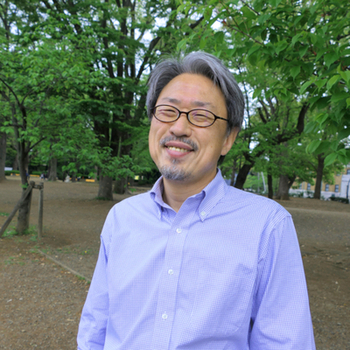
Plant scientist Kim Jong-Myong is CEO of Ac-Planta and an assistant professor at the University of Tokyo Graduate School of Agricultural and Life Sciences.      Source: Ac-Planta

Ac-Planta hopes to expand the market for Skeepon not only in Japan but also overseas. It has already applied for international patents in 30 countries, including China, India, and Australia. From January, the company will begin demonstration tests in Uganda, where rainfall continues to decrease due to climate change. It is also preparing to use Skeepon at a California tree plantation.

The company has raised ¥260 million in funding to date. One investor, the Sony Innovation Fund, told J-Stories: “We invested in Ac-Planta in the hope that it can help solve food problems through its deep expertise and steady efforts in plant epigenetics technology.”
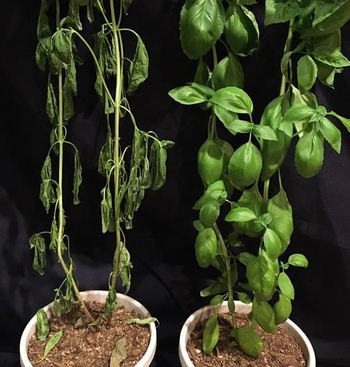
Two basil plants after going unwatered for 40 days. The plant on the right was given Skeepon. Source: Ac-Planta

This November, the Ugandan ambassador to Japan visited a mini-tomato farm in Fujieda City, Shizuoka Prefecture, that is using Skeepon. The farmer there had stopped production after the summer temperature in his plastic greenhouse exceeded 40 degrees Celsius. But after using Skeepon for a year until this November, the number of harvests increased from four a year to five, and the yield doubled.
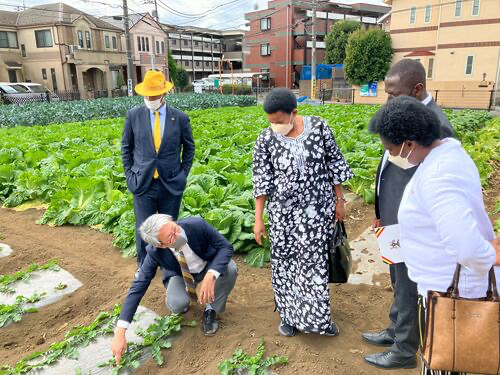
Ugandan Ambassador to Japan Tophace Kaahwa (center) visiting a mini-tomato farm in Shizuoka Prefecture that has successfully used Skeepon.     Source: Ac-Planta

Kim told J-Stories that he hopes Skeepon will enable agriculture to continue in areas affected by climate change.

“In places where people are troubled by drought and dryness, they are losing the very foundations of their life,” said Kim. “If they have to migrate somewhere else, the culture they have built up will be lost. I want to do my best to protect them using the power of plants and botany.”

Translation by Tony McNicol

Top page photo by yanadjana/Envato

For inquiries about this article, please contact us at jstories@pacificbridge.jp


Click here for the Japanese version of the article.

Tags: biotechnologyClimate ChangeNatureSustainabilityZero Waste
Previous Post

Round-Up Video #37

Next Post

Round-Up Video #38

Yui Sawada

Yui Sawada

Related Posts

Clean Tech

Japanese startup turns eggshell waste into eco-friendly plastics and paper

by Yoshiko Ohira
02/06/2026
Earth

A world first: Detecting road sinkholes from space

by Ayaka Sagasaki
01/30/2026
AgriTech

Fish scraps as a hidden treasure

by Kei Mizuno
01/16/2026
AgriTech

Can a small robot save Japan’s terraced paddies?

by Yoshiko Ohira
11/28/2025
Clean Tech

From swordfish to blue jeans: How a Japanese craftsman turns waste into wear

by Yoshiko Ohira
11/07/2025
Next Post

Round-Up Video #38

Leave a Reply Cancel reply

Your email address will not be published. Required fields are marked *

Videos

Round-up Video #23

08/04/2022

The blind leading the sighted

05/27/2022

Round-up Video #21

07/21/2022

Browse by Tags

Ai Alternative Energy biotechnology Climate Change Community decarbonization Education Event Food foodtech Health Inclusion Infrastructure Innovation Interview J-Stories Japan Japan-Taiwan Innovation Summit Japan startups Japan Tech Labor Living Nature Podcast Recycling Refugees robotics Society Space Startup Startup Ecosystem Startups SusHI Tech Tokyo Sustainability Sustainable Society Taiwan Technology Tokyo Tokyo Innovation Base Tokyo Metropolitan Government Tokyo Updates venture capital video Wealth Zero Waste
JStories

©Articles and photos published on JSTORIES are protected by Japanese copyright law and international treaties. They cannot be reproduced without the permission of the copyright holders

Explore JStories

  • About Jstories
  • Company
  • Contact
  • Home
  • Partner Press Releases
  • Pricing
  • Privacy Policy
  • Team

Follow Us

Welcome Back!

Login to your account below

Forgotten Password?

Retrieve your password

Please enter your username or email address to reset your password.

Log In
No Result
View All Result
  • Home
  • AI
    • Artificial Intelligence
    • Robotics
    • Mobility
  • Earth
    • Energy
    • Climate Tech
    • AgriTech
    • Clean Tech
    • Disaster Tech
    • SpaceTech
  • Life Sciences
    • BioTech
    • HealthTech
    • MedTech
    • AgeTech
  • Society
    • Media
    • EdTech
    • Diversity
    • FemTech
    • HRTech
    • LegalTech
    • Social Impact
    • FinTech
    • Anime
  • Lifestyle
    • FoodTech
    • FashionTech
    • BeautyTech
    • Wellbeing
    • Art & Music
  • Travel
    • Adventure Travel
    • Luxury Travel
    • Wellness & Medical Tourism
    • Culture
  • Video
  • Deals
    • Venture Capital
    • M&A
    • Startup Events
    • Ecosystem Support
  • Interview
  • Opinion

©Articles and photos published on JSTORIES are protected by Japanese copyright law and international treaties. They cannot be reproduced without the permission of the copyright holders

Are you sure want to unlock this post?
Unlock left : 0
Are you sure want to cancel subscription?