• Login
Upgrade
JStories
  • 日本語
  • 中文 (中国)
No Result
View All Result
  • Home
  • AI
    • Artificial Intelligence
    • Robotics
    • Mobility
  • Earth
    • Energy
    • Climate Tech
    • AgriTech
    • Clean Tech
    • Disaster Tech
    • SpaceTech
  • Life Sciences
    • BioTech
    • HealthTech
    • MedTech
    • AgeTech
  • Society
    • Media
    • EdTech
    • Diversity
    • FemTech
    • HRTech
    • LegalTech
    • Social Impact
    • FinTech
    • Anime
  • Lifestyle
    • FoodTech
    • FashionTech
    • BeautyTech
    • Wellbeing
    • Art & Music
  • Travel
    • Adventure Travel
    • Luxury Travel
    • Wellness & Medical Tourism
    • Culture
  • Video
  • Deals
    • Venture Capital
    • M&A
    • Startup Events
    • Pitch
    • Ecosystem Support
  • Interview
  • Opinion
  • Home
  • AI
    • Artificial Intelligence
    • Robotics
    • Mobility
  • Earth
    • Energy
    • Climate Tech
    • AgriTech
    • Clean Tech
    • Disaster Tech
    • SpaceTech
  • Life Sciences
    • BioTech
    • HealthTech
    • MedTech
    • AgeTech
  • Society
    • Media
    • EdTech
    • Diversity
    • FemTech
    • HRTech
    • LegalTech
    • Social Impact
    • FinTech
    • Anime
  • Lifestyle
    • FoodTech
    • FashionTech
    • BeautyTech
    • Wellbeing
    • Art & Music
  • Travel
    • Adventure Travel
    • Luxury Travel
    • Wellness & Medical Tourism
    • Culture
  • Video
  • Deals
    • Venture Capital
    • M&A
    • Startup Events
    • Pitch
    • Ecosystem Support
  • Interview
  • Opinion
en English ja 日本語 zh 中文 (中国)
JStories
No Result
View All Result

‘One hundred hours’ of Japanese lessons

Emi Takahata by Emi Takahata
08/04/2022
in Diversity, EdTech, Social Impact, Society
0
Home Society Diversity
Share on FacebookShare on Twitter

J-STORIES – A non-governmental organization has introduced a project to help children of foreign immigrant adapt to life in Japanese schools.

In recent years, a plummeting birthrate and rising percentage of elderly citizens has forced Japan to reconsider its immigration policy, meaning a rising number of foreign nationals in Japan. However, the children of the immigrants that Japan is gradually letting into the country are typically at high risk of school truancy and social exclusion, largely as a result of the language barrier that exists here.

According to a survey by Japan’s education ministry, as of last May there were over 130,000 non-Japanese children of elementary school age living in Japan. However, it is feared that some do not attend school.

A major reason for this is lack of Japanese language ability, which is a critical tool to get by in Japanese schools where only Japanese is spoken, says Yoko Ishikawa, president of Tokyo-based NGO Supporting Foreign Children to Attend School (SFCS).

To help these children learn Japanese, thrive in school, and integrate into society, her organization has started a program to provide 100 hours of Japanese instruction per child – enough, they say, to equip the children with sufficient Japanese to understand lessons at an elementary school here.

The Japanese language is renowned for its difficulty not least because of its complex writing system. A Japanese school text book, for example, will likely use characters from two syllabaries of almost 50 characters each, and any of around 1,800 Chinese ideograms, while other reading materials occasionally feature Romanized script, which can also be a problem for children from countries using other writing systems.

In the SFCS program, children spend around 10 hours on learning to read and write the two syllabaries. This is followed by 40 hours learning useful phrases for school life. Finally, they spend 50 hours practicing Japanese conversation, including how to express their feelings and talk with friends and teachers.

Five children from India and Vietnam are taking part in the program’s first class. As of July 2022, they had received 80 hours of online instruction. As a general rule, they have one hour of lessons a day. The tutors are supplied by Aileron, a company also run by Ishikawa that trains teachers of Japanese. The program has been supported by 1.7 million yen in crowdfunding.
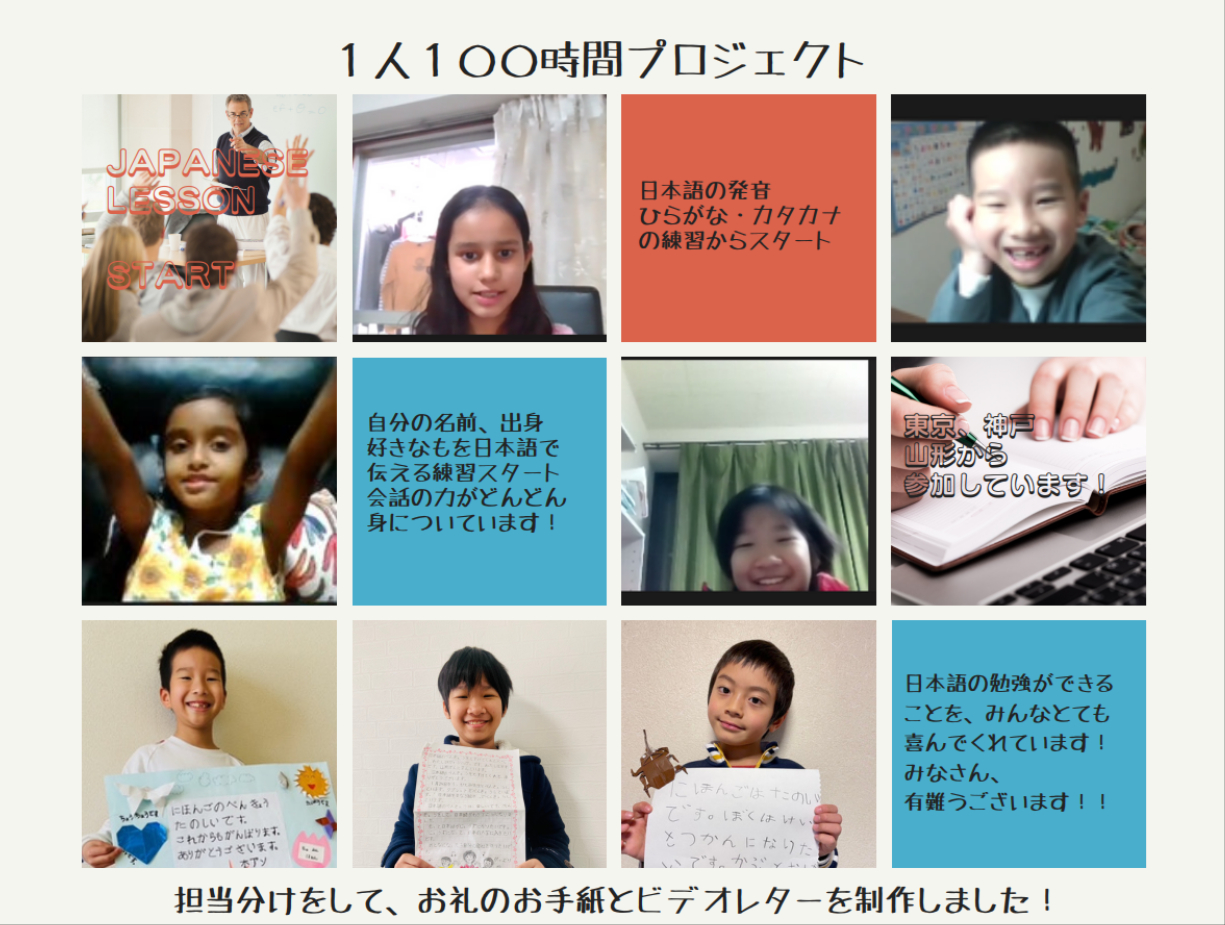
The five children taking part in the first online lesson program have written thank you letters and created video messages.     Source: SFCS

Although the number of non-Japanese children not attending Japanese school has almost halved in the last two years, there are still almost 10,000 who skip school, data shows.

According to Ishikawa, it is often hard for the authorities to know exactly why children are absent. However, she believes that one reason is that they lack the necessary language skills to communicate with their classmates and participate in lessons in what is largely a mono-linguistic society.

Due to a shortage of Japanese language teachers to help them, these children often don’t receive the instruction they need. As a result, some drop out of school, putting them at risk of social isolation.

SFCS’s director Vlasti Kobara has first-hand experience of how important learning Japanese is to foreign students. He came to Japan from Russia at the age of 6 and was educated in Japanese schools.
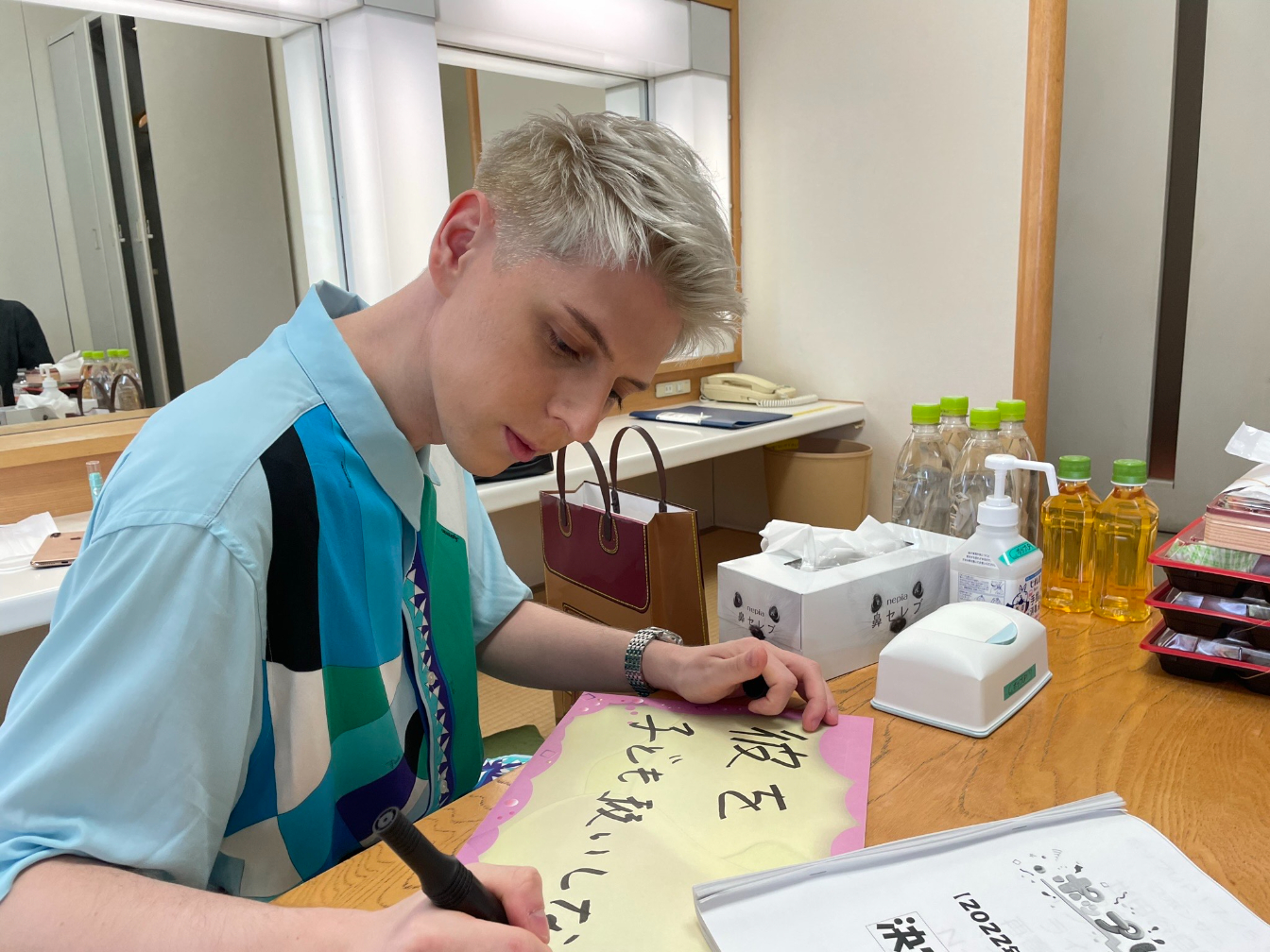
SFCS’s director is TV personality Vlas Kobara. He came to Japan from Russia when he was 6 and attended Japanese schools.     Source: Almost Japanese

Now 30, Kobara works as a TV personality and YouTuber. He is helping the NGO publicize its activities, raise money, and employ more professional teachers of Japanese to assist children struggling with the language.

Translation and editing by Tony McNicol

Top page photo by ijeab / Envato

For inquires about this article, please contact us at jstories@pacificbridge.jp


Click here for the Japanese version of the article.

Tags: EducationHuman RightsImmigrants
Previous Post

Citizens help energize food waste

Next Post

Round-up Video #23

Emi Takahata

Emi Takahata

Related Posts

Japan leads global collaboration to combat AI disinformation
AI

Japan leads global collaboration to combat AI disinformation

by Ayaka Sagasaki
03/16/2026
Anime

World-first “anime character-based therapy” trial to test effectiveness in Japanese young adults

by Lucas Maltzman
01/30/2026
Social Impact

From a childhood shaped by conflict to an investor bridging Japan and the world

by Ayaka Sagasaki
01/23/2026
Diversity

What happens when women’s ideas are finally taken seriously?

by HIROKO ISHII
12/12/2025
Diversity

Iceland’s bold break from tradition: The Women’s Day Off that rewrote history

by Sayuri Daimon
12/05/2025
Next Post

Round-up Video #23

Leave a Reply Cancel reply

Your email address will not be published. Required fields are marked *

Videos

Round-up Video #27

09/22/2022

Round-Up Video #32

11/03/2022

Round-Up Video #38

12/15/2022

Browse by Tags

Ai Alternative Energy biotechnology Climate Change Community decarbonization Education Event Food foodtech Health Inclusion Infrastructure Innovation Interview J-Stories Japan Japan-Taiwan Innovation Summit Japan startups Japan Tech Labor Living Nature Podcast Recycling Refugees robotics Society Space Startup Startup Ecosystem Startups SusHI Tech Tokyo Sustainability Sustainable Society Taiwan Technology Tokyo Tokyo Innovation Base Tokyo Metropolitan Government Tokyo Updates venture capital video Wealth Zero Waste
JStories

©Articles and photos published on JSTORIES are protected by Japanese copyright law and international treaties. They cannot be reproduced without the permission of the copyright holders

Explore JStories

  • About Jstories
  • Company
  • Contact
  • Home
  • Partner Press Releases
  • Pricing
  • Privacy Policy
  • Team

Follow Us

Welcome Back!

Login to your account below

Forgotten Password?

Retrieve your password

Please enter your username or email address to reset your password.

Log In
No Result
View All Result
  • Home
  • AI
    • Artificial Intelligence
    • Robotics
    • Mobility
  • Earth
    • Energy
    • Climate Tech
    • AgriTech
    • Clean Tech
    • Disaster Tech
    • SpaceTech
  • Life Sciences
    • BioTech
    • HealthTech
    • MedTech
    • AgeTech
  • Society
    • Media
    • EdTech
    • Diversity
    • FemTech
    • HRTech
    • LegalTech
    • Social Impact
    • FinTech
    • Anime
  • Lifestyle
    • FoodTech
    • FashionTech
    • BeautyTech
    • Wellbeing
    • Art & Music
  • Travel
    • Adventure Travel
    • Luxury Travel
    • Wellness & Medical Tourism
    • Culture
  • Video
  • Deals
    • Venture Capital
    • M&A
    • Startup Events
    • Ecosystem Support
  • Interview
  • Opinion

©Articles and photos published on JSTORIES are protected by Japanese copyright law and international treaties. They cannot be reproduced without the permission of the copyright holders

Are you sure want to unlock this post?
Unlock left : 0
Are you sure want to cancel subscription?