• Login
Upgrade
JStories
  • 日本語
  • 中文 (中国)
No Result
View All Result
  • Home
  • AI
    • Artificial Intelligence
    • Robotics
    • Mobility
  • Earth
    • Energy
    • Climate Tech
    • AgriTech
    • Clean Tech
    • Disaster Tech
    • SpaceTech
  • Life Sciences
    • BioTech
    • HealthTech
    • MedTech
    • AgeTech
  • Society
    • Media
    • EdTech
    • Diversity
    • FemTech
    • HRTech
    • LegalTech
    • Social Impact
    • FinTech
    • Anime
  • Lifestyle
    • FoodTech
    • FashionTech
    • BeautyTech
    • Wellbeing
    • Art & Music
  • Travel
    • Adventure Travel
    • Luxury Travel
    • Wellness & Medical Tourism
    • Culture
  • Video
  • Deals
    • Venture Capital
    • M&A
    • Startup Events
    • Pitch
    • Ecosystem Support
  • Interview
  • Opinion
  • Home
  • AI
    • Artificial Intelligence
    • Robotics
    • Mobility
  • Earth
    • Energy
    • Climate Tech
    • AgriTech
    • Clean Tech
    • Disaster Tech
    • SpaceTech
  • Life Sciences
    • BioTech
    • HealthTech
    • MedTech
    • AgeTech
  • Society
    • Media
    • EdTech
    • Diversity
    • FemTech
    • HRTech
    • LegalTech
    • Social Impact
    • FinTech
    • Anime
  • Lifestyle
    • FoodTech
    • FashionTech
    • BeautyTech
    • Wellbeing
    • Art & Music
  • Travel
    • Adventure Travel
    • Luxury Travel
    • Wellness & Medical Tourism
    • Culture
  • Video
  • Deals
    • Venture Capital
    • M&A
    • Startup Events
    • Pitch
    • Ecosystem Support
  • Interview
  • Opinion
en English ja 日本語 zh 中文 (中国)
JStories
No Result
View All Result

A new kind of urban space in Tokyo redefines idea of ‘park’

Yang Liu by Yang Liu
05/16/2025
in Adventure Travel, Art & Music, Lifestyle, Travel, Video
0
Home Travel Adventure Travel
Share on FacebookShare on Twitter

JStories ー In Ginza, one of Tokyo’s most popular destinations for inbound tourists, it’s now a familiar sight to see visitors strolling the streets, enjoying shopping and dining experiences. Yet in this densely built-up area, public spaces where people can pause or rest are limited. For travelers on their feet for long hours, the lack of benches and rest spots has become a persistent issue.

Enter Ginza Sony Park, an “experiential public space” that opened in January 2025. Located in the heart of Ginza, the facility is free to enter and more than just a resting place — it’s been designed as a “21st-century park” featuring participatory and multisensory experiences. Visitors can explore interactive exhibitions blending music, art, and technology, and enjoy physical game content at no cost.
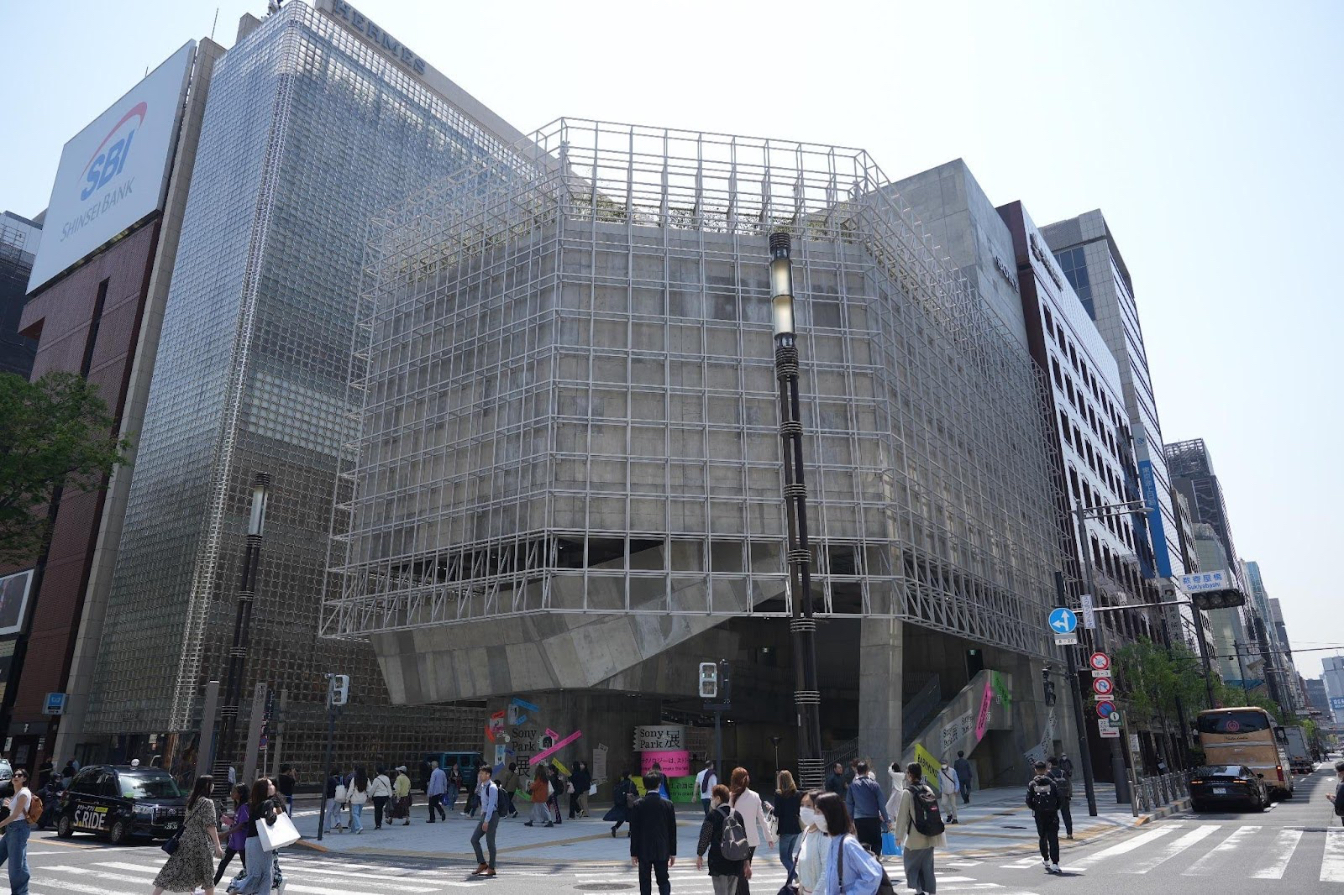
Sony Park in Ginza: an innovative urban space where music, art, and technology converge     Photo by JStories (Same below)

Daisuke Nagano, president and representative director of Sony Group Corp., explains that the park was created to bring rhythm to the Ginza experience.

“Before, if someone was tired after shopping but still wanted to visit a couple more stores, they might have just gone home. Now they can take a break at Ginza Sony Park and keep going afterward. Like a musical rest symbol, it gives people a chance to pause or get re-energized by what they see. The park helps people switch between ‘on’ and ‘off’ modes, creating a rhythm for the city,” said Nagano.

Exhibits in the space rotate regularly. In April 2025, the park was hosting a themed exhibition with the concept of reboothing the senses.
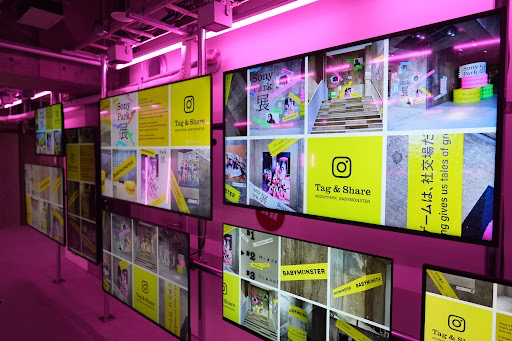
An interactive installation themed around Babymonster, part of the Ginza Sony Park exhibition

The exhibits inside the park are rotated regularly, and as of spring 2025 (at the time of the interview in April), the “Ginza Sony Park Exhibition 2025” is underway. The exhibition highlights six key business areas that Sony is engaged in: Music, Semiconductors, Finance, Gaming, Entertainment Technology, and Film. Each of these is reimagined through a different experiential lens: Journey, Science Fiction, Poetry, Social Space, Street, and Forest. The result is a collection of unique interactive installations, created in collaboration with six different artists or creative teams — including popular acts like Babymonster and Creepy Nuts.

Ginza Sony Park presents this as a way of “rebooting the senses,” offering a dynamic and immersive public space that blends technology, creativity, and relaxation.

Nagano emphasizes the importance of combining “activity” with “breathing space.”

“If there’s only activity, it becomes an amusement park. If it’s only for relaxation, then it’s just a regular park. What makes Ginza Sony Park unique is the mix — a space where excitement and relaxation coexist.”

The park is designed accordingly: it features interactive, high-tech installations alongside calm areas for unwinding to sound and visuals. In the B2 level, visitors can enjoy a custom rhythm game inspired by songs from popular girl group Babymonster, or create a personalized avatar with 3D capture technology and have it dance to music.
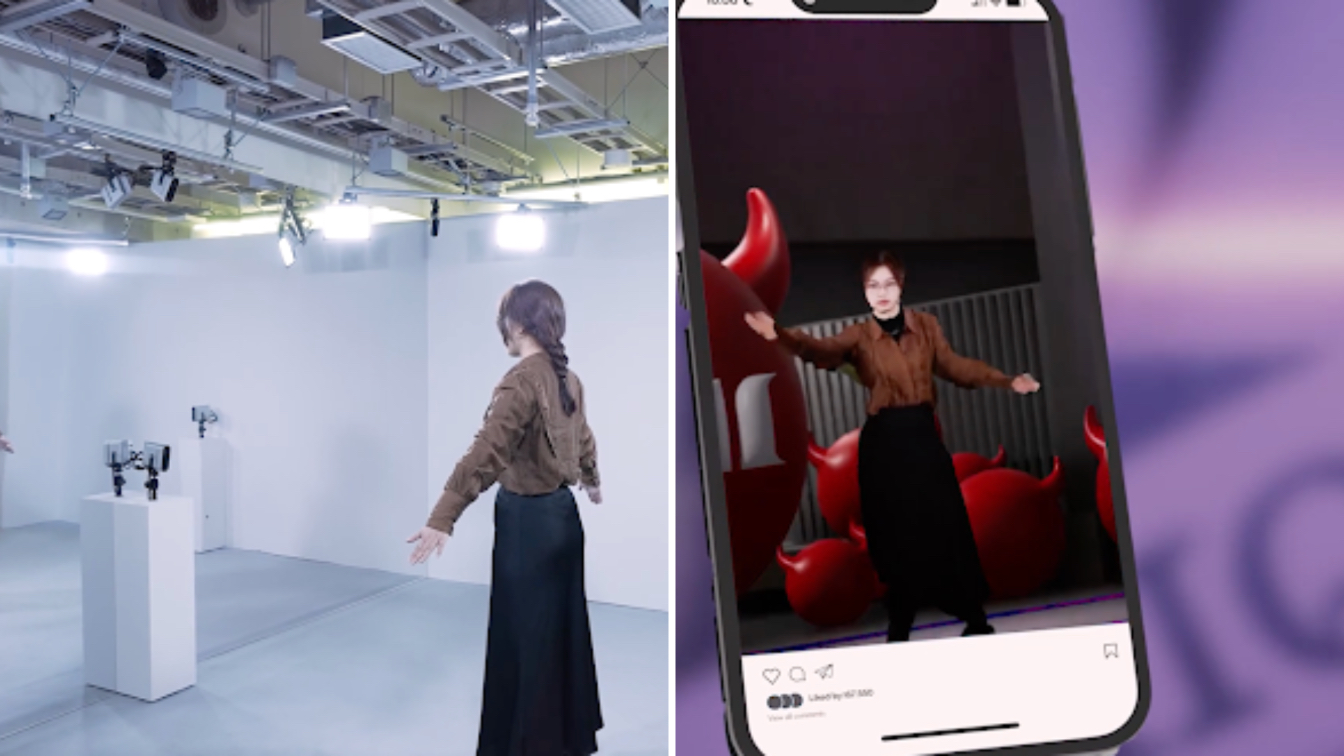
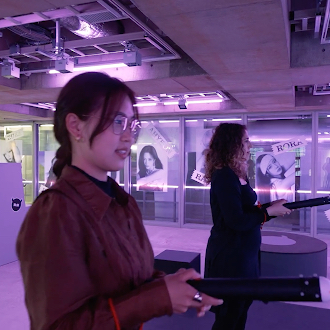
Visitors can use 3D technology to create their virtual characters and enjoy an interactive experience with dance animations.
“Games are social spaces.” JStories staffers enjoy one of the interactive games.

On the third floor, visitors are immersed in a live concert experience of hip-hop duo Creepy Nuts, surrounded by eight high-resolution LED displays and around 20 speakers. Benches are equipped with haptic technology, allowing guests to feel music through vibrations.
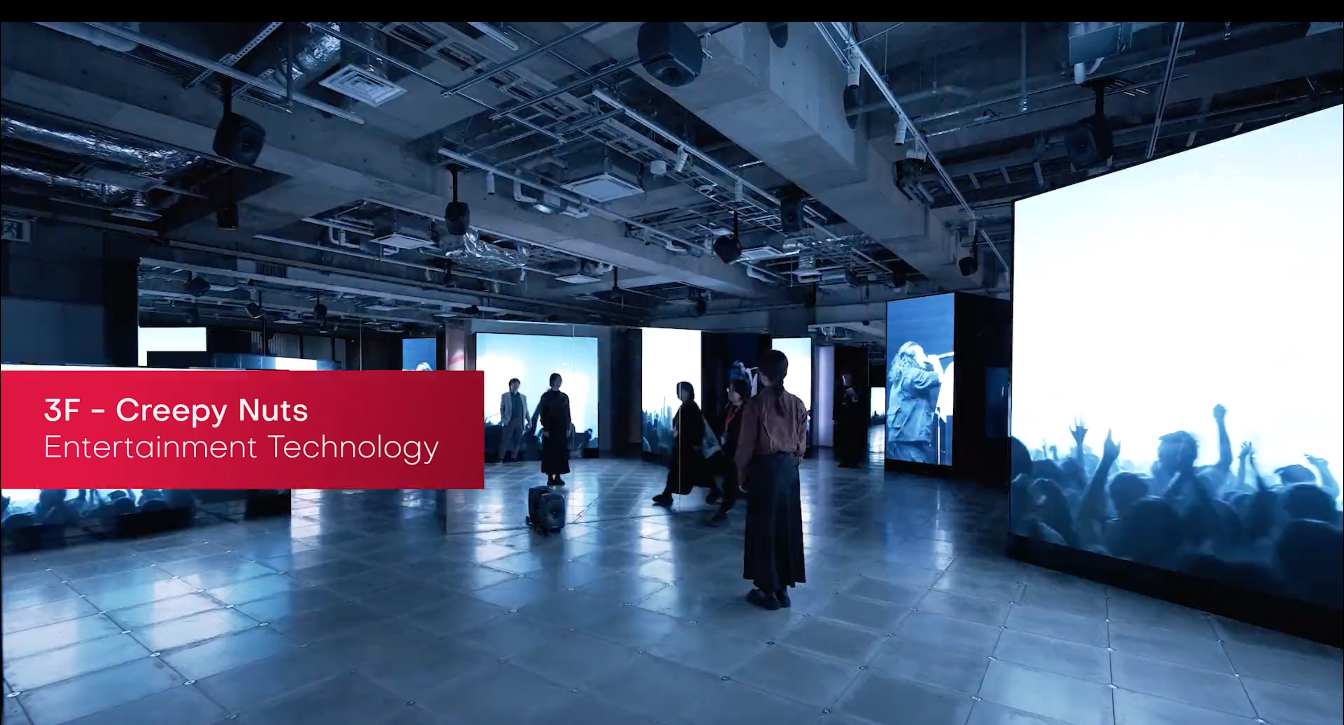
A realistic sensory experience of Creepy Nuts’ live performance, complete with music and vibrations

In contrast, the fourth floor offers a forest-themed relaxation zone curated by composer Kensuke Ushio. Guests can sit in chairs and listen to selected soundtracks from 20 films via headphones in a peaceful atmosphere.
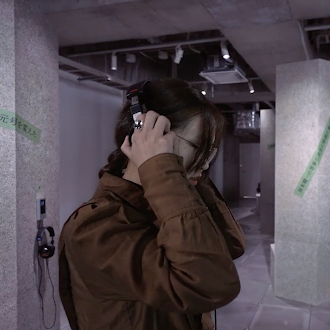
Visitors can listen to film soundtracks through headphones in the dedicated area

The park also includes a casual dining area called “1/2 (Nibun no Ichi)” which offers Western-style dishes in smaller portions — half-size or even quarter-size — allowing guests to sample a variety of items without feeling too full.
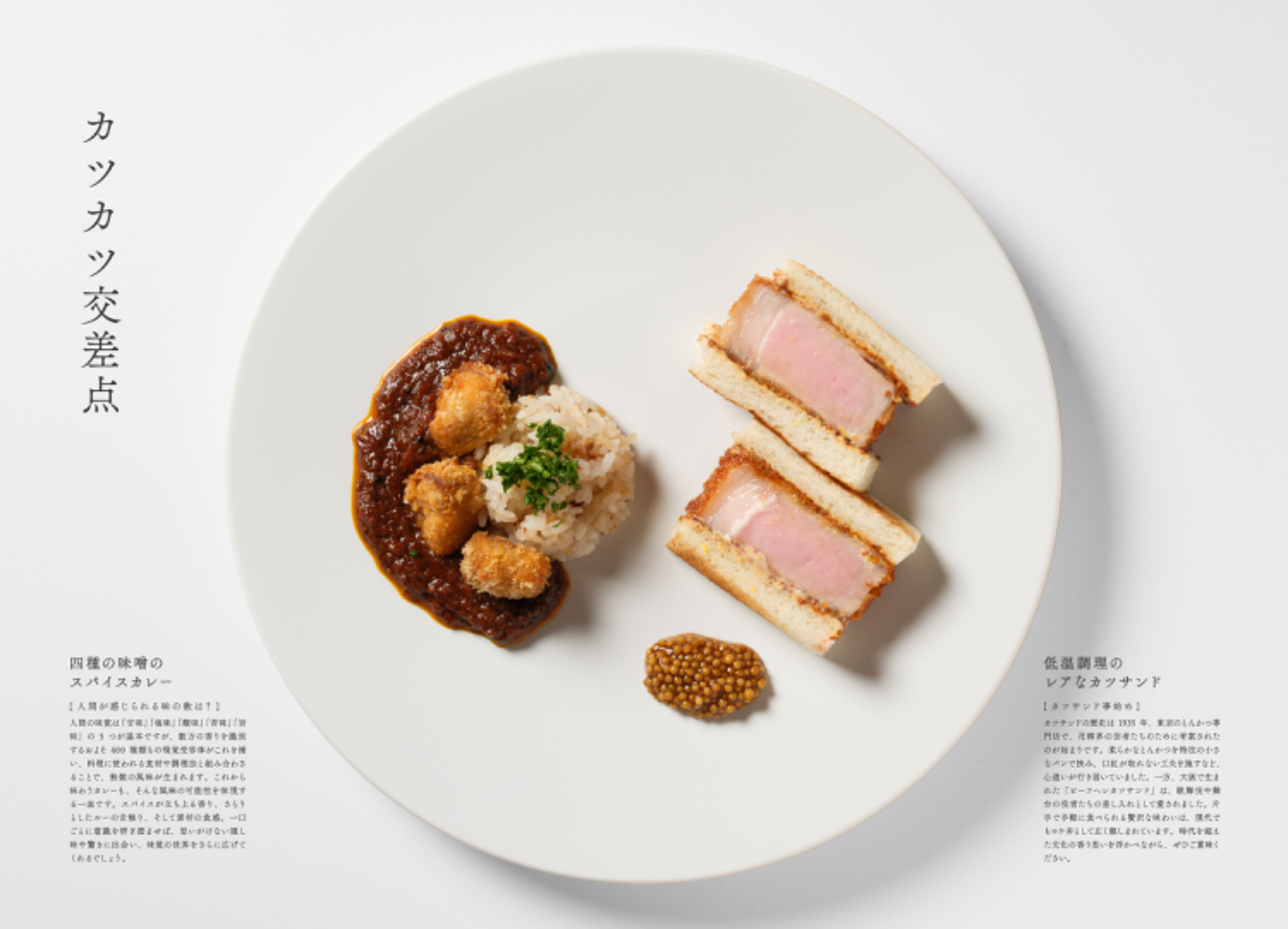
Photo illustrating the concept of “1/2 (Nibun no Ichi)”        Source: Ginza Sony Park

“Sometimes you just want a light bite before dinner. Or maybe you’re in Ginza and want to try lots of places, but this one catches your eye — then it’s fine to just eat a little. That’s why we offer smaller portions,” Nagano explained.

Nagano sees Ginza Sony Park as another step in Sony’s history of introducing new value to the world — much like the Walkman, which took music outside the home; the PlayStation, which transformed children’s play into adult entertainment; and AIBO, which redefined relationships with robots.

“Ginza doesn’t need Ginza Sony Park to exist — but it becomes more interesting with it. We want to offer new value to the world,” he told JStories.

For now, the Ginza location is the only one of its kind. But Nagano hints at potential international expansion:

“If the opportunity arises, I’d love to bring successful events from Ginza to cities like London, Paris, or Shanghai.”

While no concrete plans are in place, he remains open to future collaborations.

“If there’s interest from a city, we’d be happy to explore it.”

Nagano concludes by underscoring the park’s alignment with the arts.

“Art can draw in new people when it blends into a city. Ginza Sony Park is a natural fit with art and music, and we want to continue building activities around those themes.”
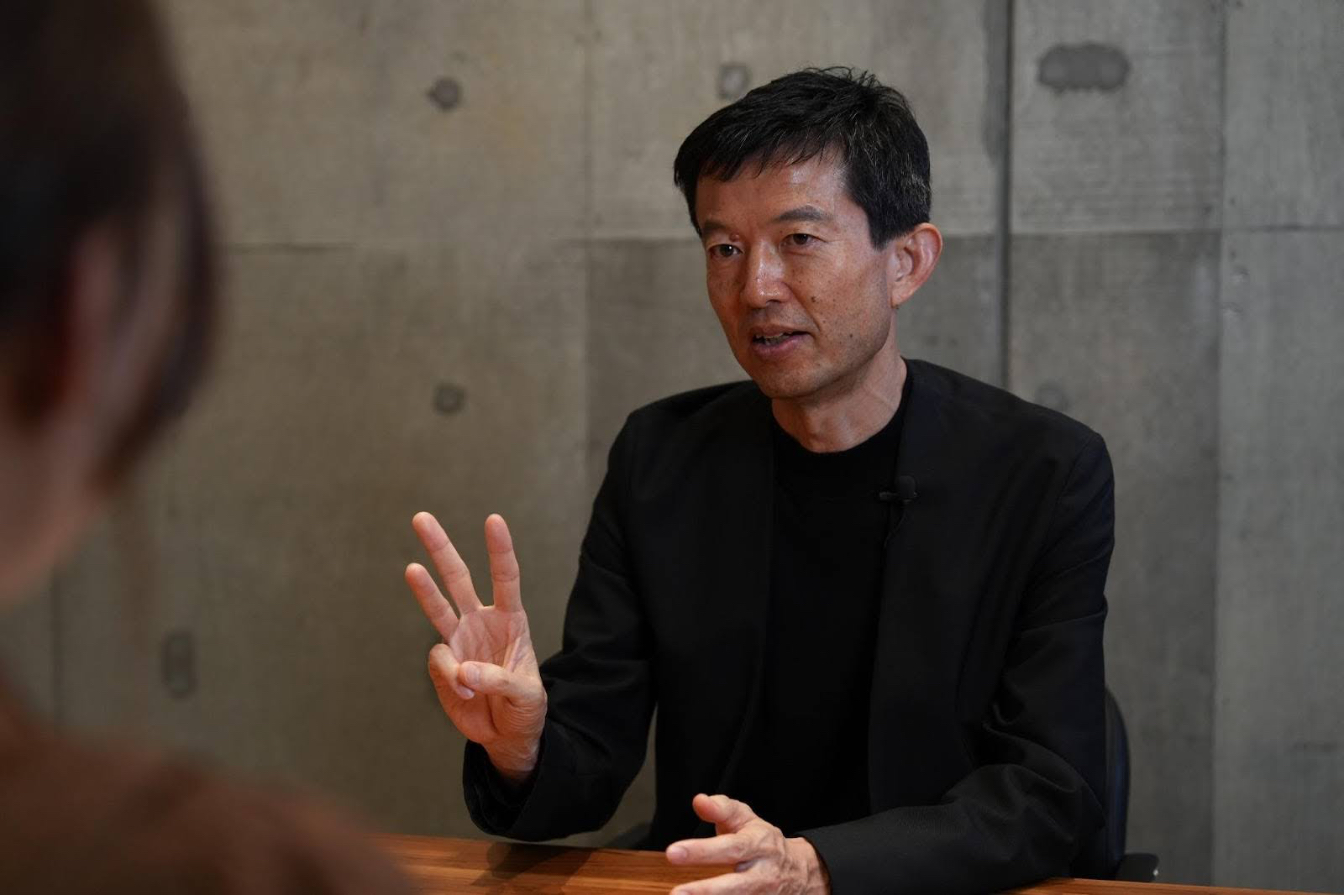
Daisuke Nagano, president and representative director and chief branding officer at Sony Enterprise Co. Ltd., talks to JStories about the idea behind the Ginza Sony Park      Photo by Moritz Brinkhoff | JStories

Watch the highlight of our interview with Daisuke Nagano below:


Translated by Anita De Michele | JStories

Edited by Mark Goldsmith

Top video: Alexander Cas, Moritz Brinkhoff, Jeremy Touitou | JStories

For inquiries regarding this article, please contact jstories@pacificbridge.jp


Click here for the Japanese version of the article
Tags: ArchitectureCity LifeExperiential DesignGinza Sony ParkInteractive ArtInterviewJapanPublic SpaceTokyoTourismUrban Space
Previous Post

C-level leaders from over 70 Unicorns and rising stars gather in Tokyo for Asia’s first ‘unicorn summit’

Next Post

What makes Japan attractive to top Indian IT engineers?

Yang Liu

Yang Liu

Related Posts

When digital and physical worlds meet – Interview with Yoichi Ochiai 何がすごい? 〜 現実とデジタルを融合する、落合陽一の世界
Video

When digital and physical worlds meet – Interview with Yoichi Ochiai 何がすごい? 〜 現実とデジタルを融合する、落合陽一の世界

by JStories_Admin
04/01/2026
Starting a sustainable wood-fired bakery in Tokyo
FoodTech

Starting a sustainable wood-fired bakery in Tokyo

by Tokyo Updates
03/05/2026
Lifestyle

The plush toy hospital keeping childhood memories alive

by Tokyo Updates
01/30/2026
Lifestyle

Lost item return rate triples: Tokyo startup envisions a world where nothing stays lost

by Tokyo Updates
01/23/2026
FoodTech

[Interview: Part 2] A digital approach to tackle child hunger in Japan with dignity

by Toshi Maeda
12/19/2025
Next Post

What makes Japan attractive to top Indian IT engineers?

Leave a Reply Cancel reply

Your email address will not be published. Required fields are marked *

Videos

Round-up Video #13

05/26/2022

INTERVIEW | Taking action for peace

11/30/2022

Round-Up Video #31

10/27/2022

Browse by Tags

Ai Alternative Energy biotechnology Climate Change Community decarbonization Education Event Food foodtech Health Inclusion Infrastructure Innovation Interview J-Stories Japan Japan-Taiwan Innovation Summit Japan startups Japan Tech Labor Living Nature Podcast Recycling Refugees robotics Society Space Startup Startup Ecosystem Startups SusHI Tech Tokyo Sustainability Sustainable Society Taiwan Technology Tokyo Tokyo Innovation Base Tokyo Metropolitan Government Tokyo Updates venture capital video Wealth Zero Waste
JStories

©Articles and photos published on JSTORIES are protected by Japanese copyright law and international treaties. They cannot be reproduced without the permission of the copyright holders

Explore JStories

  • About Jstories
  • Company
  • Contact
  • Home
  • Partner Press Releases
  • Pricing
  • Privacy Policy
  • Team

Follow Us

Welcome Back!

Login to your account below

Forgotten Password?

Retrieve your password

Please enter your username or email address to reset your password.

Log In
No Result
View All Result
  • Home
  • AI
    • Artificial Intelligence
    • Robotics
    • Mobility
  • Earth
    • Energy
    • Climate Tech
    • AgriTech
    • Clean Tech
    • Disaster Tech
    • SpaceTech
  • Life Sciences
    • BioTech
    • HealthTech
    • MedTech
    • AgeTech
  • Society
    • Media
    • EdTech
    • Diversity
    • FemTech
    • HRTech
    • LegalTech
    • Social Impact
    • FinTech
    • Anime
  • Lifestyle
    • FoodTech
    • FashionTech
    • BeautyTech
    • Wellbeing
    • Art & Music
  • Travel
    • Adventure Travel
    • Luxury Travel
    • Wellness & Medical Tourism
    • Culture
  • Video
  • Deals
    • Venture Capital
    • M&A
    • Startup Events
    • Ecosystem Support
  • Interview
  • Opinion

©Articles and photos published on JSTORIES are protected by Japanese copyright law and international treaties. They cannot be reproduced without the permission of the copyright holders

Are you sure want to unlock this post?
Unlock left : 0
Are you sure want to cancel subscription?