• Login
Upgrade
JStories
  • 日本語
  • 中文 (中国)
No Result
View All Result
  • Home
  • AI
    • Artificial Intelligence
    • Robotics
    • Mobility
  • Earth
    • Energy
    • Climate Tech
    • AgriTech
    • Clean Tech
    • Disaster Tech
    • SpaceTech
  • Life Sciences
    • BioTech
    • HealthTech
    • MedTech
    • AgeTech
  • Society
    • Media
    • EdTech
    • Diversity
    • FemTech
    • HRTech
    • LegalTech
    • Social Impact
    • FinTech
    • Anime
  • Lifestyle
    • FoodTech
    • FashionTech
    • BeautyTech
    • Wellbeing
    • Art & Music
  • Travel
    • Adventure Travel
    • Luxury Travel
    • Wellness & Medical Tourism
    • Culture
  • Video
  • Deals
    • Venture Capital
    • M&A
    • Startup Events
    • Pitch
    • Ecosystem Support
  • Interview
  • Opinion
  • Home
  • AI
    • Artificial Intelligence
    • Robotics
    • Mobility
  • Earth
    • Energy
    • Climate Tech
    • AgriTech
    • Clean Tech
    • Disaster Tech
    • SpaceTech
  • Life Sciences
    • BioTech
    • HealthTech
    • MedTech
    • AgeTech
  • Society
    • Media
    • EdTech
    • Diversity
    • FemTech
    • HRTech
    • LegalTech
    • Social Impact
    • FinTech
    • Anime
  • Lifestyle
    • FoodTech
    • FashionTech
    • BeautyTech
    • Wellbeing
    • Art & Music
  • Travel
    • Adventure Travel
    • Luxury Travel
    • Wellness & Medical Tourism
    • Culture
  • Video
  • Deals
    • Venture Capital
    • M&A
    • Startup Events
    • Pitch
    • Ecosystem Support
  • Interview
  • Opinion
en English ja 日本語 zh 中文 (中国)
JStories
No Result
View All Result

Unveiling the future of electronics: Saga University develops world’s first diamond semiconductor power circuit

Ayaka Sagasaki by Ayaka Sagasaki
06/12/2023
in AI
0
Home AI
Share on FacebookShare on Twitter

J-STORIES – A Japanese university research team has developed what is thought to be the world’s first power circuit containing a device using diamond semiconductors.

Led by Makoto Kasu, the team at Saga University began the research into diamond semiconductors after exploring the theory that they have the potential to offer much better performance than silicon and other materials currently used. It proved to be a significant challenge: More than fifty years of global research has previously shown just how hard it is to reach the stage of practical use.
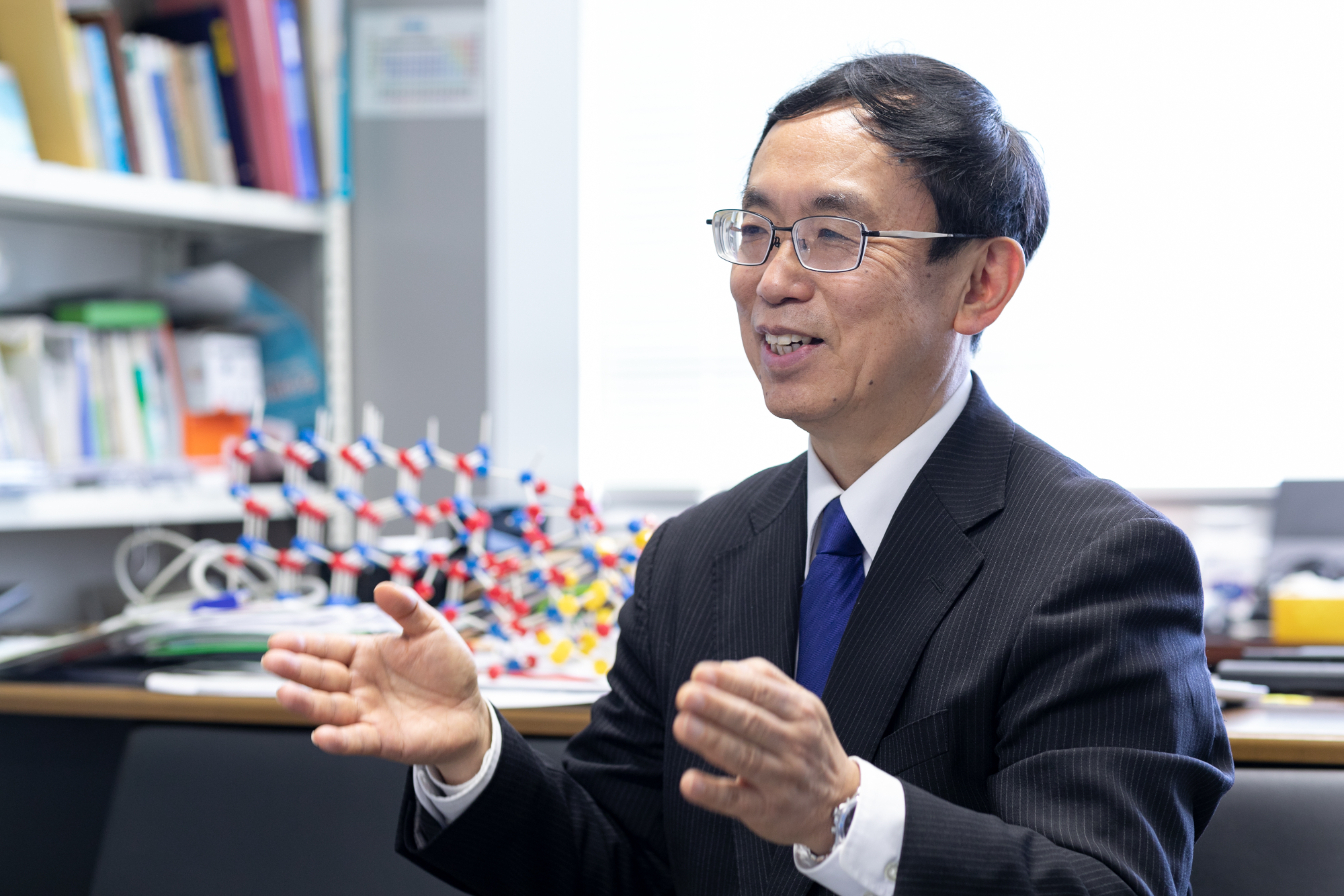
Makoto Kasu     Source: Saga University

Currently, the majority of semiconductors used in electronic components are made from silicon. While strong and powerful semiconductors made from silicon carbide, gallium nitride, and other materials are in widespread use for electric vehicles, rail cars, and 5G base stations that handle high voltages and currents, the data capacity of communications systems continues to increase and there is an urgent need for semiconductors with even better performance.

According to the Saga University researchers, diamonds have around five times the high-power efficiency of silicon and around 1,200 times the ability to transfer data at high speed. And compared to other materials, they have much higher performance and durability.
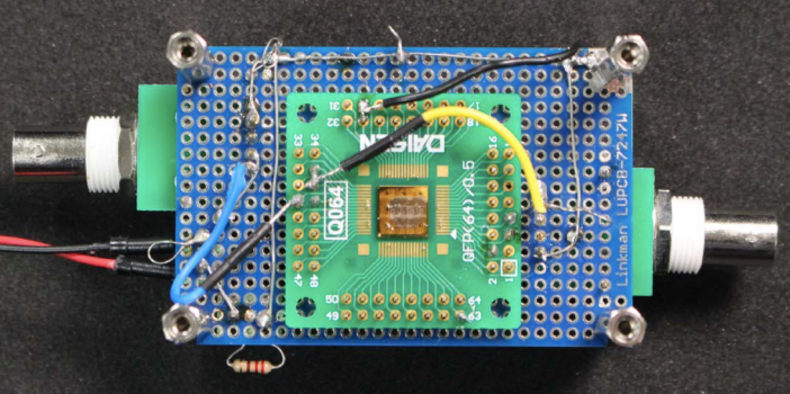
A semiconductor device circuit that uses industrial diamond in its base.     Source: Saga University

For example, communications satellites use vacuum tubes because there are no semiconductors that can handle the high frequencies they require. However, these have problems with efficiency and durability. Diamond semiconductors on the other hand, can handle high frequencies and power, and are also resistant to radiation.

For those reasons, they are said to be essential to the future of space development. Such high-performance diamond semiconductors could also find a use in future autonomous drive vehicles.

The ground-breaking research at Saga University has apparently yielded results that pave the way for the application of diamond semiconductor technology in such fields. The power circuit developed by Kasu can achieve high-speed switching of less than 10 nanoseconds, remaining stable without any deterioration over 190 hours of continuous use.
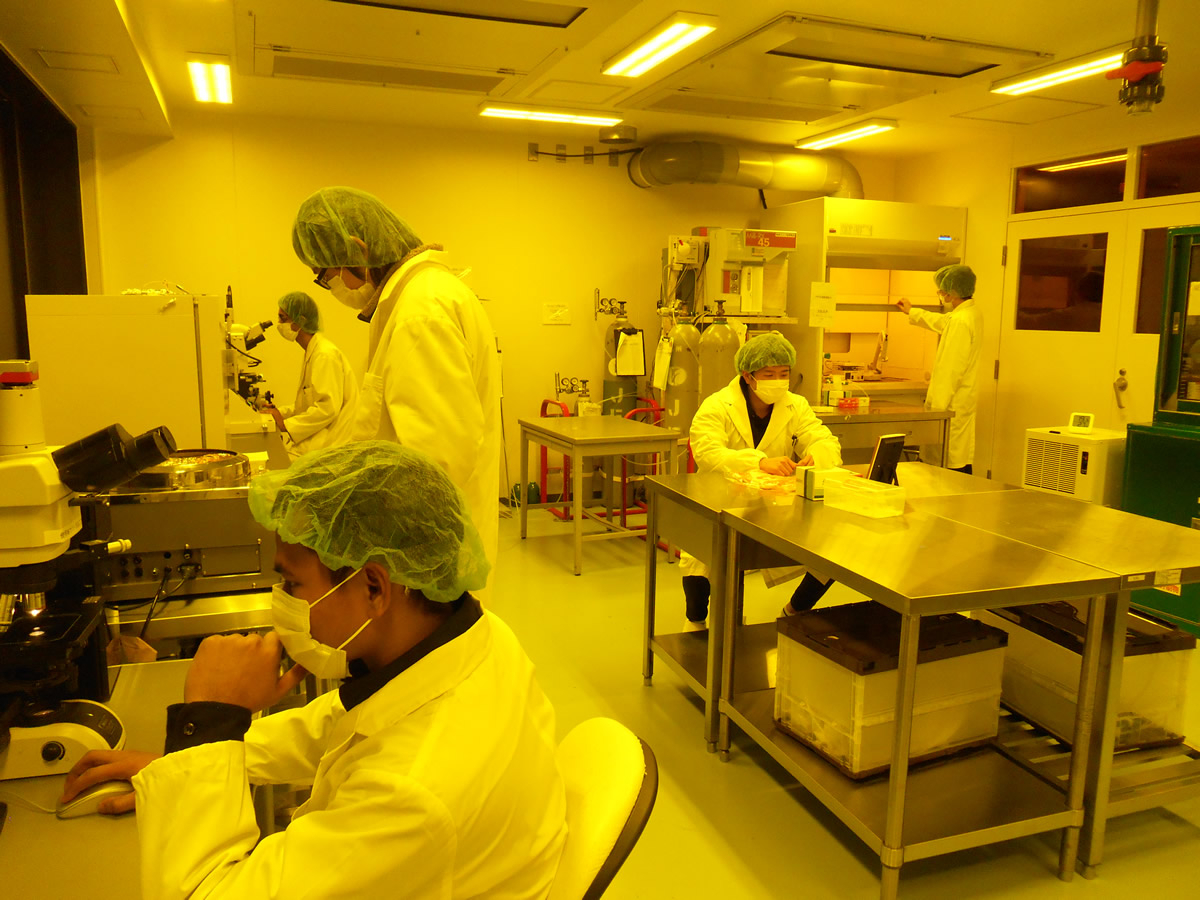
The research team at work in the laboratory.     Source: Saga University

According to Kasu, globally there have been many research papers on diamond semiconductors and various results have shown high instantaneous performance. But there have been no papers showing the kind of stable performance needed for an actual product. He hopes his team’s research could lead to new technology, such as new “beyond 5G” communications and the use of diamond semiconductors in satellites in place of vacuum tubes.

Kasu told J-Stories that, “No matter what high performance is proven, that has no meaning unless the technology is put to practical use.” He added that his recent research results were down to “building up fundamental properties one by one like children’s building blocks in order to create something that can be industrially reproduced and put into practical use.”
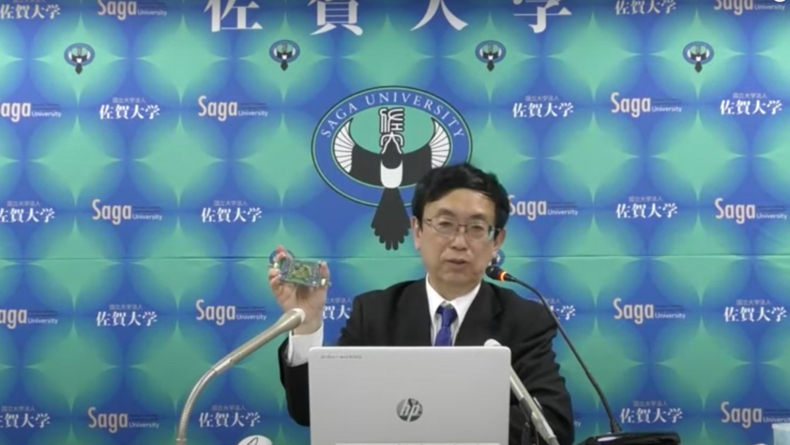
Makoto Kasu of Saga University holding the world’s first power circuit using diamond semiconductors.    Source: Saga University

Makoto Kasu of Saga University holding the world’s first power circuit using diamond semiconductors.     Source: Saga University

Makoto Kasu of Saga University holding the world’s first power circuit using diamond semiconductors. Source: Saga University

Kasu said that they hope to produce a sample within three or four years, and for the technology to be in practical use around 10 years after that. Of course, there are many issues to be addressed before that happens. For example, it will be necessary to improve various related technologies such as methods to efficiently polish diamonds.

However, some successes have already been seen. This month, a joint venture between Tokyo-based Orbray, which has developed a 2-inch (5 cm) diamond wafer in collaboration with Saga University, and Mirise Technologies in Aichi Prefecture, announced a major step toward the application of diamond semiconductors in electric vehicles.

Such potential has convinced Kasu that the decades of research into the tech will ultimately prove diamonds are far more than just a girl’s best friend.

“In mountain terms, diamond semiconductors are the Mt. Everest of semiconductors,” he says.. “We have kept on climbing and finally reached the half-way point. I would like various people to join us in this process and speed it up, then for us to somehow reach the summit.”

Translation by Tony McNicol

Top page photo by Saga University

For inquiries about this article, please contact jstories@pacficbridge.jp

***

Click here for the Japanese version of the article.

Tags: Diamond semiconductorElectronicsSemiconductor
Previous Post

INTERVIEW | World famous architect Kengo Kuma calls Japanese culture “a kind of environmental technology”

Next Post

Japanese company introduces self-cleaning tableware as a solution to combat global water shortages

Ayaka Sagasaki

Ayaka Sagasaki

Related Posts

Japan leads global collaboration to combat AI disinformation
AI

Japan leads global collaboration to combat AI disinformation

by Ayaka Sagasaki
03/16/2026
AI

A new era of marketing, pioneered by generative AI

by Tokyo Updates
11/28/2025
AI

Pioneering the future of Tokyo’s startup ecosystem through finance and technology

by Tokyo Updates
10/31/2025
AI

Beyond tariffs: How Japanese companies are mastering US market expansion

by Toshi Maeda
10/10/2025
AI

Elon Musk approves: Yo-Kai Express brings chip-making precision to ramen and bubble tea, eyes year-end IPO

by BNEXT
10/10/2025
Next Post

Japanese company introduces self-cleaning tableware as a solution to combat global water shortages

Leave a Reply Cancel reply

Your email address will not be published. Required fields are marked *

Videos

Round-up Video #25

09/01/2022

Round-Up Video #35

11/24/2022

Round-Up Video #39

12/22/2022

Browse by Tags

Ai Alternative Energy biotechnology Climate Change Community decarbonization Education Event Food foodtech Health Inclusion Infrastructure Innovation Interview J-Stories Japan Japan-Taiwan Innovation Summit Japan startups Japan Tech Labor Living Nature Podcast Recycling Refugees robotics Society Space Startup Startup Ecosystem Startups SusHI Tech Tokyo Sustainability Sustainable Society Taiwan Technology Tokyo Tokyo Innovation Base Tokyo Metropolitan Government Tokyo Updates venture capital video Wealth Zero Waste
JStories

©Articles and photos published on JSTORIES are protected by Japanese copyright law and international treaties. They cannot be reproduced without the permission of the copyright holders

Explore JStories

  • About Jstories
  • Company
  • Contact
  • Home
  • Partner Press Releases
  • Pricing
  • Privacy Policy
  • Team

Follow Us

Welcome Back!

Login to your account below

Forgotten Password?

Retrieve your password

Please enter your username or email address to reset your password.

Log In
No Result
View All Result
  • Home
  • AI
    • Artificial Intelligence
    • Robotics
    • Mobility
  • Earth
    • Energy
    • Climate Tech
    • AgriTech
    • Clean Tech
    • Disaster Tech
    • SpaceTech
  • Life Sciences
    • BioTech
    • HealthTech
    • MedTech
    • AgeTech
  • Society
    • Media
    • EdTech
    • Diversity
    • FemTech
    • HRTech
    • LegalTech
    • Social Impact
    • FinTech
    • Anime
  • Lifestyle
    • FoodTech
    • FashionTech
    • BeautyTech
    • Wellbeing
    • Art & Music
  • Travel
    • Adventure Travel
    • Luxury Travel
    • Wellness & Medical Tourism
    • Culture
  • Video
  • Deals
    • Venture Capital
    • M&A
    • Startup Events
    • Ecosystem Support
  • Interview
  • Opinion

©Articles and photos published on JSTORIES are protected by Japanese copyright law and international treaties. They cannot be reproduced without the permission of the copyright holders

Are you sure want to unlock this post?
Unlock left : 0
Are you sure want to cancel subscription?