• Login
Upgrade
JStories
  • 日本語
  • 中文 (中国)
No Result
View All Result
  • Home
  • AI
    • Artificial Intelligence
    • Robotics
    • Mobility
  • Earth
    • Energy
    • Climate Tech
    • AgriTech
    • Clean Tech
    • Disaster Tech
    • SpaceTech
  • Life Sciences
    • BioTech
    • HealthTech
    • MedTech
    • AgeTech
  • Society
    • Media
    • EdTech
    • Diversity
    • FemTech
    • HRTech
    • LegalTech
    • Social Impact
    • FinTech
    • Anime
  • Lifestyle
    • FoodTech
    • FashionTech
    • BeautyTech
    • Wellbeing
    • Art & Music
  • Travel
    • Adventure Travel
    • Luxury Travel
    • Wellness & Medical Tourism
    • Culture
  • Video
  • Deals
    • Venture Capital
    • M&A
    • Startup Events
    • Pitch
    • Ecosystem Support
  • Interview
  • Opinion
  • Home
  • AI
    • Artificial Intelligence
    • Robotics
    • Mobility
  • Earth
    • Energy
    • Climate Tech
    • AgriTech
    • Clean Tech
    • Disaster Tech
    • SpaceTech
  • Life Sciences
    • BioTech
    • HealthTech
    • MedTech
    • AgeTech
  • Society
    • Media
    • EdTech
    • Diversity
    • FemTech
    • HRTech
    • LegalTech
    • Social Impact
    • FinTech
    • Anime
  • Lifestyle
    • FoodTech
    • FashionTech
    • BeautyTech
    • Wellbeing
    • Art & Music
  • Travel
    • Adventure Travel
    • Luxury Travel
    • Wellness & Medical Tourism
    • Culture
  • Video
  • Deals
    • Venture Capital
    • M&A
    • Startup Events
    • Pitch
    • Ecosystem Support
  • Interview
  • Opinion
en English ja 日本語 zh 中文 (中国)
JStories
No Result
View All Result

Cool idea combats warming

Ayaka Sagasaki by Ayaka Sagasaki
04/12/2023
in Climate Tech, Earth
0
Home Earth Climate Tech
Share on FacebookShare on Twitter

J-STORIES – A Japanese company has come up with a truly cool idea – a material that can bring the internal temperature of outdoor equipment, factories, and other buildings below the outside temperature without using any electricity or other energy source.

“Spacecool” is a material that can block heat from the sun and atmosphere, while simultaneously radiating internal heat into space. It could reduce energy used for cooling, protect equipment from heat related damage, and help prevent health dangers such as heatstroke.

https://www.youtube.com/watch?v=4byWh48rhhI

Development of the material began in 2017 with a project by Osaka Gas Co., which subsequently took the lead in establishing the joint venture Spacecool Inc. in 2021 to launch sales, a venture that brought together a large number of energy and other major companies.

The material, which the company likens to “shady trees,” exploits a phenomenon called “radiative cooling” whereby the Earth emits thermal radiation into space, one of the reasons why temperatures drop at night. Normally, during the day objects, including buildings, absorb heat from the sun, but Spacecool’s special optical design means it also reflects over 95 percent of sunlight. This means that the material simultaneously releases more heat than it absorbs, even in sunlight, achieving a cooling effect without use of electricity or other power.

According to Spacecool Inc. COO Takahisa Utaki, similar products are available from other companies outside Japan, but the Osaka Gas-inspired material’s reflectivity and radiant cooling performance is the highest in the world.
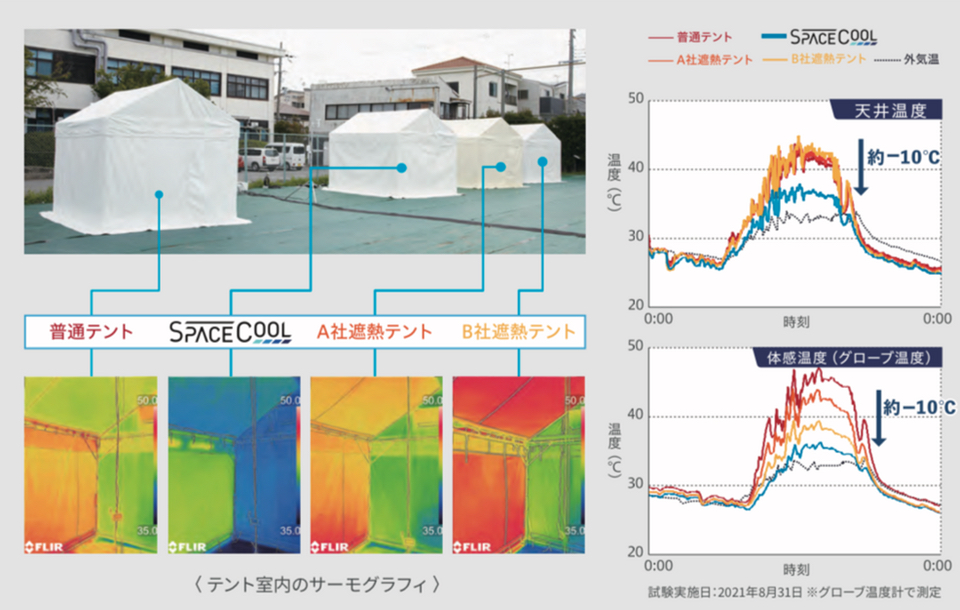
Spacecool tested the material by using it to construct a tent then measuring the temperature inside.     Source: Spacecool Inc.

For example, tests comparing tents made of Spacecool material with ordinary tents showed a difference of approximately 10 C in terms of temperature. In fact, compared to the heat felt inside a standard tent, the inside of a tent using the Spacecool material felt cooler than the outside temperature.

Similarly, in an experiment where the material was attached to the exterior of a white shed, the temperature of the ceiling was 20 degrees lower than before the material was attached, while the interior overall was as much as 10 C lower.

Meanwhile, during a demonstration test of the material at Honda’s Yorii Plant in Saitama Prefecture this January, researchers confirmed that an air-conditioned container covered in Spacecool material required 53 percent less energy than an ordinary container. Also, when it was fitted to passageways between buildings, the surface temperature of the walls was 15 C lower. A building using Spacecool membrane material is also being designed for the Gas Pavilion at the Expo 2025 in Osaka.
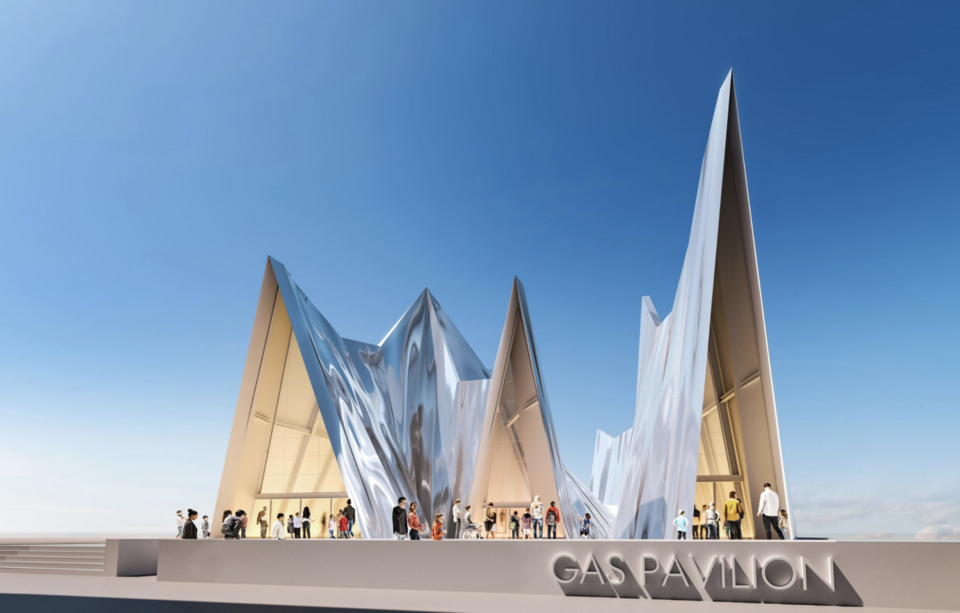
A design image of a building made with Spacecool membrane for the Expo 2025 in Osaka.     Source: The Japan Gas Association

Utaki told J-Stories that Spacecool Inc. is also testing the material for possible applications in a wide range of other industries, including manufacturing, commerce, logistics, arable farming, livestock, and forestry.

The company also expects demand from countries in the Middle East and Africa that experience long periods of heat. It said that Honda R&D has expressed an interest in using the material both at its plants in Japan and in Southeast Asia once the demonstration experiments are finished.

“Some have suggested it would be useful in areas without electricity,” said Otaki, adding the company would like to popularize the material around the world, especially for the benefit of people in need. “For example, we are considering using it for tents in refugee and disaster evacuation camps.”
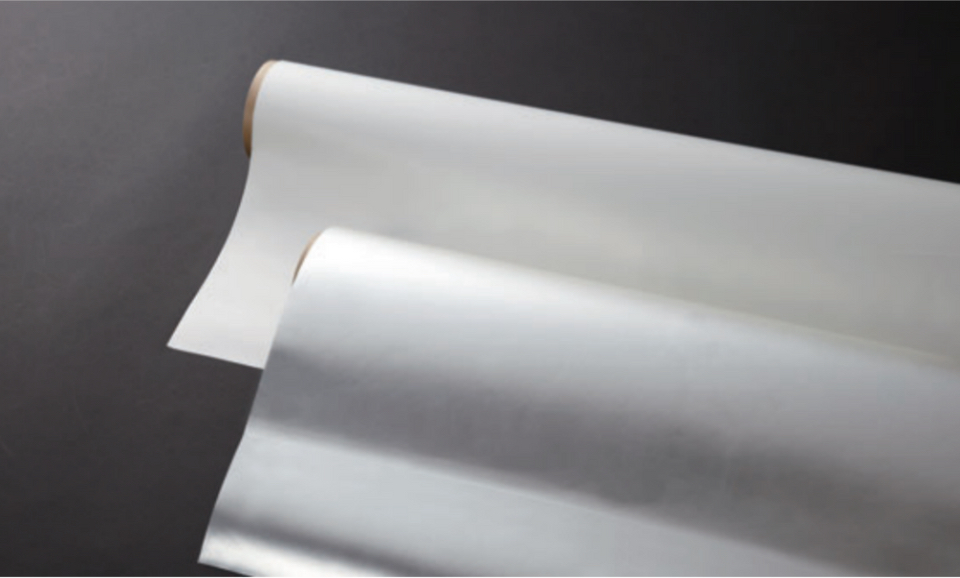
Spacecool material can be used as a film to apply to surfaces, or as a membrane material that can be sewn and processed into various forms.     Source: Spacecool Inc.

So far, Spacecool has only been available as a raw material, but the company is considering test sales of a parasol made from the material as an easy way for people to see how well it works.

Translation by Tony McNicol

Top page photo by spacecool

For inquiries about this article, please contact jstories@pacficbridge.jp


Click here for the Japanese version of the article.
Tags: Product designSocietySustainable designSustainable SocietyTechnology
Previous Post

Round-Up #52

Next Post

Allergy product not to be sneezed at

Ayaka Sagasaki

Ayaka Sagasaki

Related Posts

Clean Tech

Japanese startup turns eggshell waste into eco-friendly plastics and paper

by Yoshiko Ohira
02/06/2026
Earth

A world first: Detecting road sinkholes from space

by Ayaka Sagasaki
01/30/2026
AgriTech

Fish scraps as a hidden treasure

by Kei Mizuno
01/16/2026
AgriTech

Can a small robot save Japan’s terraced paddies?

by Yoshiko Ohira
11/28/2025
Clean Tech

From swordfish to blue jeans: How a Japanese craftsman turns waste into wear

by Yoshiko Ohira
11/07/2025
Next Post

Allergy product not to be sneezed at

Leave a Reply Cancel reply

Your email address will not be published. Required fields are marked *

Videos

Round-up Video #13

05/26/2022

Round-Up Video #34

11/17/2022

Round-up Video #25

09/01/2022

Browse by Tags

Ai Alternative Energy biotechnology Climate Change Community decarbonization Education Event Food foodtech Health Inclusion Infrastructure Innovation Interview J-Stories Japan Japan-Taiwan Innovation Summit Japan startups Japan Tech Labor Living Nature Podcast Recycling Refugees robotics Society Space Startup Startup Ecosystem Startups SusHI Tech Tokyo Sustainability Sustainable Society Taiwan Technology Tokyo Tokyo Innovation Base Tokyo Metropolitan Government Tokyo Updates venture capital video Wealth Zero Waste
JStories

©Articles and photos published on JSTORIES are protected by Japanese copyright law and international treaties. They cannot be reproduced without the permission of the copyright holders

Explore JStories

  • About Jstories
  • Company
  • Contact
  • Home
  • Partner Press Releases
  • Pricing
  • Privacy Policy
  • Team

Follow Us

Welcome Back!

Login to your account below

Forgotten Password?

Retrieve your password

Please enter your username or email address to reset your password.

Log In
No Result
View All Result
  • Home
  • AI
    • Artificial Intelligence
    • Robotics
    • Mobility
  • Earth
    • Energy
    • Climate Tech
    • AgriTech
    • Clean Tech
    • Disaster Tech
    • SpaceTech
  • Life Sciences
    • BioTech
    • HealthTech
    • MedTech
    • AgeTech
  • Society
    • Media
    • EdTech
    • Diversity
    • FemTech
    • HRTech
    • LegalTech
    • Social Impact
    • FinTech
    • Anime
  • Lifestyle
    • FoodTech
    • FashionTech
    • BeautyTech
    • Wellbeing
    • Art & Music
  • Travel
    • Adventure Travel
    • Luxury Travel
    • Wellness & Medical Tourism
    • Culture
  • Video
  • Deals
    • Venture Capital
    • M&A
    • Startup Events
    • Ecosystem Support
  • Interview
  • Opinion

©Articles and photos published on JSTORIES are protected by Japanese copyright law and international treaties. They cannot be reproduced without the permission of the copyright holders

Are you sure want to unlock this post?
Unlock left : 0
Are you sure want to cancel subscription?