• Login
Upgrade
JStories
  • 日本語
  • 中文 (中国)
No Result
View All Result
  • Home
  • AI
    • Artificial Intelligence
    • Robotics
    • Mobility
  • Earth
    • Energy
    • Climate Tech
    • AgriTech
    • Clean Tech
    • Disaster Tech
    • SpaceTech
  • Life Sciences
    • BioTech
    • HealthTech
    • MedTech
    • AgeTech
  • Society
    • Media
    • EdTech
    • Diversity
    • FemTech
    • HRTech
    • LegalTech
    • Social Impact
    • FinTech
    • Anime
  • Lifestyle
    • FoodTech
    • FashionTech
    • BeautyTech
    • Wellbeing
    • Art & Music
  • Travel
    • Adventure Travel
    • Luxury Travel
    • Wellness & Medical Tourism
    • Culture
  • Video
  • Deals
    • Venture Capital
    • M&A
    • Startup Events
    • Pitch
    • Ecosystem Support
  • Interview
  • Opinion
  • Home
  • AI
    • Artificial Intelligence
    • Robotics
    • Mobility
  • Earth
    • Energy
    • Climate Tech
    • AgriTech
    • Clean Tech
    • Disaster Tech
    • SpaceTech
  • Life Sciences
    • BioTech
    • HealthTech
    • MedTech
    • AgeTech
  • Society
    • Media
    • EdTech
    • Diversity
    • FemTech
    • HRTech
    • LegalTech
    • Social Impact
    • FinTech
    • Anime
  • Lifestyle
    • FoodTech
    • FashionTech
    • BeautyTech
    • Wellbeing
    • Art & Music
  • Travel
    • Adventure Travel
    • Luxury Travel
    • Wellness & Medical Tourism
    • Culture
  • Video
  • Deals
    • Venture Capital
    • M&A
    • Startup Events
    • Pitch
    • Ecosystem Support
  • Interview
  • Opinion
en English ja 日本語 zh 中文 (中国)
JStories
No Result
View All Result

3D-printing quality food for seniors

Emi Takahata by Emi Takahata
04/08/2022
in FoodTech, HealthTech, Life Sciences, Lifestyle, MedTech, Wellbeing
0
Home Lifestyle FoodTech
Share on FacebookShare on Twitter
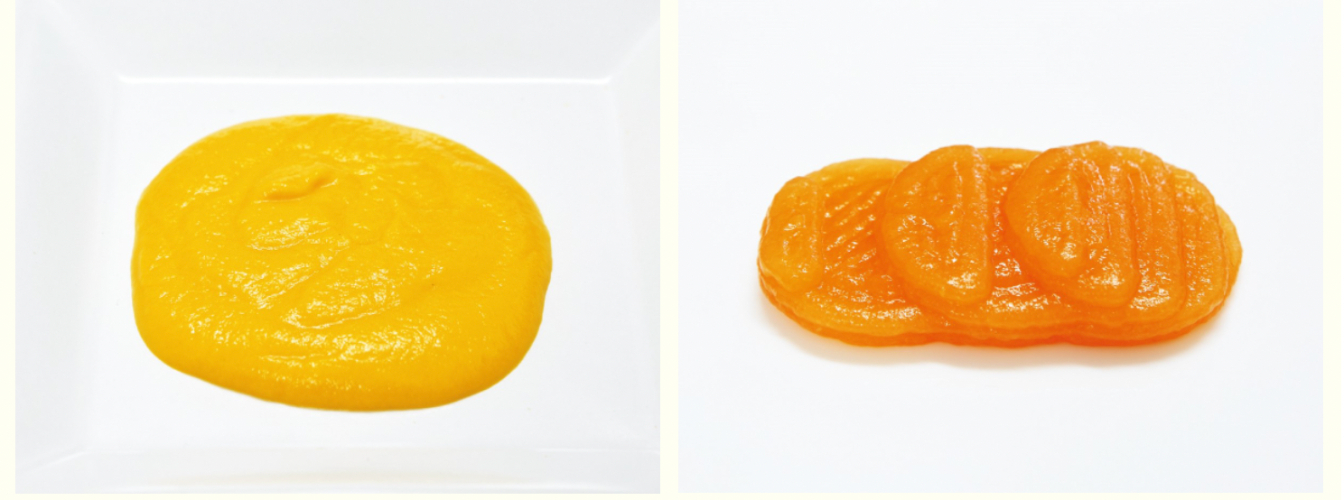
Conventional soft food for seniors (left) and an alternative produced with a food 3D printer.    Source: Yamagata University website

J-STORIES ー 3D printers are already widely used in model making and manufacturing. Now, researchers aim to use them in the food industry to create attractive and tasty food for seniors.

Soft food in various shapes for seniors can be produced from meat, fish, or vegetables paste, which is the “ink” for the printer. This has the twin benefits of allowing seniors, whose ability to chew and swallow food has become weaker, to continue enjoying meals, and lessening the burden of giving care.

Masaru Kawakami, an associate professor at Yamagata University, is working on the development of a 3D printer for food. While using 3D printers for research on proteins and other materials, he had the idea of making soft foods using vegetable, meat, and fish gels, then developed a 3D printer for food products together with a local company.
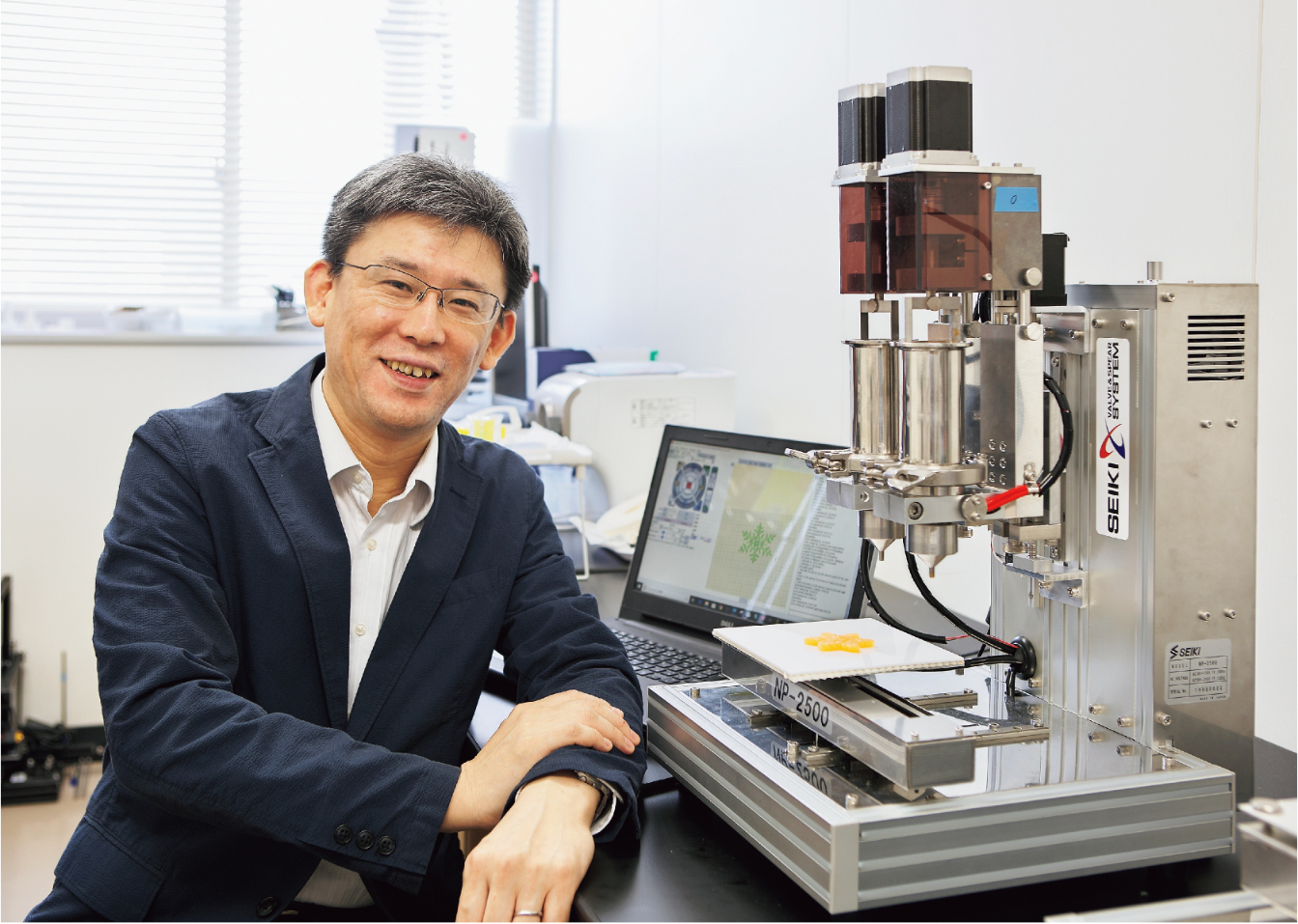
Yamagata University’s Masaru Kawakami says 3D printers could improve the quality of food for seniors and even for astronauts.    Source: Yamagata University website  

Many of the foods for seniors currently on the market lack taste and texture, so are far from fun to eat. With a food 3D printer, if personalized data such as preferred firmness is received beforehand, the machine can make perfect food for seniors. After inserting the food gel in the printer, the “cooking time” until the food is ready is around five minutes.

The food 3D printer doesn’t just help senior citizens; it provides value for the caregiving facilities that look after them too. According to Japan’s Ministry of Health, Labor and Welfare, as the population ages there will be a shortage of approximately 220,000 caregivers in fiscal 2023 and 690,000 in 2040. The burden on staff and facilities caring for elderly patients with problems of differing severity chewing or swallowing continues to increase.

Food 3D printers have not yet been commercialized, and issues remain before they can be put to practical use. As well as bringing the cost down, which is currently several million yen per custom-made unit, researchers need to develop a way to simplify the time-consuming process of preparing ingredients before they are poured into the machine.

“There is no need to particularly use a machine like a 3D printer to make delicious food already made by human hands,” he said in an online interview with J-Stories. “There is a need, however, for food 3D printers to produce better alternatives to current food for seniors and space food.”

Translation/Editing by Tony McNicol and Toshi Maeda

Top page photo credit: Yamagata University website

For inquires about this article, please contact us at jstories@pacificbridge.jp


Click here for the Japanese version of the article.
Tags: 3D3D Printer3DprinterFoodFood 3D PrinterFood PrinterFoodprinterJapanSeniors
Previous Post

Round-up Video #6

Next Post

Supporting Ukrainian refugees with employment

Emi Takahata

Emi Takahata

Related Posts

Starting a sustainable wood-fired bakery in Tokyo
FoodTech

Starting a sustainable wood-fired bakery in Tokyo

by Tokyo Updates
03/05/2026
HealthTech

Engineering safety from the ground up

by Tokyo Updates
02/13/2026
Lifestyle

The plush toy hospital keeping childhood memories alive

by Tokyo Updates
01/30/2026
Lifestyle

Lost item return rate triples: Tokyo startup envisions a world where nothing stays lost

by Tokyo Updates
01/23/2026
BioTech

Toward a targeted therapy with fewer side effects for chronic allergic eye disease

by Yoshiko Ohira
01/08/2026
Next Post

Supporting Ukrainian refugees with employment

Leave a Reply Cancel reply

Your email address will not be published. Required fields are marked *

Videos

Round-up Video #25

09/01/2022

Round-Up Video #38

12/15/2022

Round-Up Video #33

11/10/2022

Browse by Tags

Ai Alternative Energy biotechnology Climate Change Community decarbonization Education Event Food foodtech Health Inclusion Infrastructure Innovation Interview J-Stories Japan Japan-Taiwan Innovation Summit Japan startups Japan Tech Labor Living Nature Podcast Recycling Refugees robotics Society Space Startup Startup Ecosystem Startups SusHI Tech Tokyo Sustainability Sustainable Society Taiwan Technology Tokyo Tokyo Innovation Base Tokyo Metropolitan Government Tokyo Updates venture capital video Wealth Zero Waste
JStories

©Articles and photos published on JSTORIES are protected by Japanese copyright law and international treaties. They cannot be reproduced without the permission of the copyright holders

Explore JStories

  • About Jstories
  • Company
  • Contact
  • Home
  • Partner Press Releases
  • Pricing
  • Privacy Policy
  • Team

Follow Us

Welcome Back!

Login to your account below

Forgotten Password?

Retrieve your password

Please enter your username or email address to reset your password.

Log In
No Result
View All Result
  • Home
  • AI
    • Artificial Intelligence
    • Robotics
    • Mobility
  • Earth
    • Energy
    • Climate Tech
    • AgriTech
    • Clean Tech
    • Disaster Tech
    • SpaceTech
  • Life Sciences
    • BioTech
    • HealthTech
    • MedTech
    • AgeTech
  • Society
    • Media
    • EdTech
    • Diversity
    • FemTech
    • HRTech
    • LegalTech
    • Social Impact
    • FinTech
    • Anime
  • Lifestyle
    • FoodTech
    • FashionTech
    • BeautyTech
    • Wellbeing
    • Art & Music
  • Travel
    • Adventure Travel
    • Luxury Travel
    • Wellness & Medical Tourism
    • Culture
  • Video
  • Deals
    • Venture Capital
    • M&A
    • Startup Events
    • Ecosystem Support
  • Interview
  • Opinion

©Articles and photos published on JSTORIES are protected by Japanese copyright law and international treaties. They cannot be reproduced without the permission of the copyright holders

Are you sure want to unlock this post?
Unlock left : 0
Are you sure want to cancel subscription?