• Login
Upgrade
JStories
  • 日本語
  • 中文 (中国)
No Result
View All Result
  • Home
  • AI
    • Artificial Intelligence
    • Robotics
    • Mobility
  • Earth
    • Energy
    • Climate Tech
    • AgriTech
    • Clean Tech
    • Disaster Tech
    • SpaceTech
  • Life Sciences
    • BioTech
    • HealthTech
    • MedTech
    • AgeTech
  • Society
    • Media
    • EdTech
    • Diversity
    • FemTech
    • HRTech
    • LegalTech
    • Social Impact
    • FinTech
    • Anime
  • Lifestyle
    • FoodTech
    • FashionTech
    • BeautyTech
    • Wellbeing
    • Art & Music
  • Travel
    • Adventure Travel
    • Luxury Travel
    • Wellness & Medical Tourism
    • Culture
  • Video
  • Deals
    • Venture Capital
    • M&A
    • Startup Events
    • Pitch
    • Ecosystem Support
  • Interview
  • Opinion
  • Home
  • AI
    • Artificial Intelligence
    • Robotics
    • Mobility
  • Earth
    • Energy
    • Climate Tech
    • AgriTech
    • Clean Tech
    • Disaster Tech
    • SpaceTech
  • Life Sciences
    • BioTech
    • HealthTech
    • MedTech
    • AgeTech
  • Society
    • Media
    • EdTech
    • Diversity
    • FemTech
    • HRTech
    • LegalTech
    • Social Impact
    • FinTech
    • Anime
  • Lifestyle
    • FoodTech
    • FashionTech
    • BeautyTech
    • Wellbeing
    • Art & Music
  • Travel
    • Adventure Travel
    • Luxury Travel
    • Wellness & Medical Tourism
    • Culture
  • Video
  • Deals
    • Venture Capital
    • M&A
    • Startup Events
    • Pitch
    • Ecosystem Support
  • Interview
  • Opinion
en English ja 日本語 zh 中文 (中国)
JStories
No Result
View All Result

Sharing traditional Japan knowledge with the world

Yui Sawada by Yui Sawada
07/07/2022
in AgriTech, Clean Tech, Culture, Diversity, Earth, EdTech, Social Impact, Society, Travel
0
Home Earth AgriTech
Share on FacebookShare on Twitter

J-STORIES – There are many elements of traditional Japanese culture that might surprise non-Japanese nationals. For example, people in countries where fired brick has been used in construction for thousands of years might not know about Japan’s age-old practice of building walls from earthen plaster. Similarly, residents in countries where seaweed isn’t considered a foodstuff might be surprised to learn that seaweed is an integral part of Japanese cuisine.

The Tokyo-based company GEN Japan (Genuine Education Network Japan) is hoping to fill such information gaps, educating people from countries outside Japan about traditional Japanese culture while facilitating two-way cultural exchange.
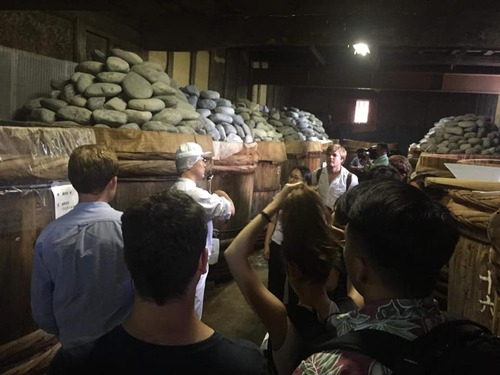
Participants in a GEN Japan program learn about traditional fermentation and preservation methods of such foodstuffs as soy sauce and miso.     Source: GEN Japan

To date, it has run more than 30 educational programs in the Japanese countryside, as well as in Italy, Spain and other countries. In those programs the company has looked at traditions relating to food, architecture, and interior design, while participants have included chefs, architects, designers, food researchers, and academics from over 30 different countries.
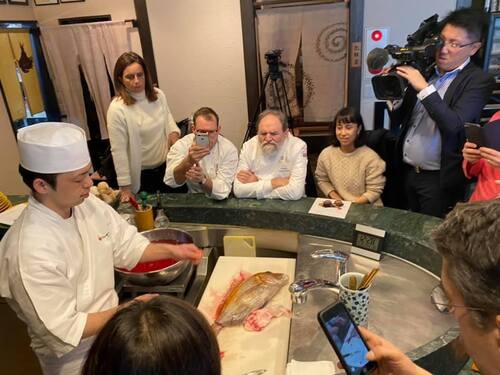
Participants in a GEN Japan program watch a demonstration of “ikijime,” a traditional fish preparation technique.      Source GEN Japan

Participants in domestic programs spend a week to 10 days in a Japanese locality. Their instructors and guides are bilingual experts in the local culture. As well as learning about the local culture and skills, participants discuss how they can apply this traditional Japanese knowledge in their own communities back home.

According to GEN Japan CEO and social entrepreneur Yukako Saito, not every topic automatically attracts interest. Sharing such traditional knowledge across national borders is difficult in some respects because of the barriers posed by the culture and customs of each country, she says.

“There are many things that are ignored in one country but are used a lot in another,” she says. “To take advantage of something that is ignored and underutilized in one region requires a considerable shift in perspective and thinking (in others), and that can only be done with inspiration.”

GEN Japan CEO Yukako Saito also heads GEN Italy, which shares traditional knowledge from Europe with Japan and other parts of the world.     Source: GEN Japan

Indeed, Saito believes traditional Japanese culture includes many elements that can help people overseas tap unused resources or develop new environmentally friendly technology.

An example is a project Saito is currently working on to develop a bio-toilet that uses traditional fermentation knowledge to turn bodily waste into fertilizer.

In this project, body waste and toilet paper are allowed to decompose through a process of “compound fermentation” in order to completely decompose the waste. And since nutrients such as nitrogen and phosphoric acid remain in the purified water that results from this process, it can be used for agriculture as liquid fertilizer. The liquid’s effectiveness in improving soil has already been demonstrated, and ultimately, the company hopes to produce water that has been purified to a drinkable level.

The bio-toilet project is run through an organization called Jinowa, which was set up by GEN Japan and is led by Saito.

According to the Jinowa website, soil health “is closely connected to plants, people and all life forms, and taking care of the soil also contributes significantly to people’s well-being.” Healthy and fertile soil also has the ability “to absorb and store the carbon dioxide present in the atmosphere,” making it a perfect decarbonation method, it adds.

The bio-toilet was designed by Tono Mirai, an architect internationally renowned for his use of earth.      Source: GEN Japan

A consortium of companies is involved in the project, including Matteo Brioni S.r.l., an Italian company that uses earth in interior design, and Souchikusya Inc., a Japanese company that specializes in traditional plaster walls. All the companies share a special interest in soil.

Also involved in the project are Ishizaka Inc., a company that has developed soil recycled from industrial waste materials, Tono Mirai Architects, a firm that specializes in sustainable buildings made with natural materials, and Terashima Kohmuten, which applies traditional shrine and temple architectural construction technology to residential housing.

The toilet was designed by Tono Mirai and constructed with recycled earth, including from buildings dismantled by Ishizaka Inc., a company known for its “zero waste” system. So, the toilet recycles building materials as well as bodily waste.

Project leader Yukako Saito says she set her sights on earth because of its crucial importance to the environment. The aim of the project is to increase the microorganisms in the soil while maintaining a good balance. Fertilizing the soil and circulating organic matter can strengthen the natural ability of the earth to repair itself.

The group plans to build a prototype Jinowa bio-toilet on land belonging to Ishizaka Inc. next March.

Translation and Editing by Tony McNicol

Top page photo by SeanPavone / Envato

For inquires about this article, please contact us at jstories@pacificbridge.jp


Click here for the Japanese version of the article.
Tags: Sustainability
Previous Post

Researchers coat robotic finger with self-healing skin

Next Post

Round-up Video #19

Yui Sawada

Yui Sawada

Related Posts

When digital and physical worlds meet – Interview with Yoichi Ochiai 何がすごい? 〜 現実とデジタルを融合する、落合陽一の世界
Video

When digital and physical worlds meet – Interview with Yoichi Ochiai 何がすごい? 〜 現実とデジタルを融合する、落合陽一の世界

by JStories_Admin
04/01/2026
Japan leads global collaboration to combat AI disinformation
AI

Japan leads global collaboration to combat AI disinformation

by Ayaka Sagasaki
03/16/2026
Clean Tech

Japanese startup turns eggshell waste into eco-friendly plastics and paper

by Yoshiko Ohira
02/06/2026
Anime

World-first “anime character-based therapy” trial to test effectiveness in Japanese young adults

by Lucas Maltzman
01/30/2026
Earth

A world first: Detecting road sinkholes from space

by Ayaka Sagasaki
01/30/2026
Next Post

Round-up Video #19

Leave a Reply Cancel reply

Your email address will not be published. Required fields are marked *

Videos

Round-Up Video #34

11/17/2022

Round-up Video #28

09/29/2022

Round-up Video #22

07/28/2022

Browse by Tags

Ai Alternative Energy biotechnology Climate Change Community decarbonization Education Event Food foodtech Health Inclusion Infrastructure Innovation Interview J-Stories Japan Japan-Taiwan Innovation Summit Japan startups Japan Tech Labor Living Nature Podcast Recycling Refugees robotics Society Space Startup Startup Ecosystem Startups SusHI Tech Tokyo Sustainability Sustainable Society Taiwan Technology Tokyo Tokyo Innovation Base Tokyo Metropolitan Government Tokyo Updates venture capital video Wealth Zero Waste
JStories

©Articles and photos published on JSTORIES are protected by Japanese copyright law and international treaties. They cannot be reproduced without the permission of the copyright holders

Explore JStories

  • About Jstories
  • Company
  • Contact
  • Home
  • Partner Press Releases
  • Pricing
  • Privacy Policy
  • Team

Follow Us

Welcome Back!

Login to your account below

Forgotten Password?

Retrieve your password

Please enter your username or email address to reset your password.

Log In
No Result
View All Result
  • Home
  • AI
    • Artificial Intelligence
    • Robotics
    • Mobility
  • Earth
    • Energy
    • Climate Tech
    • AgriTech
    • Clean Tech
    • Disaster Tech
    • SpaceTech
  • Life Sciences
    • BioTech
    • HealthTech
    • MedTech
    • AgeTech
  • Society
    • Media
    • EdTech
    • Diversity
    • FemTech
    • HRTech
    • LegalTech
    • Social Impact
    • FinTech
    • Anime
  • Lifestyle
    • FoodTech
    • FashionTech
    • BeautyTech
    • Wellbeing
    • Art & Music
  • Travel
    • Adventure Travel
    • Luxury Travel
    • Wellness & Medical Tourism
    • Culture
  • Video
  • Deals
    • Venture Capital
    • M&A
    • Startup Events
    • Ecosystem Support
  • Interview
  • Opinion

©Articles and photos published on JSTORIES are protected by Japanese copyright law and international treaties. They cannot be reproduced without the permission of the copyright holders

Are you sure want to unlock this post?
Unlock left : 0
Are you sure want to cancel subscription?