
• Login
Upgrade
JStories
  • 日本語
  • 中文 (中国)
No Result
View All Result
  • Home
  • AI
    • Artificial Intelligence
    • Robotics
    • Mobility
  • Earth
    • Energy
    • Climate Tech
    • AgriTech
    • Clean Tech
    • Disaster Tech
    • SpaceTech
  • Life Sciences
    • BioTech
    • HealthTech
    • MedTech
    • AgeTech
  • Society
    • Media
    • EdTech
    • Diversity
    • FemTech
    • HRTech
    • LegalTech
    • Social Impact
    • FinTech
    • Anime
  • Lifestyle
    • FoodTech
    • FashionTech
    • BeautyTech
    • Wellbeing
    • Art & Music
  • Travel
    • Adventure Travel
    • Luxury Travel
    • Wellness & Medical Tourism
    • Culture
  • Video
  • Deals
    • Venture Capital
    • M&A
    • Startup Events
    • Pitch
    • Ecosystem Support
  • Interview
  • Opinion
  • Home
  • AI
    • Artificial Intelligence
    • Robotics
    • Mobility
  • Earth
    • Energy
    • Climate Tech
    • AgriTech
    • Clean Tech
    • Disaster Tech
    • SpaceTech
  • Life Sciences
    • BioTech
    • HealthTech
    • MedTech
    • AgeTech
  • Society
    • Media
    • EdTech
    • Diversity
    • FemTech
    • HRTech
    • LegalTech
    • Social Impact
    • FinTech
    • Anime
  • Lifestyle
    • FoodTech
    • FashionTech
    • BeautyTech
    • Wellbeing
    • Art & Music
  • Travel
    • Adventure Travel
    • Luxury Travel
    • Wellness & Medical Tourism
    • Culture
  • Video
  • Deals
    • Venture Capital
    • M&A
    • Startup Events
    • Pitch
    • Ecosystem Support
  • Interview
  • Opinion
en English ja 日本語 zh 中文 (中国)
JStories
No Result
View All Result

Japan gets the bug for insect cuisine

Yui Sawada by Yui Sawada
07/13/2022
in AgriTech, Climate Tech, Earth, FoodTech, Lifestyle, Wellbeing
0
Home Earth AgriTech
Share on FacebookShare on Twitter

J-STORIES – Earlier this year, some Japanese students made an unusual lunchroom menu request: They wanted to eat insects.

Pretty soon, the canteen at Komatsushima Nishi High School on the southern island of Shikoku was serving “nikuman” dumplings featuring a nutritious, delicious and eco-friendly powder made from crickets.

The ingredient was developed by Gryllus, a local startup, and Takuma Kawahara, a public relations official for the company, told J-Stories that the children were interested in insects as an environmentally sustainable source of protein.

The company’s powdered cricket tastes similar to dried sardines or shrimp.      Source: Gryllus

Although many Japanese are still unfamiliar with entomophagy, or the consumption of insects, it is certainly not new to Japan. In fact, like some other Asian countries, Japan has a long history of eating bugs.

According to Tokyo-based Semitama, a startup that promotes regional economic development through edible insects, 55 types of insects were part of the Japanese diet as late as the 1960s. As the country modernized and its economy grew, however, international cuisine became increasingly popular, and the number of insects consumed shrank to just six by the mid-1980s.

But the potential for the environment is well established. Insect rearing consumes less feed and emits less carbon dioxide than raising cattle or pigs, and the United Nations’ Food and Agriculture Organization believes that expanding the use of entomophagy could lead to a solution to the world’s food problems.

And the world appears to be listening. According to the Economist, two billion people around the world “regularly” eat insects, and even nations that have traditionally shunned entomophagy have started to catch the bug bug.

Other reports show that protein- and fiber-rich insect products are being developed in some poorer parts of the world to relieve famine and aid recovery from illnesses, such as tuberculosis, in treatment centers that are sometimes unable to provide adequate nutrition to their patients.

Ironically, most people in Japan are still resistant to the idea of insect cuisine, Kawahara said, “[but] sometimes it starts with children and then parents become interested.” Kawahara expressed his hope that his company’s free donation to the Shikoku high school will encourage children to think together about social issues such as the environment.

Yet, it seems that a renewed interest in bug munching is starting to hatch here. Semitama reports that there are 42 locations in Japan with vending machines that sell edible insects.
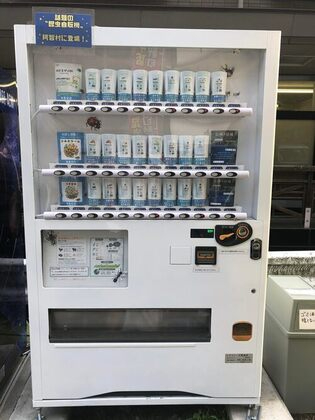
This vending machine in Nagano prefecture stocks packages of edible insects costing between 500 and 2,600 yen.      Source: Achi Hirugami Tourist Bureau, Nagano Prefecture

Two of them can be found at tourist sites in mountainous Nagano Prefecture, an area with a robust tradition of insect cuisine, including crickets, wasp larvae, and silkworm pupae.

One of them, the Achi Base tourist facility, offers 25 types of insect foods, while the “Tenku Minami-Shinshu Glamping” site sells 18 different types.

Operator, Asami Osawa, told the media that the vending machines are very popular, particularly for creepy-crawly delicacies such as chocolate-coated grasshoppers and apple cider made with extract of giant water bug. Some items have sold out in just a month
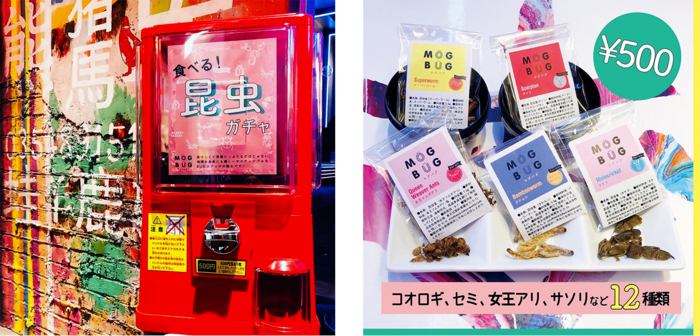
The capsule toy dispenser at Kome to Circus restaurant. As well as packets of insects, it sometimes dispenses a “lucky ticket” for cider infused with extract of giant water bug.      Source: Kome to Circus

Insects are also now available from the gacha capsule dispensers that usually contain toys.

Tokyo restaurant chain Kome to Circus has been serving insect cuisine since 2016, but in May, it set up gacha machines containing its own “Mogbug” brand of edible insects. Each capsule costs 500 yen and there are 12 varieties, including queen weaver ants, locusts and superworms.

Translation and Editing by Tony McNicol

Top page photo by jirkaejc / Envato

For inquires about this article, please contact us at jstories@pacificbridge.jp


Click here for the Japanese version of the article.

Tags: Altertanative FoodSustainabilitySustainable Society
Previous Post

Round-up Video #19

Next Post

Japan’s first virtual mall with a traditional touch

Yui Sawada

Yui Sawada

Related Posts

Starting a sustainable wood-fired bakery in Tokyo
FoodTech

Starting a sustainable wood-fired bakery in Tokyo

by Tokyo Updates
03/05/2026
Clean Tech

Japanese startup turns eggshell waste into eco-friendly plastics and paper

by Yoshiko Ohira
02/06/2026
Earth

A world first: Detecting road sinkholes from space

by Ayaka Sagasaki
01/30/2026
Lifestyle

The plush toy hospital keeping childhood memories alive

by Tokyo Updates
01/30/2026
Lifestyle

Lost item return rate triples: Tokyo startup envisions a world where nothing stays lost

by Tokyo Updates
01/23/2026
Next Post

Japan’s first virtual mall with a traditional touch

Leave a Reply Cancel reply

Your email address will not be published. Required fields are marked *

Videos

Round-up Video #27

09/22/2022

Round-up Video #21

07/21/2022

Round-Up Video #38

12/15/2022

Browse by Tags

Ai Alternative Energy biotechnology Climate Change Community decarbonization Education Event Food foodtech Health Inclusion Infrastructure Innovation Interview J-Stories Japan Japan-Taiwan Innovation Summit Japan startups Japan Tech Labor Living Nature Podcast Recycling Refugees robotics Society Space Startup Startup Ecosystem Startups SusHI Tech Tokyo Sustainability Sustainable Society Taiwan Technology Tokyo Tokyo Innovation Base Tokyo Metropolitan Government Tokyo Updates venture capital video Wealth Zero Waste
JStories

©Articles and photos published on JSTORIES are protected by Japanese copyright law and international treaties. They cannot be reproduced without the permission of the copyright holders

Explore JStories

  • About Jstories
  • Company
  • Contact
  • Home
  • Partner Press Releases
  • Pricing
  • Privacy Policy
  • Team

Follow Us

Welcome Back!

Login to your account below

Forgotten Password?

Retrieve your password

Please enter your username or email address to reset your password.

Log In
No Result
View All Result
  • Home
  • AI
    • Artificial Intelligence
    • Robotics
    • Mobility
  • Earth
    • Energy
    • Climate Tech
    • AgriTech
    • Clean Tech
    • Disaster Tech
    • SpaceTech
  • Life Sciences
    • BioTech
    • HealthTech
    • MedTech
    • AgeTech
  • Society
    • Media
    • EdTech
    • Diversity
    • FemTech
    • HRTech
    • LegalTech
    • Social Impact
    • FinTech
    • Anime
  • Lifestyle
    • FoodTech
    • FashionTech
    • BeautyTech
    • Wellbeing
    • Art & Music
  • Travel
    • Adventure Travel
    • Luxury Travel
    • Wellness & Medical Tourism
    • Culture
  • Video
  • Deals
    • Venture Capital
    • M&A
    • Startup Events
    • Ecosystem Support
  • Interview
  • Opinion

©Articles and photos published on JSTORIES are protected by Japanese copyright law and international treaties. They cannot be reproduced without the permission of the copyright holders

Are you sure want to unlock this post?
Unlock left : 0
Are you sure want to cancel subscription?