• Login
Upgrade
JStories
  • 日本語
  • 中文 (中国)
No Result
View All Result
  • Home
  • AI
    • Artificial Intelligence
    • Robotics
    • Mobility
  • Earth
    • Energy
    • Climate Tech
    • AgriTech
    • Clean Tech
    • Disaster Tech
    • SpaceTech
  • Life Sciences
    • BioTech
    • HealthTech
    • MedTech
    • AgeTech
  • Society
    • Media
    • EdTech
    • Diversity
    • FemTech
    • HRTech
    • LegalTech
    • Social Impact
    • FinTech
    • Anime
  • Lifestyle
    • FoodTech
    • FashionTech
    • BeautyTech
    • Wellbeing
    • Art & Music
  • Travel
    • Adventure Travel
    • Luxury Travel
    • Wellness & Medical Tourism
    • Culture
  • Video
  • Deals
    • Venture Capital
    • M&A
    • Startup Events
    • Pitch
    • Ecosystem Support
  • Interview
  • Opinion
  • Home
  • AI
    • Artificial Intelligence
    • Robotics
    • Mobility
  • Earth
    • Energy
    • Climate Tech
    • AgriTech
    • Clean Tech
    • Disaster Tech
    • SpaceTech
  • Life Sciences
    • BioTech
    • HealthTech
    • MedTech
    • AgeTech
  • Society
    • Media
    • EdTech
    • Diversity
    • FemTech
    • HRTech
    • LegalTech
    • Social Impact
    • FinTech
    • Anime
  • Lifestyle
    • FoodTech
    • FashionTech
    • BeautyTech
    • Wellbeing
    • Art & Music
  • Travel
    • Adventure Travel
    • Luxury Travel
    • Wellness & Medical Tourism
    • Culture
  • Video
  • Deals
    • Venture Capital
    • M&A
    • Startup Events
    • Pitch
    • Ecosystem Support
  • Interview
  • Opinion
en English ja 日本語 zh 中文 (中国)
JStories
No Result
View All Result

A ‘zero waste’ town deep in the Japanese mountains

Emi Takahata by Emi Takahata
06/22/2022
in Clean Tech, Culture, Earth, Energy, Social Impact, Society, Travel
0
Home Earth Clean Tech
Share on FacebookShare on Twitter

J-STORIES – The town of Kamikatsu, which is nestled deep in the mountains of the southern Japanese island of Shikoku, is home to around 1,500 people, many of them elderly. It is not, perhaps, the first place you’d expect to find world-leading environmental innovation.

But 20 years ago, Kamikatsu declared its intention to achieve “zero waste.” It now recycles over 80 percent of its garbage, helped by a facility where residents sort items into dozens of different categories. Yet, the town tirelessly battles on to achieve its waste-free goal.

The motivation for Kamikatsu’s declaration was actually lack of funds. Local residents and businesses had been burning garbage in the open air and causing pollution. But since the town couldn’t afford an incinerator to safely burn the waste, it decided to recycle its garbage instead.

First, residents were encouraged to start turning kitchen waste into compost. Soon, they moved on to recycling other items of everyday refuse, such as cans, glass, and PET bottles. As of 2022, residents sort their waste into 45 different varieties at the Kamikatsu Zero Waste Center.

Those who don’t have a car, or who are too elderly to bring their own garbage, are assisted by other residents. In this way, the initiative also helps strengthen community ties and systems of support.
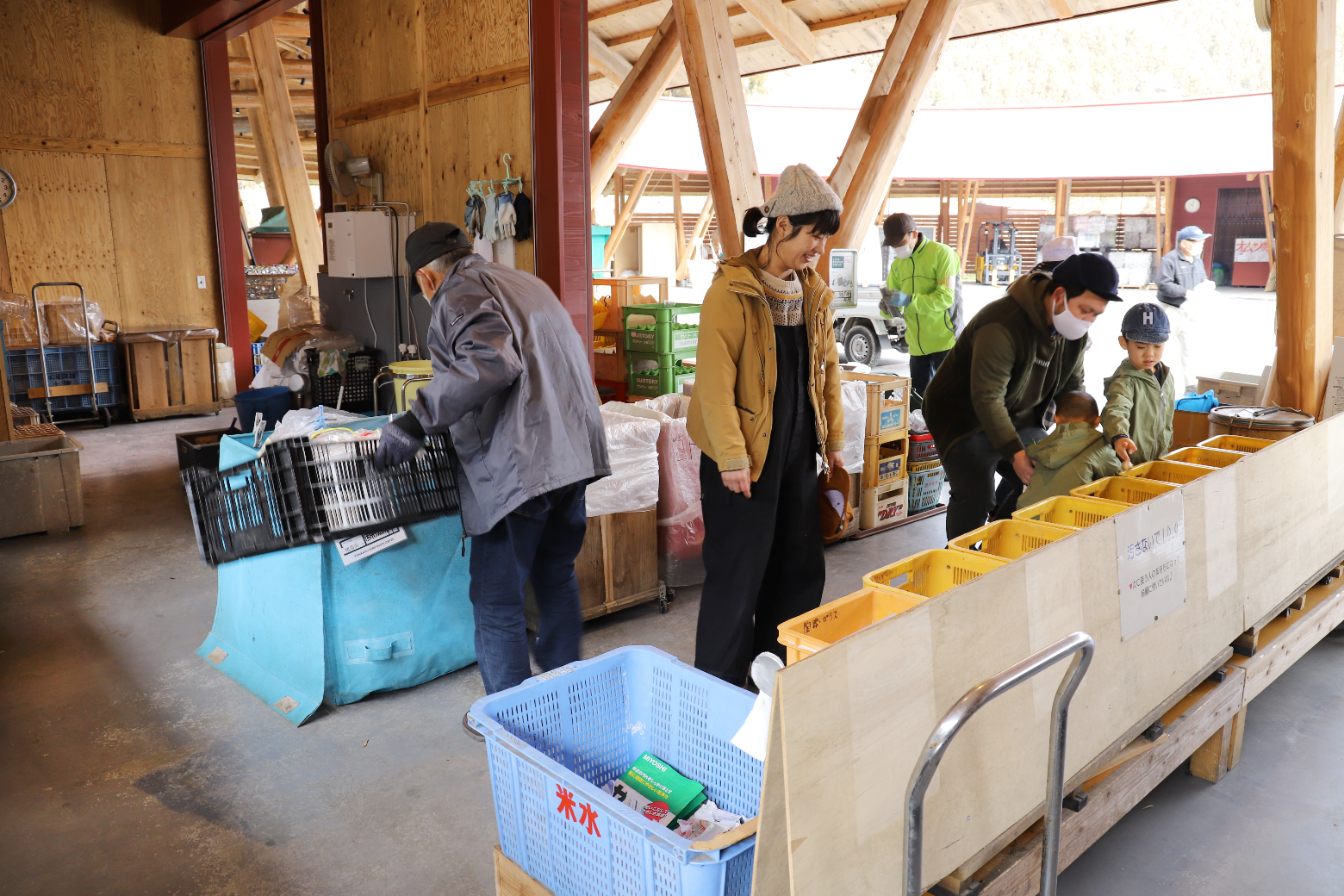
There are 13 main categories of waste and 45 subcategories.     Source: Kamikatsu Town

When it kicked off in 2003, Kamikatsu’s zero waste initiative was the first of its kind in Japan. This January, it won the Grand Prize (Prime Minister’s Prize) of the Japanese government’s Community Development Awards. It has also attracted international attention. In 2019, Akira Sakano, deputy chief officer of the Kamikatsu-based NPO, Zero Waste Academy, which is involved in the town’s efforts, was chosen as a co-chair at Davos 2019 (the meeting of the World Economic Forum).

Kamikatsu is also using its zero waste fame to promote ecotourism. Visitors to the town can buy unpackaged food, as well as beer made from citrus fruit that would otherwise go to waste. They can also stay in hot spas heated by biomass energy.

The town’s recycling center is built in the curved shape of a question mark, with an adjoining hotel serving as the dot. Guests can pop out to learn about the town’s efforts firsthand. The hotel itself is eco-friendly, shunning items often found in Japanese hotels, such as borrowable pajamas, or disposable toothbrushes.
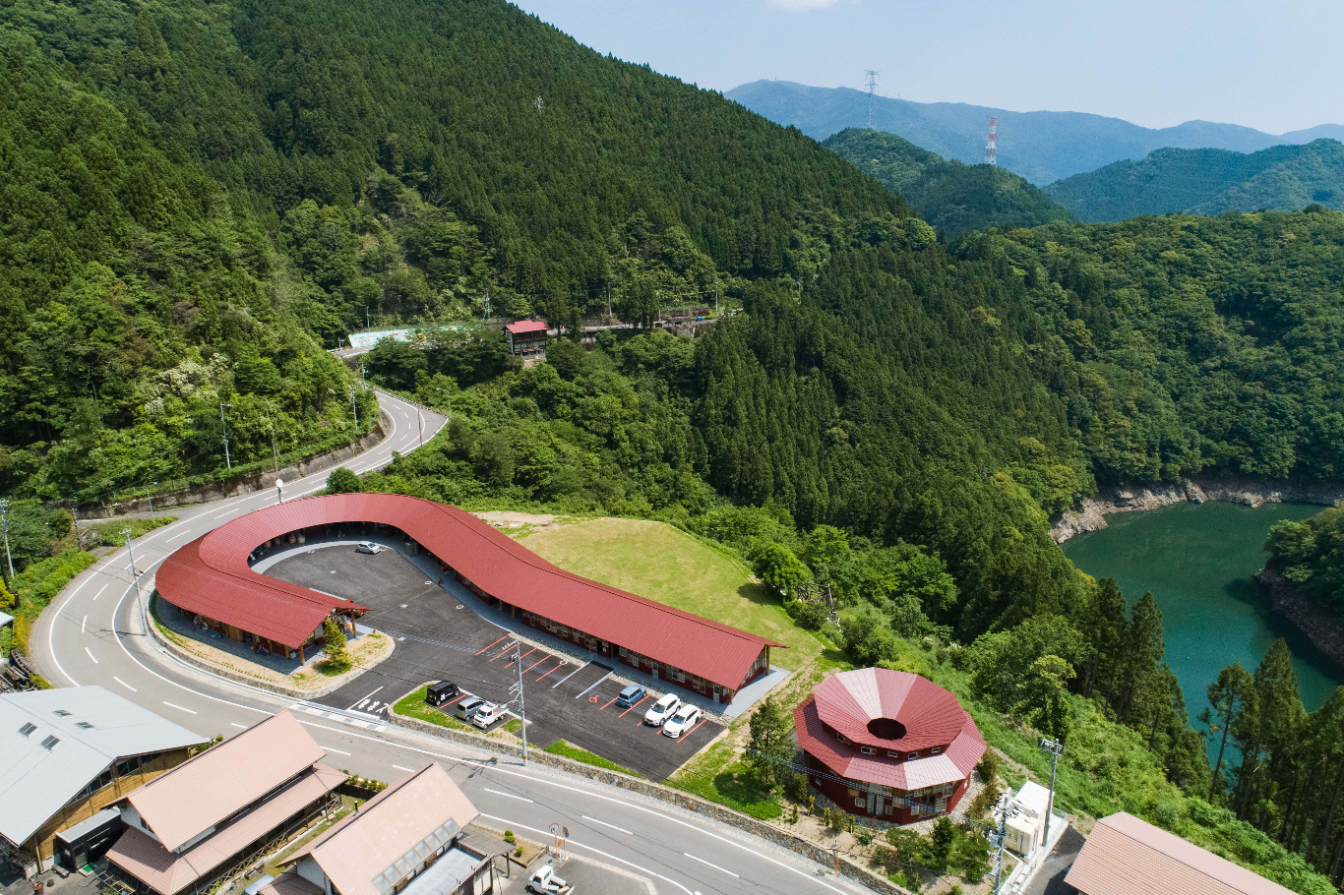
The question-mark shape of the zero waste facility and hotel invites people to rethink their consumption habits.     Source: Kamikatsu Town

Women and young people play a prominent role in Kamikatsu’s activities. Four of the town’s “Zero Waste Advocates,” who are leaders of its recycling work, are women. Meanwhile, many young people have moved to Kamikatsu from urban areas, attracted by its recycling efforts.

One of those advocates, Sonoe Fujii, told J-Stories that she expects these idealistic young people to play a greater role in the town’s future efforts. But she also pointed out that if the complicated recycling process doesn’t help the local economy, it will just be seen as a burden.

For that reason, almost 10 years ago the town launched a system of recycling “points” that residents can exchange for products. The town is also working hard to educate children about its key goal of reducing waste to zero by 2030.
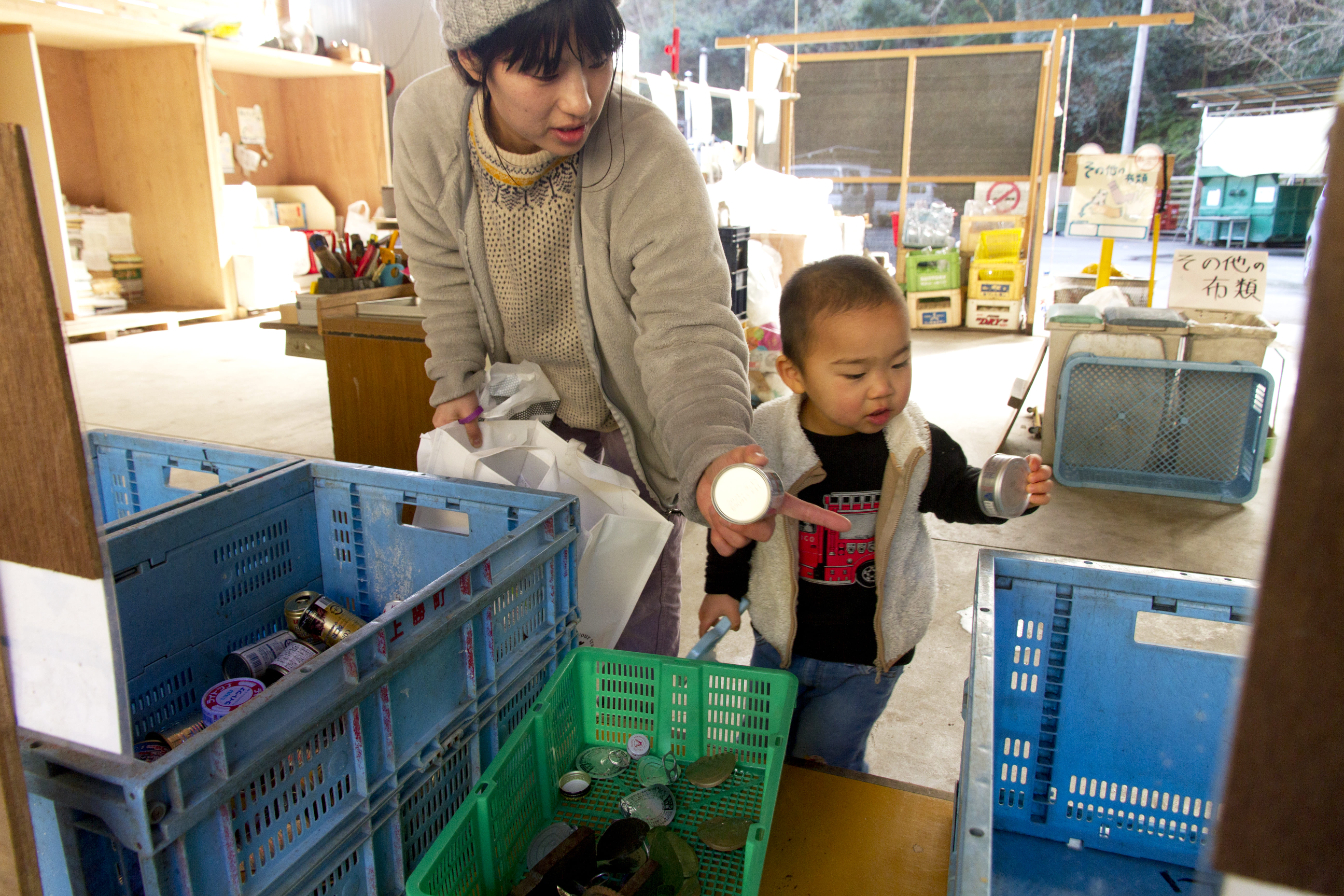
Kamikatsu wants children to learn not only about recycling, but how not to produce waste in the first place.     Source Kamikatsu Town

However, eliminating waste completely will be difficult for the town to achieve by itself, and this is one reason for the town extending its original goal of zero waste by 2020. There is still waste that is prohibitively expensive to recycle because it contains multiple materials, such as frying pan lids or vacuum flasks. The town tries to reuse such items, but nonetheless they have a finite lifespan and break eventually.

Fujii pointed out that Japanese society as a whole needs to deal with such issues. It has to focus on educating children on how to share things, as well as not produce garbage in the first place, she said. And despite the hurdles, the town remains determined to achieve its goal.

“Recycling is an extremely important thing, but that in itself won’t solve the problem of garbage.”

Translation and Editing by Tony McNicol

Top page photo by Kamikatsu Town

For inquiries regarding this article, please contact jstories@pacificbridge.jp.


Click here for the Japanese version of the article.
Tags: EducationRecyclingZero Waste
Previous Post

Turning bone china into fertilizer

Next Post

Round-up Video #17

Emi Takahata

Emi Takahata

Related Posts

When digital and physical worlds meet – Interview with Yoichi Ochiai 何がすごい? 〜 現実とデジタルを融合する、落合陽一の世界
Video

When digital and physical worlds meet – Interview with Yoichi Ochiai 何がすごい? 〜 現実とデジタルを融合する、落合陽一の世界

by JStories_Admin
04/01/2026
Japan leads global collaboration to combat AI disinformation
AI

Japan leads global collaboration to combat AI disinformation

by Ayaka Sagasaki
03/16/2026
Clean Tech

Japanese startup turns eggshell waste into eco-friendly plastics and paper

by Yoshiko Ohira
02/06/2026
Anime

World-first “anime character-based therapy” trial to test effectiveness in Japanese young adults

by Lucas Maltzman
01/30/2026
Earth

A world first: Detecting road sinkholes from space

by Ayaka Sagasaki
01/30/2026
Next Post

Round-up Video #17

Leave a Reply Cancel reply

Your email address will not be published. Required fields are marked *

Videos

Round-up Video #13

05/26/2022

Round-up Video #23

08/04/2022

Round-up Video #27

09/22/2022

Browse by Tags

Ai Alternative Energy biotechnology Climate Change Community decarbonization Education Event Food foodtech Health Inclusion Infrastructure Innovation Interview J-Stories Japan Japan-Taiwan Innovation Summit Japan startups Japan Tech Labor Living Nature Podcast Recycling Refugees robotics Society Space Startup Startup Ecosystem Startups SusHI Tech Tokyo Sustainability Sustainable Society Taiwan Technology Tokyo Tokyo Innovation Base Tokyo Metropolitan Government Tokyo Updates venture capital video Wealth Zero Waste
JStories

©Articles and photos published on JSTORIES are protected by Japanese copyright law and international treaties. They cannot be reproduced without the permission of the copyright holders

Explore JStories

  • About Jstories
  • Company
  • Contact
  • Home
  • Partner Press Releases
  • Pricing
  • Privacy Policy
  • Team

Follow Us

Welcome Back!

Login to your account below

Forgotten Password?

Retrieve your password

Please enter your username or email address to reset your password.

Log In
No Result
View All Result
  • Home
  • AI
    • Artificial Intelligence
    • Robotics
    • Mobility
  • Earth
    • Energy
    • Climate Tech
    • AgriTech
    • Clean Tech
    • Disaster Tech
    • SpaceTech
  • Life Sciences
    • BioTech
    • HealthTech
    • MedTech
    • AgeTech
  • Society
    • Media
    • EdTech
    • Diversity
    • FemTech
    • HRTech
    • LegalTech
    • Social Impact
    • FinTech
    • Anime
  • Lifestyle
    • FoodTech
    • FashionTech
    • BeautyTech
    • Wellbeing
    • Art & Music
  • Travel
    • Adventure Travel
    • Luxury Travel
    • Wellness & Medical Tourism
    • Culture
  • Video
  • Deals
    • Venture Capital
    • M&A
    • Startup Events
    • Ecosystem Support
  • Interview
  • Opinion

©Articles and photos published on JSTORIES are protected by Japanese copyright law and international treaties. They cannot be reproduced without the permission of the copyright holders

Are you sure want to unlock this post?
Unlock left : 0
Are you sure want to cancel subscription?