• Login
Upgrade
JStories
  • 日本語
  • 中文 (中国)
No Result
View All Result
  • Home
  • AI
    • Artificial Intelligence
    • Robotics
    • Mobility
  • Earth
    • Energy
    • Climate Tech
    • AgriTech
    • Clean Tech
    • Disaster Tech
    • SpaceTech
  • Life Sciences
    • BioTech
    • HealthTech
    • MedTech
    • AgeTech
  • Society
    • Media
    • EdTech
    • Diversity
    • FemTech
    • HRTech
    • LegalTech
    • Social Impact
    • FinTech
    • Anime
  • Lifestyle
    • FoodTech
    • FashionTech
    • BeautyTech
    • Wellbeing
    • Art & Music
  • Travel
    • Adventure Travel
    • Luxury Travel
    • Wellness & Medical Tourism
    • Culture
  • Video
  • Deals
    • Venture Capital
    • M&A
    • Startup Events
    • Pitch
    • Ecosystem Support
  • Interview
  • Opinion
  • Home
  • AI
    • Artificial Intelligence
    • Robotics
    • Mobility
  • Earth
    • Energy
    • Climate Tech
    • AgriTech
    • Clean Tech
    • Disaster Tech
    • SpaceTech
  • Life Sciences
    • BioTech
    • HealthTech
    • MedTech
    • AgeTech
  • Society
    • Media
    • EdTech
    • Diversity
    • FemTech
    • HRTech
    • LegalTech
    • Social Impact
    • FinTech
    • Anime
  • Lifestyle
    • FoodTech
    • FashionTech
    • BeautyTech
    • Wellbeing
    • Art & Music
  • Travel
    • Adventure Travel
    • Luxury Travel
    • Wellness & Medical Tourism
    • Culture
  • Video
  • Deals
    • Venture Capital
    • M&A
    • Startup Events
    • Pitch
    • Ecosystem Support
  • Interview
  • Opinion
en English ja 日本語 zh 中文 (中国)
JStories
No Result
View All Result

The Future of Biomass Plastics : From Rice to Plastic

Takanori Isshiki by Takanori Isshiki
11/10/2023
in AgriTech, Clean Tech, Climate Tech, Earth
0
Home Earth AgriTech
Share on FacebookShare on Twitter

J-STORIES – Traditional plastics made from oil are being replaced by “biomass plastics” created from renewable resources like plants. Biomass plastics are eco-friendly alternatives to petroleum-based plastics. They don’t deplete resources and help decrease CO2 emissions. They’re expected to be the future of environmentally-friendly plastics.

Sugarcane and corn are often used to make biomass plastics, but a Japanese company has created a special plastic from rice, a staple food for the Japanese, and is working to boost rice production while helping society.
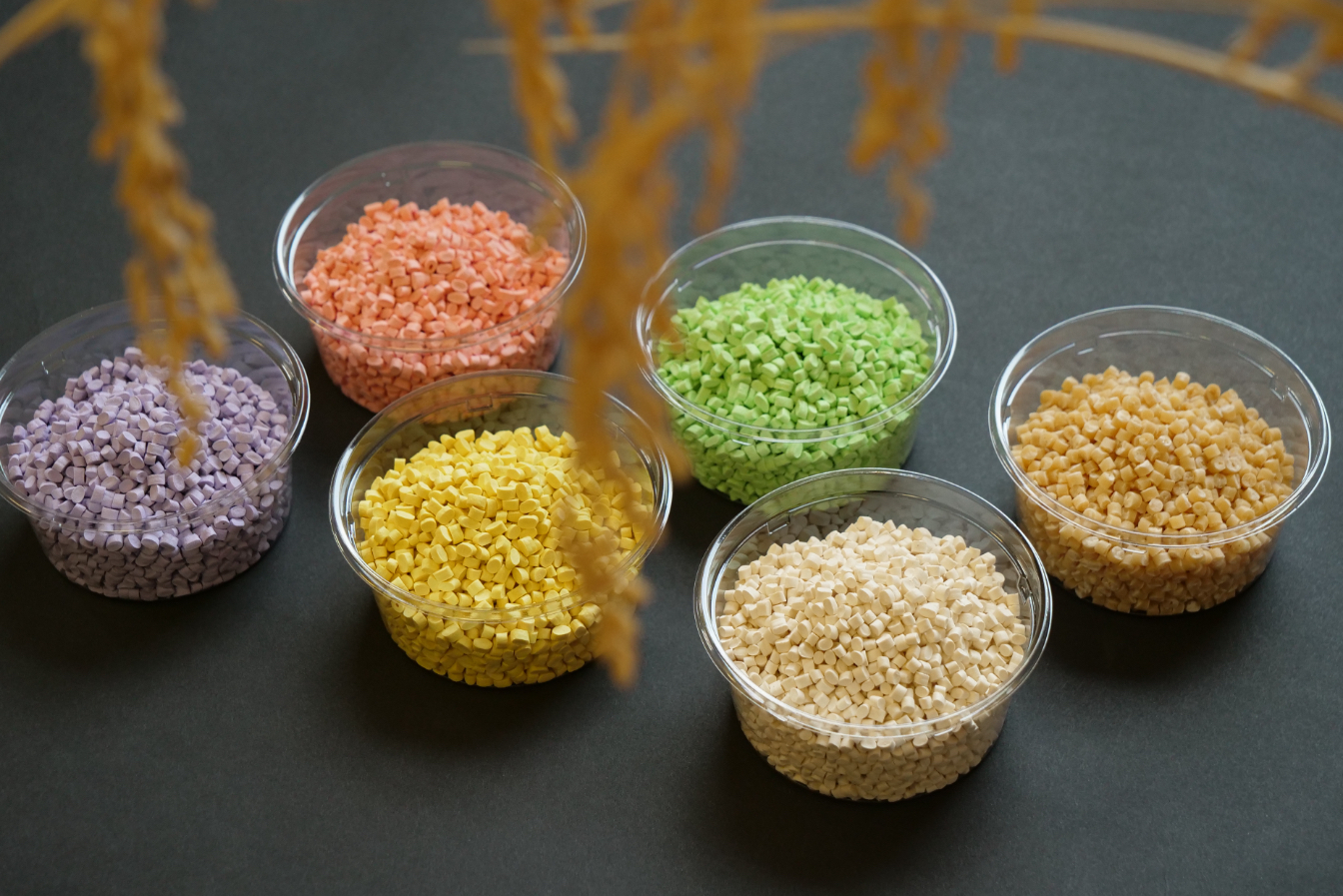
Colorfully made rice resin.     Source: Biomass Resin Holdings

Biomass Resin Holdings is a start-up company, founded by ex-trading company worker Kazuhito Kamiya. While employed by a food trading company, Kamiya went to the United States to witness a major grain company innovate by making bioplastic from corn. Upon seeing this, he came up with the idea to create a similar business of producing bioplastic, called “rice resin,” by using rice from Japan.
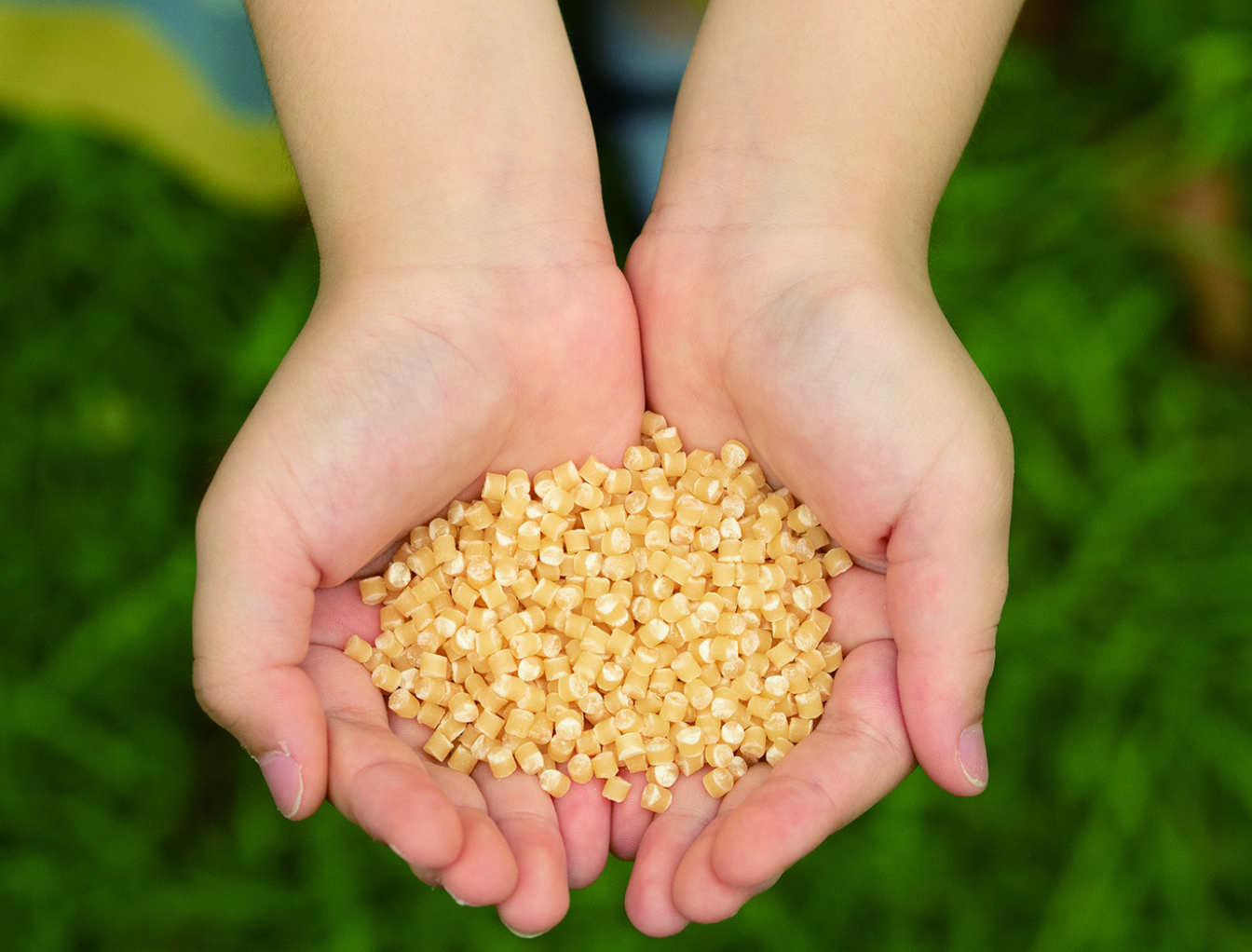
Rice Resin.     Source: Biomass Resin Holdings

Kamiya wants to help society and the environment by making recycled products from rice that would otherwise be wasted. To do this, he uses old, crushed, and other excess rice to create his biomass products. However, when he started his previous company in 2007, although the technology was highly regarded, there was still little market demand for environmentally friendly products, and the business was not stable, and he remembers losing heart every three years.

After that, he actively collaborated with people involved in other industries, including rice farmers and plastic molding manufacturers, and worked hard to come up with ideas to keep the business going.
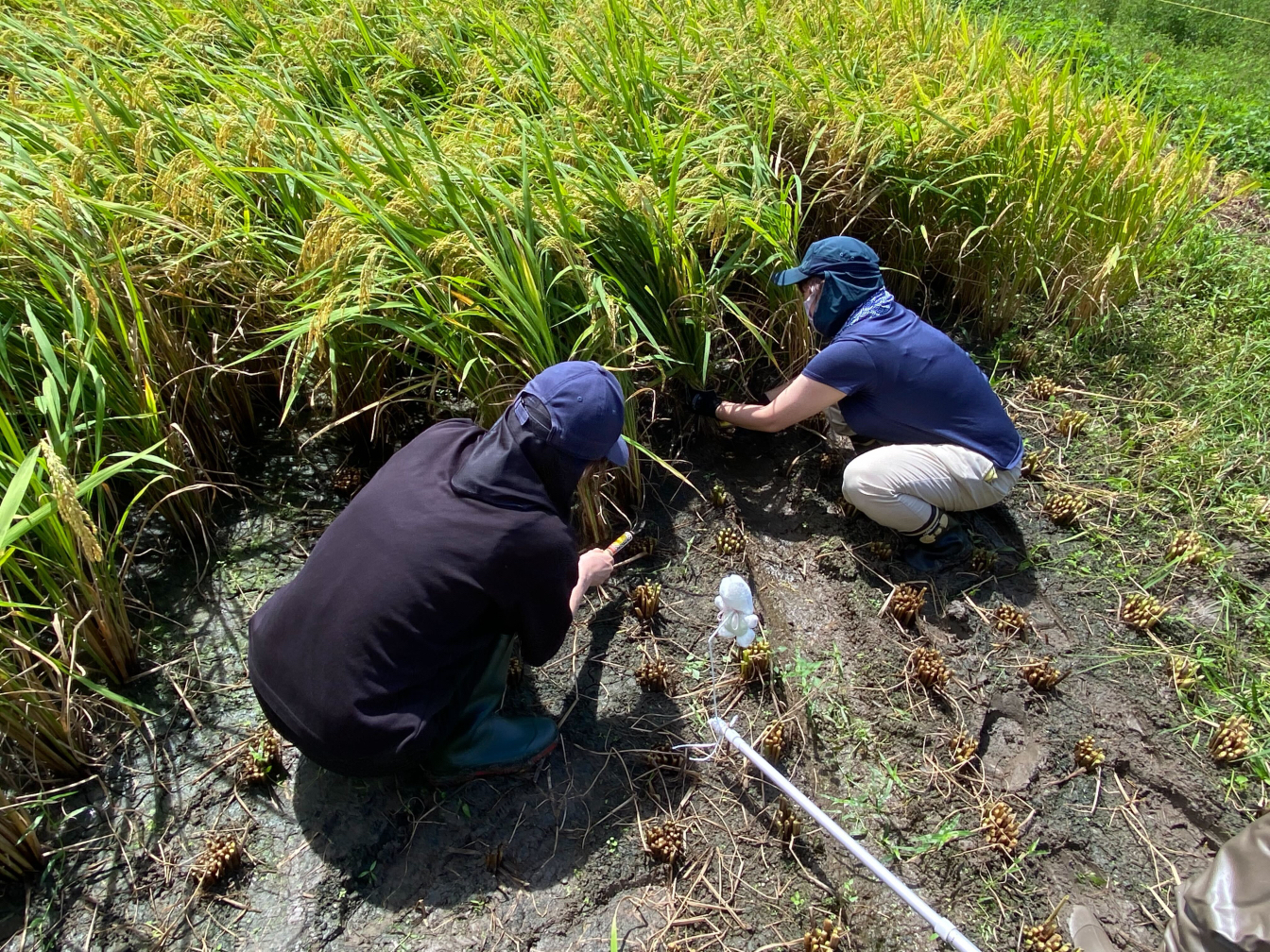
Rice as a source of biomass resin.     Source: Biomass Resin Holdings

“While older farmers are facing challenges, more young people are interested in becoming farmers. My goal is to develop a modern agricultural business model that will empower the next generation of farmers to revitalize agriculture.” said Kamiya.

As a first step in 2017, he established a plant, Biomass Resin Minami Uonuma, in Niigata that uses locally-sourced wasted rice to produce biomass resin.

The biomass plastic is made with up to 70% rice and has less petroleum-based plastic. It is comparable in cost, moldability, and strength to regular plastics. The company’s products are used in a variety of applications, including plastic bags, trash bags, disposable tableware, baby toys, toiletries, and cosmetic bottles.

Tableware and other utensils “Hoari” (left) Toys made from rice resin “OKOMEIRO” (right).    Source: Biomass Resin Holdings

In 2021, the company also formed a business alliance with MITSUI&CO.PLASTICS LTD.

to expand its sales channels. The number of cases of use in restaurants is increasing, with YOSHINOYA CO.,LTD., a popular beef bowl restaurant in Japan, introducing some rice resin plastic shopping bags, as well as the popular hamburger restaurant MOS BURGER which is introducing forks and spoons.
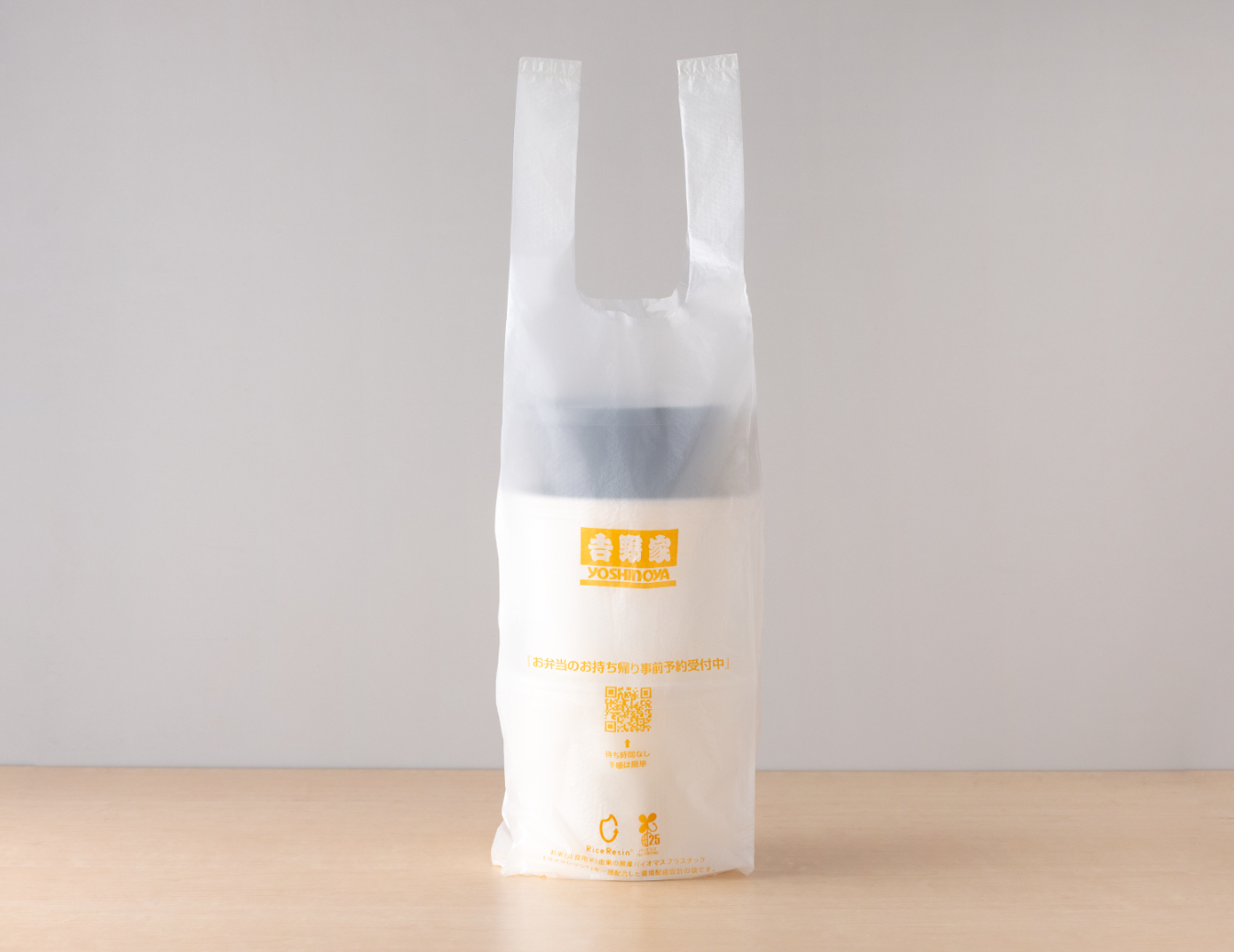
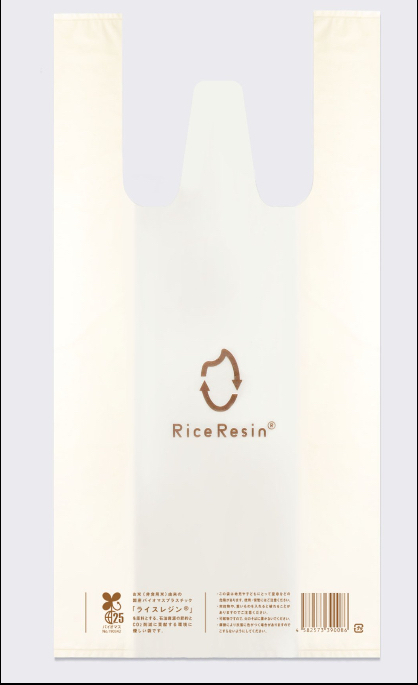
Yoshinoya’s plastic takeout bags containing the biomass plastic “Rice Resin®”.     Source: Yoshinoya
Rice Resin Garbage Bags.     Source: Biomass Resin Holdings

Meanwhile, the company is not only reusing discarded rice, but has also begun to expand production of rice as a raw material as part of its efforts to revitalize local communities. In Namie Town, Fukushima Prefecture, a production plant using such industrial rice was completed and started operation last year.

This year, the company is studying implementation as a business partner with about 20 locations nationwide, including JA Higashikawa in Hokkaido and MOS Farm Kumamoto, and plans to expand its plantings to 300 hectares within three years, utilizing abandoned rice fields and other land throughout Japan.

Biomass Resin Fukushima Plant.     Source: Biomass Resin Holdings

In April 2023, KOBAORI Co.,LTD., a manufacturer of subsidiary materials, adopted the company’s plastic as a raw material for “rice leather,” one of their plant-derived leather products. FUMIKODA, an environmentally friendly bag brand, has now started using the company’s rice leather as one of the raw materials for a new line of wallets.

Rice leather wallet.     Source: Biomass Resin Holdings

The Japanese government, under the leadership of the Ministry of the Environment and others, plans to use about 2 million tons of biomass plastic by 2030 in order to promote a decarbonization policy.

The company is developing eco-friendly plastics that can be broken down by microorganisms into carbon dioxide and water. They’ve partnered with Kyoto University to create “Neoryza,” a biodegradable plastic made from rice. They’re also exploring other biodegradable plastic options. The company has established bases in Thailand and Vietnam, and plans to expand internationally, mainly in Asia and Africa.

“Biodegradable plastics will play a leading role in regions with high expectations for waste disposal issues. We hope that locally produced rice will be an approach to solving the garbage problem,” said Kamiya.

Translated by Tony McNicol

Proofreading by Ridley Coyte

Top page photo provided by Biomass Resin Holdings

For inquiries about this article, please contact jstories@pacificbridge.jp


Click here for the Japanese version of the article

Tags: ecologygreenJapanRicerice fields
Previous Post

Eco-friendly next-generation laundromat that doesn’t use detergent

Next Post

One-of-a-kind marriage certificates strengthen marital bond

Takanori Isshiki

Takanori Isshiki

Related Posts

Clean Tech

Japanese startup turns eggshell waste into eco-friendly plastics and paper

by Yoshiko Ohira
02/06/2026
Earth

A world first: Detecting road sinkholes from space

by Ayaka Sagasaki
01/30/2026
AgriTech

Fish scraps as a hidden treasure

by Kei Mizuno
01/16/2026
AgriTech

Can a small robot save Japan’s terraced paddies?

by Yoshiko Ohira
11/28/2025
Clean Tech

From swordfish to blue jeans: How a Japanese craftsman turns waste into wear

by Yoshiko Ohira
11/07/2025
Next Post

One-of-a-kind marriage certificates strengthen marital bond

Leave a Reply Cancel reply

Your email address will not be published. Required fields are marked *

Videos

Round-up Video #28

09/29/2022

Round-up Video #27

09/22/2022

INTERVIEW | Taking action for peace

11/30/2022

Browse by Tags

Ai Alternative Energy biotechnology Climate Change Community decarbonization Education Event Food foodtech Health Inclusion Infrastructure Innovation Interview J-Stories Japan Japan-Taiwan Innovation Summit Japan startups Japan Tech Labor Living Nature Podcast Recycling Refugees robotics Society Space Startup Startup Ecosystem Startups SusHI Tech Tokyo Sustainability Sustainable Society Taiwan Technology Tokyo Tokyo Innovation Base Tokyo Metropolitan Government Tokyo Updates venture capital video Wealth Zero Waste
JStories

©Articles and photos published on JSTORIES are protected by Japanese copyright law and international treaties. They cannot be reproduced without the permission of the copyright holders

Explore JStories

  • About Jstories
  • Company
  • Contact
  • Home
  • Partner Press Releases
  • Pricing
  • Privacy Policy
  • Team

Follow Us

Welcome Back!

Login to your account below

Forgotten Password?

Retrieve your password

Please enter your username or email address to reset your password.

Log In
No Result
View All Result
  • Home
  • AI
    • Artificial Intelligence
    • Robotics
    • Mobility
  • Earth
    • Energy
    • Climate Tech
    • AgriTech
    • Clean Tech
    • Disaster Tech
    • SpaceTech
  • Life Sciences
    • BioTech
    • HealthTech
    • MedTech
    • AgeTech
  • Society
    • Media
    • EdTech
    • Diversity
    • FemTech
    • HRTech
    • LegalTech
    • Social Impact
    • FinTech
    • Anime
  • Lifestyle
    • FoodTech
    • FashionTech
    • BeautyTech
    • Wellbeing
    • Art & Music
  • Travel
    • Adventure Travel
    • Luxury Travel
    • Wellness & Medical Tourism
    • Culture
  • Video
  • Deals
    • Venture Capital
    • M&A
    • Startup Events
    • Ecosystem Support
  • Interview
  • Opinion

©Articles and photos published on JSTORIES are protected by Japanese copyright law and international treaties. They cannot be reproduced without the permission of the copyright holders

Are you sure want to unlock this post?
Unlock left : 0
Are you sure want to cancel subscription?