• Login
Upgrade
JStories
  • 日本語
  • 中文 (中国)
No Result
View All Result
  • Home
  • AI
    • Artificial Intelligence
    • Robotics
    • Mobility
  • Earth
    • Energy
    • Climate Tech
    • AgriTech
    • Clean Tech
    • Disaster Tech
    • SpaceTech
  • Life Sciences
    • BioTech
    • HealthTech
    • MedTech
    • AgeTech
  • Society
    • Media
    • EdTech
    • Diversity
    • FemTech
    • HRTech
    • LegalTech
    • Social Impact
    • FinTech
    • Anime
  • Lifestyle
    • FoodTech
    • FashionTech
    • BeautyTech
    • Wellbeing
    • Art & Music
  • Travel
    • Adventure Travel
    • Luxury Travel
    • Wellness & Medical Tourism
    • Culture
  • Video
  • Deals
    • Venture Capital
    • M&A
    • Startup Events
    • Pitch
    • Ecosystem Support
  • Interview
  • Opinion
  • Home
  • AI
    • Artificial Intelligence
    • Robotics
    • Mobility
  • Earth
    • Energy
    • Climate Tech
    • AgriTech
    • Clean Tech
    • Disaster Tech
    • SpaceTech
  • Life Sciences
    • BioTech
    • HealthTech
    • MedTech
    • AgeTech
  • Society
    • Media
    • EdTech
    • Diversity
    • FemTech
    • HRTech
    • LegalTech
    • Social Impact
    • FinTech
    • Anime
  • Lifestyle
    • FoodTech
    • FashionTech
    • BeautyTech
    • Wellbeing
    • Art & Music
  • Travel
    • Adventure Travel
    • Luxury Travel
    • Wellness & Medical Tourism
    • Culture
  • Video
  • Deals
    • Venture Capital
    • M&A
    • Startup Events
    • Pitch
    • Ecosystem Support
  • Interview
  • Opinion
en English ja 日本語 zh 中文 (中国)
JStories
No Result
View All Result

Perfect e-fit

Yoshiko Ohira by Yoshiko Ohira
12/29/2023
in AI, HealthTech, Life Sciences, Media, MedTech, Mobility, Social Impact, Society
0
Home AI
Share on FacebookShare on Twitter

J-STORIES – Late last year, visitors to the Maker Faire Tokyo took note of a very harmonious piece of fabric. Called “Nuno,” the e-textile had a unique feature: It could be played just like a keyboard, with even the lightest touch emitting an array of synthesized notes.

The Nuno e-textile sensor kit appeared in an exhibition space at the event called “Smart Clothing Lab,” where a range of wearable devices was on display, including underwear with wearable biometric tracking tech.

They are all part of a rapidly growing “smart clothing” market that has been estimated to reach US$5.3 billion by 2024 — an almost threefold increase over 2019 ($1.9 billion). Other estimates show it will expand more than four times that over the next decade, hitting $22 billion by 2032.

Among the companies looking to tap into this market is the Tokyo-based startup Hap, which is developing technology related to the “smart city” concept, where life in urban conurbations is made easier through digital networks. For example, clothes with conductive fibers might contain electrocardiograms and other sensors that could enable measurement and analysis of data such as heart rate and brain waves. This could then be transmitted to online medical services.

Hap also hopes to develop functional fabric with conductive fibers that can be controlled by smartphone to adjust temperature, humidity, and airflow. And it is even looking at textiles that could be used to heat and freeze foodstuffs.

And while many examples of wearable tech on the market today look to tap into the ever-expanding sport and fitness boom, others have a more practical outlook centered around fabrics themselves.

Hap’s research into high-tech apparel began in 2013 with the use of photocatalysts and other substances to improve the practical function of clothes. For example, by applying the company’s Coveross technology, clothes can be made more resistant to sweat stains and less likely to retain odors. Anti-stain treatment, meanwhile, enables stubborn stains to be washed out with just water.

Other functions include antiviral properties, UV-protection, heat blocking, cooling, and preventing annoyances such as sticking, becoming see-through, static electricity, and pilling. As of today, the company has developed over 30 treatments for new or used clothes made from natural or artificial fabrics.
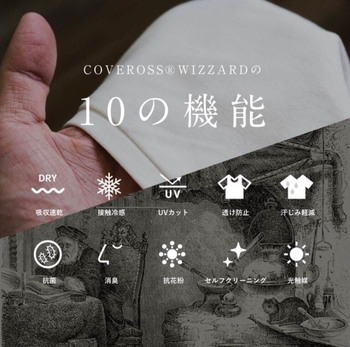
Treatments are applied to the fabric, providing functionality uniformly through the garment.     Source: Hap

Normally, adding such functions to fabric requires large quantities of gluelike “binders” that stiffen fabric and reduce air permeability. But the company has minimized binder use by developing a photocatalytic treatment process that relies on ion bonding. This makes possible fabrics that retain their feel to wear, but also have excellent breathability and stand up to repeated washing.

Hap CEO Moto Suzuki told J-Stories: “We got here by pursuing comfort in everyday clothing. Through the evolution of technology, there are endless possibilities for the clothes that people across the world wear day by day.”
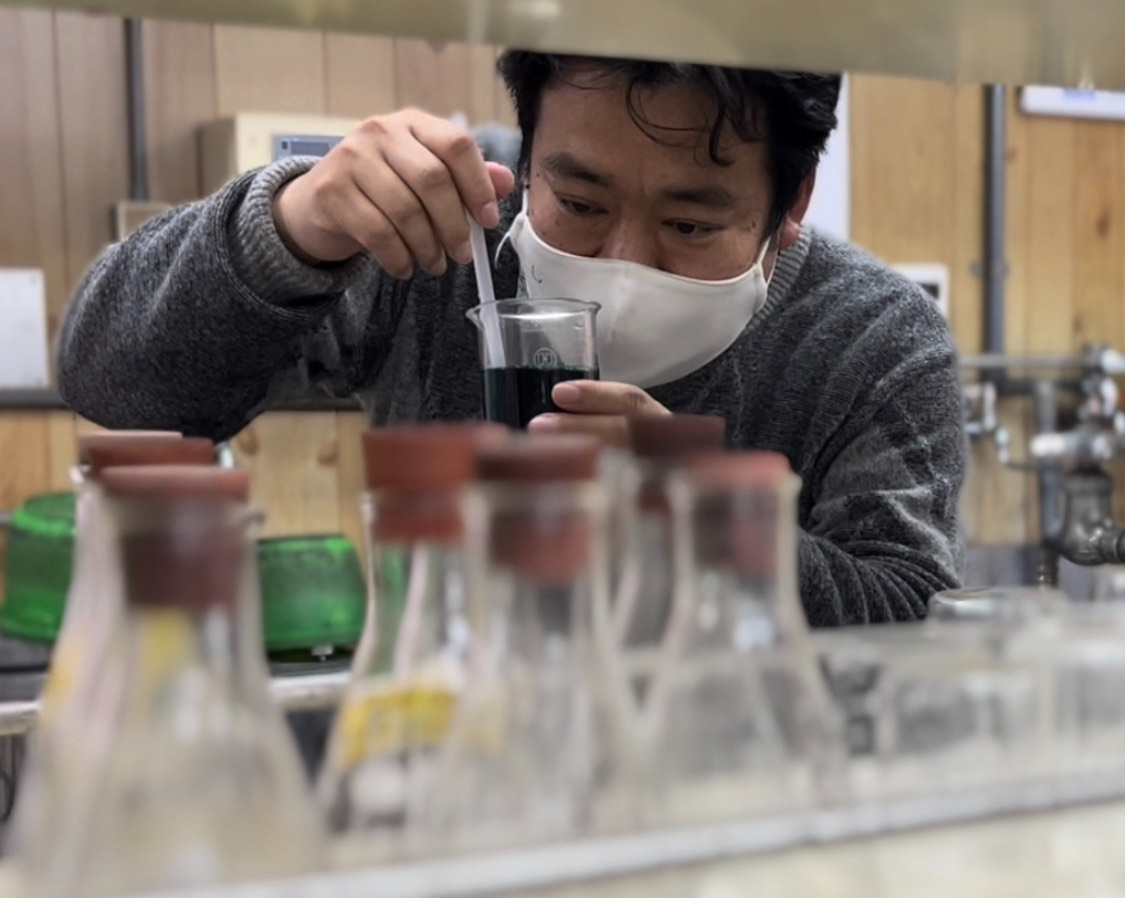
Hap CEO Moto Suzuki researching apparel treatments.     Source: Hap

Indeed, Hap is just one of a number of Japanese companies exploring those possibilities. Another is Teijin Ltd., which has developed a jacket that can simulate the sense of touch in virtual reality, while Toray Industries‘ “Hitoe” conductive fabric has been approved for medical use.

Toray’s fabric is made from ultrafine threads that fit closely to the skin, enabling it to accurately monitor “biosignals,” weak electrical signals from the heart. This is particularly useful for those suffering from heart conditions such as atrial fibrillation (or “a-fib”), an irregular and often very rapid heart rhythm that elevates the risk of a stroke, or heart attack.

Since 2019, Hap, too, has been looking into “wellness” garments, teaming up with the faculty of textile science and technology at Shinshu University to develop smart clothes that can assist the immune system, promote relaxation, and improve sleep.

Meanwhile, in response to more people working from home, they are developing clothing that can help regulate wearers’ minds and bodies.
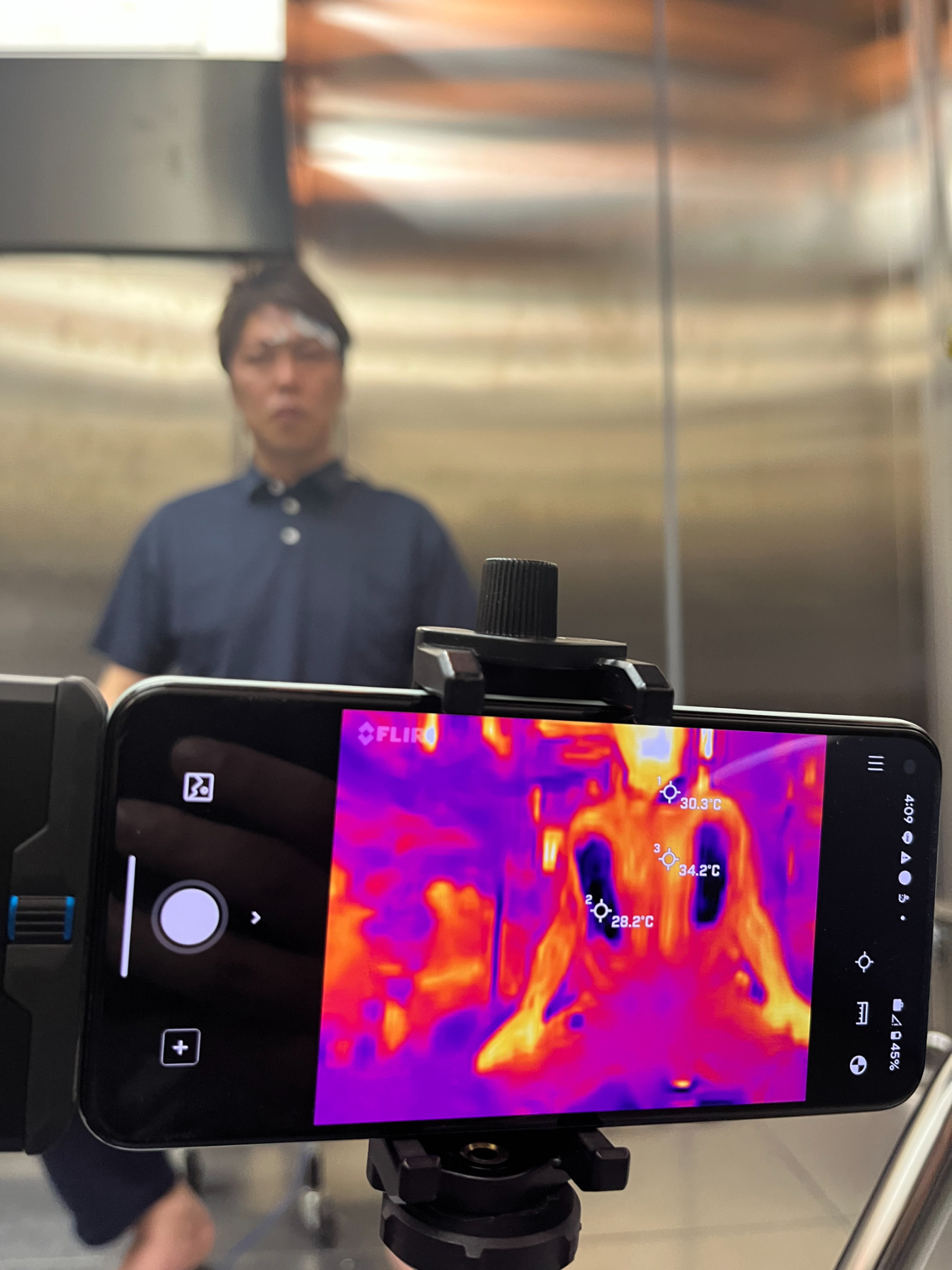
Clothes made of fabric containing conductive fibers could be controlled to heat or cool specific parts of the body.     Source: Hap

The environment also stands to gain. Other clothing developed by the company can be comfortably worn even when the temperature changes, helping reduce carbon emissions from heating and air conditioning. The company will also start a recycling service in which local authorities collect used clothes so that they can be repaired and worn again.

“In the future, instead of choosing clothes to suit the temperature, clothes themselves will be able to change their temperature to suit the weather,” said Suzuki.

Translation by Tony McNicol

Top page photo by myjuly/Envato

For inquiries about this article, please contact us at jstories@pacificbridge.jp


Click here for the Japanese version of the article.

Tags: Atrial FibrillationBiosignalsCircular FashionCoverossDigital HealthHap Inc.Haptic TechnologyJapan TechMaker Faire TokyoNuno E-textilePhotocatalystSmart CitySmart Clothing LabTeijinToray HitoeWearable Tech
Previous Post

Organic power packs

Next Post

Breathing new life into old wood

Yoshiko Ohira

Yoshiko Ohira

Related Posts

Japan leads global collaboration to combat AI disinformation
AI

Japan leads global collaboration to combat AI disinformation

by Ayaka Sagasaki
03/16/2026
HealthTech

Engineering safety from the ground up

by Tokyo Updates
02/13/2026
Anime

World-first “anime character-based therapy” trial to test effectiveness in Japanese young adults

by Lucas Maltzman
01/30/2026
Social Impact

From a childhood shaped by conflict to an investor bridging Japan and the world

by Ayaka Sagasaki
01/23/2026
BioTech

Toward a targeted therapy with fewer side effects for chronic allergic eye disease

by Yoshiko Ohira
01/08/2026
Next Post

Researchers produce baby mice from the cells of two male parents

Leave a Reply Cancel reply

Your email address will not be published. Required fields are marked *

Videos

Round-up Video #23

08/04/2022

Round-up Video #21

07/21/2022

Round-Up Video #30

10/13/2022

Browse by Tags

Ai Alternative Energy biotechnology Climate Change Community decarbonization Education Event Food foodtech Health Inclusion Infrastructure Innovation Interview J-Stories Japan Japan-Taiwan Innovation Summit Japan startups Japan Tech Labor Living Nature Podcast Recycling Refugees robotics Society Space Startup Startup Ecosystem Startups SusHI Tech Tokyo Sustainability Sustainable Society Taiwan Technology Tokyo Tokyo Innovation Base Tokyo Metropolitan Government Tokyo Updates venture capital video Wealth Zero Waste
JStories

©Articles and photos published on JSTORIES are protected by Japanese copyright law and international treaties. They cannot be reproduced without the permission of the copyright holders

Explore JStories

  • About Jstories
  • Company
  • Contact
  • Home
  • Partner Press Releases
  • Pricing
  • Privacy Policy
  • Team

Follow Us

Welcome Back!

Login to your account below

Forgotten Password?

Retrieve your password

Please enter your username or email address to reset your password.

Log In
No Result
View All Result
  • Home
  • AI
    • Artificial Intelligence
    • Robotics
    • Mobility
  • Earth
    • Energy
    • Climate Tech
    • AgriTech
    • Clean Tech
    • Disaster Tech
    • SpaceTech
  • Life Sciences
    • BioTech
    • HealthTech
    • MedTech
    • AgeTech
  • Society
    • Media
    • EdTech
    • Diversity
    • FemTech
    • HRTech
    • LegalTech
    • Social Impact
    • FinTech
    • Anime
  • Lifestyle
    • FoodTech
    • FashionTech
    • BeautyTech
    • Wellbeing
    • Art & Music
  • Travel
    • Adventure Travel
    • Luxury Travel
    • Wellness & Medical Tourism
    • Culture
  • Video
  • Deals
    • Venture Capital
    • M&A
    • Startup Events
    • Ecosystem Support
  • Interview
  • Opinion

©Articles and photos published on JSTORIES are protected by Japanese copyright law and international treaties. They cannot be reproduced without the permission of the copyright holders

Are you sure want to unlock this post?
Unlock left : 0
Are you sure want to cancel subscription?