

J-STORIES – The global movement toward decarbonization is gaining momentum year by year. At COP28 (the 28th Conference of the Parties to the United Nations Framework Convention on Climate Change), held in Dubai, United Arab Emirates from the end of November to December 12 , 2023, 118 countries worldwide agreed to pledge to triple their renewable energy capacity by 2030.
Among renewable energy sources, hydrogen energy produced from renewable resources, known as “green hydrogen,” is attracting attention as a promising next-generation energy source that can help ensure a stable power supply in addition to contributing to decarbonization due to its high storage capacity.
Amidst these circumstances, in November prior to the conference, Tokyo Governor Yuriko Koike hosted the international conference “HENCA Tokyo 2023” in Tokyo , showcasing the city’s pioneering efforts in city-wide hydrogen utilization.
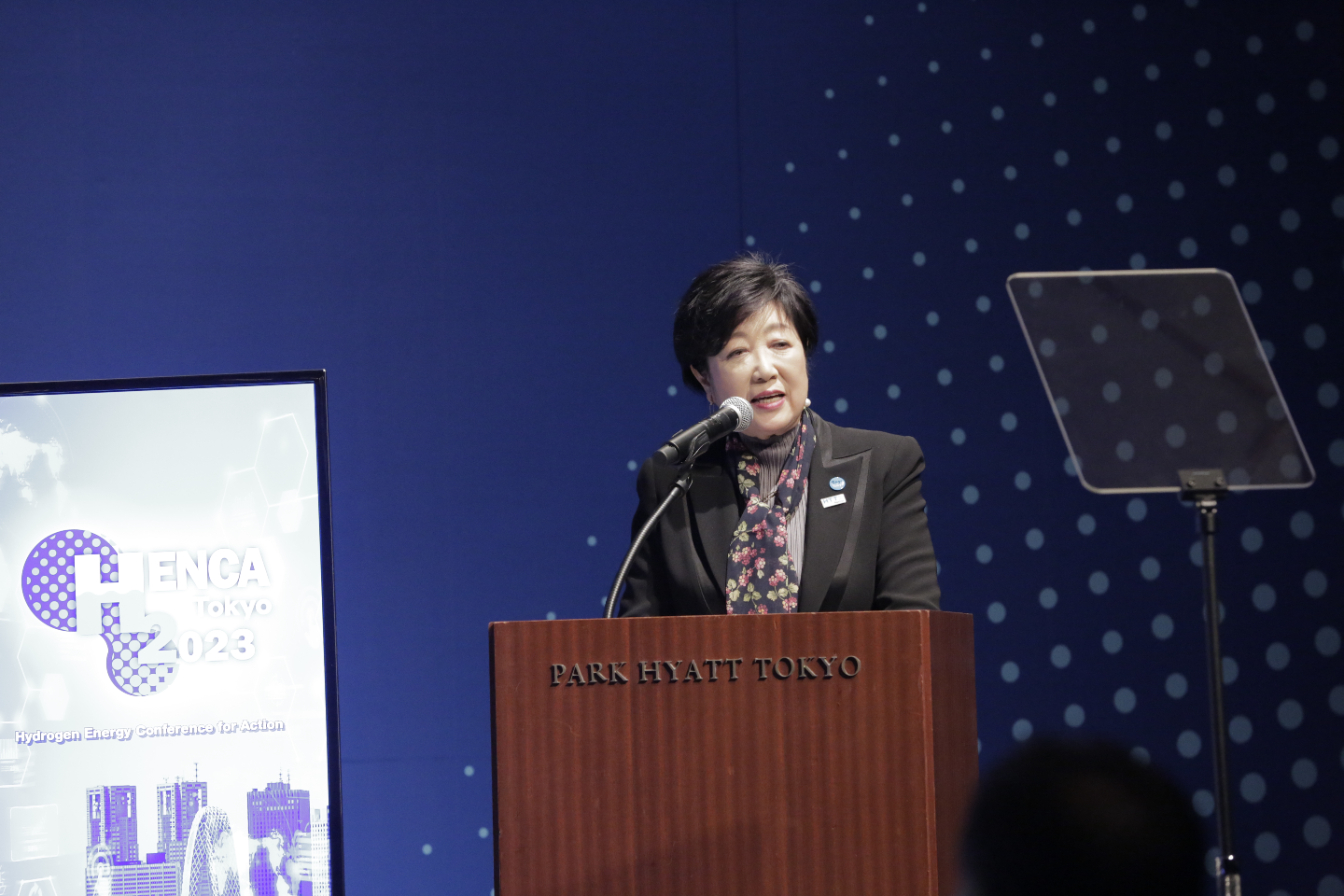
Governor Koike took the stage at the beginning of the meeting and declared that the Harumi district on the Tokyo Bay waterfront will be reborn as a world-first hydrogen town in the spring of next year (2024), stating, “This will demonstrate to the world a new model for utilizing hydrogen energy.”
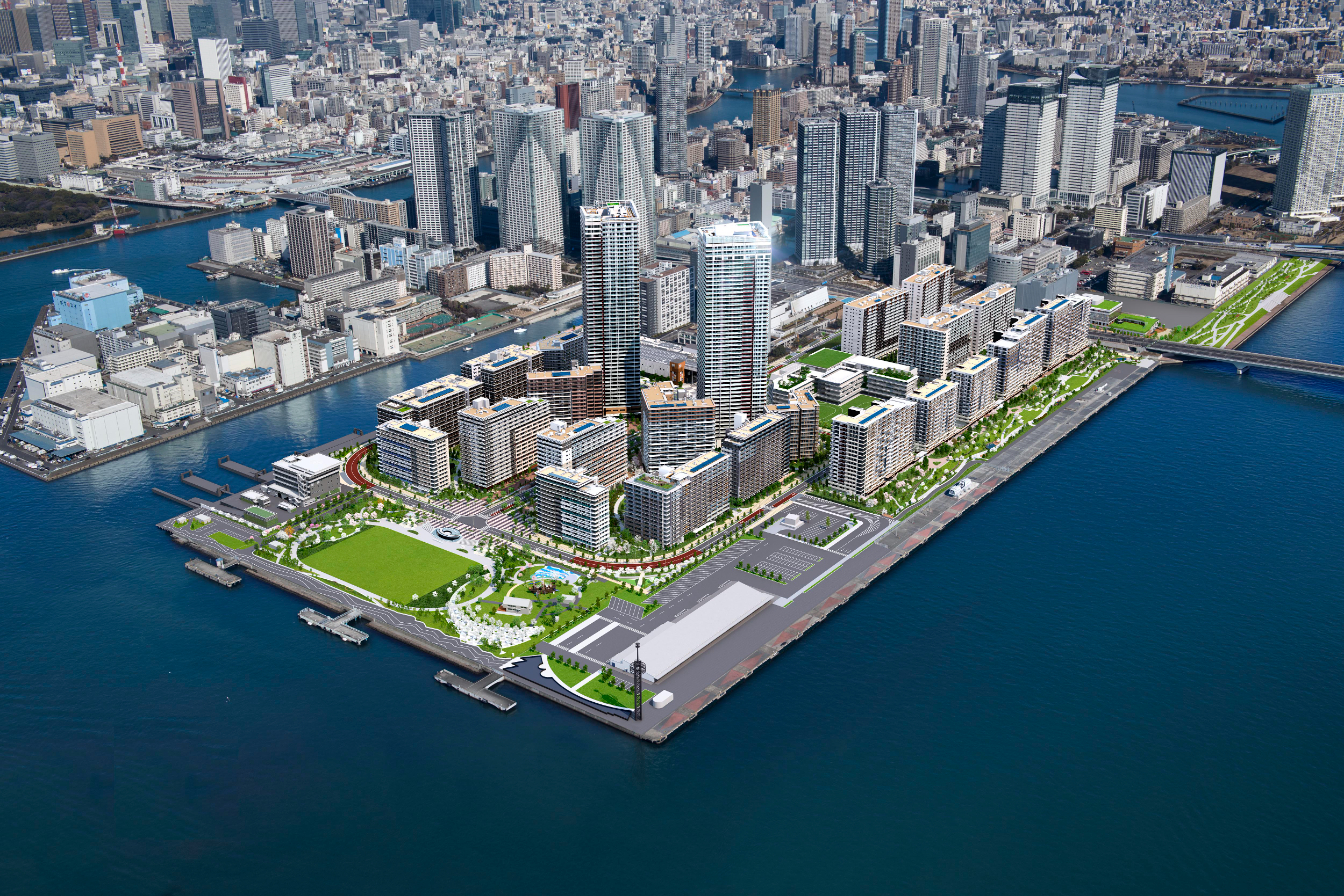
The Harumi district, which is the target of the redevelopment, was used as the athletes’ village for the Tokyo 2020 Olympic and Paralympic Games held in 2021. During the Games, a temporary hydrogen refueling station was set up in the district to supply power, and approximately 500 fuel cell vehicles and fuel cell buses were used as vehicles related to the Games, demonstrating a track record of actively utilizing hydrogen.
This district, also known as “HARUMI FLAG,” will begin accepting residents into condominiums in 2025, with approximately 12,000 people expected to live there. Hydrogen pipelines will be laid from a hydrogen station installed within the district to various locations, supplying hydrogen for electricity to the residents’ common areas. This initiative is the first of its kind in Japan at the practical stage and is expected to become a central hub for hydrogen utilization in Tokyo.
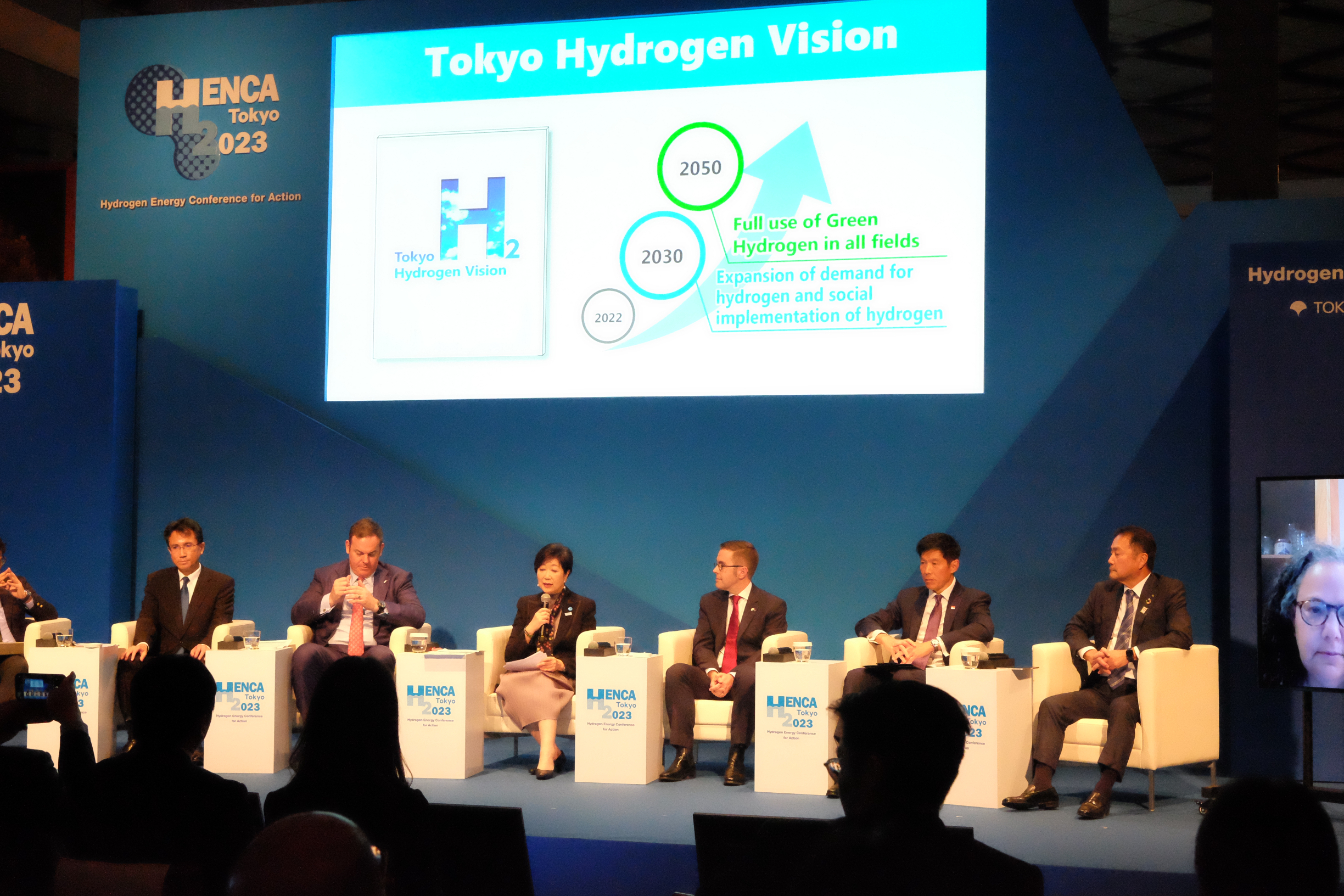
In the “Tokyo Hydrogen Vision” announced last March, Governor Koike promoted Tokyo as a world leader in hydrogen utilization, calling for active investment from the private sector, while also expressing strong support for businesses, such as providing subsidies of up to 253 million yen to hydrogen production equipment manufacturers in Tokyo.
In its vision, the Tokyo Metropolitan Government has set targets of reducing greenhouse gas emissions by 50% compared to 2000 levels by 2030 (“carbon half”) and achieving net-zero greenhouse gas emissions by 2050 (“net-zero”).
On the other hand, according to the recently announced “Tokyo Metropolitan Government Environmental Basic Plan,” energy-related CO2 emissions in Tokyo in 2019 were only 8% lower than in 2000. In order to achieve the carbon halve target by 2030, emissions will need to be reduced by another half from the 2019 level.
During the meeting, Governor Koike stated that “matching supply and demand is necessary” to further promote the utilization of hydrogen, emphasizing the importance of promoting collaborative activities between the public and private sectors. As a concrete measure, she mentioned aiming to build a supply chain that can accept large quantities of green hydrogen imported from overseas, in cooperation with airports, waterfront areas, and relevant local governments.
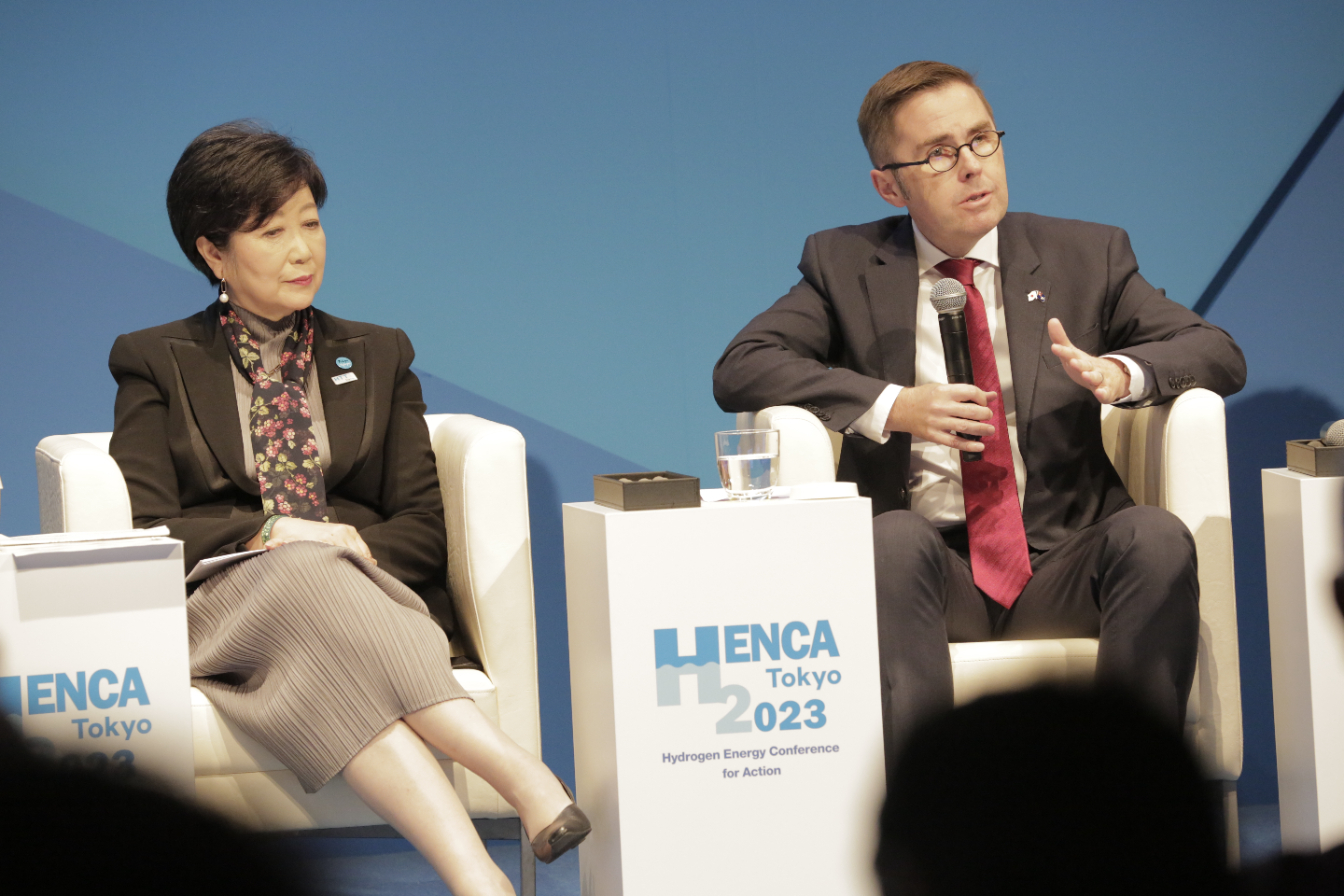
Tokyo is not the only city undertaking such green hydrogen initiatives. During the panel discussion, representatives from various countries presented their specific initiatives, including investments in hydrogen.
Speaking on behalf of Queensland, Australia, Paul Martin (Undersecretary of Energy and Public Works in the state) presented a plan to collaborate with neighboring states to create a hydrogen superhighway traversing the country’s east coast for cargo transport. He stated that Australia and Japan are trusted partners with a history of over 20 years, and added, “We want to work together with Tokyo as a key partner to create the future hydrogen industry.”
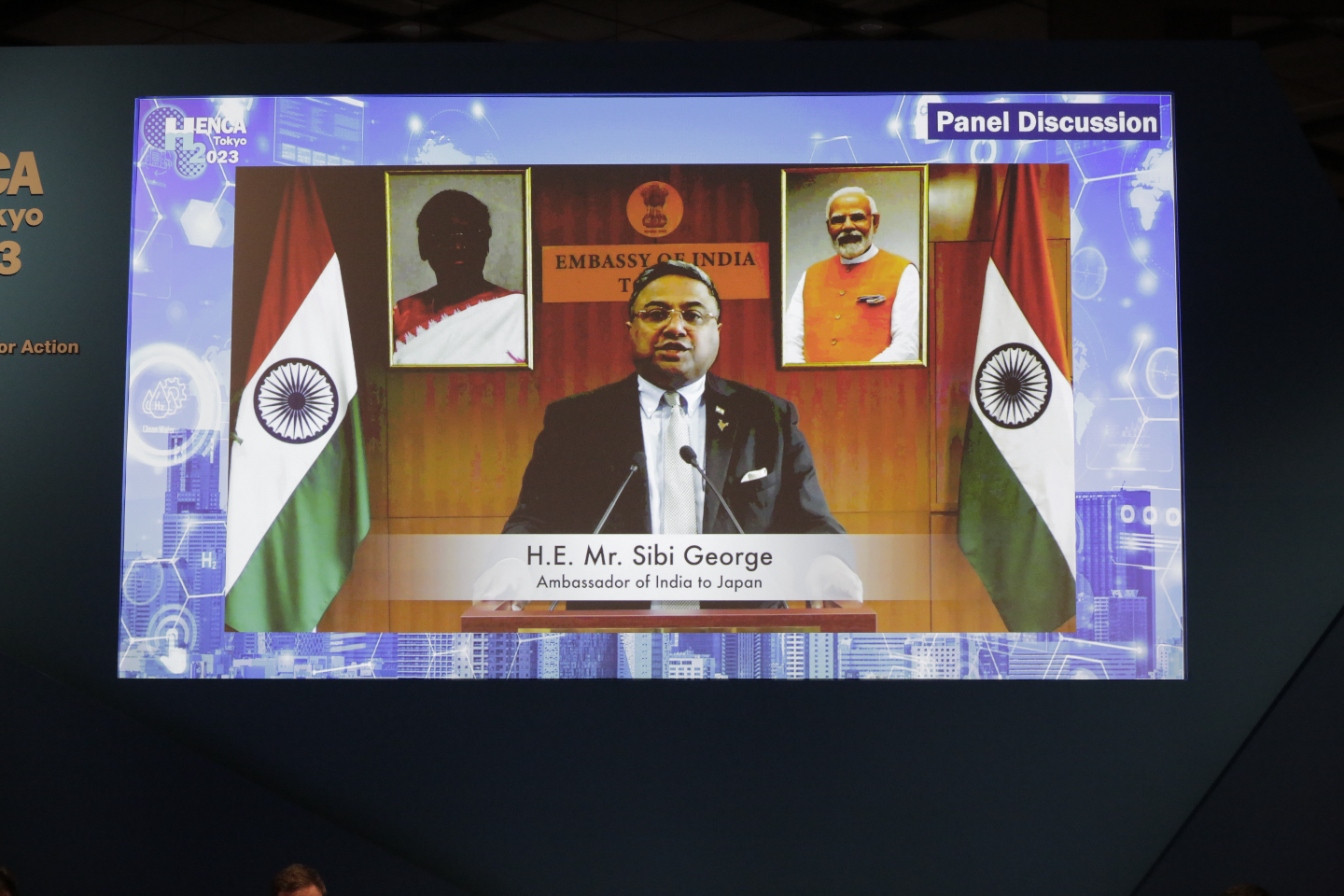
Furthermore, India’s Ambassador Extraordinary and Plenipotentiary, Sibi George, stated that India is actively working to utilize hydrogen as an alternative for decarbonization and aims to become a global hub for the production, use, and export of green hydrogen. He added that by combining Japan’s technological capabilities with India’s abundant resources, they are “well-positioned to create synergies and strengthen cooperation in this field,” expressing his expectation for further strengthening of relations between the two countries.
Finally, Governor Koike concluded the meeting by saying, “Now is the time to change the future through concrete action. Let’s unite our strengths and create a sustainable society.”
Later, Governor Yuriko Koike, who visited Dubai to attend the COP28 conference, announced a plan to open a hydrogen exchange in Tokyo, advocating for increased transparency in hydrogen trading to promote its use.
Article by: Riku Kobayashi, Edited by: Takanori Isshiki
Photography by Desiderio Luna
For inquiries regarding this article, please contact jstories@pacificbridge.jp.
The English version of this article can be viewed here .