• Login
Upgrade
JStories
  • 日本語
  • 中文 (中国)
No Result
View All Result
  • Home
  • AI
    • Artificial Intelligence
    • Robotics
    • Mobility
  • Earth
    • Energy
    • Climate Tech
    • AgriTech
    • Clean Tech
    • Disaster Tech
    • SpaceTech
  • Life Sciences
    • BioTech
    • HealthTech
    • MedTech
    • AgeTech
  • Society
    • Media
    • EdTech
    • Diversity
    • FemTech
    • HRTech
    • LegalTech
    • Social Impact
    • FinTech
    • Anime
  • Lifestyle
    • FoodTech
    • FashionTech
    • BeautyTech
    • Wellbeing
    • Art & Music
  • Travel
    • Adventure Travel
    • Luxury Travel
    • Wellness & Medical Tourism
    • Culture
  • Video
  • Deals
    • Venture Capital
    • M&A
    • Startup Events
    • Pitch
    • Ecosystem Support
  • Interview
  • Opinion
  • Home
  • AI
    • Artificial Intelligence
    • Robotics
    • Mobility
  • Earth
    • Energy
    • Climate Tech
    • AgriTech
    • Clean Tech
    • Disaster Tech
    • SpaceTech
  • Life Sciences
    • BioTech
    • HealthTech
    • MedTech
    • AgeTech
  • Society
    • Media
    • EdTech
    • Diversity
    • FemTech
    • HRTech
    • LegalTech
    • Social Impact
    • FinTech
    • Anime
  • Lifestyle
    • FoodTech
    • FashionTech
    • BeautyTech
    • Wellbeing
    • Art & Music
  • Travel
    • Adventure Travel
    • Luxury Travel
    • Wellness & Medical Tourism
    • Culture
  • Video
  • Deals
    • Venture Capital
    • M&A
    • Startup Events
    • Pitch
    • Ecosystem Support
  • Interview
  • Opinion
en English ja 日本語 zh 中文 (中国)
JStories
No Result
View All Result

Avatar robots provide a new form of customer service

Ayana Usui by Ayana Usui
05/16/2024
in AI, Art & Music, Diversity, FoodTech, HRTech, Lifestyle, Mobility, Robotics, Social Impact, Society
0
Home AI
Share on FacebookShare on Twitter

J-STORIES – In one café in Japan, customers are served by remotely operated robots. And the people who operate them do so from the comfort of their beds.

“Avatar Robot Cafe DAWN ver.β” is a cafe using robot technology not only to serve customers but also to serve bedridden people with a purpose and means to participate in society. People who are confined to their beds due to diseases or disabilities often find it hard to go out or work freely, even if they want to. But the cafe, which opened in 2021, helped them become robot “pilots,” or robot operators.

The pilots with disabilities control their alter-ego robots in the café from their homes using gaze input devices and light fingertip movements. The pilots act as waiters who serve customers, bring food and drinks, and talk with visitors using mics and cameras.
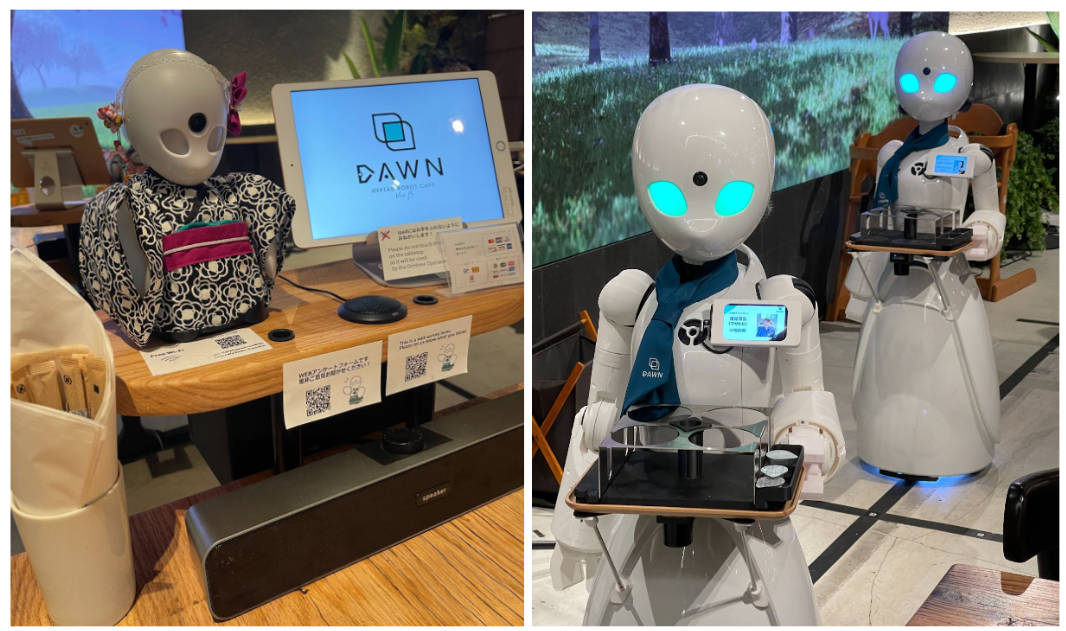
A robot who welcomes customers at the table (left) and the waiter robots walking through the isle (right)    Photos by Ayana Usui

The café started as a limited experiment store in 2018 with only 10 pilots. As its popularity grew, it opened officially at its current location in 2021. This cafe was well-received by the pilots and visitors. Since then, the number of pilots has continued to grow, with about 67 pilots working from all over the country.

Developing robots to help people

Ory Laboratory not only operates the café but also develops the alter ego robot Orihime-D. Ollie Yoshifuji, the institute’s representative and director, developed the robot as a tool to communicate easily and remotely, as he himself had difficulty going out of his house during middle school. The café was inspired when he met bedridden patients while developing the robot. He learned that what they were looking for was not just communication, but a strong connection to society through working.
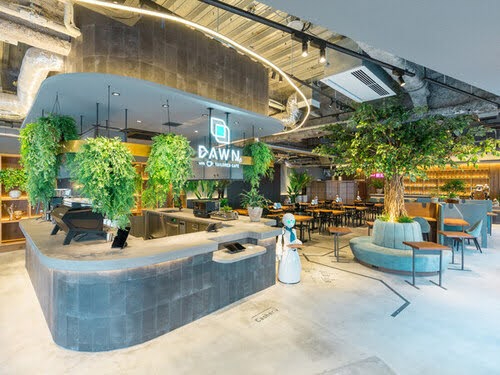
  Avatar Robot Cafe DAWN ver.β, opened in Nihonbashi, Tokyo, June 2021     Source: OryLab 

Ory Laboratory had previously described the café as an “experiment in creating a new form of social participation” where people can meet, talk, and enjoy each other’s company, regardless of whether they are disabled or able-bodied. Three years since it officially opened, it has become so popular that it is difficult to make reservations, especially among foreign tourists interested in Japanese robot culture.
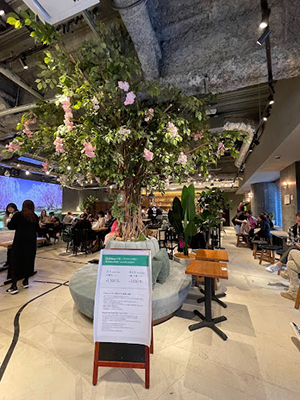
  Inside Avatar Robot Cafe DAWN ver.β     Source: OryLab

Keiko Hamaguchi, public relations manager for the institute, said: “This is the only place where robots are being implemented to aid societal inclusion, not being left as a mere demonstration experiment. Also, this is the only cafe that provides new ways and values of working from such interesting activities, and I am proud of that.”

Hamaguchi said the pilots are proud of their work and position title. “We can call them café staff, waitstaff, or another collective term,” she said. “But we still call them pilots because we feel that we have to make it an aspirational profession.”

The title, which evokes respect and esteem, is based on an expression that developer Ollie Yoshifuji heard from a boy during the manufacturing process. He named the robot with “coolness” and friendliness in mind.

Moving lives by helping people move again

The pilots say that working at the café made a difference in their daily lives. Fumiko Miyoshi has an incurable disease called spinal muscular atrophy (SMA). It’s a disorder that affects motor neurons, the nerve cells that control voluntary muscular movement. When muscles cannot respond to signals, they weaken and shrink, which leads to a gradual loss of mass and strength.
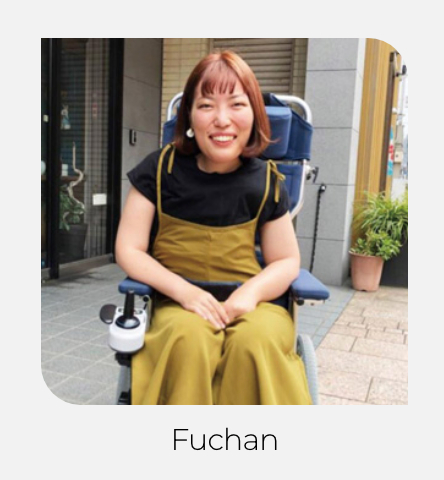
“I feel most fulfilled and enriched when I’m working. I can forget about my body, which doesn’t move as I want it to, and feel that I have meaning in my life and that I am connected to society.”- The cafe’s pilot, Fumiko Miyosih, aka Fuchan.     Source: OryLab

On her X account, Miyoshi posted: “I feel most fulfilled and enriched when I’m working. I can forget about my body, which doesn’t move as I want it to, and feel that I have meaning in my life and that I am connected to society.”

When J-STORIES returned to the cafe on March 27th, 2024, we listened to the experiences of another pilot. Mikako Fujita is battling a disease called ALS (amyotrophic lateral sclerosis), a neurological disease that causes the muscles in her hands, feet, throat, tongue, and breathing to lose strength. Fujita has been bedridden for several years. To remotely control the robot, she uses only her toes.
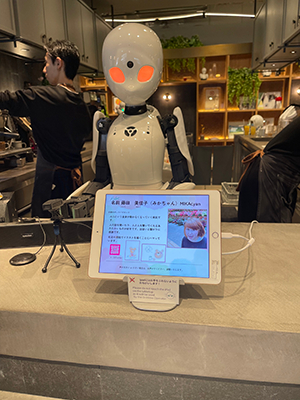
Having a conversation with Mikachan at the counter      Photos by Ayana Usui

Before her diagnosis, Fujita worked a variety of jobs, but when she became bedridden, she felt the career she had built up over the years was suddenly taken away. Her condition limited her work options and prevented her from connecting with new people. She said she only recently learned about the diverse work options provided by the robot café.

“I can meet people I wouldn’t normally meet if I stayed at home, and it’s hard to connect with people when you’re like this. It’s also nice to serve them and have them tell me how much they enjoyed their experience here. I am very happy that I can still work, even if I am no longer able to move.” – The cafe’s pilot, Mikako Fujita, aka Mikachan     Source: OryLab

Despite the fear of losing her physical freedom, she made her work her purpose in life.

“I really enjoy working here,” she said. “I can meet people I wouldn’t normally meet if I stayed at home, and it’s hard to connect with people when you’re like this. It’s also nice to serve them and have them tell me how much they enjoyed their experience here. I am very happy that I can still work, even if I am no longer able to move.”

A young female visitor, who came with a friend who researches the relationship between humans and robots, learned about the cafe after attending a lecture by Ollie Yoshifuji. “It was refreshing to talk to a robot operated by a person. And even though it is a robot, it has warmth to it. Of course, normal café clerks in Japan don’t talk to you, and you wouldn’t talk to them, but that you can actually have a conversation with a remotely controlled robot is amazing,” she said.

Translation by Dedsiderio Luna

Top page photo by OryLab

For inquiries about this article, please contact jstories@pacificbridge.jp

***

Click here for the Japanese version of the article.

Tags: AccessibilityAvatar Robot Cafe DAWNDisability EmploymentDiversity & InclusionFuture of WorkHealthcare TechnologyInclusive DesignNihonbashiOriHimeOry LaboratoryRemote WorkroboticsSocial Inclusionsocial innovationTelepresence
Previous Post

From Japan to the world: globalizing Japanese startups

Next Post

World-first technology controls ratio of female to male pigs

Ayana Usui

Ayana Usui

Related Posts

Japan leads global collaboration to combat AI disinformation
AI

Japan leads global collaboration to combat AI disinformation

by Ayaka Sagasaki
03/16/2026
Starting a sustainable wood-fired bakery in Tokyo
FoodTech

Starting a sustainable wood-fired bakery in Tokyo

by Tokyo Updates
03/05/2026
Anime

World-first “anime character-based therapy” trial to test effectiveness in Japanese young adults

by Lucas Maltzman
01/30/2026
Lifestyle

The plush toy hospital keeping childhood memories alive

by Tokyo Updates
01/30/2026
Social Impact

From a childhood shaped by conflict to an investor bridging Japan and the world

by Ayaka Sagasaki
01/23/2026
Next Post

World-first technology controls ratio of female to male pigs

Leave a Reply Cancel reply

Your email address will not be published. Required fields are marked *

Videos

Round-up Video #28

09/29/2022

Round-Up Video #30

10/13/2022

Round-up Video #25

09/01/2022

Browse by Tags

Ai Alternative Energy biotechnology Climate Change Community decarbonization Education Event Food foodtech Health Inclusion Infrastructure Innovation Interview J-Stories Japan Japan-Taiwan Innovation Summit Japan startups Japan Tech Labor Living Nature Podcast Recycling Refugees robotics Society Space Startup Startup Ecosystem Startups SusHI Tech Tokyo Sustainability Sustainable Society Taiwan Technology Tokyo Tokyo Innovation Base Tokyo Metropolitan Government Tokyo Updates venture capital video Wealth Zero Waste
JStories

©Articles and photos published on JSTORIES are protected by Japanese copyright law and international treaties. They cannot be reproduced without the permission of the copyright holders

Explore JStories

  • About Jstories
  • Company
  • Contact
  • Home
  • Partner Press Releases
  • Pricing
  • Privacy Policy
  • Team

Follow Us

Welcome Back!

Login to your account below

Forgotten Password?

Retrieve your password

Please enter your username or email address to reset your password.

Log In
No Result
View All Result
  • Home
  • AI
    • Artificial Intelligence
    • Robotics
    • Mobility
  • Earth
    • Energy
    • Climate Tech
    • AgriTech
    • Clean Tech
    • Disaster Tech
    • SpaceTech
  • Life Sciences
    • BioTech
    • HealthTech
    • MedTech
    • AgeTech
  • Society
    • Media
    • EdTech
    • Diversity
    • FemTech
    • HRTech
    • LegalTech
    • Social Impact
    • FinTech
    • Anime
  • Lifestyle
    • FoodTech
    • FashionTech
    • BeautyTech
    • Wellbeing
    • Art & Music
  • Travel
    • Adventure Travel
    • Luxury Travel
    • Wellness & Medical Tourism
    • Culture
  • Video
  • Deals
    • Venture Capital
    • M&A
    • Startup Events
    • Ecosystem Support
  • Interview
  • Opinion

©Articles and photos published on JSTORIES are protected by Japanese copyright law and international treaties. They cannot be reproduced without the permission of the copyright holders

Are you sure want to unlock this post?
Unlock left : 0
Are you sure want to cancel subscription?