• Login
Upgrade
JStories
  • 日本語
  • 中文 (中国)
No Result
View All Result
  • Home
  • AI
    • Artificial Intelligence
    • Robotics
    • Mobility
  • Earth
    • Energy
    • Climate Tech
    • AgriTech
    • Clean Tech
    • Disaster Tech
    • SpaceTech
  • Life Sciences
    • BioTech
    • HealthTech
    • MedTech
    • AgeTech
  • Society
    • Media
    • EdTech
    • Diversity
    • FemTech
    • HRTech
    • LegalTech
    • Social Impact
    • FinTech
    • Anime
  • Lifestyle
    • FoodTech
    • FashionTech
    • BeautyTech
    • Wellbeing
    • Art & Music
  • Travel
    • Adventure Travel
    • Luxury Travel
    • Wellness & Medical Tourism
    • Culture
  • Video
  • Deals
    • Venture Capital
    • M&A
    • Startup Events
    • Pitch
    • Ecosystem Support
  • Interview
  • Opinion
  • Home
  • AI
    • Artificial Intelligence
    • Robotics
    • Mobility
  • Earth
    • Energy
    • Climate Tech
    • AgriTech
    • Clean Tech
    • Disaster Tech
    • SpaceTech
  • Life Sciences
    • BioTech
    • HealthTech
    • MedTech
    • AgeTech
  • Society
    • Media
    • EdTech
    • Diversity
    • FemTech
    • HRTech
    • LegalTech
    • Social Impact
    • FinTech
    • Anime
  • Lifestyle
    • FoodTech
    • FashionTech
    • BeautyTech
    • Wellbeing
    • Art & Music
  • Travel
    • Adventure Travel
    • Luxury Travel
    • Wellness & Medical Tourism
    • Culture
  • Video
  • Deals
    • Venture Capital
    • M&A
    • Startup Events
    • Pitch
    • Ecosystem Support
  • Interview
  • Opinion
en English ja 日本語 zh 中文 (中国)
JStories
No Result
View All Result

The future of flavor: New technology aims to make low-salt diets more enjoyable

Yui Sawada by Yui Sawada
06/14/2024
in AI, Artificial Intelligence, FoodTech, HealthTech, Life Sciences, Lifestyle, Wellbeing
0
Home AI
Share on FacebookShare on Twitter

J-STORIES – While it’s well-known that excessive salt intake can lead to high blood pressure and other health issues, low-salt diets often lack flavor, making dietary changes difficult. To address this, a new type of tableware that uses electrical stimulation is being developed and is moving toward practical application.

Meiji University’s Miyashita Laboratory and Kirin Holdings, both based in Nakano, Tokyo, are collaborating on a low-salt device called ‘ElecSalt.’ The device uses extremely weak electrical currents, which are harmless to humans, to adjust the movement of ions responsible for salty and umami flavors in food. This allows it to simulate enhancing or reducing the taste of food. Clinical trials from this joint research have, for the first time in the world, confirmed that the device can increase the perceived saltiness of low-salt foods by about 1.5 times.

The company announced a chopstick-shaped device in April 2022 and a spoon-shaped device in September of the same year.     Source: Kirin Holdings

In April 2022, a chopstick-like device that connects to a smartwatch via a cable was developed. Later, in September of the same year, spoon-shaped and bowl-shaped devices were also created. All of these devices use electrical stimulation from the tableware to enhance the flavor of low-salt foods.
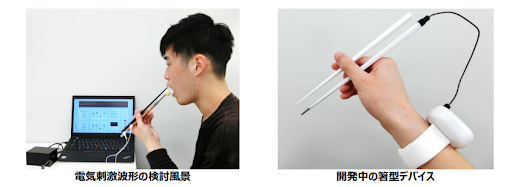
Experiments to study electrical stimulation waveforms using a chopstick-shaped device.     Source: Kirin Holdings

Research on electric taste began with a paper published in 2011 by Professor Miyashita of Meiji University. He introduced a vision of altering the taste of food and drinks through electrical stimulation using straws, chopsticks, and forks, expanding the culinary experience and taste perception. This sparked global interest, leading researchers worldwide to conduct experiments using various devices.

Over the past decade, Miyashita’s work has been widely cited, earning him significant recognition. In 2021, he received the Lasting Impact Award from an international academic society. In 2023, he was honored with the Ig Nobel Prize, which celebrates research that makes people laugh and think. He also won the Japan Open Innovation Prize.
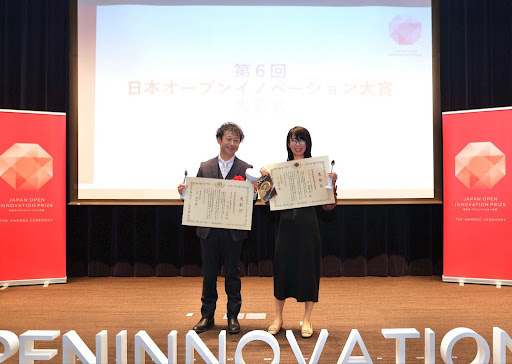
 Professor Homei Miyashita, winner of the Japan Open Innovation Award, and Ai Sato, New Business Group, Health Science Division.     Source: Kirin Holdings

His research aims to make low-salt diets more enjoyable, contributing to solving the social issue of health problems caused by excessive salt intake. This work has garnered attention not only from industry and academia but also from government bodies.

The current device can enhance the perception of saltiness by about 1.5 times. However, Professor Homei Miyashita explains, ‘We understand the principles of effectively bringing out flavors. By optimizing the chemical composition of low-salt foods to align with this knowledge, we can achieve a synergistic effect, potentially enhancing the perceived flavor by more than 1.5 times.’

‘‘For example, when you eat sweet-and-sour pork, the salt content is reduced while the acidity and umami are enhanced, so rather than the salt becoming stronger, the umami and other flavors are added and the overall taste is better.‘‘- Professor Homei Miyashita      Source: Meiji university

Professor Miyashita also points out that the electric taste device can enhance not just saltiness but other flavors like sourness and umami as well. ‘For example, when eating sweet and sour pork, both the sourness and umami can be enhanced while keeping the salt content low. This makes the dish taste better overall, not just saltier,’ Miyashita says.

In an interview with J-STORIES, Professor Miyashita mentioned that when the device was first introduced in 2022, there was a slight time lag before the effects were felt, and the saltiness had a subtle off-taste. However, over the past two years, these issues have been significantly improved. The time lag has been reduced, and the saltiness now tastes much better. ‘There is a concern that the idea of using electricity might scare people. I hope that once people experience the benefits of this device, they will understand its value and adopt it without prejudice,’ Miyashita says.
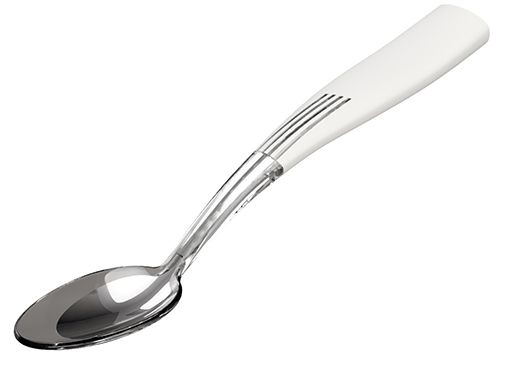
ElecSalt -Spoon- targeted for launch in summer 2024.     Source: Kirin Holdings 

Kirin aims to release the ‘ElecSalt Spoon’ in the summer of 2024 and is currently developing the sales model and conducting durability and efficacy tests with prototype devices. The chopstick device, which gained attention after winning the Ig Nobel Prize, faced some resistance from users who found the wrist-mounted cable uncomfortable. As a result, the first product to be launched will be the spoon-shaped device. Kirin is also considering the development of other tableware, such as cups and straws, for practical use in the future.

In an interview with J-STORIES, Kirin stated, ‘We aim to make this technology practical in Japan as one method to prevent the onset and worsening of lifestyle-related diseases.’

Translation by Tony McNicol

Updated by Oğuzhan Karagözoğlu and Erin Hirakawa

Top page photo by Kirin Holdings

For inquiries about this article, please contact jstories@pacficbridge.jp


Click here for the Japanese version of the article.

Tags: ElecSaltElectric TastefoodtechHealth InnovationHomei MiyashitaHypertensionIg Nobel PrizeKirin HoldingsMeiji UniversitySalt Reduction
Previous Post

【Update】World’s first ‘teething drug’ clinical trial starts in September – Aiming for full commercialization by 2030

Next Post

An electrically assisted bicycle that can recharge even going uphill

Yui Sawada

Yui Sawada

Related Posts

Japan leads global collaboration to combat AI disinformation
AI

Japan leads global collaboration to combat AI disinformation

by Ayaka Sagasaki
03/16/2026
Starting a sustainable wood-fired bakery in Tokyo
FoodTech

Starting a sustainable wood-fired bakery in Tokyo

by Tokyo Updates
03/05/2026
HealthTech

Engineering safety from the ground up

by Tokyo Updates
02/13/2026
Lifestyle

The plush toy hospital keeping childhood memories alive

by Tokyo Updates
01/30/2026
Lifestyle

Lost item return rate triples: Tokyo startup envisions a world where nothing stays lost

by Tokyo Updates
01/23/2026
Next Post

An electrically assisted bicycle that can recharge even going uphill

Leave a Reply Cancel reply

Your email address will not be published. Required fields are marked *

Videos

Round-up Video #23

08/04/2022

Round-up Video #24

08/25/2022

Round-Up Video #34

11/17/2022

Browse by Tags

Ai Alternative Energy biotechnology Climate Change Community decarbonization Education Event Food foodtech Health Inclusion Infrastructure Innovation Interview J-Stories Japan Japan-Taiwan Innovation Summit Japan startups Japan Tech Labor Living Nature Podcast Recycling Refugees robotics Society Space Startup Startup Ecosystem Startups SusHI Tech Tokyo Sustainability Sustainable Society Taiwan Technology Tokyo Tokyo Innovation Base Tokyo Metropolitan Government Tokyo Updates venture capital video Wealth Zero Waste
JStories

©Articles and photos published on JSTORIES are protected by Japanese copyright law and international treaties. They cannot be reproduced without the permission of the copyright holders

Explore JStories

  • About Jstories
  • Company
  • Contact
  • Home
  • Partner Press Releases
  • Pricing
  • Privacy Policy
  • Team

Follow Us

Welcome Back!

Login to your account below

Forgotten Password?

Retrieve your password

Please enter your username or email address to reset your password.

Log In
No Result
View All Result
  • Home
  • AI
    • Artificial Intelligence
    • Robotics
    • Mobility
  • Earth
    • Energy
    • Climate Tech
    • AgriTech
    • Clean Tech
    • Disaster Tech
    • SpaceTech
  • Life Sciences
    • BioTech
    • HealthTech
    • MedTech
    • AgeTech
  • Society
    • Media
    • EdTech
    • Diversity
    • FemTech
    • HRTech
    • LegalTech
    • Social Impact
    • FinTech
    • Anime
  • Lifestyle
    • FoodTech
    • FashionTech
    • BeautyTech
    • Wellbeing
    • Art & Music
  • Travel
    • Adventure Travel
    • Luxury Travel
    • Wellness & Medical Tourism
    • Culture
  • Video
  • Deals
    • Venture Capital
    • M&A
    • Startup Events
    • Ecosystem Support
  • Interview
  • Opinion

©Articles and photos published on JSTORIES are protected by Japanese copyright law and international treaties. They cannot be reproduced without the permission of the copyright holders

Are you sure want to unlock this post?
Unlock left : 0
Are you sure want to cancel subscription?