• Login
Upgrade
JStories
  • 日本語
  • 中文 (中国)
No Result
View All Result
  • Home
  • AI
    • Artificial Intelligence
    • Robotics
    • Mobility
  • Earth
    • Energy
    • Climate Tech
    • AgriTech
    • Clean Tech
    • Disaster Tech
    • SpaceTech
  • Life Sciences
    • BioTech
    • HealthTech
    • MedTech
    • AgeTech
  • Society
    • Media
    • EdTech
    • Diversity
    • FemTech
    • HRTech
    • LegalTech
    • Social Impact
    • FinTech
    • Anime
  • Lifestyle
    • FoodTech
    • FashionTech
    • BeautyTech
    • Wellbeing
    • Art & Music
  • Travel
    • Adventure Travel
    • Luxury Travel
    • Wellness & Medical Tourism
    • Culture
  • Video
  • Deals
    • Venture Capital
    • M&A
    • Startup Events
    • Pitch
    • Ecosystem Support
  • Interview
  • Opinion
  • Home
  • AI
    • Artificial Intelligence
    • Robotics
    • Mobility
  • Earth
    • Energy
    • Climate Tech
    • AgriTech
    • Clean Tech
    • Disaster Tech
    • SpaceTech
  • Life Sciences
    • BioTech
    • HealthTech
    • MedTech
    • AgeTech
  • Society
    • Media
    • EdTech
    • Diversity
    • FemTech
    • HRTech
    • LegalTech
    • Social Impact
    • FinTech
    • Anime
  • Lifestyle
    • FoodTech
    • FashionTech
    • BeautyTech
    • Wellbeing
    • Art & Music
  • Travel
    • Adventure Travel
    • Luxury Travel
    • Wellness & Medical Tourism
    • Culture
  • Video
  • Deals
    • Venture Capital
    • M&A
    • Startup Events
    • Pitch
    • Ecosystem Support
  • Interview
  • Opinion
en English ja 日本語 zh 中文 (中国)
JStories
No Result
View All Result

Japanese strawberry brands gain global popularity, now grown in hot, humid climates

Yoshiko Ohira by Yoshiko Ohira
12/13/2024
in AgriTech, AI, Artificial Intelligence, Climate Tech, Earth
0
Home Earth AgriTech
Share on FacebookShare on Twitter

J-STORIES – High-quality Japanese fruits are renowned in Asia and around the world. But they’re also famously pricey. This is partly due to constraints on where and when they can be grown, as well as the cost of transporting them to various markets.

Life would be much easier for Japan’s farmers if they could grow fruits and vegetables year-round and in a wider range of locations. For example, currently, it is difficult to grow strawberries in Japan’s many hot and humid regions. Meanwhile, Japan’s farmers share the same challenges as those faced by farmers around the world, such as damage to crops due to climate change, as well as urbanization and desertification that lead to loss of agricultural land. New technology that addresses these problems could both make agriculture more efficient and safeguard its future.

Tokyo-based agricultural startup Culta‘s new “speed-breeding” technology reduces the time it takes to develop a new crop variety from around 10 years to just two. This makes it easier for farmers to respond flexibly to climate change and keep producing high-quality “grown in Japan” products.
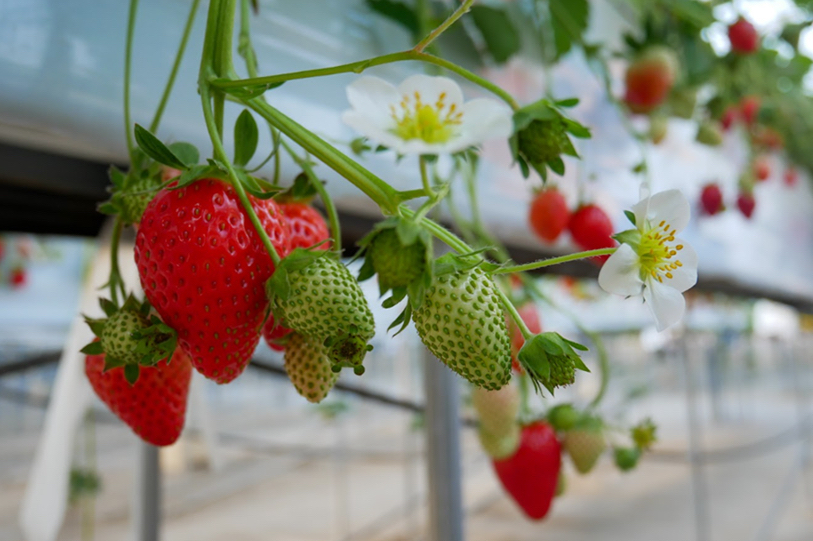
A strawberry variety produced using Culta’s speed-breeding technology.    Source: Culta (Same below)

CEO Shuhei Noaki launched Culta in November 2017, while he was a student at the University of Tokyo. Noaki made use of image analysis technology he had studied in the university’s Graduate School of Agricultural and Life Sciences. He combined this with his experience working with strawberry farmers and at the Tokyo Metropolitan Central Wholesale Market. Noaki hopes to commercialize his company’s technology both in Japan and overseas.

Notably, Culta’s speed-breeding technology makes use of genomic information, but does not actually edit crop genes. The genomic information is instead analyzed to predict the crop “phenotype” — in other words, its actual shape and characteristics. Crossbreeding and selection are then used to approach the optimum crop variety. By rapidly repeating this process, the technology reduces the time required to produce a new variety by 80%.

It also uses plant-specific AI image analysis and 3D point cloud analysis developed at Tokyo University. This has speeded up the acquisition of crop phenotypes, something that had held back the analysis of genomic information. Going forward, this technology will be applied to the agricultural supply chain and will help its contract farmers with quality control.
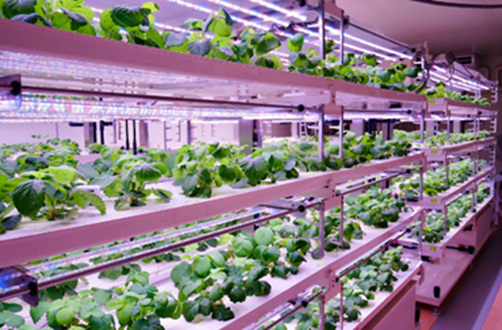
Strawberries growing in a “plant factory.”

Noaki’s time studying abroad played a crucial role in inspiring him to establish an agricultural startup.

“I had many chances to visit Southeast Asia as a student and an intern,” he recalls. “I looked around towns and saw big signboards for Japanese electronics manufacturers. But those were from the past, and I felt the emptiness of the ‘Japan brand.’

”In the Philippines, he tasted local tomatoes and noticed how poorly they compared to those back home. It made him realize the strength of Japanese food culture, and he became convinced that it could be a winning field for Japan.
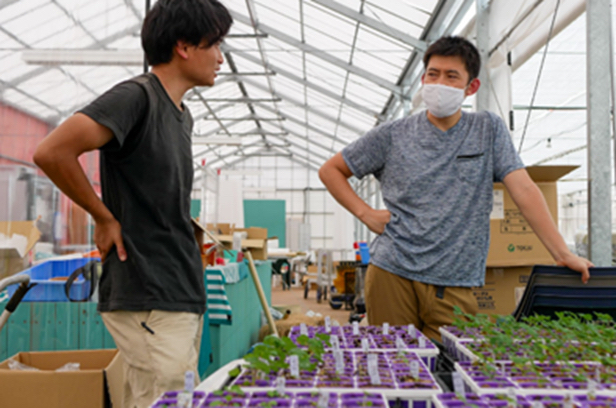
CEO Shuhei Noaki (left) talks with one of the 15 farmers Culta has a contract with. 

Currently, the company is concentrating on applying speed-breeding technology to strawberries. This fruit was chosen over many other candidates for several reasons. It’s a relatively easy “Japan brand” to promote abroad over local products, the overseas market for strawberries is growing, and demand for them is high in Japan.

Culta has contracts with 15 farmers in Japan and three in Malaysia to grow strawberries on a trial basis.

“Because Malaysia doesn’t have four different seasons, it’s possible to grow strawberries year-round rather than just seasonally as in Japan,” he explains. “The year-round availability of the product will enable us to build brand awareness.”

He also notes that growing the strawberries locally will reduce transportation and other intermediate costs, enabling them to market fresh, high-quality “Japan-brand” fruit.
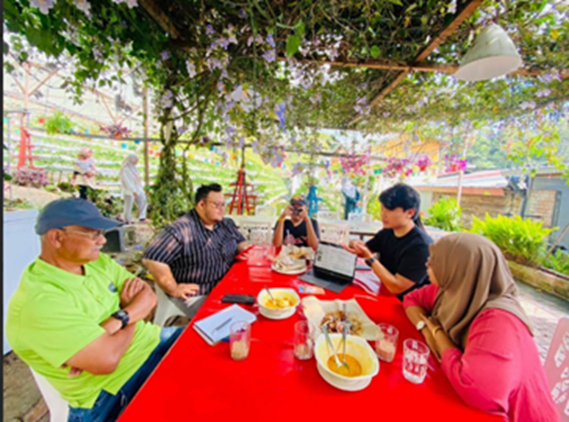
Noaki (second from right) chats with strawberry farmers in Malaysia. 

He adds that the company has had positive responses from local government officials overseas thanks to the potential for its technology to raise the level of local agricultural production.

In the future, Culta hopes to arrange contracts with strawberry farmers in Vietnam and Australia, as well as begin pilot production and sales in Japan and Malaysia by the end of 2025. It is working with a Malaysian university on a system to rapidly develop varieties suited to the local market and also preparing for local application of some of the research.

Culta plans to expand to melons and watermelons from 2028 and, in the longer term, has its sights set on grapes, apples, other tree fruit, coffee, and cacao. Sales will start in Singapore, Malaysia and Thailand, before branching out within the Asia-Pacific region, including Australia.

The company is also working with Tokyo’s Kirin Holdings to apply its breeding technology to the production of hops, a key ingredient of beer, and develop varieties that are resistant to heat and drought and able to adapt to climate change.
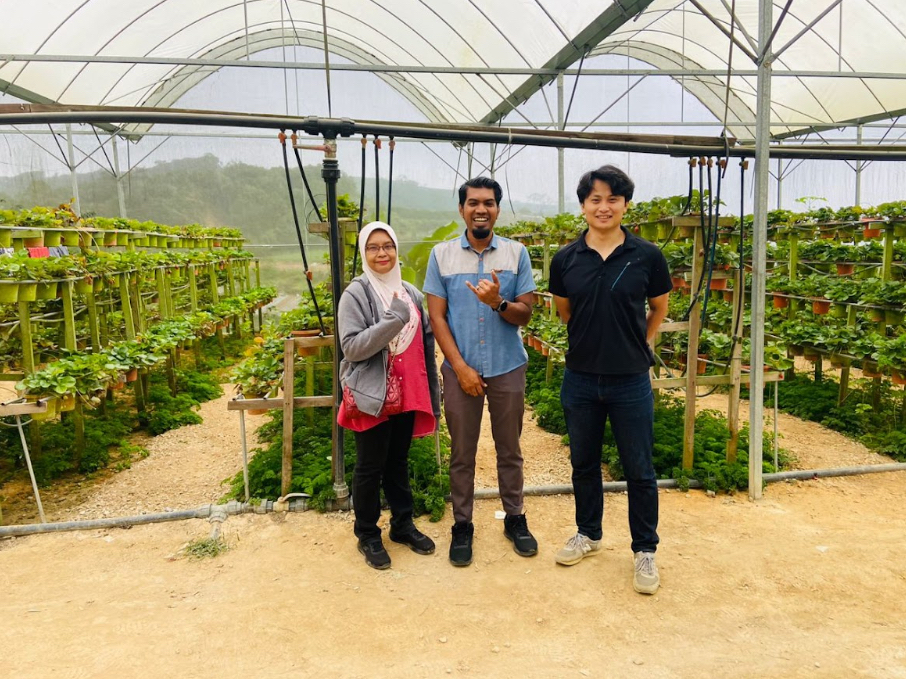
Noaki poses with farmers in Malaysia.

By strengthening relationships with farmers in Japan, Malaysia, Australia, Vietnam and other countries, Noaki says that the company hopes to earn 2 billion yen from Japanese strawberries in Japan by 2030, and even more from overseas sales.

Translated by Tony McNicol

Top photo by Culta

For inquiries regarding this article, please contact jstories@pacificbridge.jp


Click here for the Japanese version of the article

Tags: Agri-TechAI image analysisClimate ChangeCultafood productiongenomicsJapan brandJapanese agricultureplant factorysmart farmingSoutheast Asiaspeed breedingstrawberries
Previous Post

INTERVIEW | Why SaaS is growing so much faster in Japan — Interview with Shinji Asada at One Capital (Part 2)

Next Post

Can UNESCO recognition save Japan’s shrinking sake industry?

Yoshiko Ohira

Yoshiko Ohira

Related Posts

Japan leads global collaboration to combat AI disinformation
AI

Japan leads global collaboration to combat AI disinformation

by Ayaka Sagasaki
03/16/2026
Clean Tech

Japanese startup turns eggshell waste into eco-friendly plastics and paper

by Yoshiko Ohira
02/06/2026
Earth

A world first: Detecting road sinkholes from space

by Ayaka Sagasaki
01/30/2026
AgriTech

Fish scraps as a hidden treasure

by Kei Mizuno
01/16/2026
AgriTech

Can a small robot save Japan’s terraced paddies?

by Yoshiko Ohira
11/28/2025
Next Post

Can UNESCO recognition save Japan's shrinking sake industry?

Leave a Reply Cancel reply

Your email address will not be published. Required fields are marked *

Videos

Round-Up Video #38

12/15/2022

Round-Up Video #35

11/24/2022

Round-up Video #29

10/06/2022

Browse by Tags

Ai Alternative Energy biotechnology Climate Change Community decarbonization Education Event Food foodtech Health Inclusion Infrastructure Innovation Interview J-Stories Japan Japan-Taiwan Innovation Summit Japan startups Japan Tech Labor Living Nature Podcast Recycling Refugees robotics Society Space Startup Startup Ecosystem Startups SusHI Tech Tokyo Sustainability Sustainable Society Taiwan Technology Tokyo Tokyo Innovation Base Tokyo Metropolitan Government Tokyo Updates venture capital video Wealth Zero Waste
JStories

©Articles and photos published on JSTORIES are protected by Japanese copyright law and international treaties. They cannot be reproduced without the permission of the copyright holders

Explore JStories

  • About Jstories
  • Company
  • Contact
  • Home
  • Partner Press Releases
  • Pricing
  • Privacy Policy
  • Team

Follow Us

Welcome Back!

Login to your account below

Forgotten Password?

Retrieve your password

Please enter your username or email address to reset your password.

Log In
No Result
View All Result
  • Home
  • AI
    • Artificial Intelligence
    • Robotics
    • Mobility
  • Earth
    • Energy
    • Climate Tech
    • AgriTech
    • Clean Tech
    • Disaster Tech
    • SpaceTech
  • Life Sciences
    • BioTech
    • HealthTech
    • MedTech
    • AgeTech
  • Society
    • Media
    • EdTech
    • Diversity
    • FemTech
    • HRTech
    • LegalTech
    • Social Impact
    • FinTech
    • Anime
  • Lifestyle
    • FoodTech
    • FashionTech
    • BeautyTech
    • Wellbeing
    • Art & Music
  • Travel
    • Adventure Travel
    • Luxury Travel
    • Wellness & Medical Tourism
    • Culture
  • Video
  • Deals
    • Venture Capital
    • M&A
    • Startup Events
    • Ecosystem Support
  • Interview
  • Opinion

©Articles and photos published on JSTORIES are protected by Japanese copyright law and international treaties. They cannot be reproduced without the permission of the copyright holders

Are you sure want to unlock this post?
Unlock left : 0
Are you sure want to cancel subscription?