• Login
Upgrade
JStories
  • 日本語
  • 中文 (中国)
No Result
View All Result
  • Home
  • AI
    • Artificial Intelligence
    • Robotics
    • Mobility
  • Earth
    • Energy
    • Climate Tech
    • AgriTech
    • Clean Tech
    • Disaster Tech
    • SpaceTech
  • Life Sciences
    • BioTech
    • HealthTech
    • MedTech
    • AgeTech
  • Society
    • Media
    • EdTech
    • Diversity
    • FemTech
    • HRTech
    • LegalTech
    • Social Impact
    • FinTech
    • Anime
  • Lifestyle
    • FoodTech
    • FashionTech
    • BeautyTech
    • Wellbeing
    • Art & Music
  • Travel
    • Adventure Travel
    • Luxury Travel
    • Wellness & Medical Tourism
    • Culture
  • Video
  • Deals
    • Venture Capital
    • M&A
    • Startup Events
    • Pitch
    • Ecosystem Support
  • Interview
  • Opinion
  • Home
  • AI
    • Artificial Intelligence
    • Robotics
    • Mobility
  • Earth
    • Energy
    • Climate Tech
    • AgriTech
    • Clean Tech
    • Disaster Tech
    • SpaceTech
  • Life Sciences
    • BioTech
    • HealthTech
    • MedTech
    • AgeTech
  • Society
    • Media
    • EdTech
    • Diversity
    • FemTech
    • HRTech
    • LegalTech
    • Social Impact
    • FinTech
    • Anime
  • Lifestyle
    • FoodTech
    • FashionTech
    • BeautyTech
    • Wellbeing
    • Art & Music
  • Travel
    • Adventure Travel
    • Luxury Travel
    • Wellness & Medical Tourism
    • Culture
  • Video
  • Deals
    • Venture Capital
    • M&A
    • Startup Events
    • Pitch
    • Ecosystem Support
  • Interview
  • Opinion
en English ja 日本語 zh 中文 (中国)
JStories
No Result
View All Result

An electrically assisted bicycle that can recharge even going uphill

Hiroko Ishi by Hiroko Ishi
06/14/2024
in AI, Clean Tech, Climate Tech, Deals, Earth, Ecosystem Support, Energy, Mobility, Quantum Computing
0
Home AI
Share on FacebookShare on Twitter

J-STORIES – In 2022, almost three decades after the world’s first electrically assisted bicycles appeared in Japan, sales reached 795,000 units, for the first time pulling ahead of ordinary bicycles. Sales are also booming in Europe and other parts of the world, as consumers see electric bicycles as a healthy alternative to cars and a way to help decarbonize society. It has been estimated that the electric bicycle market will reach $73.2 billion by 2030.

A recent addition to the electric bicycle peloton in Japan is the Mag Drive System Smart E-bike, developed by Hello Space, a startup from Kumamoto City on Japan’s southern island of Kyushu.

Its unique design includes magnets that boost pedal power at the same time as the bicycle recharges its battery. In “eco mode,” it is possible to ride the bicycle indefinitely without connecting it to an external power source, and the only limit is the usage lifetime of the battery. Electricity stored in the battery can even be used as an emergency power source.

Electric bicycles and electric vehicles (EVs) contain expensive batteries that account for much of their production cost. Additionally, the time needed for recharging and lack of charging stations have hindered their popularity.
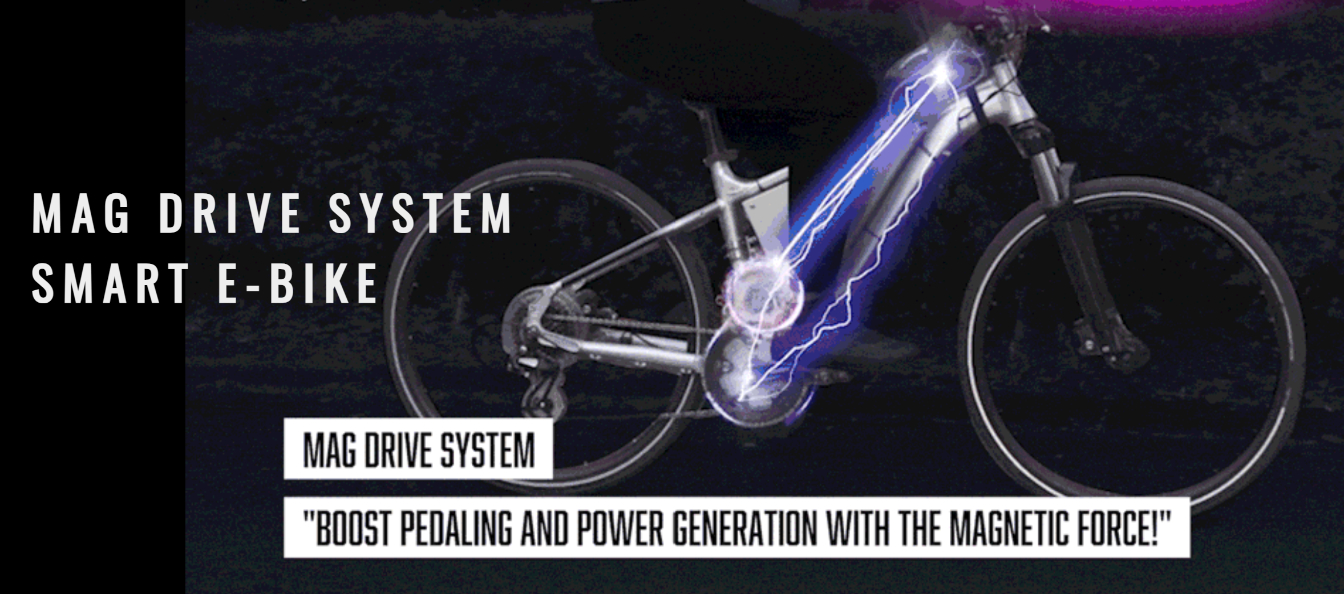
Conventional electric bicycles typically convert kinetic energy to electrical energy as they decelerate, returning it to the battery for reuse.       Source: Hello Space

Conventional electric bicycles typically convert kinetic energy to electrical energy as they decelerate, returning it to the battery for reuse. The amount of electricity produced this way, however, is low, and batteries are typically not fully recharged.

By comparison, Hello Space’s Mag Drive generates electricity not only during deceleration, but also acceleration, making it much more efficient. Its “superconducting” technology keeps magnetic and electrical resistance to a minimum, meaning batteries last longer without running out, and charging is possible even when cycling uphill.

“The balance between electricity generated and consumed is key,” says Hello Space CEO Taketoshi Iwashita.

He says that going uphill electric bikes use more electricity, but on the flats they typically generate more. The new system, however, can generate electricity on any gradient, and there is no need to disconnect and recharge the battery. In principle, the technology could be applied to all forms of electric mobility, including cars, ships and spacecraft, he says.

Iwashita was inspired by his experiences during the earthquake and tsunami that hit northeast Japan in 2011. At the time he was working for a general trading company that was involved in petroleum wholesale. While helping deal with an explosion at an oil refinery, he vowed to start a new business based on new technology, but which didn’t rely on existing infrastructure.
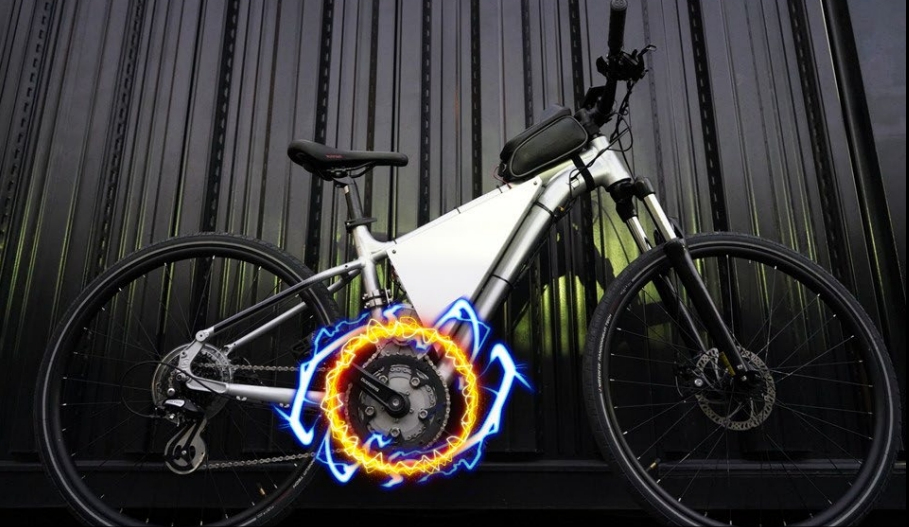
The Smart E-bike is powered by Hello Space’s innovative Mag Drive System.     Source: Hello Space

An everyday application of cutting-edge tech

Chief Engineer Rafael Jojo Simon, who hails from the Philippines, founded Hello Space together with Iwashita, and has also played a major role in the development of its technology.

His proposal was as follows: “Rather than a full superconducting system – a really big plan – why not first find a social application for our technology in an everyday vehicle, namely a bicycle?”

Hello Space has received a subsidy from the Kumamoto Next Generation Venture Creation Support Consortium and is painstakingly testing its new system with the aim of practical applications.

“If we can reduce the capacity of the battery and its manufacturing costs, eventually the sales price will come down, too,” says Iwashita. “We hope that could encourage society as a whole to shift toward EVs.”

“If we can reduce the capacity of the battery and its manufacturing costs, eventually the sales price will come down, too,” says Iwashita. “We hope that could encourage society as a whole to shift toward EVs.”- Takutoshi Iwashita, CEO of Hello Space.      Source: Hello Space

The company plans to start demonstration tests of its bike during the second half of 2024, with 100 units being tested in Japan, the US and India. Its goal is practical use of its bikes in society by 2025. Meanwhile, development is happening not just in Japan, but also together with companies in India, Thailand and Taiwan.

Future ideas for the E-bike include converting its kinetic energy into electricity and carbon credits, using the electricity to mine virtual currency, and making it part of green energy generation in society.

For example, the company has created a technology platform called “Smart E-bike Station” that aims to power railway station buildings using not just bicycles, but also propeller-less wind power, superconductor solar power, as well as power generated by humans in gyms.

Hello Space’s work, including the Smart E-bike, received the JR East Award at the 2022 Eco-Tech Grand Prix, a set of business awards supported by major companies. The award recognized the company’s “development of self-powered electric mobility that does not require external recharging.”
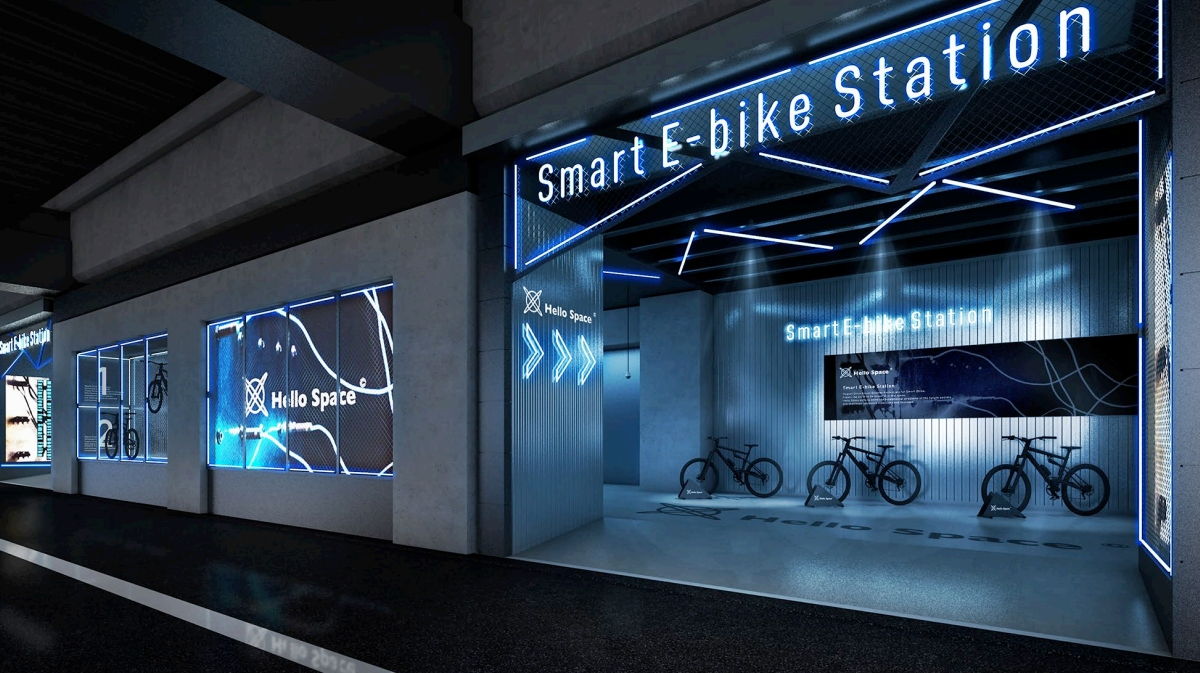
Hello Space hopes to use its technology for bike sharing systems [computer-generated image].      Source: Co-planned by JR East Marketing & Communications,Inc. and Hello Space Co.

In 2025, the company aims to start developing products such as the Mag Drive for E-bike, a power generation and storage unit that can be attached to ordinary bicycles, the Smart Aerobike, which can be installed on fitness bikes and used as a generator in emergencies or at events, the Mag Drive for E-scooter for electric scooters, and the Mag Drive for E-motorbike for electric motorbikes.

Translation by Tony McNicol

Top page photo by Hello Space

For inquires about this article, please contact us at jstories@pacificbridge.jp


Click here for the Japanese version of the article.

Tags: CES 2026decarbonizationHello SpaceKumamotoMag Drive SystemRange AnxietyRegenerative ChargingSemi-superconductingSmart E-bikeToyota Tsusho Nexty Electronics
Previous Post

The future of flavor: New technology aims to make low-salt diets more enjoyable

Next Post

A lightweight robot that can be worn like clothing

Hiroko Ishi

Hiroko Ishi

Related Posts

Japan leads global collaboration to combat AI disinformation
AI

Japan leads global collaboration to combat AI disinformation

by Ayaka Sagasaki
03/16/2026
Deals

More than 700 startups to gather at SusHi Tech Tokyo 2026, Asia’s largest global innovation conference

by Toshi Maeda
02/20/2026
Clean Tech

Japanese startup turns eggshell waste into eco-friendly plastics and paper

by Yoshiko Ohira
02/06/2026
Earth

A world first: Detecting road sinkholes from space

by Ayaka Sagasaki
01/30/2026
AgriTech

Fish scraps as a hidden treasure

by Kei Mizuno
01/16/2026
Next Post

A lightweight robot that can be worn like clothing

Leave a Reply Cancel reply

Your email address will not be published. Required fields are marked *

Videos

Taking action for peace

11/30/2022

Round-up Video #21

07/21/2022

Harmonizing tradition and technology with immersive sound experience

07/19/2023

Browse by Tags

Ai Alternative Energy biotechnology Climate Change Community decarbonization Education Event Food foodtech Health Inclusion Infrastructure Innovation Interview J-Stories Japan Japan-Taiwan Innovation Summit Japan startups Japan Tech Labor Living Nature Podcast Recycling Refugees robotics Society Space Startup Startup Ecosystem Startups SusHI Tech Tokyo Sustainability Sustainable Society Taiwan Technology Tokyo Tokyo Innovation Base Tokyo Metropolitan Government Tokyo Updates venture capital video Wealth Zero Waste
JStories

©Articles and photos published on JSTORIES are protected by Japanese copyright law and international treaties. They cannot be reproduced without the permission of the copyright holders

Explore JStories

  • About Jstories
  • Company
  • Contact
  • Home
  • Partner Press Releases
  • Pricing
  • Privacy Policy
  • Team

Follow Us

Welcome Back!

Login to your account below

Forgotten Password?

Retrieve your password

Please enter your username or email address to reset your password.

Log In
No Result
View All Result
  • Home
  • AI
    • Artificial Intelligence
    • Robotics
    • Mobility
  • Earth
    • Energy
    • Climate Tech
    • AgriTech
    • Clean Tech
    • Disaster Tech
    • SpaceTech
  • Life Sciences
    • BioTech
    • HealthTech
    • MedTech
    • AgeTech
  • Society
    • Media
    • EdTech
    • Diversity
    • FemTech
    • HRTech
    • LegalTech
    • Social Impact
    • FinTech
    • Anime
  • Lifestyle
    • FoodTech
    • FashionTech
    • BeautyTech
    • Wellbeing
    • Art & Music
  • Travel
    • Adventure Travel
    • Luxury Travel
    • Wellness & Medical Tourism
    • Culture
  • Video
  • Deals
    • Venture Capital
    • M&A
    • Startup Events
    • Ecosystem Support
  • Interview
  • Opinion

©Articles and photos published on JSTORIES are protected by Japanese copyright law and international treaties. They cannot be reproduced without the permission of the copyright holders

Are you sure want to unlock this post?
Unlock left : 0
Are you sure want to cancel subscription?