• Login
Upgrade
JStories
  • English
  • 日本語
No Result
View All Result
  • Home
  • AI
    • Artificial Intelligence
    • Robotics
    • Mobility
  • Earth
    • Energy
    • Climate Tech
    • AgriTech
    • Clean Tech
    • Disaster Tech
    • SpaceTech
  • Life Sciences
    • BioTech
    • HealthTech
    • MedTech
    • AgeTech
  • Society
    • Media
    • EdTech
    • Diversity
    • FemTech
    • HRTech
    • LegalTech
    • Social Impact
    • FinTech
    • Anime
  • Lifestyle
    • FoodTech
    • FashionTech
    • BeautyTech
    • Wellbeing
    • Art & Music
  • Travel
    • Adventure Travel
    • Luxury Travel
    • Wellness & Medical Tourism
    • Culture
  • Video
  • Deals
    • Venture Capital
    • M&A
    • Startup Events
    • Pitch
    • Ecosystem Support
  • Interview
  • Opinion
  • Home
  • AI
    • Artificial Intelligence
    • Robotics
    • Mobility
  • Earth
    • Energy
    • Climate Tech
    • AgriTech
    • Clean Tech
    • Disaster Tech
    • SpaceTech
  • Life Sciences
    • BioTech
    • HealthTech
    • MedTech
    • AgeTech
  • Society
    • Media
    • EdTech
    • Diversity
    • FemTech
    • HRTech
    • LegalTech
    • Social Impact
    • FinTech
    • Anime
  • Lifestyle
    • FoodTech
    • FashionTech
    • BeautyTech
    • Wellbeing
    • Art & Music
  • Travel
    • Adventure Travel
    • Luxury Travel
    • Wellness & Medical Tourism
    • Culture
  • Video
  • Deals
    • Venture Capital
    • M&A
    • Startup Events
    • Pitch
    • Ecosystem Support
  • Interview
  • Opinion
en English ja 日本語 zh 中文 (中国)
JStories
No Result
View All Result

日本製木製人造衛星成功釋放至宇宙空間

TAKANORI ISSHIKI AND YOSHIKO OHIRA by TAKANORI ISSHIKI AND YOSHIKO OHIRA
01/10/2025
in Earth, SpaceTech, 科學・科技
0
Home Earth
Share on FacebookShare on Twitter

This article is an updated version of a related article written in October 2024 .

JSTORIES – Kyoto University (located in Sakyo-ku, Kyoto) and Sumitomo Forestry (located in Chiyoda-ku, Tokyo) announced that in December 2024, they successfully launched a small wooden satellite, about 10 centimeters on each side, from the Kibo (Hope) Japan Laboratory Module of the ISS (International Space Station) into space for the first time, marking a global first.
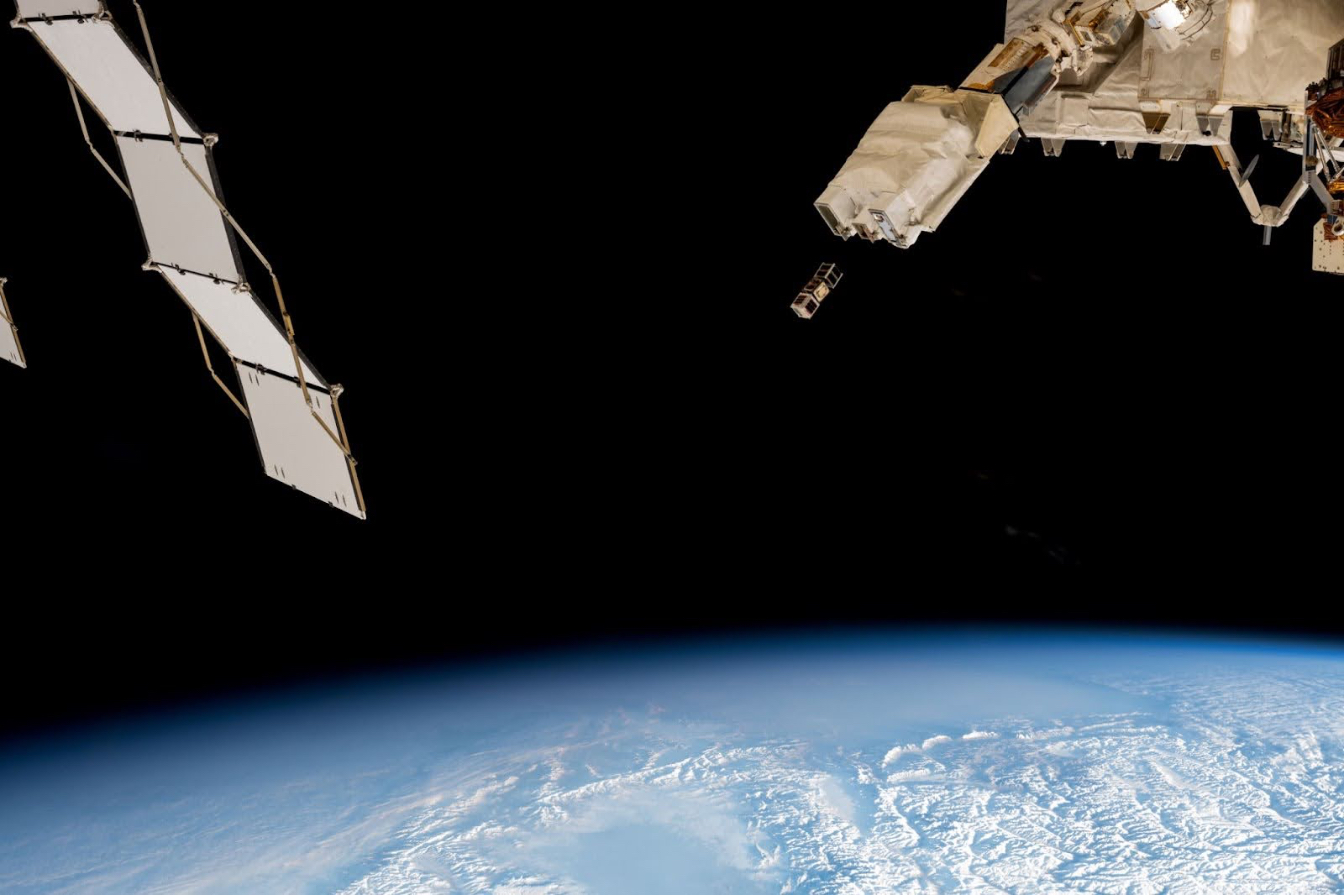
Small artificial satellites such as LignoSat (developed in collaboration between Kyoto University and Sumitomo Forestry Co., Ltd.) released from the Kibo spacecraft. Image courtesy of JAXA/NASA.

According to Kyoto University (located in Sakyo Ward, Kyoto City), the small artificial satellite released into space is currently orbiting the Earth and is scheduled to continue operating for the next three months.
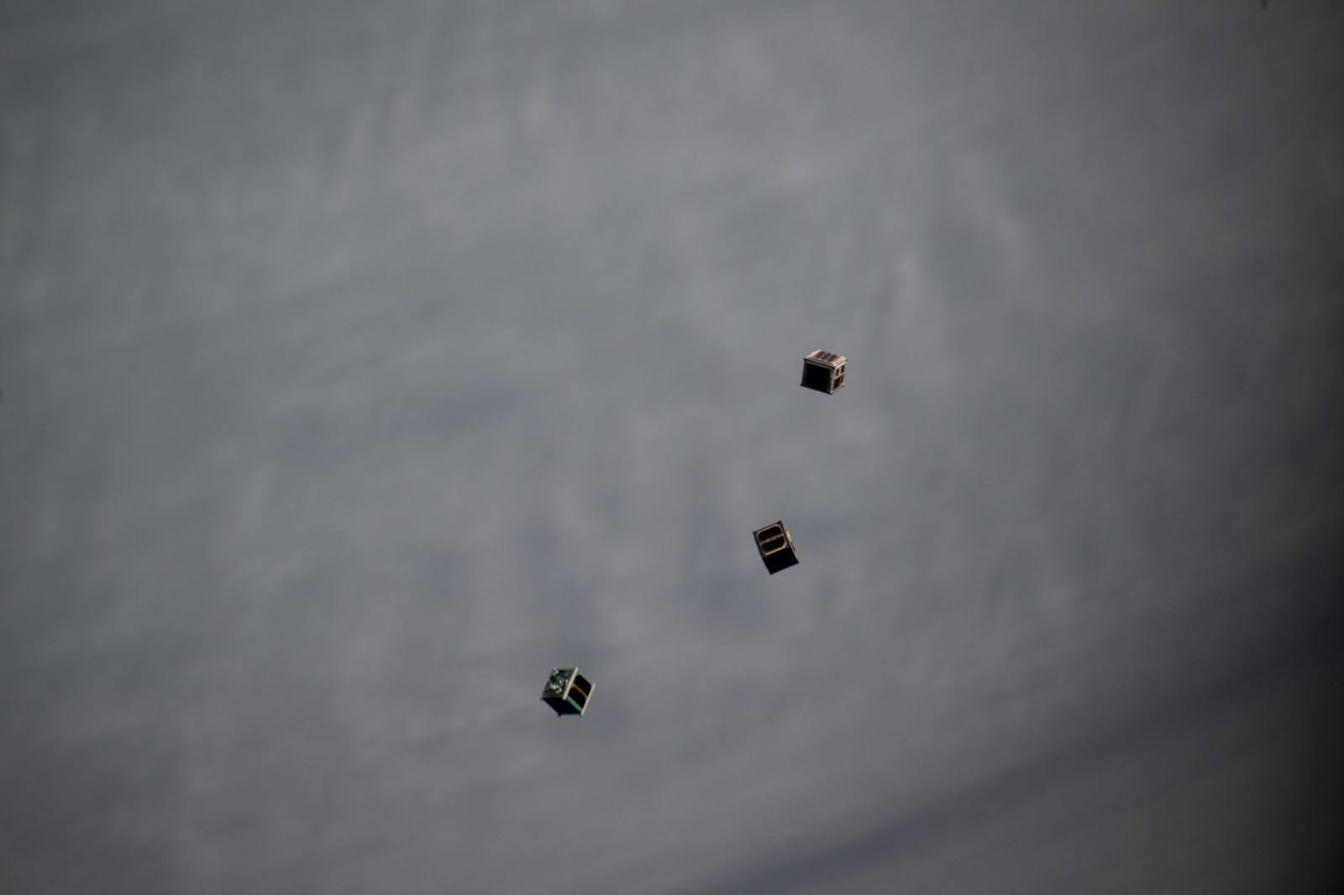
The image in the center shows the wooden artificial satellite “LignoSat” (developed in collaboration between Kyoto University and Sumitomo Forestry Co., Ltd.).

Furthermore, the wooden satellite’s structure remained stable in the space environment. Takao Doi, a former astronaut and professor at Kyoto University’s Graduate School who led the development, stated in an interview with JSTORIES, “The fact that the wooden satellite could maintain its shape in space proves that wood can also be used as a (structural) material in space,” and expressed his delight at this achievement.
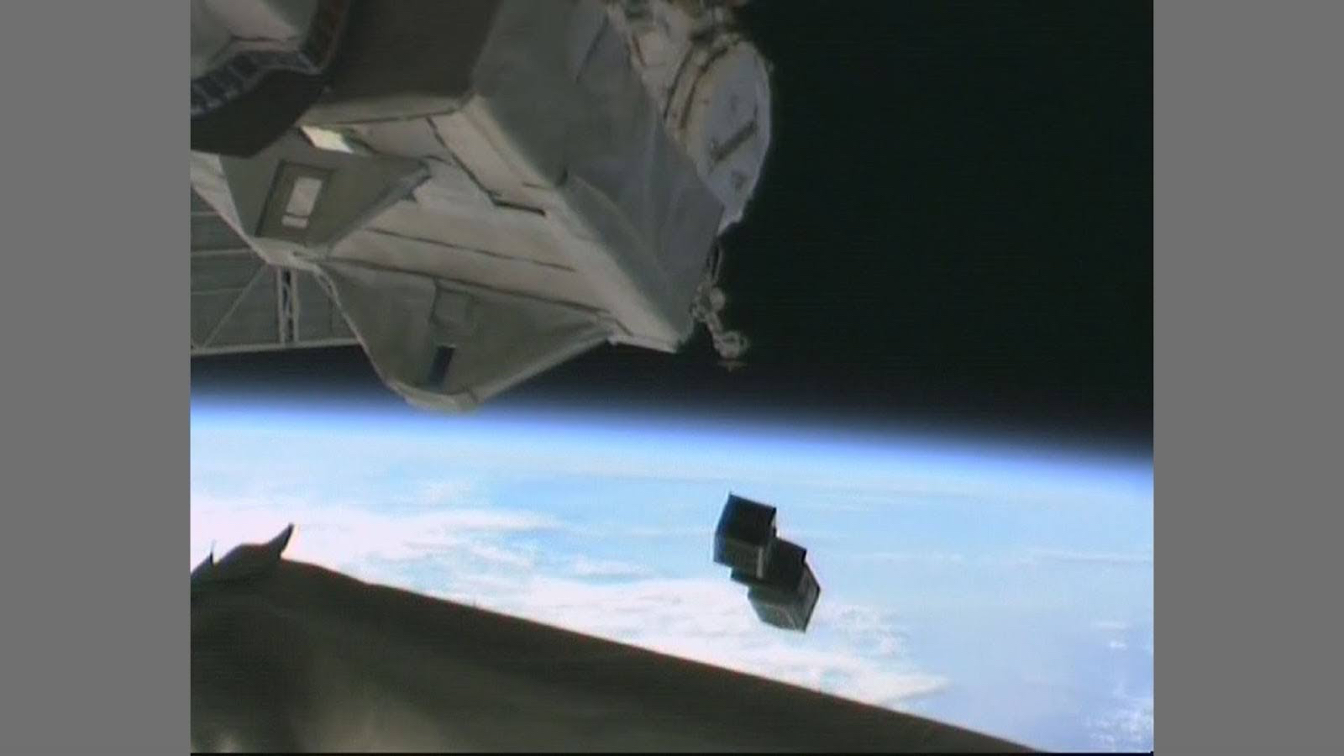
Small artificial satellites such as “LignoSat” (developed in collaboration between Kyoto University and Sumitomo Forestry Co., Ltd.) released from the “Kibo” spacecraft.
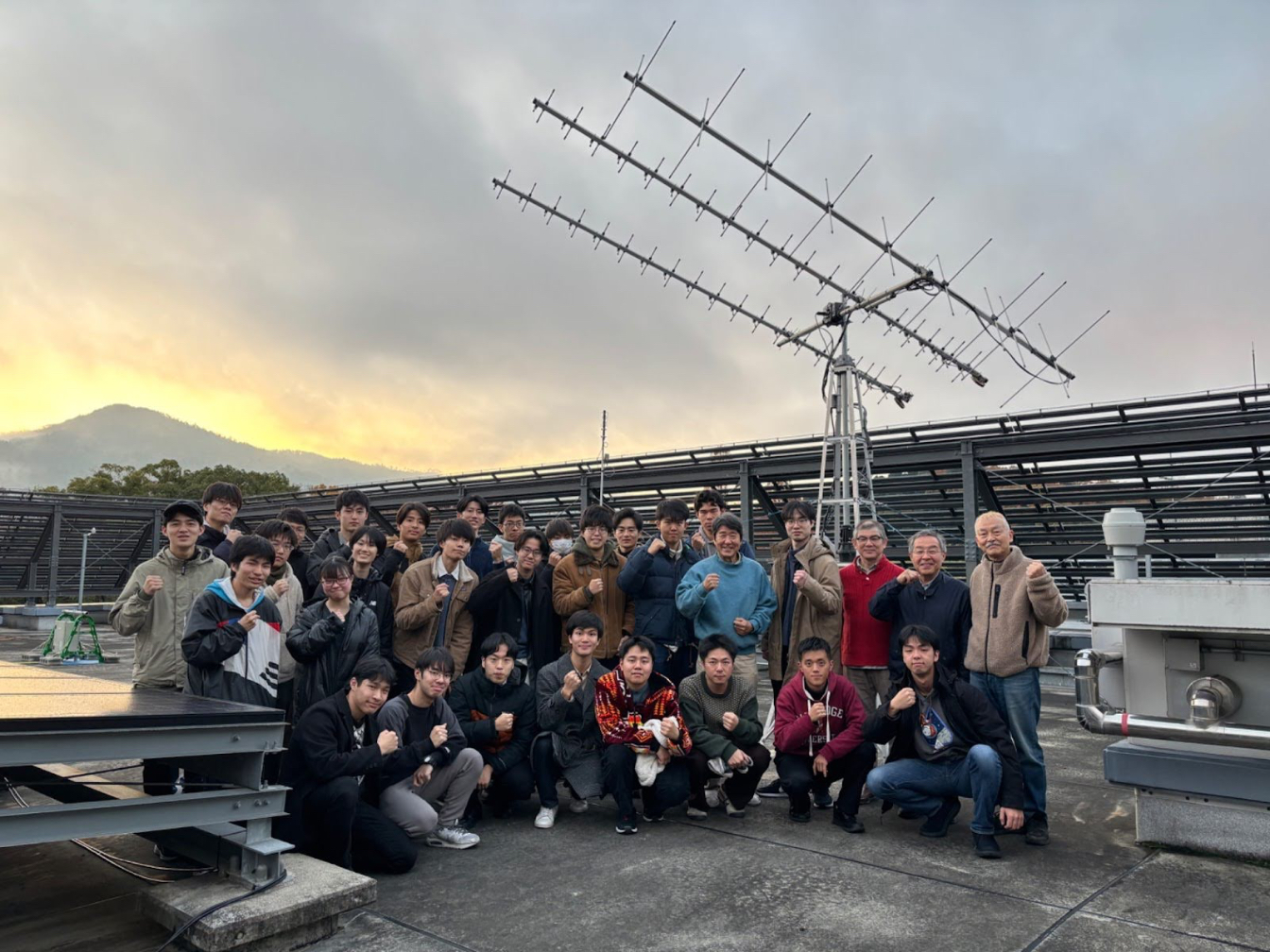
Image provided by Kyoto University: A group of Kyoto University students gathered to receive the signal.

On the other hand, although the plan was to measure the deformation, internal temperature distribution, geomagnetic field, and software errors of the wooden structure after its release and transmit the data to a communications station located on the Kyoto University campus, no signal had been received from the satellite as of January 10, 2024. Kyoto University indicated that there could be several reasons for this, but one possibility was that the satellite’s power supply had not been turned on. Considering the possibility that some external shock might have restarted the power supply, the university’s student team will continue to be stationed in the communications room, attempting to maintain communication with the satellite until the very last moment.

Kyoto University has begun developing a second version of the satellite, which will be twice the size of the wooden artificial satellite. The satellite is scheduled for launch between 2027 and 2028.
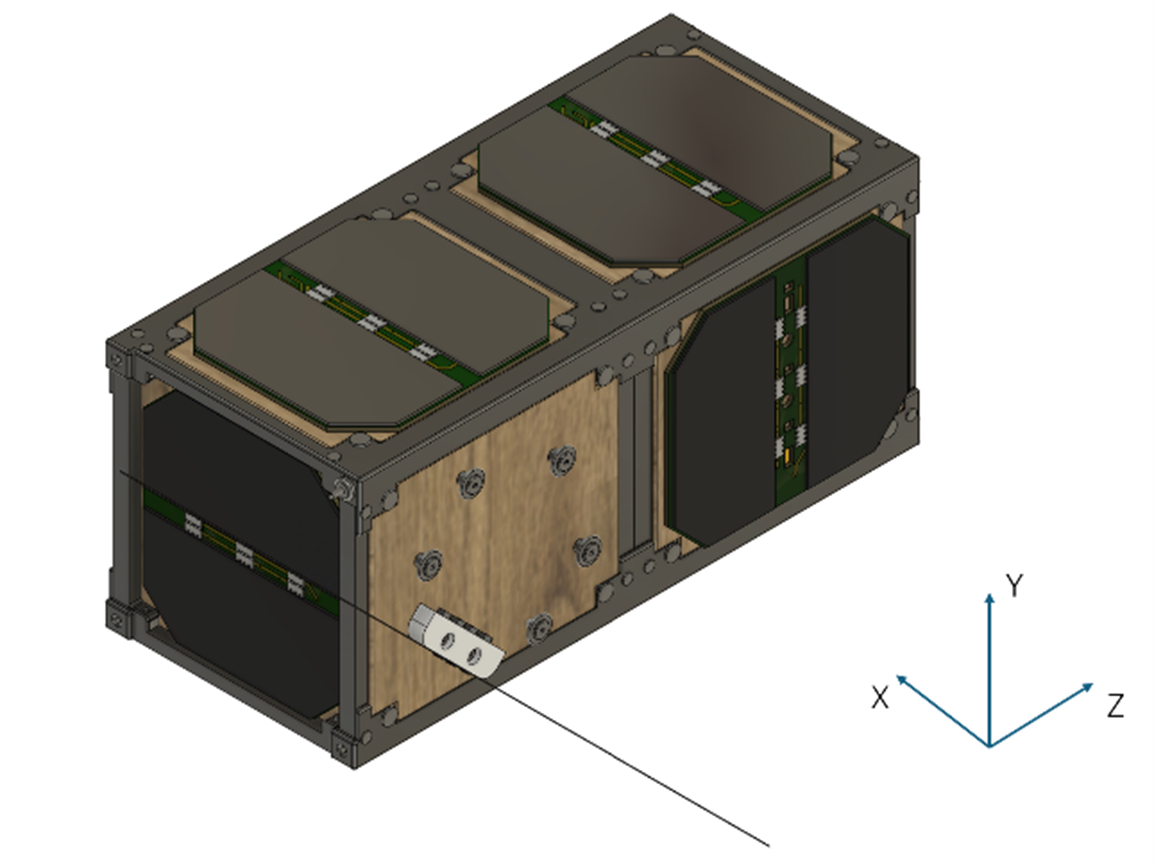
The second unit, as depicted in the rendering, is twice the size of the wooden artificial satellite.

As competition intensifies in the commercial development of space with its enormous potential, the amount of space debris , such as rockets, floating in space after completing their missions is rapidly increasing. If left unchecked, this could not only lead to satellite collisions but also exacerbate environmental pollution during atmospheric reentry, resulting in serious consequences.

To address the problem of space debris, which could become a hindrance to future space development, Japan has proposed a solution: developing wooden satellites. One way to deal with space debris is to re-enter the atmosphere and burn it up. However, traditional satellites are mostly made of metals such as aluminum or iron, which may not burn completely in the atmosphere, and the remaining metal fragments could cause environmental pollution or even abnormal weather. In contrast, wood can burn completely, thus significantly reducing these risks and becoming a more environmentally friendly option.
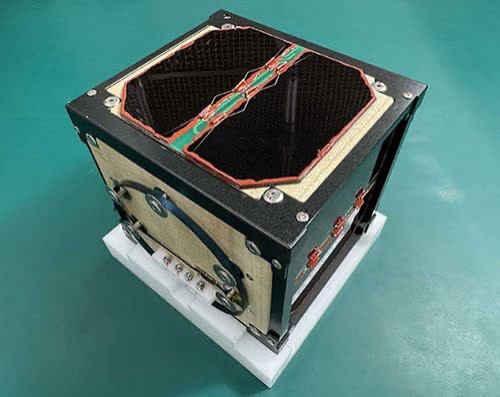
Completed wooden LignoSat flight model (actual launch vehicle)

The wooden artificial satellite released into space is a tiny cubesat with sides measuring 100 millimeters. Completed after four years of development, it was delivered to JAXA (Japan Aerospace Exploration Agency) in June 2024. Following rigorous safety reviews by NASA and JAXA, the satellite successfully passed verification, becoming the world’s first officially recognized application of wood in space.

The satellite was launched from the Kennedy Space Center in Florida aboard a SpaceX Falcon 9 rocket and transported to the International Space Station (ISS). It was subsequently released into space from the Kibo spacecraft in Japan in December.
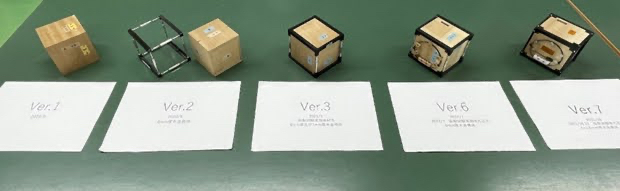
After numerous trials and improvements, a man-made satellite structure made of wooden panels was gradually completed.

The properties of wood allow it to penetrate electromagnetic waves, which means that antennas, which would normally need to be installed on the outside of a satellite, can be housed internally. This not only simplifies the satellite’s structure but also reduces the risk of malfunction. Furthermore, since there is no moisture, oxygen, or bacteria in space, wood will neither burn nor rot in the space environment.

However, the surface temperature of the International Space Station varies drastically: exceeding 100°C under sunlight and falling below -100°C when unexposed. Furthermore, space is subject to intense cosmic radiation and ultraviolet radiation. In such extreme conditions, whether the wood can ensure the satellite’s safety becomes crucial to the project’s success.

According to Cabinet Office data, a record 2,368 satellites were launched globally in 2022. This represents an 11-fold increase compared to 10 years ago, demonstrating the growing urgency of the space debris problem and highlighting the need for more effective measures to address this challenge.

Update: Isshiki Chongdian

Author of the article: Yuko Ohira

Editor: Kitamatsu Katsuro

Homepage photo: Provided by Kyoto University and Sumitomo Forestry

For inquiries about this article, please email jstories@pacificbridge.jp .


Tags: CubeSatenvironmental impact spaceFalcon 9ISSJapan space techJaxaKibou moduleKyoto universityLignoSatNasasatellite innovation Japanspace debrisSumitomo Forestrysustainable satellitesTakao Doiwooden satellite
Previous Post

[PODCAST] 獨角獸企業的計算方式如何掩蓋日本的潛力 (Part 1)

Next Post

利用生成式 AI 製作並發佈專為寵物設計的放鬆音樂 

TAKANORI ISSHIKI AND YOSHIKO OHIRA

TAKANORI ISSHIKI AND YOSHIKO OHIRA

Related Posts

Clean Tech

卵殻由来素材で実現する高耐久プラスチックと紙

by Yoshiko Ohira
02/06/2026
Earth

全球首創 從太空偵測道路塌陷風險

by Ayaka Sagasaki
01/30/2026
AgriTech

魚雜成寶山!打造美味農業與豐饒土壤

by Kei Mizuno
01/16/2026
AgriTech

足球造型除草機器人 打造永續農業

by Yoshiko Ohira
11/28/2025
Clean Tech

用旗魚的尖嘴和鹿毛打造獨一無二的牛仔褲

by Yoshiko Ohira
11/07/2025
Next Post

利用生成式 AI 製作並發佈專為寵物設計的放鬆音樂 

发表回复 取消回复

您的邮箱地址不会被公开。 必填项已用 * 标注

Videos

Round-up Video #22

07/28/2022

Round-Up Video #38

12/15/2022

Round-Up Video #32

11/03/2022

Browse by Tags

Ai Alternative Energy biotechnology circular economy Climate Change Community decarbonization Diversity Education Event Food Health Inclusion Infrastructure Innovation Interview J-Stories Japan Japan-Taiwan Innovation Summit Japan startups Japan Tech Labor Living Nature Podcast Recycling Refugees robotics Society Space Startup Startup Ecosystem Startups Sustainability Sustainable Society Taiwan Technology Tokyo Tokyo Innovation Base Tokyo Metropolitan Government Tokyo Updates venture capital video Wealth Zero Waste
JStories

©Articles and photos published on JSTORIES are protected by Japanese copyright law and international treaties. They cannot be reproduced without the permission of the copyright holders

Explore JStories

  • Home – 中文
  • 團隊
  • 新闻稿
  • 營運公司
  • 聯繫我們
  • 關於JSTORIES
  • 隱私權政策

Follow Us

Welcome Back!

Login to your account below

Forgotten Password?

Retrieve your password

Please enter your username or email address to reset your password.

Log In
No Result
View All Result
  • Home – 中文
  • AI
    • Artificial Intelligence
    • Robotics
    • Mobility
  • Earth
    • Energy
    • Climate Tech
    • AgriTech
    • Clean Tech
    • Disaster Tech
    • SpaceTech
  • Life Sciences
    • BioTech
    • HealthTech
    • MedTech
    • AgeTech
  • Society
    • Media
    • EdTech
    • Diversity
    • FemTech
    • HRTech
    • LegalTech
    • Social Impact
    • FinTech
    • Anime
  • Lifestyle
    • FoodTech
    • FashionTech
    • BeautyTech
    • Wellbeing
    • Art & Music
  • Travel
    • Adventure Travel
    • Luxury Travel
    • Wellness & Medical Tourism
    • Culture
  • Video
  • Deals
    • Venture Capital
    • M&A
    • Startup Events
    • Pitch
    • Ecosystem Support
  • Interview
  • Opinion

©Articles and photos published on JSTORIES are protected by Japanese copyright law and international treaties. They cannot be reproduced without the permission of the copyright holders

Are you sure want to unlock this post?
Unlock left : 0
Are you sure want to cancel subscription?