• Login
Upgrade
JStories
  • 日本語
  • 中文 (中国)
No Result
View All Result
  • Home
  • AI
    • Artificial Intelligence
    • Robotics
    • Mobility
  • Earth
    • Energy
    • Climate Tech
    • AgriTech
    • Clean Tech
    • Disaster Tech
    • SpaceTech
  • Life Sciences
    • BioTech
    • HealthTech
    • MedTech
    • AgeTech
  • Society
    • Media
    • EdTech
    • Diversity
    • FemTech
    • HRTech
    • LegalTech
    • Social Impact
    • FinTech
    • Anime
  • Lifestyle
    • FoodTech
    • FashionTech
    • BeautyTech
    • Wellbeing
    • Art & Music
  • Travel
    • Adventure Travel
    • Luxury Travel
    • Wellness & Medical Tourism
    • Culture
  • Video
  • Deals
    • Venture Capital
    • M&A
    • Startup Events
    • Pitch
    • Ecosystem Support
  • Interview
  • Opinion
  • Home
  • AI
    • Artificial Intelligence
    • Robotics
    • Mobility
  • Earth
    • Energy
    • Climate Tech
    • AgriTech
    • Clean Tech
    • Disaster Tech
    • SpaceTech
  • Life Sciences
    • BioTech
    • HealthTech
    • MedTech
    • AgeTech
  • Society
    • Media
    • EdTech
    • Diversity
    • FemTech
    • HRTech
    • LegalTech
    • Social Impact
    • FinTech
    • Anime
  • Lifestyle
    • FoodTech
    • FashionTech
    • BeautyTech
    • Wellbeing
    • Art & Music
  • Travel
    • Adventure Travel
    • Luxury Travel
    • Wellness & Medical Tourism
    • Culture
  • Video
  • Deals
    • Venture Capital
    • M&A
    • Startup Events
    • Pitch
    • Ecosystem Support
  • Interview
  • Opinion
en English ja 日本語 zh 中文 (中国)
JStories
No Result
View All Result

A technology to help stagnant waters ‘breathe’ again

Kei Mizuno by Kei Mizuno
06/21/2025
in AI, Clean Tech, Climate Tech, Earth, Mobility, Robotics, Social Impact, Society
0
Home AI
Share on FacebookShare on Twitter

JSTORIES ー The first things we tend to think of when we hear the term “global warming” are melting glaciers and rising sea levels. However, global warming is also a major cause of water pollution. As water temperatures rise, phytoplankton multiply. This causes abnormal growth in organisms such as blue-green algae and reduces the amount of oxygen in the water. Fish and other algae suffocate while foul odors and toxic substances spread, destroying the aquatic environment.

In recent years, global warming has caused a chain reaction of worsening water quality and deteriorating ecosystems. This has been observed in oceans, rivers and lakes not just in Japan, but around the world. The presence of blue-green algae has even been confirmed in Russia’s Lake Baikal, regarded as one of the world’s clearest lakes.
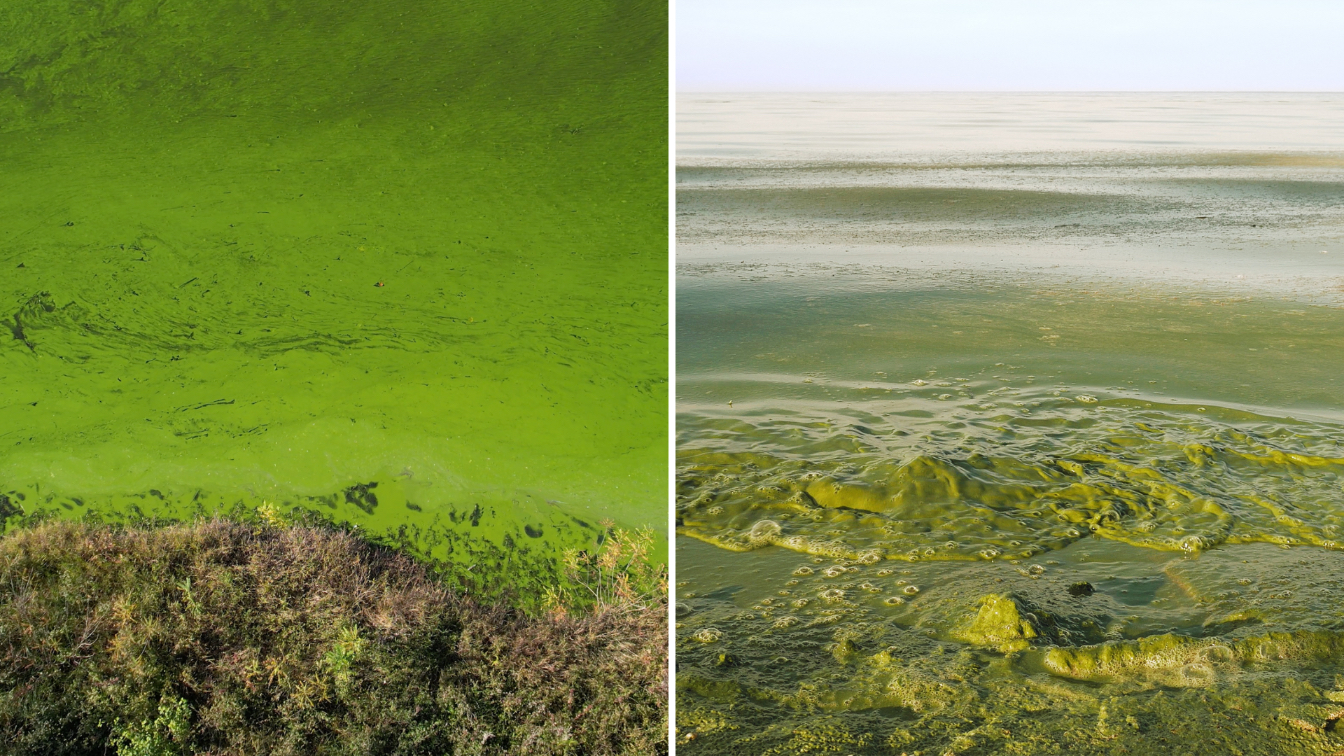
Examples of the damage caused by global warming           Source: Envato

One way to halt this deterioration in water quality and restore aquatic environments is an artificial process called “Lake Biwa deep breathing.” It mimics a natural phenomenon in Lake Biwa, Japan’s largest freshwater lake, located just northeast of Kyoto. During the winter, cold air and wind cause the cold water near the surface of Lake Biwa to mix with the warmer water at the bottom, naturally equalizing oxygen levels and water temperature. This purification phenomenon is known as “complete turnover” or “lake overturn” in English, but can also occur in the ocean due to wave movement caused by large storms.

In the past, one method to promote complete overturn and revitalize stagnant water has been to blow air into the water. However, it is expensive and the large size of the equipment required makes it unsuitable for rivers and other shallow bodies of water. Chemicals can also be used for quick results, but there are concerns over long-term residual effects on water quality and ecosystems.

A number of startups are working on technologies that can promote natural purification through so-called Lake Biwa deep breathing. One is Ebismarine, based in the southern Japanese city of Nagasaki. Specializing in environmental technology, the company has obtained patents in 25 countries and is working to clean up water in various regions.

Ryoji Terai, chairman of Ebismarine and president of its parent company, Ebistrade, explains that its core technology is the “Jet Streamer.” With the mission of “revitalizing the world’s water, this device achieves more efficient and cost-effective water circulation by using water instead of air.
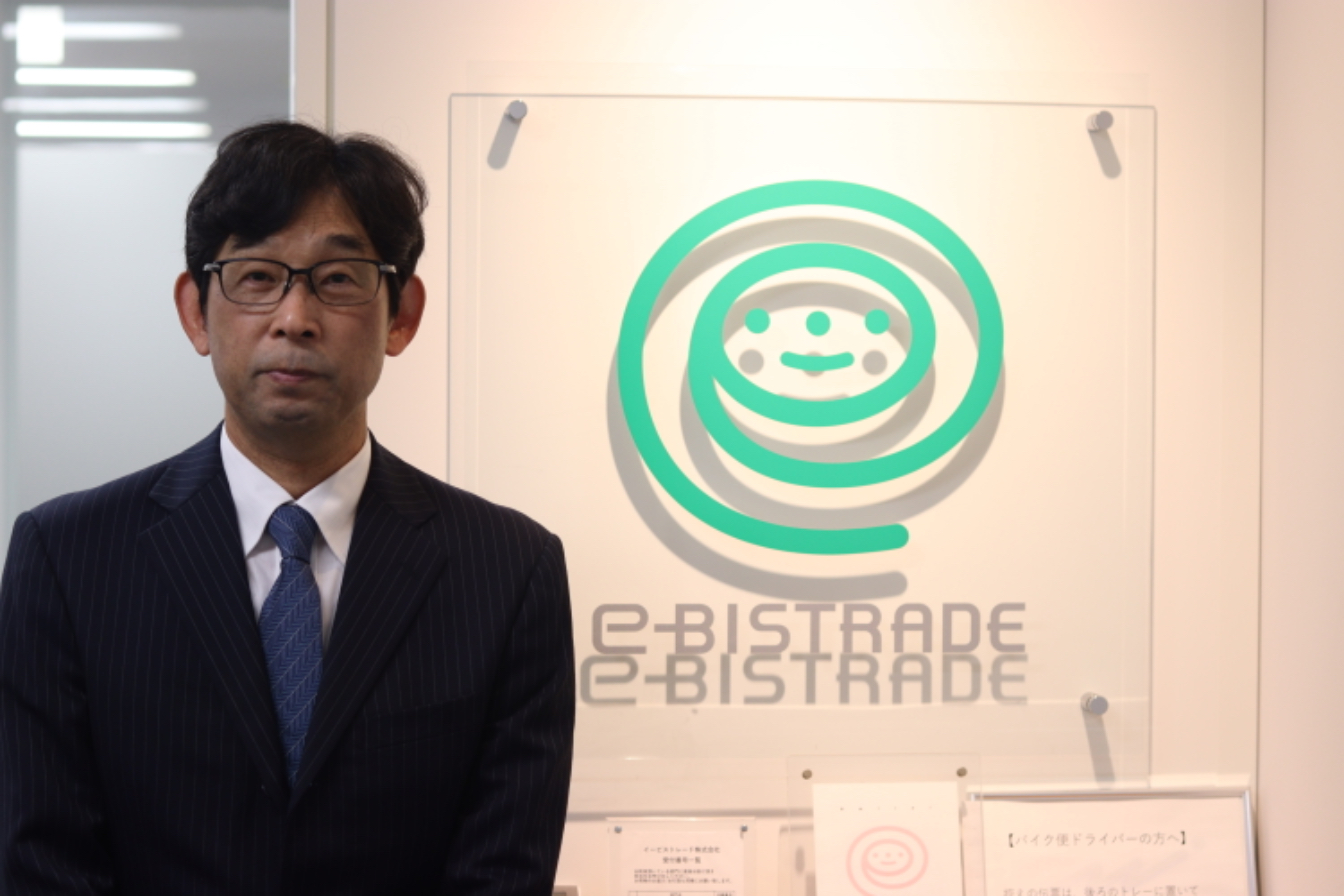
Ryoji Terai, chairman of Ebismarine and president of its parent company, Ebistrade     Photo courtesy of Ebismarine (Same below)

“This technology improves water quality throughout the entire water column, from the surface to the bottom, by moving water with water itself, and without using chemical agents,” says Terai, describing it as an “Eastern medicine-like approach” that restores natural purification capacity using water alone.
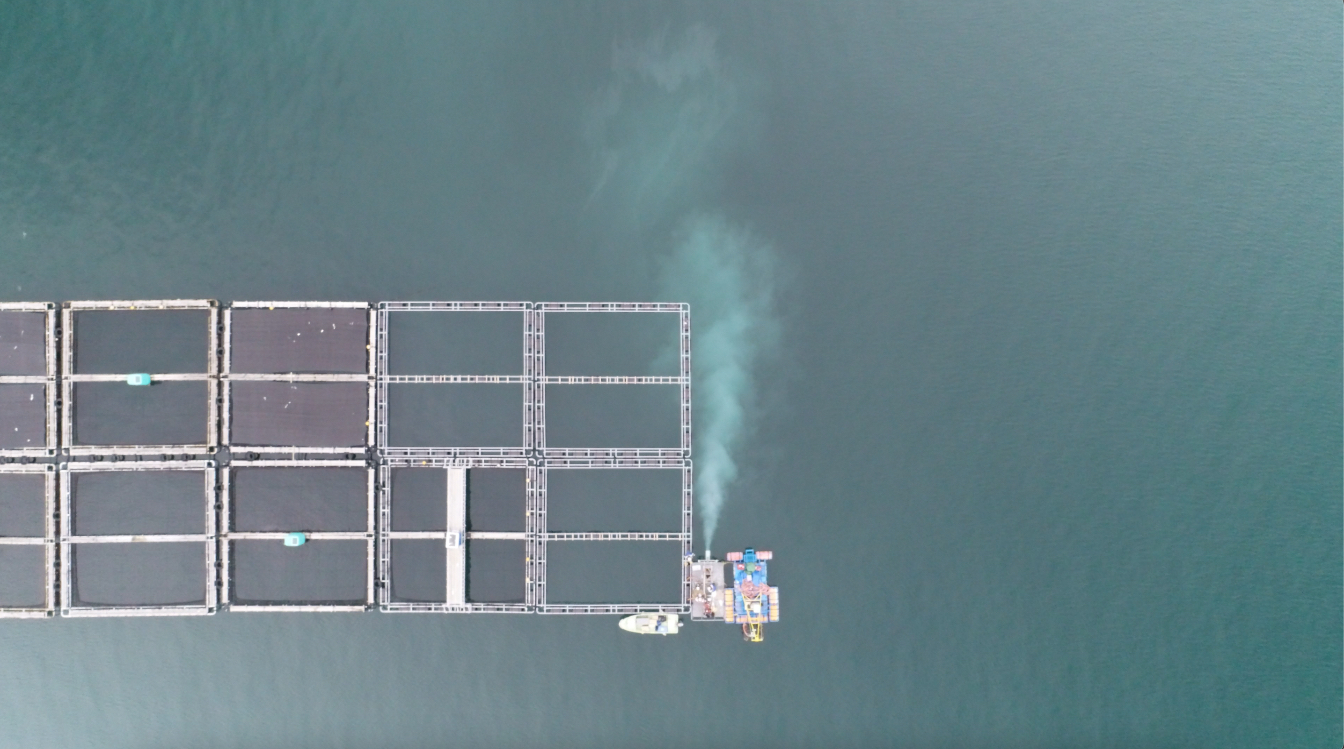
The Jet Streamer in operation, generating efficient water movement

The cost to install the Jet Streamer in a dam is 50 million to 100 million yen, but this is just around one-third that of conventional devices. Due to its hollow structure, floating garbage won’t get trapped in the device, reducing the need for maintenance. It uses a streamlining tube made from fiber-reinforced plastic, which combines low weight with high strength and durability. Once installed the system remains operational for over 10 years.

Since the Jet Streamer is smaller, lighter, and more cost-effective than conventional devices, it is easy to relocate or remove and can also be installed in shallow locations such as rivers. This makes it suitable for temporary seasonal projects, such as during summer months when water quality tends to deteriorate. Ultrasonic devices and ozone generators can also be added as optional extras, offering flexible solutions for different situations, including blue-green algae conditions, water depths, and varying terrain.
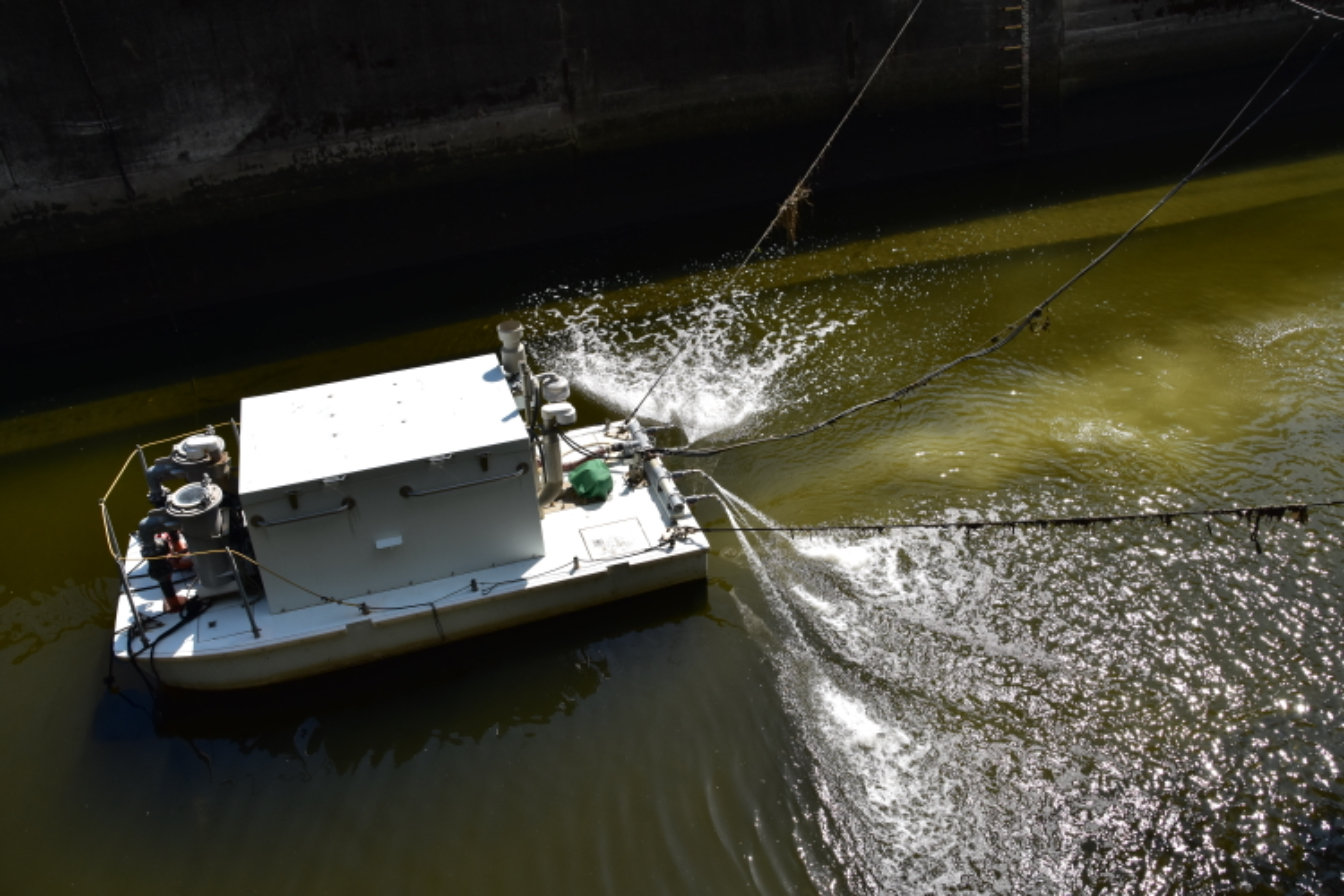
The Jet Streamer in action, a technology being used to improve water quality and circulation

According to Terai, the company’s Jet Streamer has already been installed in various locations, from Aomori Prefecture in Japan’s north to Okinawa Prefecture in the south.It has been used for jellyfish control at sea, dealing with red tide and blue tide algae blooms, in dams, lakes and marshes, in fish farms, and for water quality improvement at plants. Inquiries have also been received from overseas, including triathlon and marathon swim venues during the Olympic Games and countries in Asia.
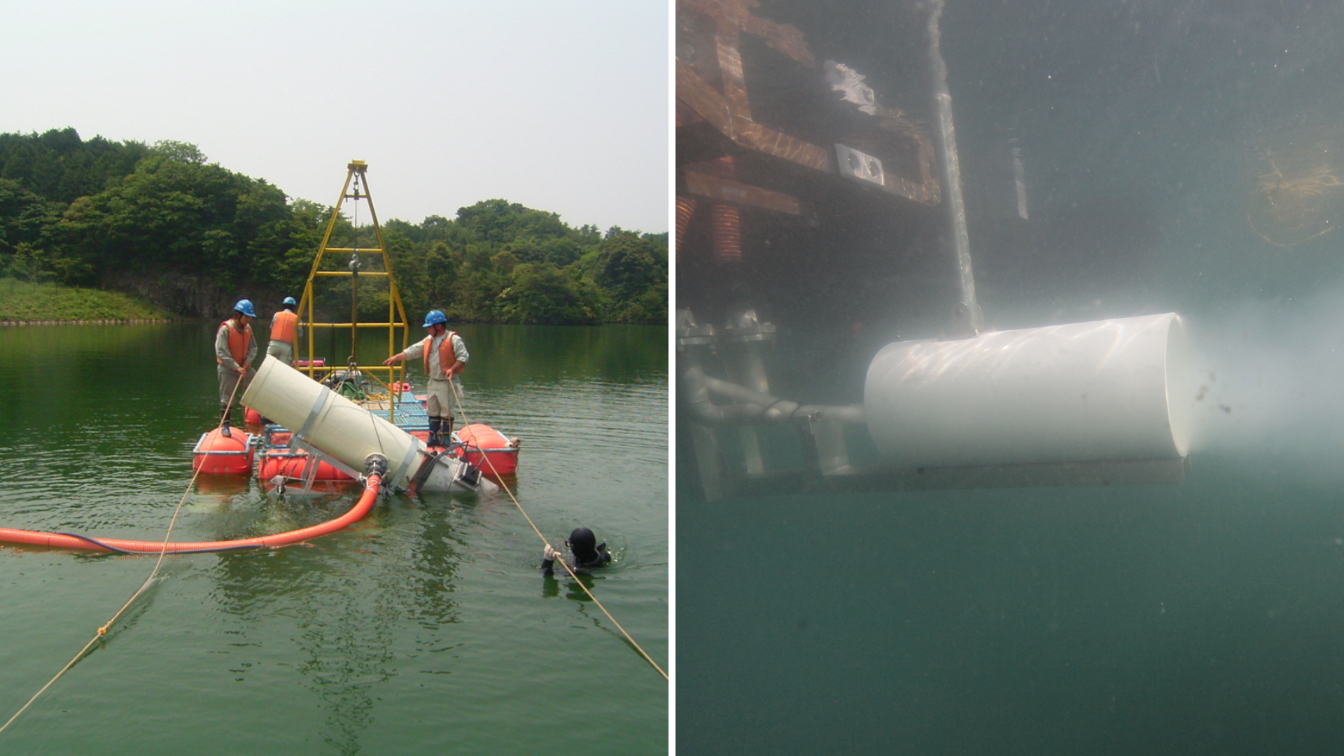
Left: The installation of the Jet Streamer at Nagahama Dam in Saga, showcasing its effectiveness in promoting water circulation in large bodies of water. Right: Water flow is also expected to be used for red tide countermeasures in the ocean

In 2024, the company partnered with Nagasaki Prefecture on demonstration experiments to control red tides using the Jet Streamer, while full-scale operational use of the device in the prefecture is scheduled for this summer. Red tide has caused widespread damage in Nagasaki, including the loss of around 530,000 farmed fish at an estimated cost of 1.5 billion yen. Because of this, the local fisheries industry has high hopes for the technology.
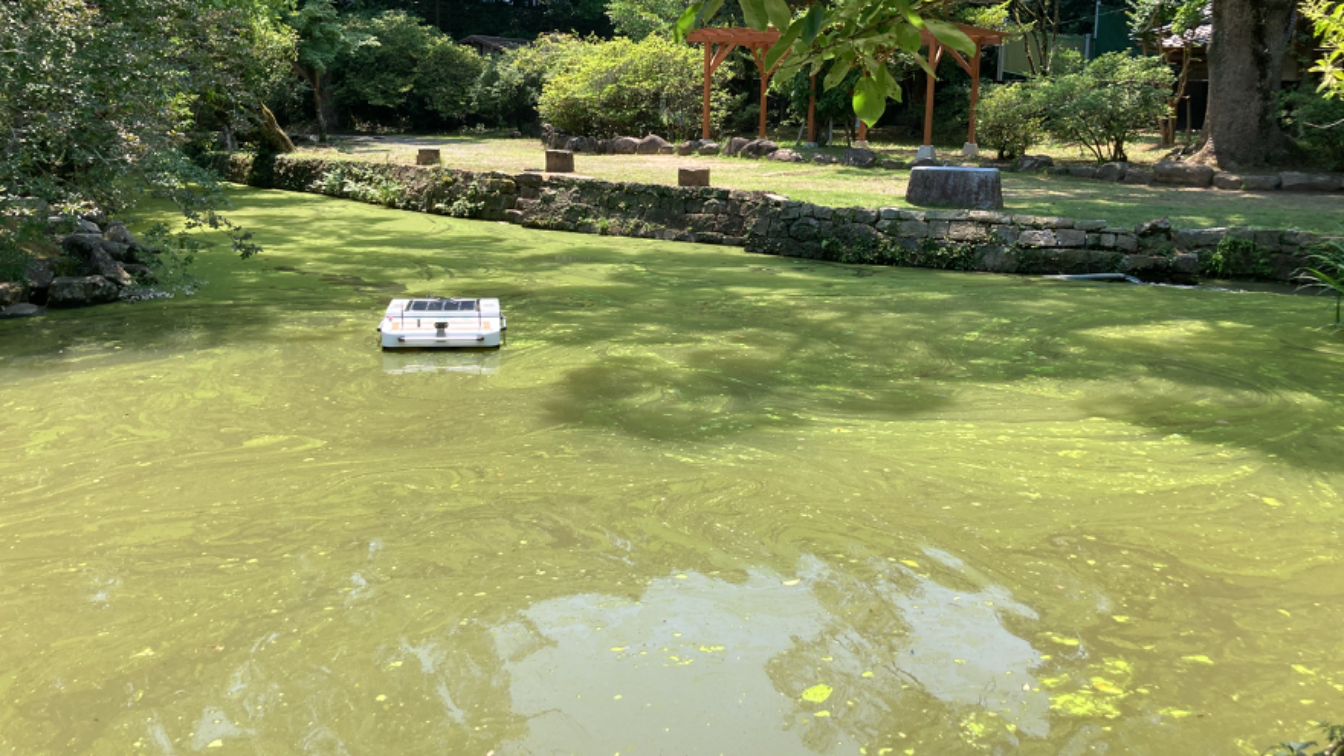
The Aokowatcher, a solar-powered floating device, designed by Ebismarine to help monitor and remove blue-green algae from water surfaces

The company is also working on a device that uses air instead of water; or, as it puts it, “moving air with air.” This device, the world’s first wingless fan-type blower, was jointly developed with the Tokyo Metropolitan Sewerage Service Corp. and is already in use at sewer construction sites, where it helps ventilate tunnels and prevent accidents caused by oxygen deficiency and the inhalation of toxic gases.

“We are ‘flow experts,’” says Terai. Our mission is to stir up stagnant things and revitalize them.”
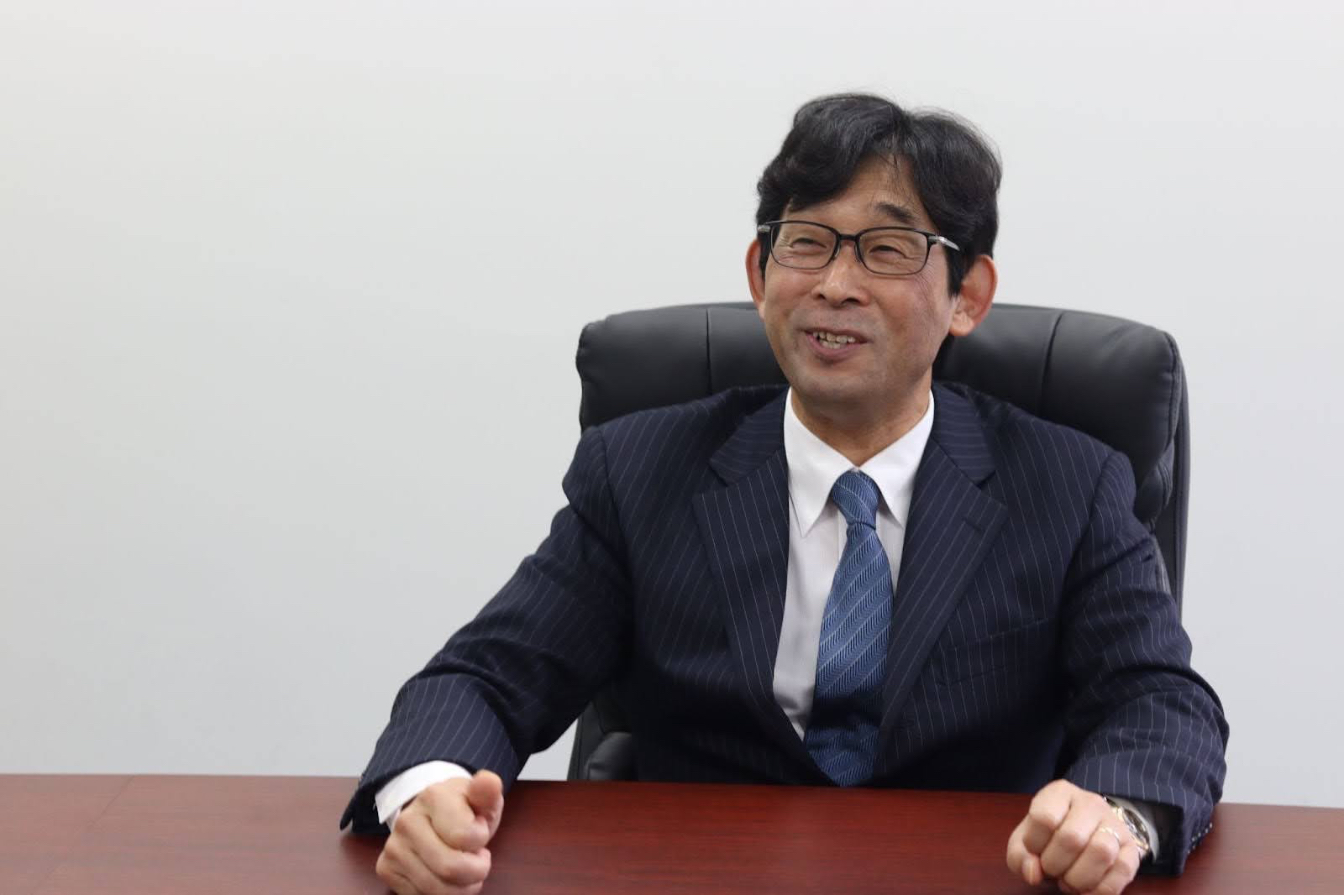
Ryoji Terai emphasizes the importance of revitalizing stagnant environments as part of the company’s mission to improve water quality.

Nagasaki Prefecture is particularly prone to stagnant water, surrounded as it is with mountains, sea and many bays. The local economy has also stagnated in recent years, with the prefecture suffering from a shrinking population compounded by what was Japan’s third-highest outward migration in 2023.

“Water, air, the economy… they all cause problems when they stagnate,” says Terai. “We want to make them flow, make them move, and revitalize. There are many places in Japan and overseas that need our technology.”
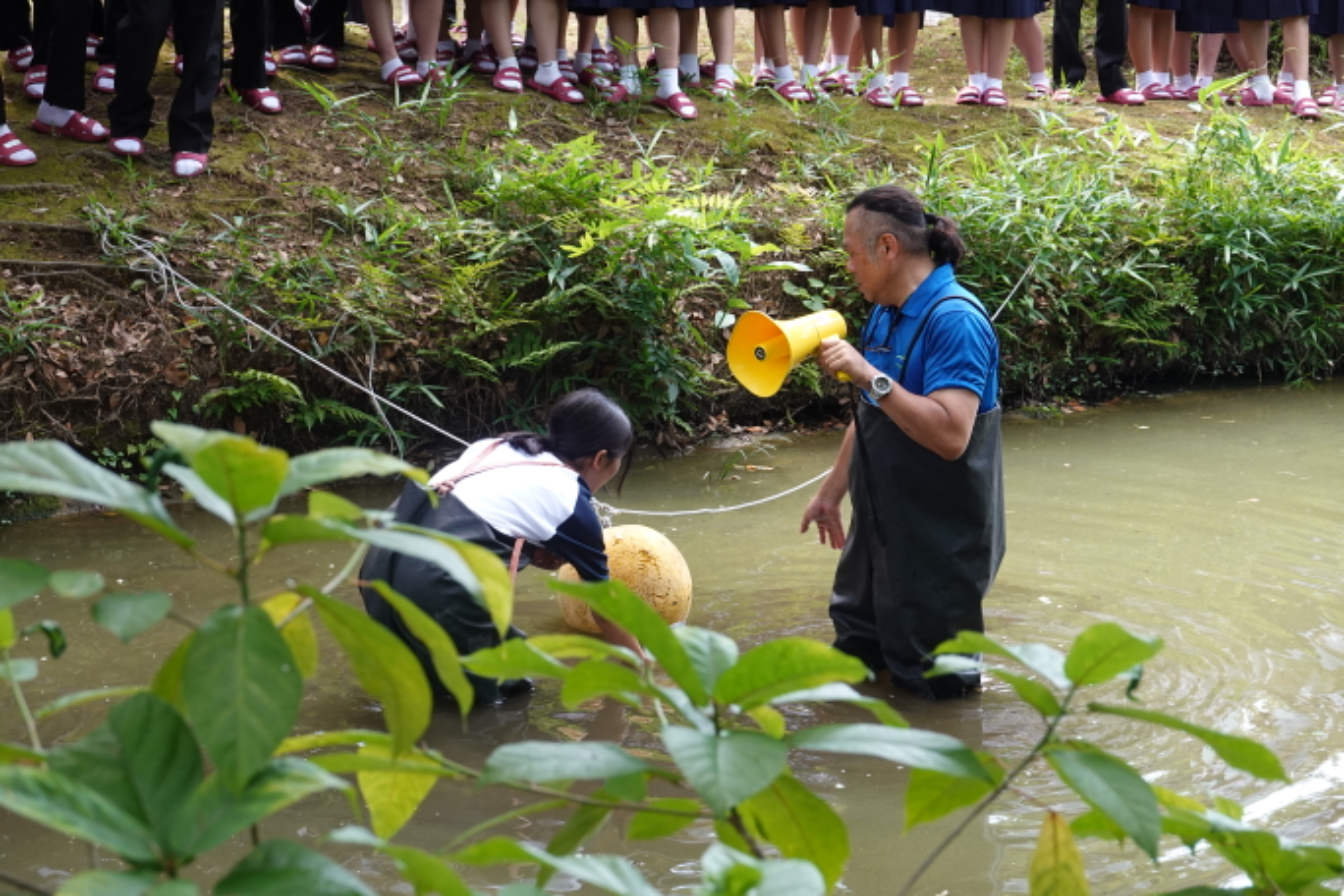
Ebismarine’s staff conduct a workshop on environmental technology with high school students during a field trip to the factory

Ultimately, he says, his company’s goal is to not only revitalize Nagasaki’s environment, but its economy, too.

Translated by Tony McNicol

Edited by Mark Goldsmith

Top photo: Photo courtesy of Ebismarine (Collage by JStories)

For inquiries regarding this article, please contact jstories@pacificbridge.jp


Click here for the Japanese version of the article

Tags: Clean WaterEnvironmental TechnologyInterviewJapanOxygen DepletionSustainabilityTechnologyWater Pollution
Previous Post

Protecting your AI innovation: Strategies for startups (Second part)

Next Post

TOKYO SNAPSHOTS | When night falls, a new Tokyo emerges

Kei Mizuno

Kei Mizuno

Related Posts

Japan leads global collaboration to combat AI disinformation
AI

Japan leads global collaboration to combat AI disinformation

by Ayaka Sagasaki
03/16/2026
Clean Tech

Japanese startup turns eggshell waste into eco-friendly plastics and paper

by Yoshiko Ohira
02/06/2026
Anime

World-first “anime character-based therapy” trial to test effectiveness in Japanese young adults

by Lucas Maltzman
01/30/2026
Earth

A world first: Detecting road sinkholes from space

by Ayaka Sagasaki
01/30/2026
Social Impact

From a childhood shaped by conflict to an investor bridging Japan and the world

by Ayaka Sagasaki
01/23/2026
Next Post

TOKYO SNAPSHOTS | When night falls, a new Tokyo emerges

Leave a Reply Cancel reply

Your email address will not be published. Required fields are marked *

Videos

Round-up Video #13

05/26/2022

Harmonizing tradition and technology with immersive sound experience

07/19/2023

Round-Up Video #39

12/22/2022

Browse by Tags

Ai Alternative Energy biotechnology Climate Change Community decarbonization Education Event Food foodtech Health Inclusion Infrastructure Innovation Interview J-Stories Japan Japan-Taiwan Innovation Summit Japan startups Japan Tech Labor Living Nature Podcast Recycling Refugees robotics Society Space Startup Startup Ecosystem Startups SusHI Tech Tokyo Sustainability Sustainable Society Taiwan Technology Tokyo Tokyo Innovation Base Tokyo Metropolitan Government Tokyo Updates venture capital video Wealth Zero Waste
JStories

©Articles and photos published on JSTORIES are protected by Japanese copyright law and international treaties. They cannot be reproduced without the permission of the copyright holders

Explore JStories

  • About Jstories
  • Company
  • Contact
  • Home
  • Partner Press Releases
  • Pricing
  • Privacy Policy
  • Team

Follow Us

Welcome Back!

Login to your account below

Forgotten Password?

Retrieve your password

Please enter your username or email address to reset your password.

Log In
No Result
View All Result
  • Home
  • AI
    • Artificial Intelligence
    • Robotics
    • Mobility
  • Earth
    • Energy
    • Climate Tech
    • AgriTech
    • Clean Tech
    • Disaster Tech
    • SpaceTech
  • Life Sciences
    • BioTech
    • HealthTech
    • MedTech
    • AgeTech
  • Society
    • Media
    • EdTech
    • Diversity
    • FemTech
    • HRTech
    • LegalTech
    • Social Impact
    • FinTech
    • Anime
  • Lifestyle
    • FoodTech
    • FashionTech
    • BeautyTech
    • Wellbeing
    • Art & Music
  • Travel
    • Adventure Travel
    • Luxury Travel
    • Wellness & Medical Tourism
    • Culture
  • Video
  • Deals
    • Venture Capital
    • M&A
    • Startup Events
    • Ecosystem Support
  • Interview
  • Opinion

©Articles and photos published on JSTORIES are protected by Japanese copyright law and international treaties. They cannot be reproduced without the permission of the copyright holders

Are you sure want to unlock this post?
Unlock left : 0
Are you sure want to cancel subscription?