• Login
Upgrade
JStories
  • 日本語
  • 中文 (中国)
No Result
View All Result
  • Home
  • AI
    • Artificial Intelligence
    • Robotics
    • Mobility
  • Earth
    • Energy
    • Climate Tech
    • AgriTech
    • Clean Tech
    • Disaster Tech
    • SpaceTech
  • Life Sciences
    • BioTech
    • HealthTech
    • MedTech
    • AgeTech
  • Society
    • Media
    • EdTech
    • Diversity
    • FemTech
    • HRTech
    • LegalTech
    • Social Impact
    • FinTech
    • Anime
  • Lifestyle
    • FoodTech
    • FashionTech
    • BeautyTech
    • Wellbeing
    • Art & Music
  • Travel
    • Adventure Travel
    • Luxury Travel
    • Wellness & Medical Tourism
    • Culture
  • Video
  • Deals
    • Venture Capital
    • M&A
    • Startup Events
    • Pitch
    • Ecosystem Support
  • Interview
  • Opinion
  • Home
  • AI
    • Artificial Intelligence
    • Robotics
    • Mobility
  • Earth
    • Energy
    • Climate Tech
    • AgriTech
    • Clean Tech
    • Disaster Tech
    • SpaceTech
  • Life Sciences
    • BioTech
    • HealthTech
    • MedTech
    • AgeTech
  • Society
    • Media
    • EdTech
    • Diversity
    • FemTech
    • HRTech
    • LegalTech
    • Social Impact
    • FinTech
    • Anime
  • Lifestyle
    • FoodTech
    • FashionTech
    • BeautyTech
    • Wellbeing
    • Art & Music
  • Travel
    • Adventure Travel
    • Luxury Travel
    • Wellness & Medical Tourism
    • Culture
  • Video
  • Deals
    • Venture Capital
    • M&A
    • Startup Events
    • Pitch
    • Ecosystem Support
  • Interview
  • Opinion
en English ja 日本語 zh 中文 (中国)
JStories
No Result
View All Result

High-tech solutions to global problem

Ayaka Sagasaki by Ayaka Sagasaki
12/29/2023
in Clean Tech, Climate Tech, Deals, Disaster Tech, Earth, Ecosystem Support, Venture Capital
0
Home Earth Clean Tech
Share on FacebookShare on Twitter

J-STORIES- A Japanese startup is looking at ways to help solve problems centering around a resource that is at the heart our existence.

Tokyo-based Wota Corp. is developing technology to overcome water shortage issues brought on by global warming and population growth that the World Meteorological Organization has warned will affect some 5 billion people worldwide by 2050.

Among the company’s products are small, decentralized water recycling systems and autonomous control systems for water treatment.

Large-scale water treatment typically relies on the experience and intuition of specialists to ensure good water quality. The systems developed by Wota, however, use proprietary sensors and AI to ensure similar water quality autonomously, and on a much smaller scale.

An example is the company’s Wota Box, a portable water treatment plant that can recycle 100 liters of water some 100 times. Released in 2019, it can provide shower facilities in situations where water mains connection is unavailable, such as after an earthquake, or other natural disaster. Wota Box is also suitable for outdoor events and at campsites.
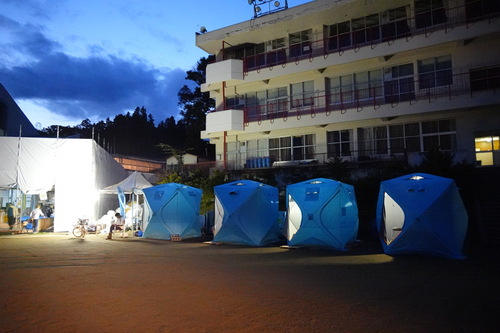
Wota Box showers being used in Nagano prefecture following a typhoon in 2019.     Source: Wota

The company has also developed a drum-shaped hand-washing stand called “Wosh.” The device can recycle 20 liters of water around 500 times without any need to connect it to the main water supply.

Wosh employs three filters— two of them activated carbon, the other a reverse osmosis membrane, deep ultraviolet rays (UVC), and chlorine disinfection to remove over 99.9 percent of bacteria and viruses from water. The stands are already in use in Japan at two major cafe and fast-food chains as well as one of the country’s largest supermarket chains.
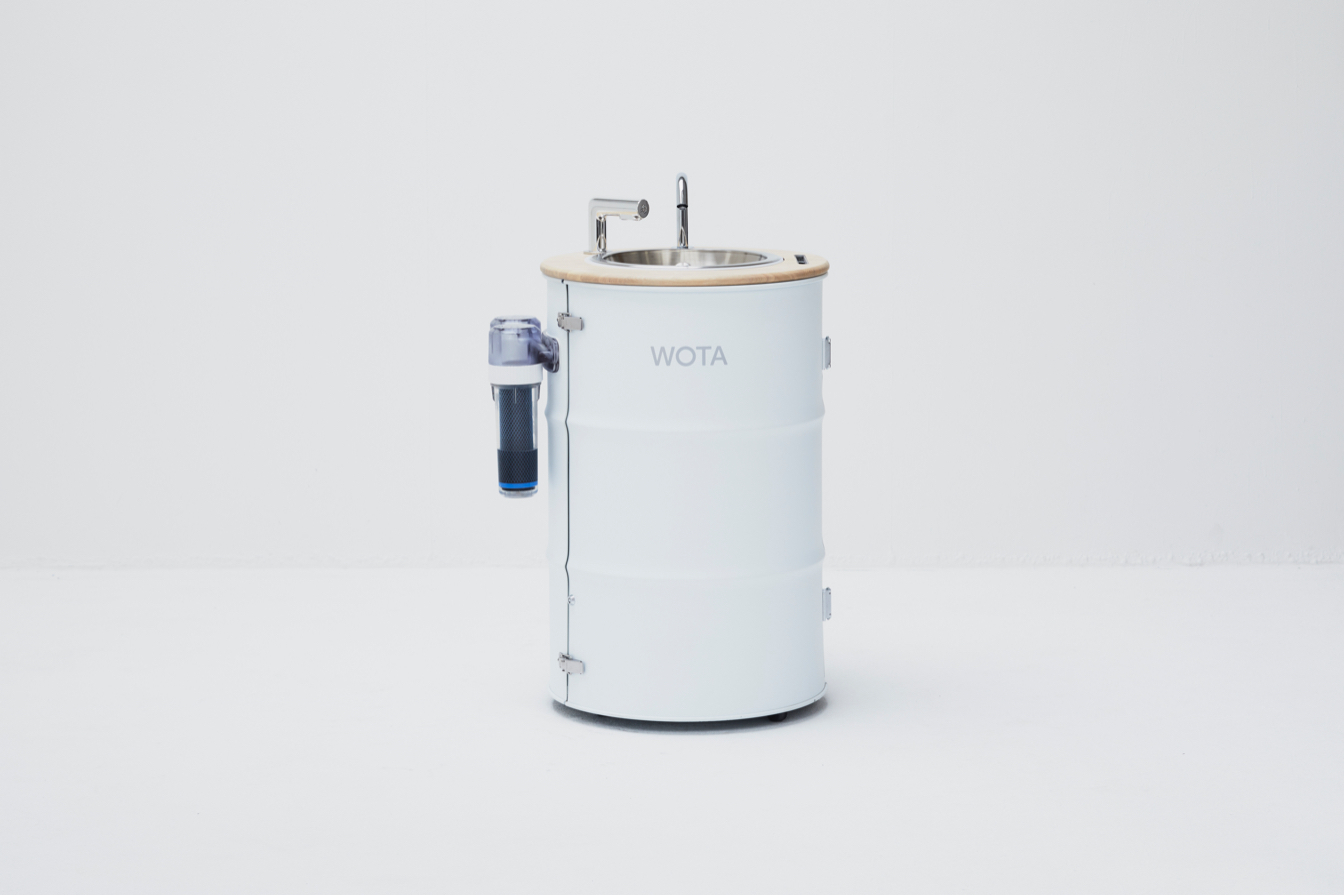
The “Wosh” hand-washing stand recycles 98 percent of the water used each wash.     Source: Wota

This March, the company launched a joint project with Japanese cosmetics manufacturer Kao Corp., and the following month it agreed to work with the government of the Caribbean island nation of Antigua and Barbuda to address local water issues. As part of that, it will study and test the use of small-scale distributed water recycling systems.

In addition to the global water shortage threats, Japan is one of many countries that face natural phenomena such as typhoons and earthquakes that regularly disrupt water supplies. In the central Japan resort town of Karuizawa, Wota is trialing a small-scale water recycling system that it has installed in a residential home. The project aims to collect rainwater and recycle it, thus removing the need to connect to water and sewage systems during such natural disasters.

In October, the company also agreed to work with SoftBank Group and others to test an “off-grid residential module” that enables self-sufficiency in water, electricity, and communications. This is intended for use on the tiny Japanese island of Toshima, which has recently struggled with water supply issues. In future, Wota hopes to provide water supply systems to other isolated islands and depopulated regions.

Translation by Tony McNicol

Top page photo by Wota

For inquiries about this article, please contact us at jstories@pacificbridge.jp


Click here for the Japanese version of the article.

Tags: Antigua and BarbudaAutonomous Water Treatmentcircular economyClimate AdaptationDecentralized InfrastructureESG InvestingJapan TechJWADNoto Peninsula EarthquakeSmart CityWater RecyclingWater ResilienceWOSHWOTA BOXWOTA Corp
Previous Post

Breathing new life into old wood

Next Post

Researchers coat robotic finger with self-healing skin

Ayaka Sagasaki

Ayaka Sagasaki

Related Posts

Japan leads global collaboration to combat AI disinformation
AI

Japan leads global collaboration to combat AI disinformation

by Ayaka Sagasaki
03/16/2026
Deals

More than 700 startups to gather at SusHi Tech Tokyo 2026, Asia’s largest global innovation conference

by Toshi Maeda
02/20/2026
Clean Tech

Japanese startup turns eggshell waste into eco-friendly plastics and paper

by Yoshiko Ohira
02/06/2026
Earth

A world first: Detecting road sinkholes from space

by Ayaka Sagasaki
01/30/2026
AgriTech

Fish scraps as a hidden treasure

by Kei Mizuno
01/16/2026
Next Post

Researchers produce baby mice from the cells of two male parents

Leave a Reply Cancel reply

Your email address will not be published. Required fields are marked *

Videos

Round-Up Video #30

10/13/2022

Round-Up Video #33

11/10/2022

Round-up Video #22

07/28/2022

Browse by Tags

Ai Alternative Energy biotechnology Climate Change Community decarbonization Education Event Food foodtech Health Inclusion Infrastructure Innovation Interview J-Stories Japan Japan-Taiwan Innovation Summit Japan startups Japan Tech Labor Living Nature Podcast Recycling Refugees robotics Society Space Startup Startup Ecosystem Startups SusHI Tech Tokyo Sustainability Sustainable Society Taiwan Technology Tokyo Tokyo Innovation Base Tokyo Metropolitan Government Tokyo Updates venture capital video Wealth Zero Waste
JStories

©Articles and photos published on JSTORIES are protected by Japanese copyright law and international treaties. They cannot be reproduced without the permission of the copyright holders

Explore JStories

  • About Jstories
  • Company
  • Contact
  • Home
  • Partner Press Releases
  • Pricing
  • Privacy Policy
  • Team

Follow Us

Welcome Back!

Login to your account below

Forgotten Password?

Retrieve your password

Please enter your username or email address to reset your password.

Log In
No Result
View All Result
  • Home
  • AI
    • Artificial Intelligence
    • Robotics
    • Mobility
  • Earth
    • Energy
    • Climate Tech
    • AgriTech
    • Clean Tech
    • Disaster Tech
    • SpaceTech
  • Life Sciences
    • BioTech
    • HealthTech
    • MedTech
    • AgeTech
  • Society
    • Media
    • EdTech
    • Diversity
    • FemTech
    • HRTech
    • LegalTech
    • Social Impact
    • FinTech
    • Anime
  • Lifestyle
    • FoodTech
    • FashionTech
    • BeautyTech
    • Wellbeing
    • Art & Music
  • Travel
    • Adventure Travel
    • Luxury Travel
    • Wellness & Medical Tourism
    • Culture
  • Video
  • Deals
    • Venture Capital
    • M&A
    • Startup Events
    • Ecosystem Support
  • Interview
  • Opinion

©Articles and photos published on JSTORIES are protected by Japanese copyright law and international treaties. They cannot be reproduced without the permission of the copyright holders

Are you sure want to unlock this post?
Unlock left : 0
Are you sure want to cancel subscription?