
• Login
Upgrade
JStories
  • 日本語
  • 中文 (中国)
No Result
View All Result
  • Home
  • AI
    • Artificial Intelligence
    • Robotics
    • Mobility
  • Earth
    • Energy
    • Climate Tech
    • AgriTech
    • Clean Tech
    • Disaster Tech
    • SpaceTech
  • Life Sciences
    • BioTech
    • HealthTech
    • MedTech
    • AgeTech
  • Society
    • Media
    • EdTech
    • Diversity
    • FemTech
    • HRTech
    • LegalTech
    • Social Impact
    • FinTech
    • Anime
  • Lifestyle
    • FoodTech
    • FashionTech
    • BeautyTech
    • Wellbeing
    • Art & Music
  • Travel
    • Adventure Travel
    • Luxury Travel
    • Wellness & Medical Tourism
    • Culture
  • Video
  • Deals
    • Venture Capital
    • M&A
    • Startup Events
    • Pitch
    • Ecosystem Support
  • Interview
  • Opinion
  • Home
  • AI
    • Artificial Intelligence
    • Robotics
    • Mobility
  • Earth
    • Energy
    • Climate Tech
    • AgriTech
    • Clean Tech
    • Disaster Tech
    • SpaceTech
  • Life Sciences
    • BioTech
    • HealthTech
    • MedTech
    • AgeTech
  • Society
    • Media
    • EdTech
    • Diversity
    • FemTech
    • HRTech
    • LegalTech
    • Social Impact
    • FinTech
    • Anime
  • Lifestyle
    • FoodTech
    • FashionTech
    • BeautyTech
    • Wellbeing
    • Art & Music
  • Travel
    • Adventure Travel
    • Luxury Travel
    • Wellness & Medical Tourism
    • Culture
  • Video
  • Deals
    • Venture Capital
    • M&A
    • Startup Events
    • Pitch
    • Ecosystem Support
  • Interview
  • Opinion
en English ja 日本語 zh 中文 (中国)
JStories
No Result
View All Result

An alcoholic drink made from trees

Yui Sawada by Yui Sawada
06/10/2022
in BioTech, Clean Tech, Earth, FoodTech, Life Sciences, Lifestyle
0
Home Life Sciences BioTech
Share on FacebookShare on Twitter

J-STORIES – Alcohol is often made using an easily available local produce, such as wine from grapes, beer from wheat, or cider from apples. But despite well over half of Japan’s land being forest, it has taken until 2022 for the country to produce one of the world’s first alcoholic drinks made from trees.

The tricky technology required to turn timber into tipple was developed by Japan’s Forestry and Forest Products Research Institute (FFPRI.) The patented process entails breaking wood into particles less than two-thousandth of a millimeter in size, extracting the sugar, diluting it in water, then fermenting the liquid using enzymes for food and distillers yeast. Two kilos of cedar, for example, can produce a standard 750 ml bottle of spirits.

The FFPRI has found that alcohol made from cedar gives off a distinct woody aroma. Spirits made from cherry tree wood, meanwhile, contain floral components such as jasmine, so the fragrance is more flowery. White birch alcohol has components that give it the sweet and fruity aroma of a matured liquor.
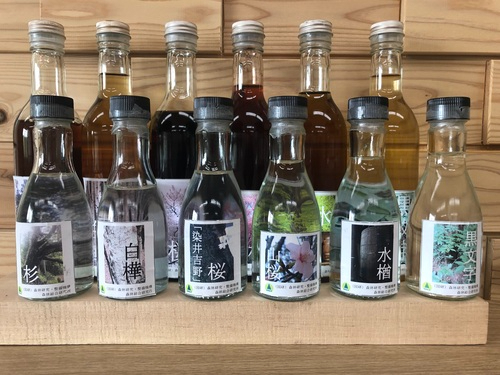
Some of the “wood alcohol,” including from cedar, cherry, oak and maple.      Source: FFPRI

The organization plans to finally confirm the safety of the distilling process this year. It has also teamed up with a Japanese distiller, The Ethical Spirits & Co., to market its “wood alcohol.” This Tokyo-based company has already had success with its craft gin made from sake lees, which won a prestigious gold medal at the 2021 International Wine and Spirits Competition in London. Ethical Spirits plans to start exporting its products to Britain and Italy this summer.
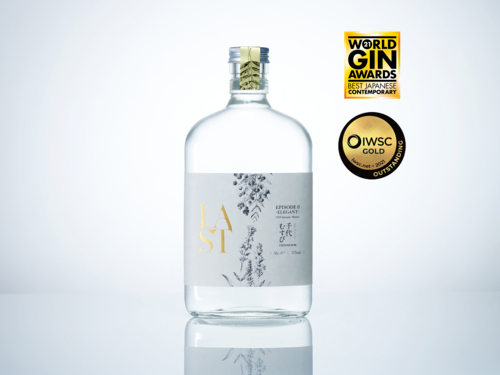
Ethical Spirits’ craft gin made from sake lees won a gold award at the 2021 International Wine and Spirits Competition in London.      Source: The Ethical Spirits & Co.

Chief Operating Officer Chikara Ono explained to J-Stories how each bottle of spirits has a slightly different taste. “When [our customers] think our products taste good and choose them, and when that leads to [many of] them realizing the value of materials that might have been thrown away, that has great meaning for us,” she said.

Yuichiro Otsuka of the FFPRI noted how trees that live for hundreds of years each have their own “story.” That is not unlike the “story” of wine and whisky that has been matured for long periods. He suggested that one day using wood from ancient trees to make “wood alcohol” could provide similar added value.

Translation and Editing by Tony McNicol

Top page photo by nzooo/Envato

For inquires about this article, please contact us at jstories@pacificbridge.jp


Click here for the Japanese version of the article.

Tags: FoodForestryRecyclingTechnology
Previous Post

Round-up Video #15

Next Post

Reinventing the wheelchair as a personal transport solution

Yui Sawada

Yui Sawada

Related Posts

Starting a sustainable wood-fired bakery in Tokyo
FoodTech

Starting a sustainable wood-fired bakery in Tokyo

by Tokyo Updates
03/05/2026
HealthTech

Engineering safety from the ground up

by Tokyo Updates
02/13/2026
Clean Tech

Japanese startup turns eggshell waste into eco-friendly plastics and paper

by Yoshiko Ohira
02/06/2026
Earth

A world first: Detecting road sinkholes from space

by Ayaka Sagasaki
01/30/2026
Lifestyle

The plush toy hospital keeping childhood memories alive

by Tokyo Updates
01/30/2026
Next Post

Reinventing the wheelchair as a personal transport solution

Leave a Reply Cancel reply

Your email address will not be published. Required fields are marked *

Videos

Round-Up Video #30

10/13/2022

One-of-a-kind marriage certificates strengthen marital bond

11/17/2023

Round-up Video #13

05/26/2022

Browse by Tags

Ai Alternative Energy biotechnology Climate Change Community decarbonization Education Event Food foodtech Health Inclusion Infrastructure Innovation Interview J-Stories Japan Japan-Taiwan Innovation Summit Japan startups Japan Tech Labor Living Nature Podcast Recycling Refugees robotics Society Space Startup Startup Ecosystem Startups SusHI Tech Tokyo Sustainability Sustainable Society Taiwan Technology Tokyo Tokyo Innovation Base Tokyo Metropolitan Government Tokyo Updates venture capital video Wealth Zero Waste
JStories

©Articles and photos published on JSTORIES are protected by Japanese copyright law and international treaties. They cannot be reproduced without the permission of the copyright holders

Explore JStories

  • About Jstories
  • Company
  • Contact
  • Home
  • Partner Press Releases
  • Pricing
  • Privacy Policy
  • Team

Follow Us

Welcome Back!

Login to your account below

Forgotten Password?

Retrieve your password

Please enter your username or email address to reset your password.

Log In
No Result
View All Result
  • Home
  • AI
    • Artificial Intelligence
    • Robotics
    • Mobility
  • Earth
    • Energy
    • Climate Tech
    • AgriTech
    • Clean Tech
    • Disaster Tech
    • SpaceTech
  • Life Sciences
    • BioTech
    • HealthTech
    • MedTech
    • AgeTech
  • Society
    • Media
    • EdTech
    • Diversity
    • FemTech
    • HRTech
    • LegalTech
    • Social Impact
    • FinTech
    • Anime
  • Lifestyle
    • FoodTech
    • FashionTech
    • BeautyTech
    • Wellbeing
    • Art & Music
  • Travel
    • Adventure Travel
    • Luxury Travel
    • Wellness & Medical Tourism
    • Culture
  • Video
  • Deals
    • Venture Capital
    • M&A
    • Startup Events
    • Ecosystem Support
  • Interview
  • Opinion

©Articles and photos published on JSTORIES are protected by Japanese copyright law and international treaties. They cannot be reproduced without the permission of the copyright holders

Are you sure want to unlock this post?
Unlock left : 0
Are you sure want to cancel subscription?