

First in a two-part series: click here for the second part
JStories ー Seven to eight years ago, amid a series of accidents in Japan where children left in cars died from heatstroke, Aisin, a major Japanese automotive parts manufacturer, reached out to a Silicon Valley venture capital firm with a crucial request: “Is there technology that can reliably detect children left behind in vehicles?”
For Anis Uzzaman, founder and CEO of Pegasus Tech Ventures, this was more than just a technology investment opportunity — it was an approach to solving social issues. He took the initiative to contact sensor companies worldwide and began his investigation.
“We contacted all sensor companies around the world to see who could solve this problem,” Uzzaman reflected.

Through this global survey, they discovered that Vayyar, an Israeli startup, had a technology that could detect human heartbeats inside vehicles, even if covered by blankets on seats.
In 2018, Pegasus introduced this technology to Aisin. After five years of demonstration testing, they announced a partnership in 2023, with investment completed in 2024. Currently, this “in-vehicle occupant detection system” is installed in actual vehicles.
“It can detect even the slightest chest movements,” Uzzaman explained. This system, which prevents children from being left in the car using a single ceiling-mounted sensor, became a case study of technology addressing social issues.
However, there’s another story behind this success.
Aisin’s factories were facing a separate serious problem: AI systems were making overly strict judgments, causing most manufactured parts to be deemed “defective.”
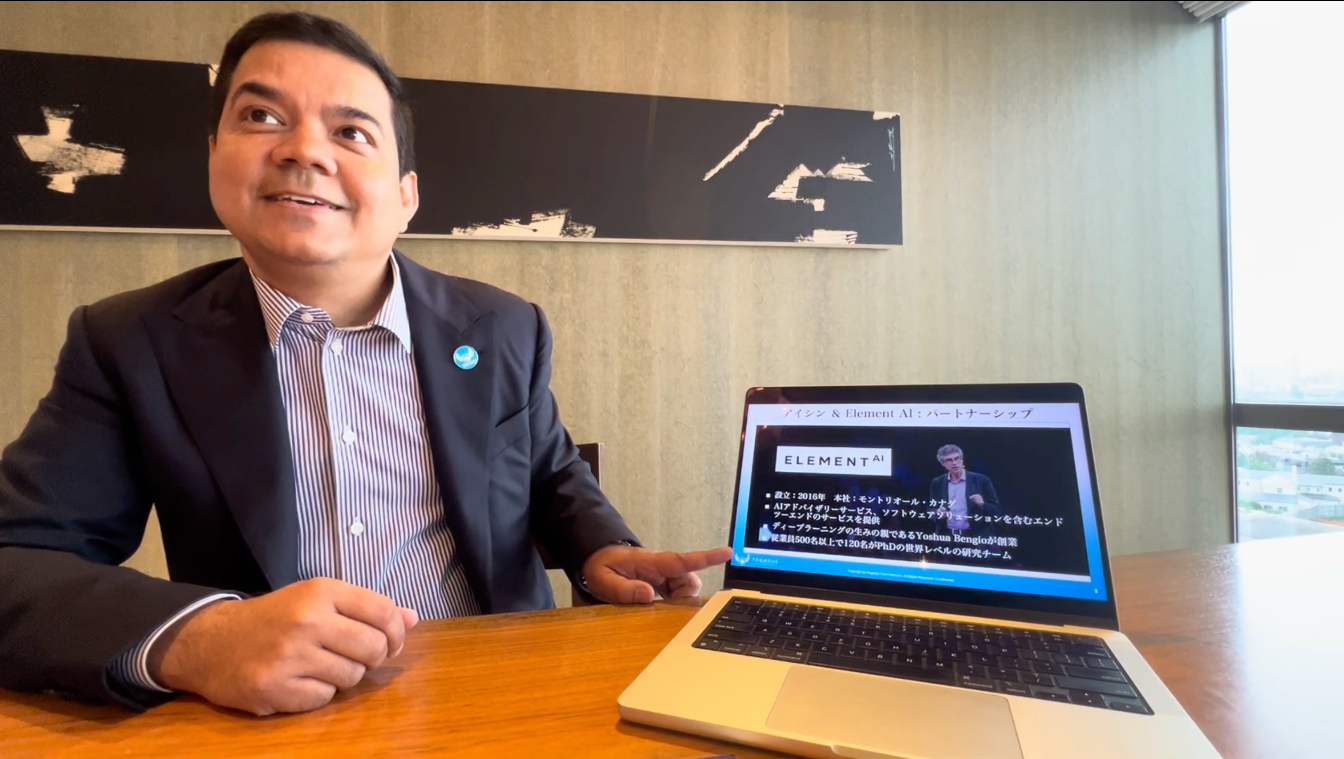
To solve this, Uzzaman turned to Element AI, a startup in Montreal, Canada. Founded by Yoshua Bengio, known as the father of AI, it was an unparalleled technical team with 500 AI engineers, 120 of whom held PhDs.
In September 2019, with an initial investment of 50 million yen, Element AI dispatched two engineers to Aichi Prefecture, where Aisin’s headquarters is located. Using “explainable AI,” they they identified which stage of the seven manufacturing processes flagged the parts as defective and why.
The results were dramatic. The yield rate (the proportion of good products among finished products) improved by about 10%, which meant value creation worth hundreds of billions of yen for Aisin, a company with annual revenues of 4 trillion yen.
“Eventually, we achieved business value returns of about seven times the invested amount,” Uzzaman said. Rather than “investment first,” Uzzaman prioritizes setting up “matching” as business partners.
Philosophy of prioritizing value creation over investment
These Aisin case studies characterize “CVC 4.0” advocated by Pegasus Tech Ventures. While traditional venture capitalists pursue financial returns, the company prioritizes business value creation and partnerships.
“We partner before investing, not after,” Uzzaman said. “The basic concept of CVC 4.0 is that investment doesn’t come before partnership.”
Currently, Pegasus Tech Ventures manages approximately 300 billion yen across 41 funds, with over 35 Japanese partner companies such as Aisin, Denka, Calbee, Sojitz, and Sega Sammy.
What’s important is that these funds are “evergreen,” according to Uzzaman.

“Financial returns are not the goal. Business returns are the main focus,” said Uzzaman, who obtained his bachelor’s and doctoral degrees in Japan and speaks fluent Japanese.
This philosophical shift in CVC investment also stems from the limitations of traditional merger and acquisition (M&A)-centered approaches.
“The old way was acquisition, but you can’t acquire companies like OpenAI They’re too big for Japanese companies,” Uzzaman noted. “But with investment, you can invest from 1 million dollars and still create good partnerships.”
The four stages of CVC evolution: Why 4.0?
Uzzaman categorizes the evolution of Corporate Venture Capital into four distinct stages. His explanation is as follows:
CVC 1.0 was a format where large corporations invested in existing funds. However, in situations where “automotive manufacturers are investing, and healthcare companies are also investing,” there was a fundamental problem that “fund managers couldn’t provide good information to everyone.”
In CVC 2.0, companies established funds internally, but failures occurred repeatedly because “employees lacked venture investment knowledge and global networks.”
In CVC 3.0, companies hired venture capital professionals from outside, but challenges remained with “hiring only one or two people” and “people constantly changing through rotation.”
CVC 4.0 means outsourcing the VC function itself to specialized teams. It’s a concept where companies use VC as a Service (VCaaS) as a service.
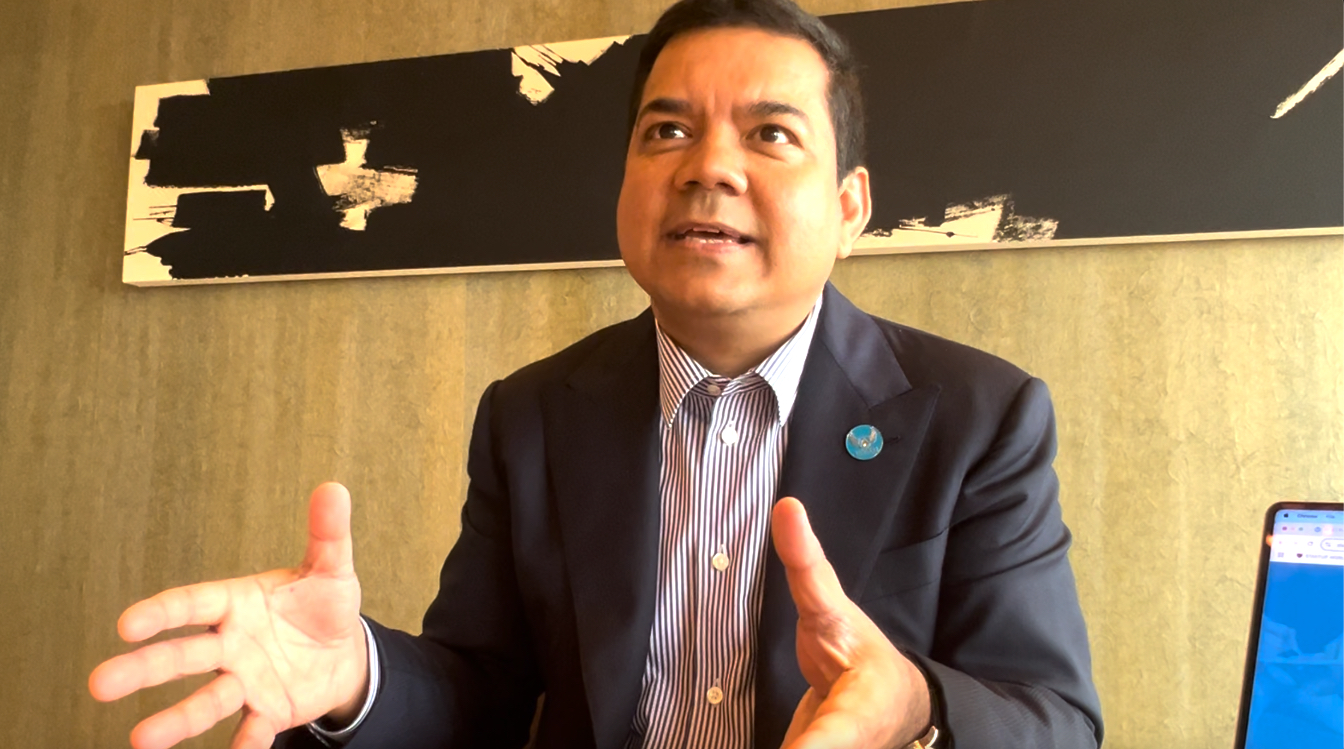
Pegasus launches individual funds under the Pegasus name for each client company. In essence, these are customized funds designed to maximize business value for each individual company.
Covering 14 countries with a 135-person team
Founded in 2012, Pegasus Tech Ventures is currently headquartered in San Jose with a team of 135 people operating across 14 countries. The company has invested in over 260 companies, with 22 achieving IPOs.
Particularly noteworthy is the quality of their portfolio companies. They have made early investments in era-defining companies such as SpaceX, OpenAI, Airbnb, Anthropic, SoFi, and X (formerly Twitter). Having invested in 30 unicorns, they boast high returns even within the American VC industry.
However, Uzzaman’s vision extends beyond mere financial and business success. The sentiment that “we must also think about giving” has led him to even greater endeavors.
In Part 2, we will introduce the grand vision of Startup World Cup connecting 130 countries, support for entrepreneurs in developing nations, and specific recommendations for Japan’s startup ecosystem.
Written by Toshi Maeda | JStories
Edited by Desiderio Luna | JStories
Top photo: Emi Takahata | JStories
For inquiries regarding this article, please contact jstories@pacificbridge.jp
Click here for the Japanese version of the article