

JSTORIES — Lithium-ion batteries power everything from smartphones to electric vehicles. But in recent years, unexpected fires and explosions have turned this essential technology into a growing everyday hazard. Now, a Japanese research team has developed the world’s first method to visualize the inside of a battery without cutting it open — a breakthrough that could prevent accidents before they happen, and even reshape the future of medical imaging.
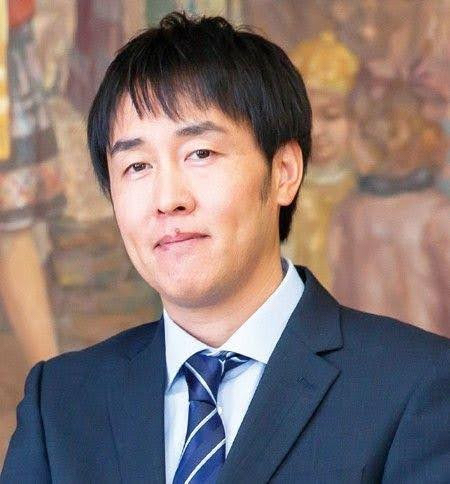
The technology was created by Integral Geometry Science (IGS), a Kobe-based startup led by CEO Kenjiro Kimura. Their innovation, the Nondestructive Rechargeable Battery Inspection System, measures the distribution of electric current inside a battery to detect hidden defects that could trigger overheating or fires. In short, it can assess a battery’s internal “health” from the outside, with no need to break or disassemble it, allowing manufacturers to remove defective units before shipment.
A mathematician’s path to a once-impossible problem
Kimura originally researched microscopes that visualize electric currents inside semiconductors at Kyoto University. After joining Kobe University as a lecturer, he received an unusual inquiry from Murata Manufacturing, a Japanese maker of electronic components: Could it be possible to detect electrical leakage inside capacitors — without destroying them?
This question set Kimura on a decade-long pursuit.
“Semiconductors have a clean crystalline structure, so current flow is clearly visible,” he explains. “Batteries, by contrast, have an amorphous, irregular structure, making it nearly impossible to see how electricity moves inside them. That’s why we needed a technology capable of ‘looking inside.'”
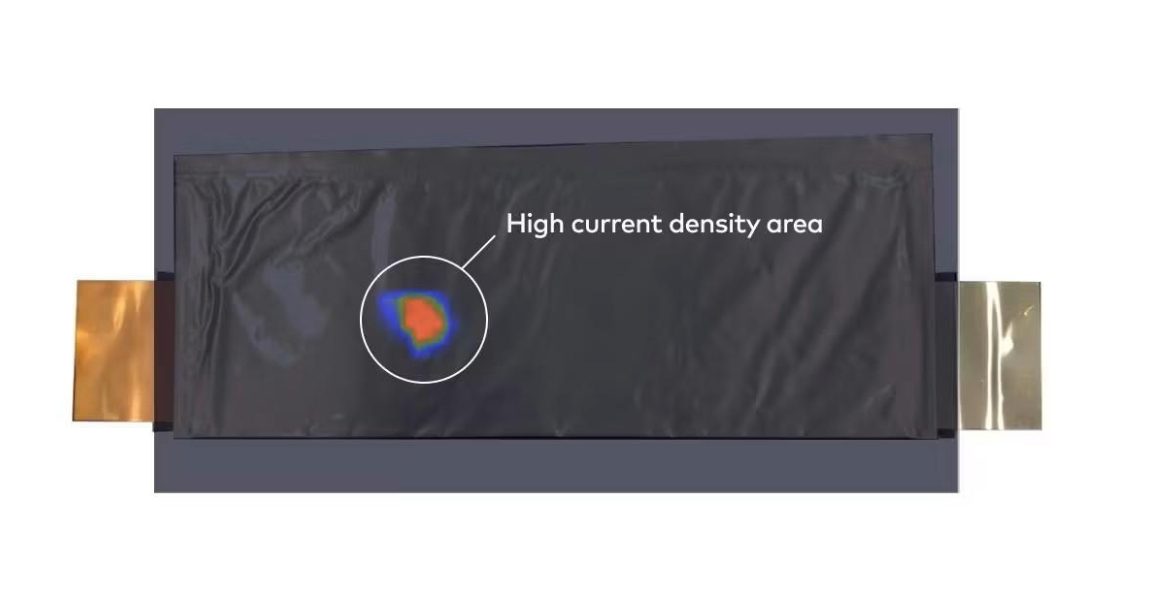
Conventional tools — light, X-rays, MRI — cannot penetrate a battery’s metal casing and its electrolyte-soaked internal structure.
So Kimura turned to physics.
“When electricity flows, it creates a magnetic field,” Kimura said. “We can’t see the electricity directly, but if we measure the magnetic field around it, we can mathematically reconstruct where the current is flowing.”
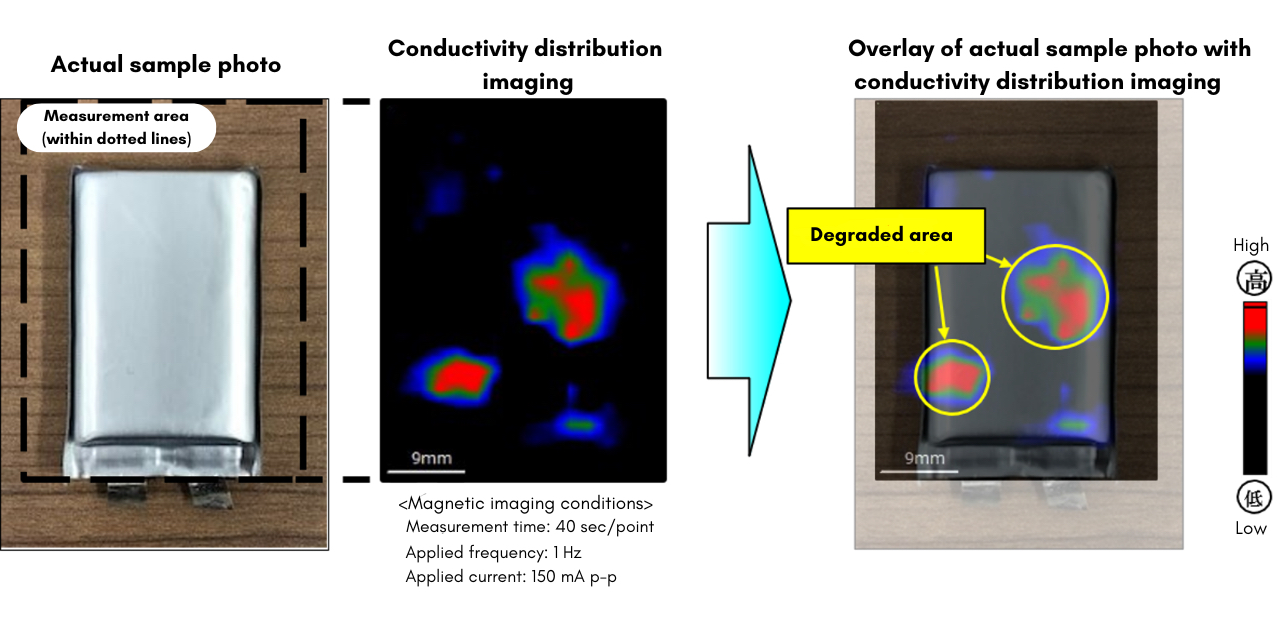
Kimura developed a method to measure magnetic field distribution using ultra-sensitive sensors and then reverse-calculate the internal currents — a technique known as solving the inverse problem. After years of work, he succeeded in producing images showing exactly where current concentrates inside a battery.
Spotting dangerous batteries before they ignite
Even with strict manufacturing processes, lithium-ion batteries cannot be made perfectly defect-free; a tiny number of “high-risk batteries” inevitably slip through. These can short-circuit, overheat, or explode.
Traditionally, manufacturers tested batteries by leaving them idle for days and observing changes in voltage. But that method cannot determine whether leakage is harmlessly diffuse — or dangerously concentrated in a single point.
IGS’s system can.
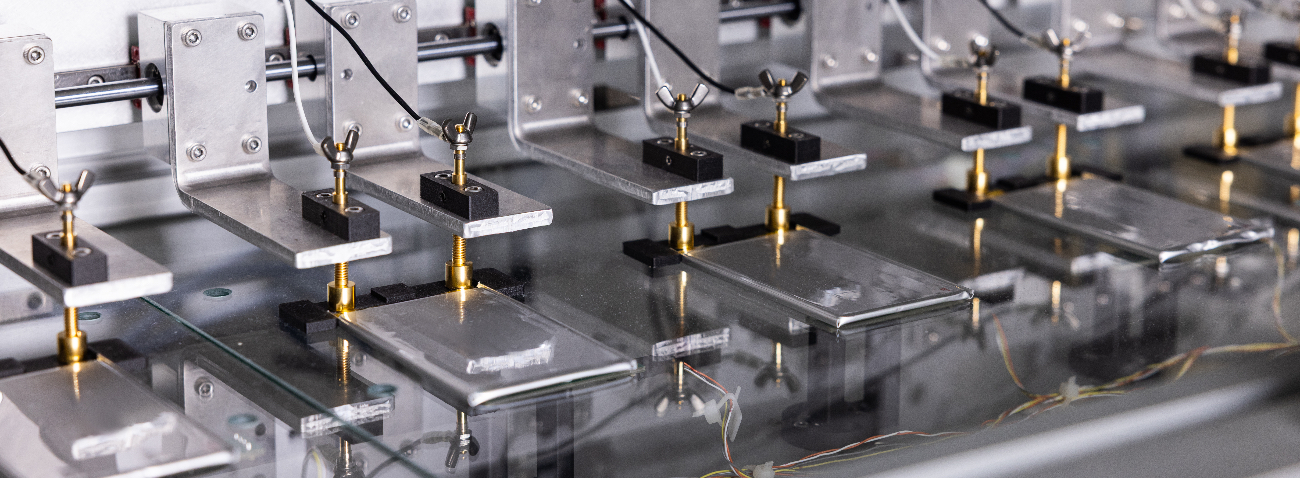
By visualizing current distribution in real time, manufacturers can spot dangerous batteries before they leave the factory. The system enables fully nondestructive, full-volume inspections on every battery, dramatically reducing accident risk.
“It’s more important to reliably detect the few dangerous batteries than to try to manufacture perfection,” Kimura says.
A decade of research backed by public and private investment
It took Kimura 10 years to develop both the theoretical framework and the ultra-sensitive sensors required to solve the inverse problem of current and magnetic fields — something long considered impossible.
The research was supported by 10 billion yen ($70 million) in combined public-private investment, including funding from the Kyoto University Fund.
“Receiving taxpayer-supported funding meant people believed in this research,” Kimura said. “I felt responsible to turn the idea into something real.”
Beyond batteries: transforming breast cancer detection
With IGS’s system, every battery on a production line can be safely inspected. Preventing defective cells from causing fires or explosions could help companies avoid recalls worth hundreds of billions of yen while making society safer overall.
“The spread of safer batteries will pave the way for higher-power batteries,” Kimura adds. “That will accelerate the development of flying cars, longer-lasting smartphones, and other next-generation technologies.”
The same mathematical approach has opened new horizons in medicine.
Traditional mammography often struggles with image clarity, particularly for individuals with dense breasts. Dense tissue appears white on a mammogram, making it difficult to spot abnormalities. IGS has developed a microwave mammography system that clearly visualizes internal breast structures, potentially enabling earlier cancer detection and improving diagnostic accuracy.
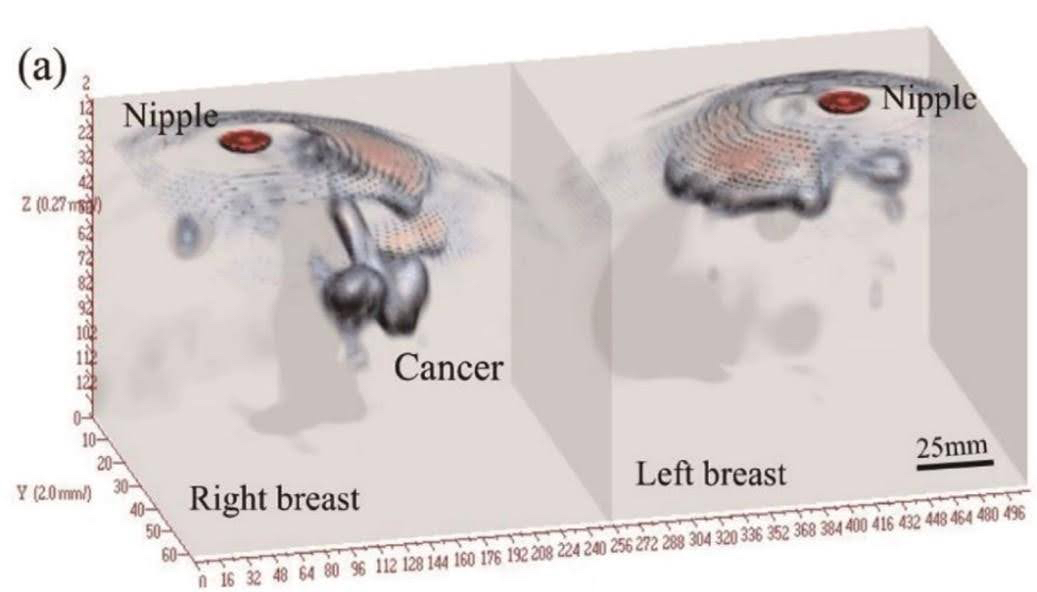
A key advantage is that the device uses the same posture for both examination and surgery. While conventional mammography involves standing and compressing the breast, surgery is performed with the patient lying on their back — making it challenging to pinpoint the tumor’s exact position. With IGS’s system, patients can be examined while lying down, allowing images to be applied directly during surgery.
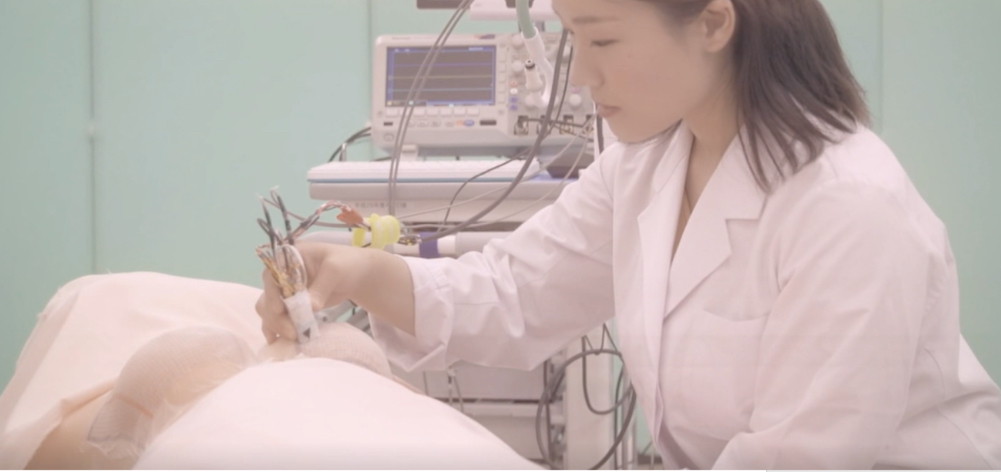
Surgeons say the system’s markers align precisely with tumor locations, helping them remove the tumors accurately without leaving residual tissue behind.
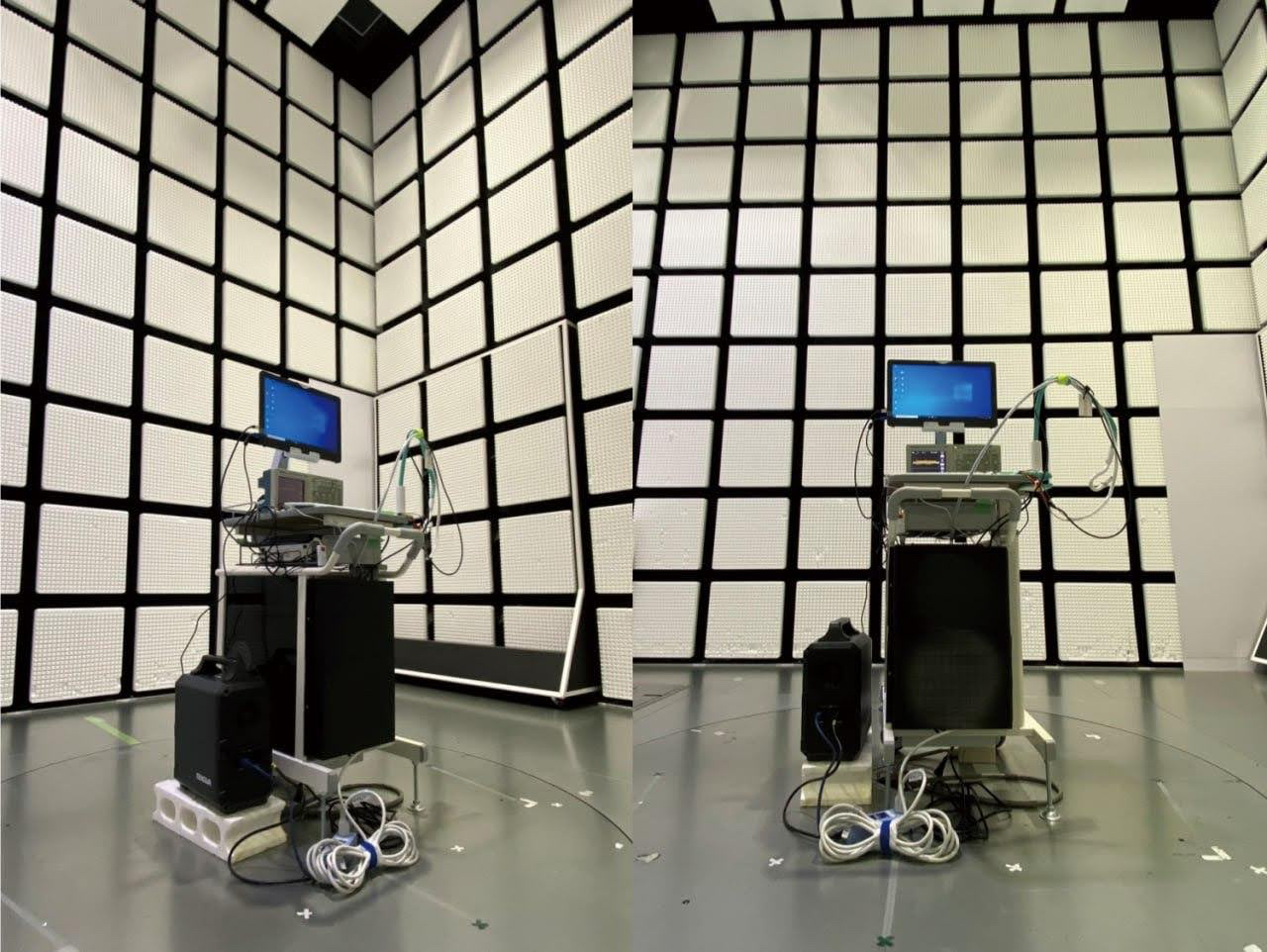
Because the device uses microwaves rather than radiation, it is safer for pregnant women and younger patients.
Applications across safety, mobility, and defense
The potential uses of Kimura’s technology extend far beyond energy and healthcare. They include autonomous driving systems capable of navigating through fog and rain, as well as security systems that detect buried land mines or concealed firearms.
“Mathematics is often seen as abstract, but it can create technologies that make society safer and more comfortable,” Kimura says. “Being part of that bridge is incredibly fulfilling.”
At BATTERY JAPAN 2024, about 400 companies visited the company’s booth, with more than half of inquiries coming from battery manufacturers in China and South Korea. Kimura aims for his diagnostic technology to inspect 10 percent of the world’s distributed batteries. In healthcare, he hopes to establish a global breast cancer screening network serving roughly 100 million people.
With a current market capitalization of around 40 billion yen, IGS plans to grow to 100 billion yen by 2027, with a long-term target of a trillion yen and expectations of stable profits.
A safer world through mathematics
“Batteries and medicine are both technologies that protect life,” Kimura says. “By making the invisible visible, we can make society a little safer.”
Japan’s first-in-the-world nondestructive battery imaging system may not only prevent fires — it could reshape the future of medical diagnostics, public safety, and next-generation mobility.
Translated by Anita De Michele | JStories
Edited by Mark Goldsmith
Top photo: Envato
For inquiries regarding this article, please contact jstories@pacificbridge.jp
Click here for the Japanese version of the article