• Login
Upgrade
JStories
  • 日本語
  • 中文 (中国)
No Result
View All Result
  • Home
  • AI
    • Artificial Intelligence
    • Robotics
    • Mobility
  • Earth
    • Energy
    • Climate Tech
    • AgriTech
    • Clean Tech
    • Disaster Tech
    • SpaceTech
  • Life Sciences
    • BioTech
    • HealthTech
    • MedTech
    • AgeTech
  • Society
    • Media
    • EdTech
    • Diversity
    • FemTech
    • HRTech
    • LegalTech
    • Social Impact
    • FinTech
    • Anime
  • Lifestyle
    • FoodTech
    • FashionTech
    • BeautyTech
    • Wellbeing
    • Art & Music
  • Travel
    • Adventure Travel
    • Luxury Travel
    • Wellness & Medical Tourism
    • Culture
  • Video
  • Deals
    • Venture Capital
    • M&A
    • Startup Events
    • Pitch
    • Ecosystem Support
  • Interview
  • Opinion
  • Home
  • AI
    • Artificial Intelligence
    • Robotics
    • Mobility
  • Earth
    • Energy
    • Climate Tech
    • AgriTech
    • Clean Tech
    • Disaster Tech
    • SpaceTech
  • Life Sciences
    • BioTech
    • HealthTech
    • MedTech
    • AgeTech
  • Society
    • Media
    • EdTech
    • Diversity
    • FemTech
    • HRTech
    • LegalTech
    • Social Impact
    • FinTech
    • Anime
  • Lifestyle
    • FoodTech
    • FashionTech
    • BeautyTech
    • Wellbeing
    • Art & Music
  • Travel
    • Adventure Travel
    • Luxury Travel
    • Wellness & Medical Tourism
    • Culture
  • Video
  • Deals
    • Venture Capital
    • M&A
    • Startup Events
    • Pitch
    • Ecosystem Support
  • Interview
  • Opinion
en English ja 日本語 zh 中文 (中国)
JStories
No Result
View All Result

Cheaper and more efficient rare earth metal recycling

Yui Sawada by Yui Sawada
06/08/2022
in AI, Clean Tech, Earth, Energy, Mobility, Social Impact, Society
0
Home AI
Share on FacebookShare on Twitter

J-STORIES – Rare earth metals are indispensable to the high-tech industry, but production is limited to just a few countries. Japan in particular imports the majority of its mineral resources, and securing a steady supply of rare earth metals is a critical issue.

But what if rare metals could be recovered from used electrical devices? A group of Japanese scientists is working on a technology that could do just that and more, extracting 10 times more rare earth metals than previous recycling methods—and at just one-fifth the cost.

Emulsion Flow Technologies is a startup established by researchers from the Japan Atomic Energy Agency that first developed the “emulsion flow” solvent extraction technology to separate specific elements from spent, or used, nuclear fuel.

However, the technology can also be used to extract rare earth metals from electronic devices, such as lithium-ion batteries. Furthermore, it enables cheaper, more efficient and higher purity “horizontal recycling,” a technique by which rare earth metals are recovered from old electronic devices, and then directly reused in new ones.

This differs from previous “mixer-settler” methods in which recovered rare earth metals were insufficiently pure, leading to costly processing. As a result, the only rare earth metals extracted and recycled in Japan were platinum used in automobile catalytic convertors and palladium from computer circuit boards.

Salinas Grandes in Argentina, which according to the United States Geological Survey is the fourth-largest source of lithium deposits.      Source: Envato

The emulsion flow device is one-tenth the size of previous extractors, 10 times more efficient, and five times cheaper to run. What’s more, IoT management enables 24-hour unmanned operation, reducing staffing costs.

Emulsion Flow Technologies’ CEO Hiroshi Suzuki told J-Stories that, instead of just mining and using mineral resources, he wants to “aim for transformation to a fully circular economy that can keep using aboveground resources into the future.”

“We want to speed up the shift to such a society by popularizing solvent extraction technology and emulsion flow around the world,” he added.
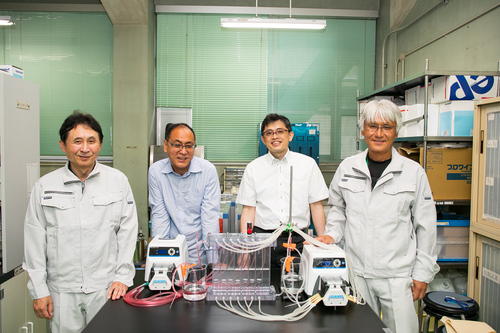
Emulsion Flow Technologies was set up by researchers from the Japan Atomic Energy Agency.      Source: Emulsion Flow Technologies

As well as working to realize horizontal recycling of the rare earth metals in lithium-ion batteries, which are expected to suffer supply shortages around 2025, the startup is also focusing on the use of powerful magnets to recycle rare earth metals.

Translation and Editing by Tony McNicol

Top page photo by YouraPechkin/Envato

For inquires about this article, please contact us at jstories@pacificbridge.jp


Click here for the Japanese version of the article.

Tags: RecyclingSustainabilitySustainable SocietyTechnology
Previous Post

Picture books help save traditional foods

Next Post

Round-up Video #15

Yui Sawada

Yui Sawada

Related Posts

Japan leads global collaboration to combat AI disinformation
AI

Japan leads global collaboration to combat AI disinformation

by Ayaka Sagasaki
03/16/2026
Clean Tech

Japanese startup turns eggshell waste into eco-friendly plastics and paper

by Yoshiko Ohira
02/06/2026
Anime

World-first “anime character-based therapy” trial to test effectiveness in Japanese young adults

by Lucas Maltzman
01/30/2026
Earth

A world first: Detecting road sinkholes from space

by Ayaka Sagasaki
01/30/2026
Social Impact

From a childhood shaped by conflict to an investor bridging Japan and the world

by Ayaka Sagasaki
01/23/2026
Next Post

Round-up Video #15

Leave a Reply Cancel reply

Your email address will not be published. Required fields are marked *

Videos

Round-Up Video #34

11/17/2022

Round-up Video #24

08/25/2022

Taking action for peace

11/30/2022

Browse by Tags

Ai Alternative Energy biotechnology Climate Change Community decarbonization Education Event Food foodtech Health Inclusion Infrastructure Innovation Interview J-Stories Japan Japan-Taiwan Innovation Summit Japan startups Japan Tech Labor Living Nature Podcast Recycling Refugees robotics Society Space Startup Startup Ecosystem Startups SusHI Tech Tokyo Sustainability Sustainable Society Taiwan Technology Tokyo Tokyo Innovation Base Tokyo Metropolitan Government Tokyo Updates venture capital video Wealth Zero Waste
JStories

©Articles and photos published on JSTORIES are protected by Japanese copyright law and international treaties. They cannot be reproduced without the permission of the copyright holders

Explore JStories

  • About Jstories
  • Company
  • Contact
  • Home
  • Partner Press Releases
  • Pricing
  • Privacy Policy
  • Team

Follow Us

Welcome Back!

Login to your account below

Forgotten Password?

Retrieve your password

Please enter your username or email address to reset your password.

Log In
No Result
View All Result
  • Home
  • AI
    • Artificial Intelligence
    • Robotics
    • Mobility
  • Earth
    • Energy
    • Climate Tech
    • AgriTech
    • Clean Tech
    • Disaster Tech
    • SpaceTech
  • Life Sciences
    • BioTech
    • HealthTech
    • MedTech
    • AgeTech
  • Society
    • Media
    • EdTech
    • Diversity
    • FemTech
    • HRTech
    • LegalTech
    • Social Impact
    • FinTech
    • Anime
  • Lifestyle
    • FoodTech
    • FashionTech
    • BeautyTech
    • Wellbeing
    • Art & Music
  • Travel
    • Adventure Travel
    • Luxury Travel
    • Wellness & Medical Tourism
    • Culture
  • Video
  • Deals
    • Venture Capital
    • M&A
    • Startup Events
    • Ecosystem Support
  • Interview
  • Opinion

©Articles and photos published on JSTORIES are protected by Japanese copyright law and international treaties. They cannot be reproduced without the permission of the copyright holders

Are you sure want to unlock this post?
Unlock left : 0
Are you sure want to cancel subscription?