• Login
Upgrade
JStories
  • 日本語
  • 中文 (中国)
No Result
View All Result
  • Home
  • AI
    • Artificial Intelligence
    • Robotics
    • Mobility
  • Earth
    • Energy
    • Climate Tech
    • AgriTech
    • Clean Tech
    • Disaster Tech
    • SpaceTech
  • Life Sciences
    • BioTech
    • HealthTech
    • MedTech
    • AgeTech
  • Society
    • Media
    • EdTech
    • Diversity
    • FemTech
    • HRTech
    • LegalTech
    • Social Impact
    • FinTech
    • Anime
  • Lifestyle
    • FoodTech
    • FashionTech
    • BeautyTech
    • Wellbeing
    • Art & Music
  • Travel
    • Adventure Travel
    • Luxury Travel
    • Wellness & Medical Tourism
    • Culture
  • Video
  • Deals
    • Venture Capital
    • M&A
    • Startup Events
    • Pitch
    • Ecosystem Support
  • Interview
  • Opinion
  • Home
  • AI
    • Artificial Intelligence
    • Robotics
    • Mobility
  • Earth
    • Energy
    • Climate Tech
    • AgriTech
    • Clean Tech
    • Disaster Tech
    • SpaceTech
  • Life Sciences
    • BioTech
    • HealthTech
    • MedTech
    • AgeTech
  • Society
    • Media
    • EdTech
    • Diversity
    • FemTech
    • HRTech
    • LegalTech
    • Social Impact
    • FinTech
    • Anime
  • Lifestyle
    • FoodTech
    • FashionTech
    • BeautyTech
    • Wellbeing
    • Art & Music
  • Travel
    • Adventure Travel
    • Luxury Travel
    • Wellness & Medical Tourism
    • Culture
  • Video
  • Deals
    • Venture Capital
    • M&A
    • Startup Events
    • Pitch
    • Ecosystem Support
  • Interview
  • Opinion
en English ja 日本語 zh 中文 (中国)
JStories
No Result
View All Result

‘Carbon-negative’ concrete that absorbs CO2 from the atmosphere

Kei Mizuno by Kei Mizuno
08/23/2024
in Clean Tech, Climate Tech, Earth, Energy, Robotics
0
Home Earth Clean Tech
Share on FacebookShare on Twitter

J-STORIES – Demand for concrete has increased alongside rapid urbanization around the world. However, due to the burning of limestone during the production of cement, a key ingredient of concrete, it is also a major source of CO2 emissions. Countries including Japan have pledged to become carbon neutral by 2050, but to make that possible the decarbonization of concrete is vital.

Fortunately, Japan is making rapid progress on the development and practical application of world-leading products and technologies to address this issue. These include capturing, fixing, and recycling CO2, the use of limestone substitutes when making cement, and even the construction of environmentally friendly buildings and houses.

In this context, the spread of “carbon-negative” concrete is attracting particular attention. This is concrete that has net CO2 emissions of less than zero during its production. In other words, it can actually reduce the amount of CO2 in the atmosphere.
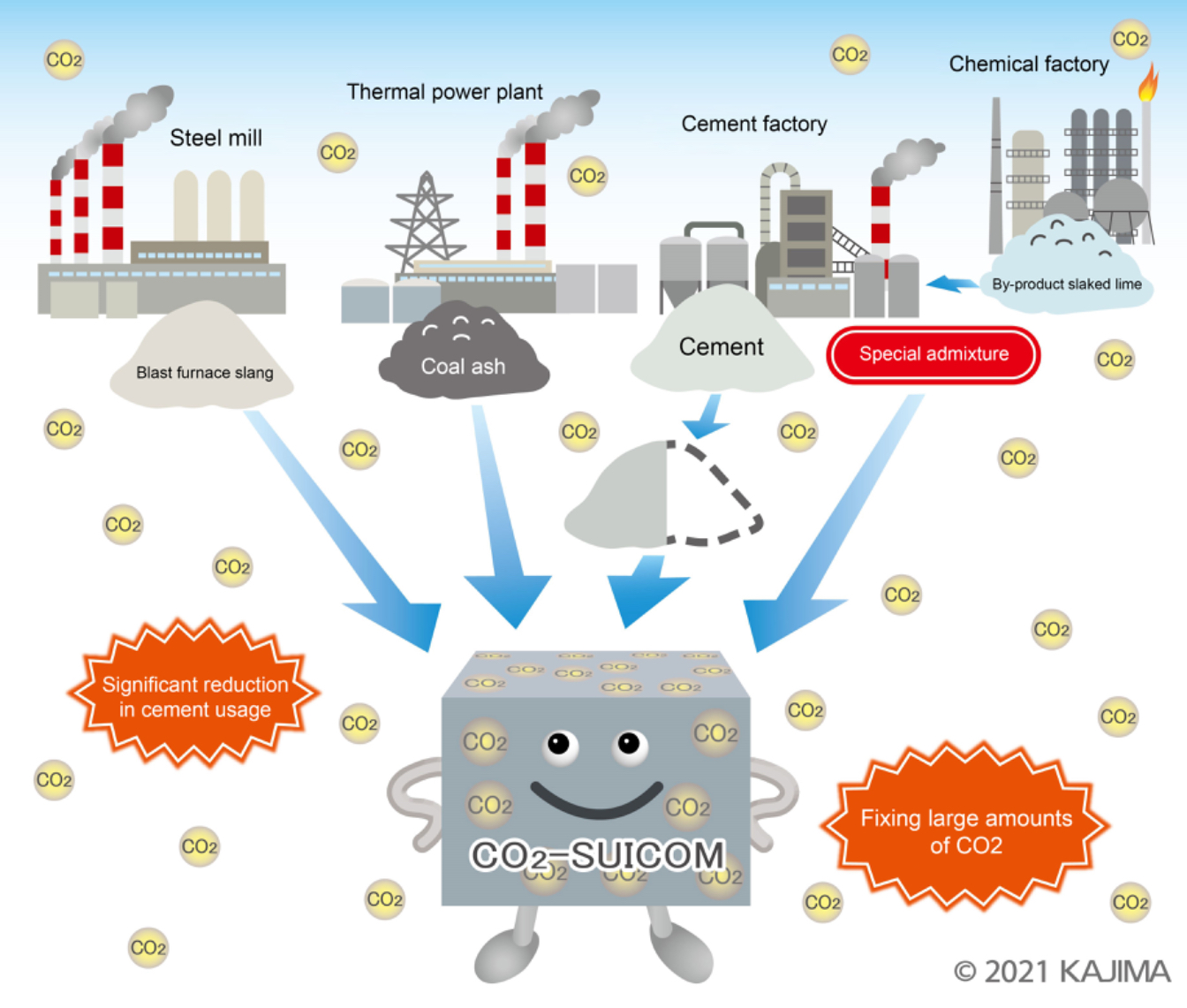
Structural diagram of ‘CO2-SUICOM’ (translated by J-STORIES)      Source: Kajima Corp.

In 2008, Japanese construction company Kajima Corp. developed and put to practical use the world’s first carbon-negative concrete, CO2-Suicom. Since then, the product’s use has increased, including as small paving blocks for architectural construction.
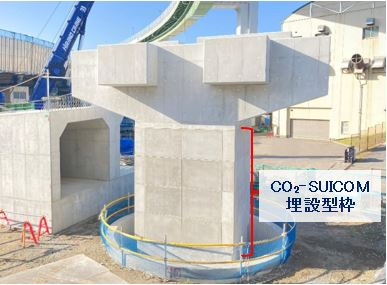
CO2-Suicom has been used in the construction of concrete piers to support expressways.      Source: Kajima Corp. press release

Although technology to reduce CO2 emissions during concrete production, such as replacing part of the cement with other materials, has existed for some time, carbon-negative concrete is a relatively recent development. CO2-Suicom not only reduces cement use through a substitute called γ-C2S, but this special admixture itself absorbs large amounts of CO2 as it hardens, making it possible to achieve negative CO2 emissions during production.

Goro Sakai, who heads research at the Kajima Construction Technology Research Institute, says, “There are still no examples of CO2-absorbing products in wide use anywhere in the world. We receive a huge number of inquiries from abroad.”

He is confident of the product’s potential, saying, “Bearing in mind that concrete is the second-most-used material after water, popularizing this product and technology would have a huge impact on the world, and contribute greatly to society.”
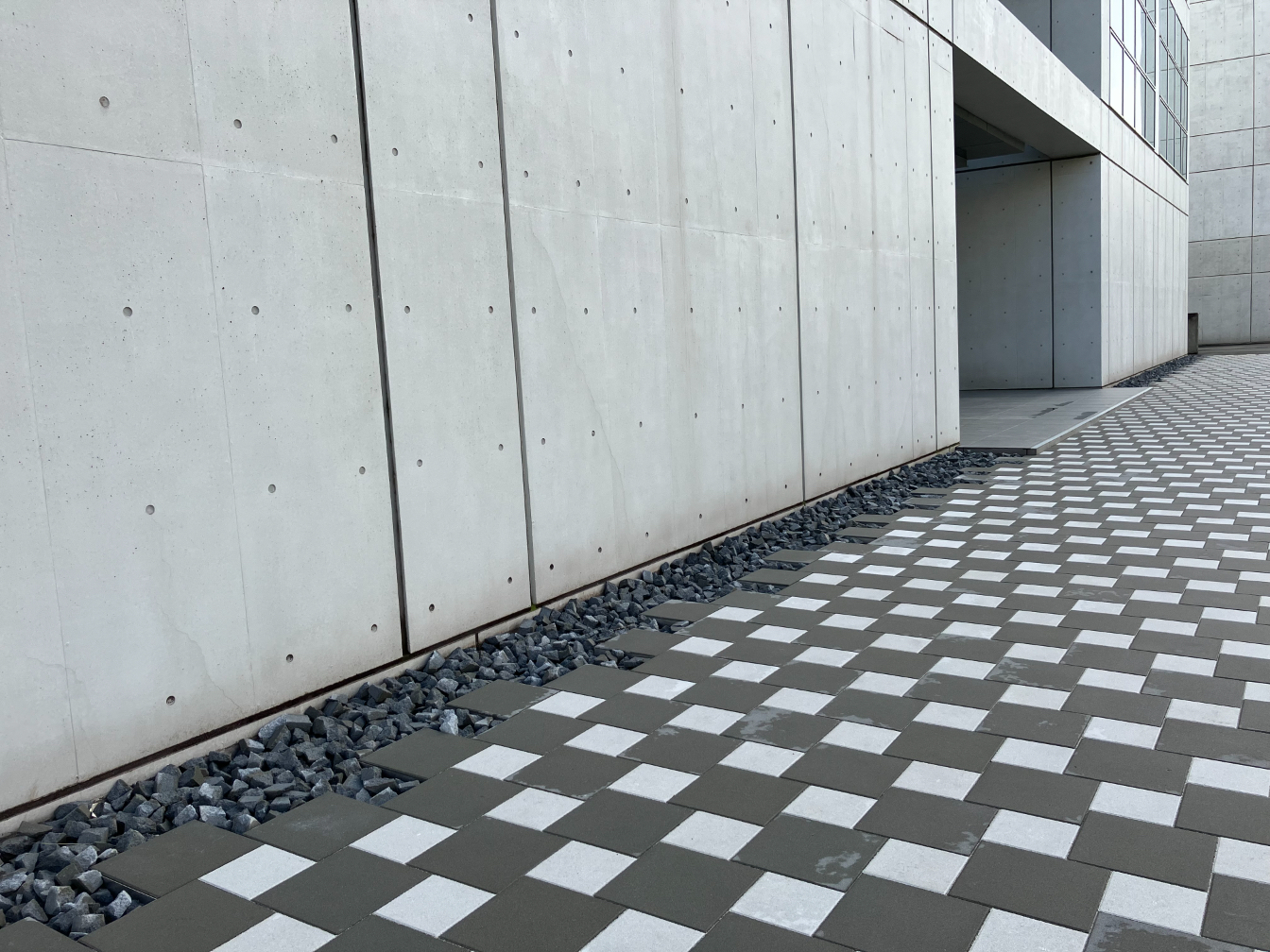
Paving blocks made with CO2-Suicom.      Source: Kajima Corp.
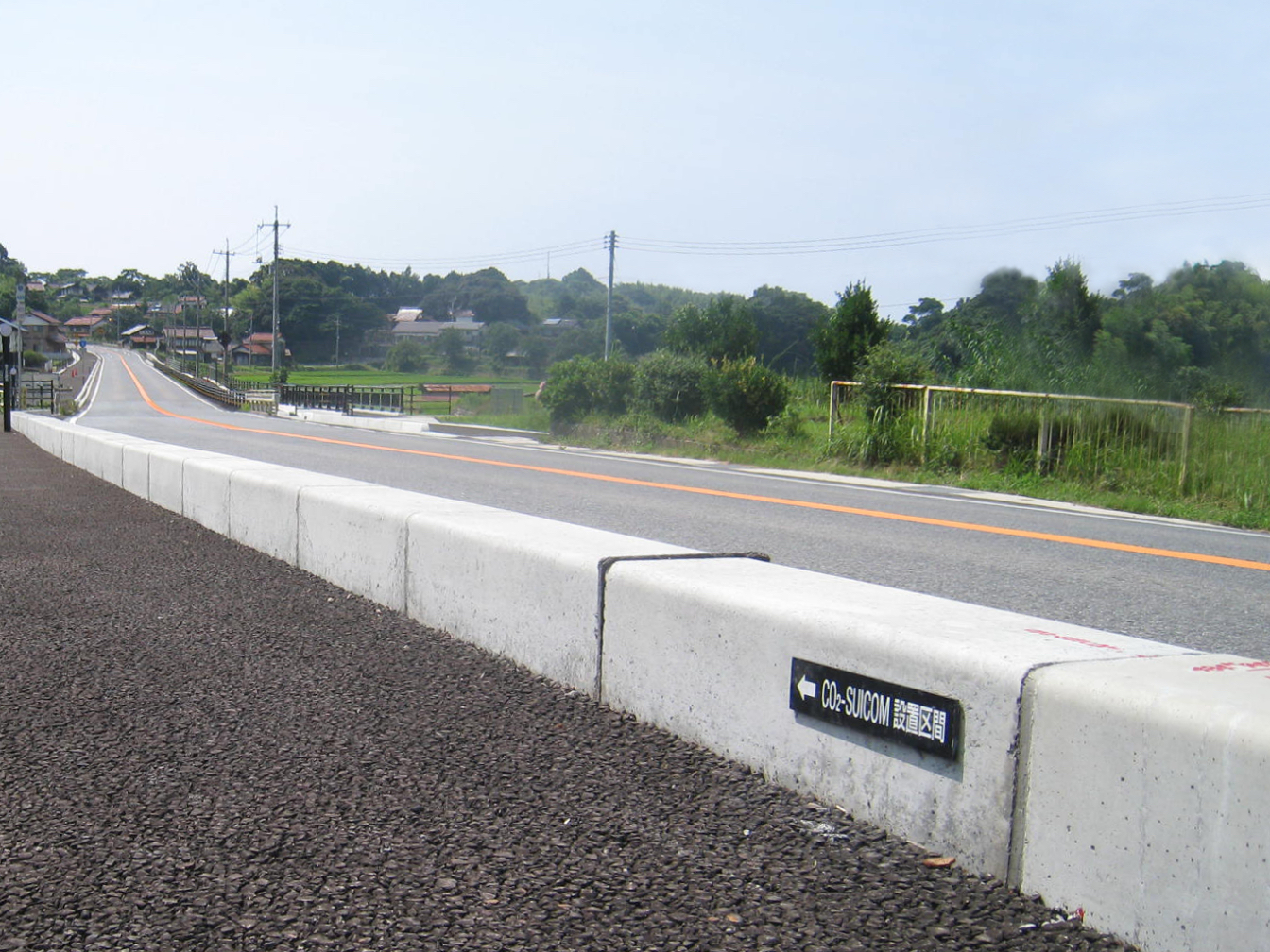
Sidewalk boundary blocks made with CO2-Suicom.      Source: Kajima Corp.

This year, Kajima launched a new grade of CO2-Suicom, which can be used to cast large concrete components for civil engineering projects. This new CO2-Suicom E (economy) costs less than regular CO2-Suicom P (premium) and is not carbon-negative. But it has been designed to still significantly reduce CO2 emissions. The company is also developing CO2-Suicom products such as a large 1-by-2-meter concrete retaining wall slab (used to prevent slopes from collapsing when soil has been removed).
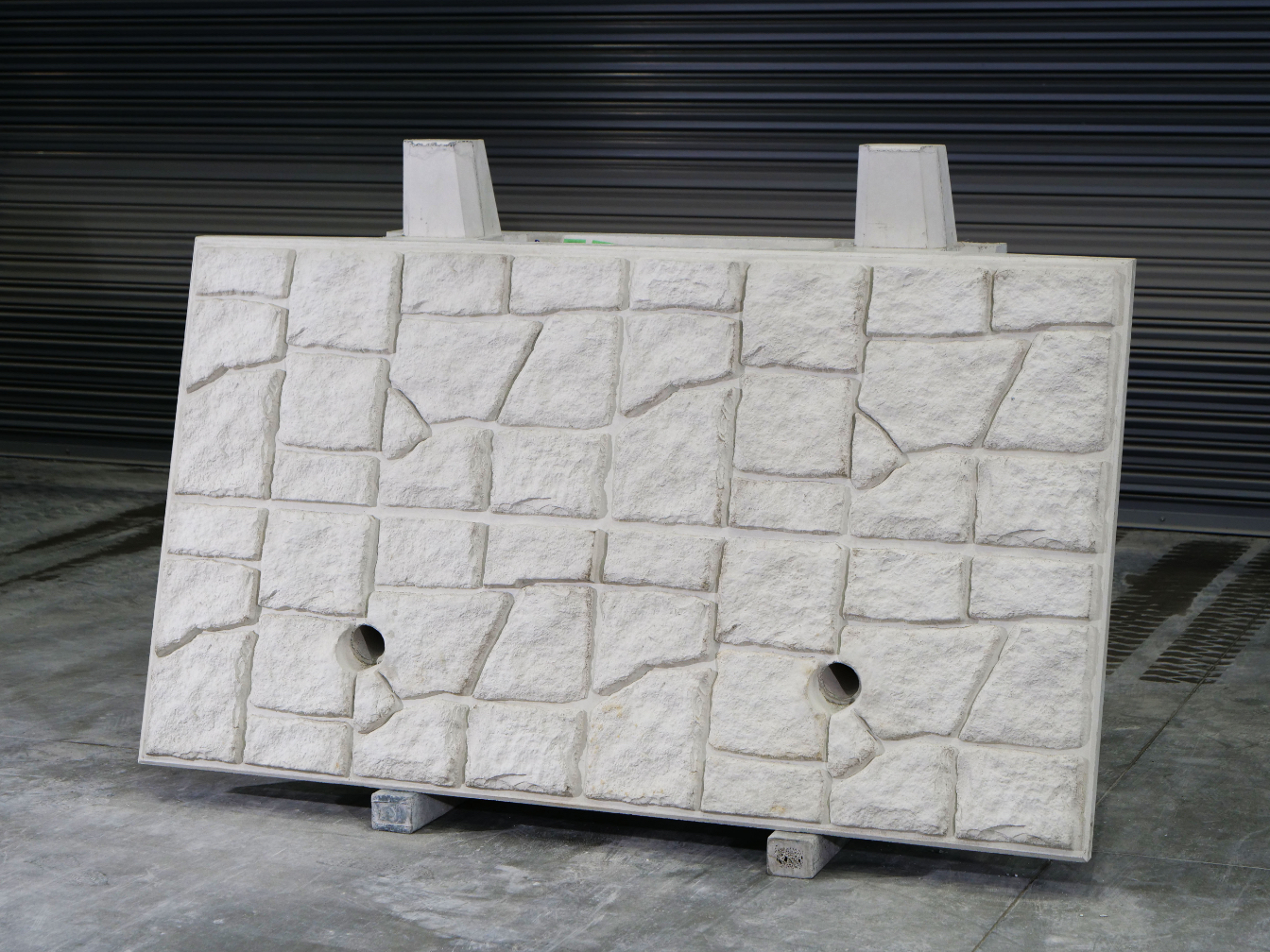
A large retaining wall slab made from CO2-Suicom.      Source: Kajima Corp.

“[Dealing with] climate change and reducing CO2 are issues that face not just Japan, but the whole world,” says Sakai. “When we considered what we could do toward that goal, we felt that bringing out CO2-Suicom products that were a little larger would be useful for the world. We plan to work together with a precast concrete manufacturer to make these large products.”As well as CO2-Suicom, Kajima Corp. has developed several other environmentally friendly concrete products, including its “ECM” reduced-cement concrete, which replaces cement with materials such as industrial by-products, and CO2-fixing concrete. It plans to use these products and achieve CO2 reduction in situations when CO2-Suicom is not suitable.
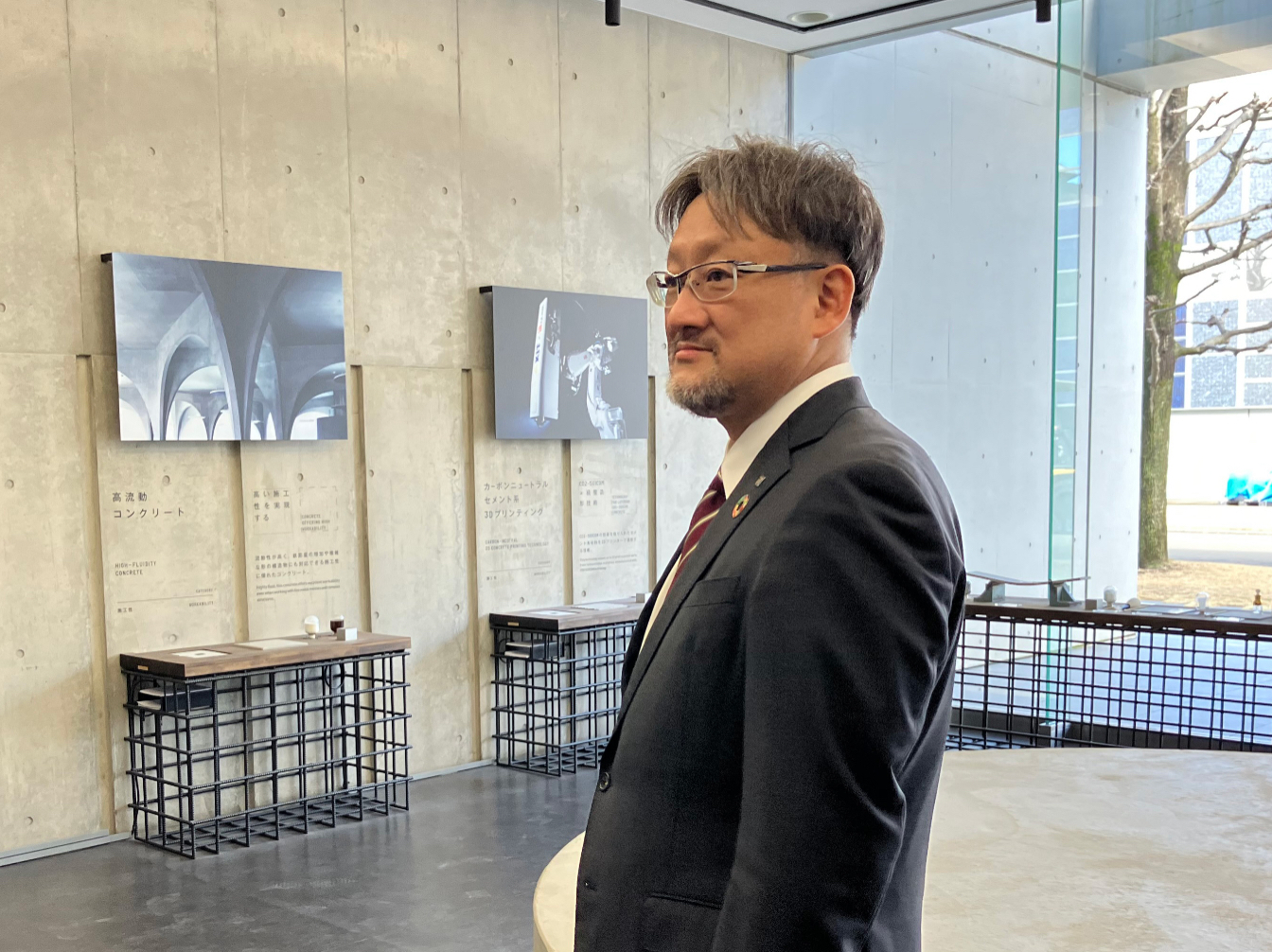
Sakai says that the company’s development work is driven by a desire to contribute to society.      Source: Kajima Corp.

In accordance with the United Nations Framework Convention on Climate Change (UNFCCC), the Paris Treaty, and the Conference of the Parties (COP), Japan’s government prepares and submits to the UN an annual inventory of greenhouse gas emissions and absorption. This April the data for emissions and absorptions in Japan for 2022 was announced, and for the first time in the world absorption (CO2) fixation by environmentally friendly concrete, including CO2-Suicom, had been calculated and reported. In response to this official calculation of CO2 absorption, Japan’s Ministry of the Environment is considering including CO2 absorbed by concrete in the government’s J-Credit scheme, allowing it to be sold as credits.

“Our development work is supported by a desire to contribute to society,” says Sakai. “First we want to firmly establish this technology in Japan, then spread it all around the world.”

Translated by Tony McNicol

Top photo: Kajima Corp.

For inquiries regarding this article, please contact jstories@pacificbridge.jp


Click here for the Japanese version of the article.

Tags: Carbon CaptureCarbon-negative ConcreteClimate ChangeCO2-SuicomConstruction TechdecarbonizationGreen ConstructionJ-CreditKajima Corpsustainable materials
Previous Post

A wave of Asian startups is expanding into Tokyo

Next Post

An AI Suitcase ‘guide dog’ for people with visual disabilities

Kei Mizuno

Kei Mizuno

Related Posts

Clean Tech

Japanese startup turns eggshell waste into eco-friendly plastics and paper

by Yoshiko Ohira
02/06/2026
Earth

A world first: Detecting road sinkholes from space

by Ayaka Sagasaki
01/30/2026
AgriTech

Fish scraps as a hidden treasure

by Kei Mizuno
01/16/2026
AgriTech

Can a small robot save Japan’s terraced paddies?

by Yoshiko Ohira
11/28/2025
Clean Tech

From swordfish to blue jeans: How a Japanese craftsman turns waste into wear

by Yoshiko Ohira
11/07/2025
Next Post

An AI Suitcase ‘guide dog’ for people with visual disabilities

Leave a Reply Cancel reply

Your email address will not be published. Required fields are marked *

Videos

Round-up Video #29

10/06/2022

Round-up Video #25

09/01/2022

Round-up Video #22

07/28/2022

Browse by Tags

Ai Alternative Energy biotechnology Climate Change Community decarbonization Education Event Food foodtech Health Inclusion Infrastructure Innovation Interview J-Stories Japan Japan-Taiwan Innovation Summit Japan startups Japan Tech Labor Living Nature Podcast Recycling Refugees robotics Society Space Startup Startup Ecosystem Startups SusHI Tech Tokyo Sustainability Sustainable Society Taiwan Technology Tokyo Tokyo Innovation Base Tokyo Metropolitan Government Tokyo Updates venture capital video Wealth Zero Waste
JStories

©Articles and photos published on JSTORIES are protected by Japanese copyright law and international treaties. They cannot be reproduced without the permission of the copyright holders

Explore JStories

  • About Jstories
  • Company
  • Contact
  • Home
  • Partner Press Releases
  • Pricing
  • Privacy Policy
  • Team

Follow Us

Welcome Back!

Login to your account below

Forgotten Password?

Retrieve your password

Please enter your username or email address to reset your password.

Log In
No Result
View All Result
  • Home
  • AI
    • Artificial Intelligence
    • Robotics
    • Mobility
  • Earth
    • Energy
    • Climate Tech
    • AgriTech
    • Clean Tech
    • Disaster Tech
    • SpaceTech
  • Life Sciences
    • BioTech
    • HealthTech
    • MedTech
    • AgeTech
  • Society
    • Media
    • EdTech
    • Diversity
    • FemTech
    • HRTech
    • LegalTech
    • Social Impact
    • FinTech
    • Anime
  • Lifestyle
    • FoodTech
    • FashionTech
    • BeautyTech
    • Wellbeing
    • Art & Music
  • Travel
    • Adventure Travel
    • Luxury Travel
    • Wellness & Medical Tourism
    • Culture
  • Video
  • Deals
    • Venture Capital
    • M&A
    • Startup Events
    • Ecosystem Support
  • Interview
  • Opinion

©Articles and photos published on JSTORIES are protected by Japanese copyright law and international treaties. They cannot be reproduced without the permission of the copyright holders

Are you sure want to unlock this post?
Unlock left : 0
Are you sure want to cancel subscription?