• Login
Upgrade
JStories
  • 日本語
  • 中文 (中国)
No Result
View All Result
  • Home
  • AI
    • Artificial Intelligence
    • Robotics
    • Mobility
  • Earth
    • Energy
    • Climate Tech
    • AgriTech
    • Clean Tech
    • Disaster Tech
    • SpaceTech
  • Life Sciences
    • BioTech
    • HealthTech
    • MedTech
    • AgeTech
  • Society
    • Media
    • EdTech
    • Diversity
    • FemTech
    • HRTech
    • LegalTech
    • Social Impact
    • FinTech
    • Anime
  • Lifestyle
    • FoodTech
    • FashionTech
    • BeautyTech
    • Wellbeing
    • Art & Music
  • Travel
    • Adventure Travel
    • Luxury Travel
    • Wellness & Medical Tourism
    • Culture
  • Video
  • Deals
    • Venture Capital
    • M&A
    • Startup Events
    • Pitch
    • Ecosystem Support
  • Interview
  • Opinion
  • Home
  • AI
    • Artificial Intelligence
    • Robotics
    • Mobility
  • Earth
    • Energy
    • Climate Tech
    • AgriTech
    • Clean Tech
    • Disaster Tech
    • SpaceTech
  • Life Sciences
    • BioTech
    • HealthTech
    • MedTech
    • AgeTech
  • Society
    • Media
    • EdTech
    • Diversity
    • FemTech
    • HRTech
    • LegalTech
    • Social Impact
    • FinTech
    • Anime
  • Lifestyle
    • FoodTech
    • FashionTech
    • BeautyTech
    • Wellbeing
    • Art & Music
  • Travel
    • Adventure Travel
    • Luxury Travel
    • Wellness & Medical Tourism
    • Culture
  • Video
  • Deals
    • Venture Capital
    • M&A
    • Startup Events
    • Pitch
    • Ecosystem Support
  • Interview
  • Opinion
en English ja 日本語 zh 中文 (中国)
JStories
No Result
View All Result

A world first: Detecting road sinkholes from space

Ayaka Sagasaki by Ayaka Sagasaki
01/30/2026
in Earth, SpaceTech
0
Home Earth
Share on FacebookShare on Twitter

JStories — As cities around the world grapple with aging roads, sewage networks, and underground infrastructure, the risk of sudden road collapses is becoming an increasingly urgent public safety concern. Sinkholes often form out of sight beneath the surface, making early detection difficult, while conventional inspection methods remain costly and labor-intensive.
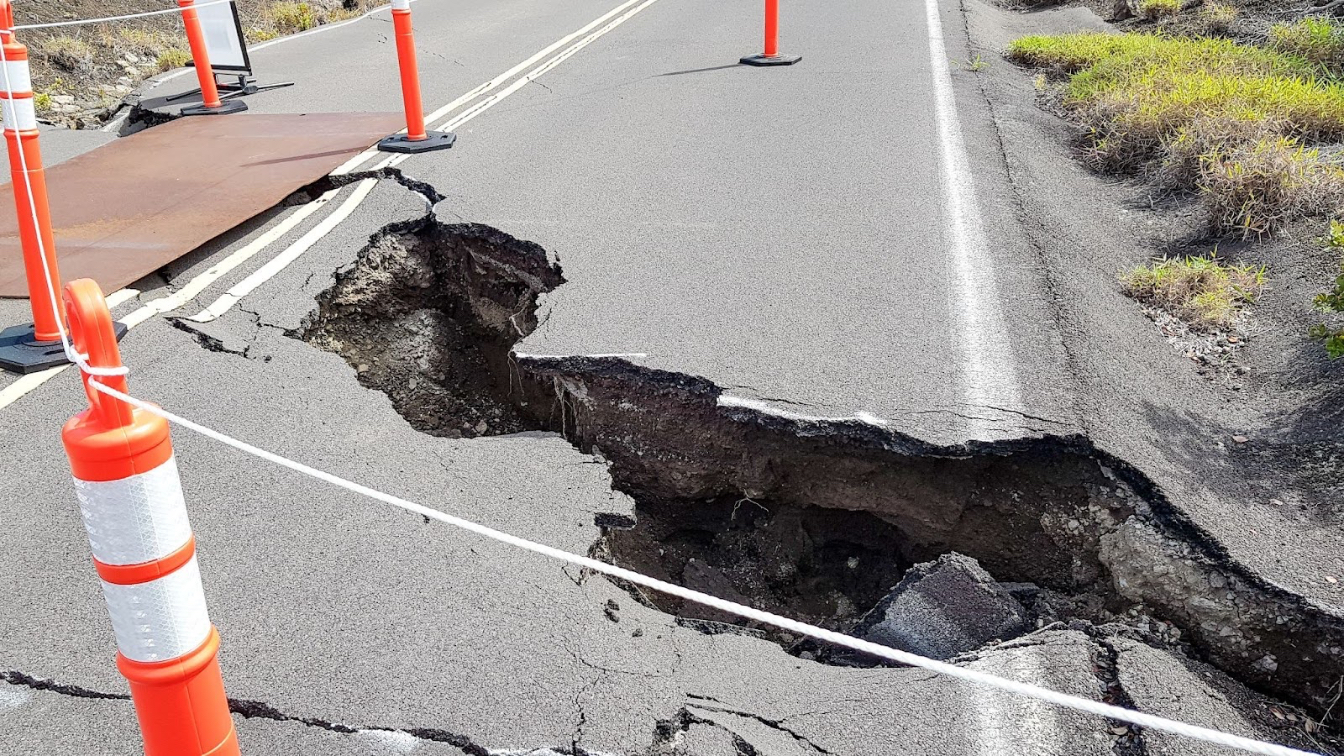
Road collapse caused by a sinkhole     Source: Envato

In Japan, the issue came into sharp focus following a major road collapse in Yashio City, Saitama Prefecture, in 2025. The incident caused significant disruption for local residents, including foul odors and the release of hydrogen sulfide from damaged sewer pipes, underscoring the dangers posed by deteriorating infrastructure. According to the Ministry of Land, Infrastructure, Transport and Tourism (MLIT), approximately 22,000 road cave-ins were confirmed nationwide between 2023 and 2024, including around 500 sinkholes deeper than one meter.

Despite the risks, inspections — a cornerstone of urban safety — remain insufficient. Current approaches rely on visual checks inside water and sewage pipes or ground-penetrating radar surveys conducted from the surface. In practice, these on-site inspections require significant manpower and incur high costs, limiting how frequently they can be carried out.

Against this backdrop, NTT has successfully demonstrated what it describes as the world’s first method for detecting precursors to road sinkholes using Synthetic Aperture Radar (SAR) satellites. By analyzing the reflection characteristics of microwaves emitted from orbiting satellites, the system can identify anomalies developing underground. Because high-risk areas can be narrowed down without on-site visits, the technology is expected to streamline inspection processes, reduce costs, and improve safety.
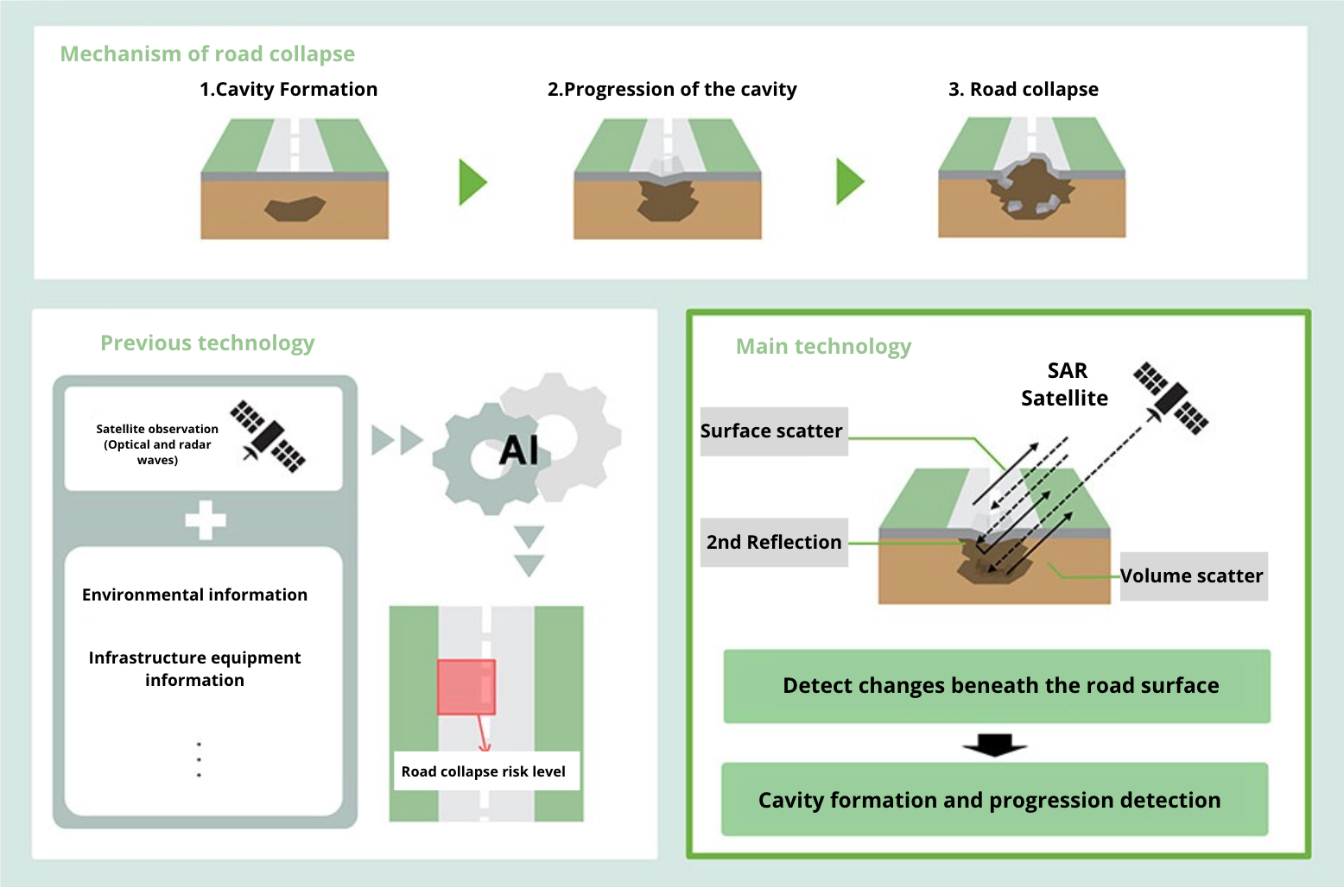
Compared with conventional methods, the system enables more reliable and lower-cost monitoring        Illustration courtesy of NTT (Same below; translated by JStories)

Road sinkholes typically develop in stages: first, an underground cavity forms, the surrounding ground becomes disturbed, and eventually minute irregularities appear on the surface. NTT’s new inspection method detects these early warning signs by analyzing changes in the direction and intensity of reflected radio waves. After comparing the results with underground cavity survey data, the company confirmed that cavities can be detected using satellite data alone. NTT estimates the approach could cut inspection costs by about 85% compared with conventional techniques.
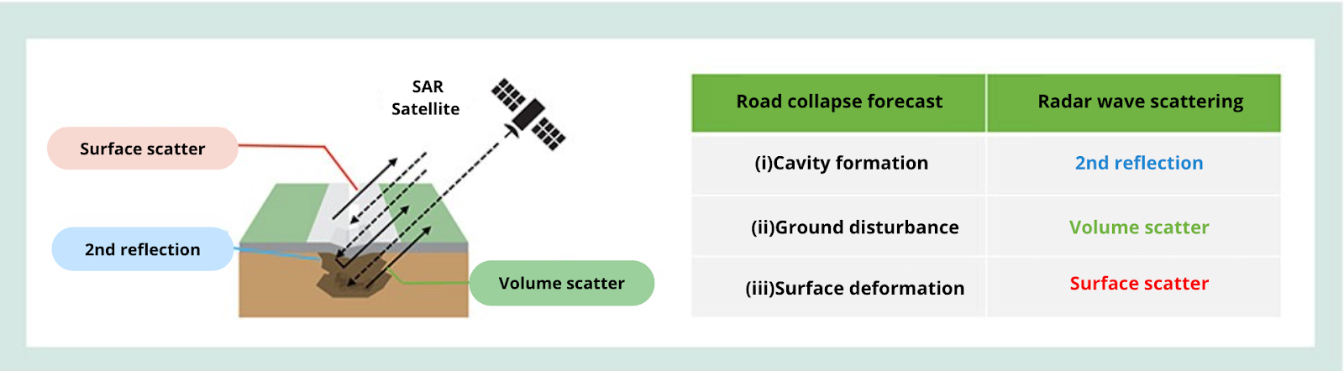
By analyzing the direction and intensity of multiple radio waves, it is possible to assess ground conditions

NTT has also unveiled a complementary technology that monitors ground conditions using optical fibers already installed along roads. While the optical-fiber method excels at detecting deep underground cavities, the satellite-based approach is better suited to identifying shallower cavities, which often pose the most immediate risk. By combining technologies with distinct strengths, NTT aims to achieve more reliable precursor detection.
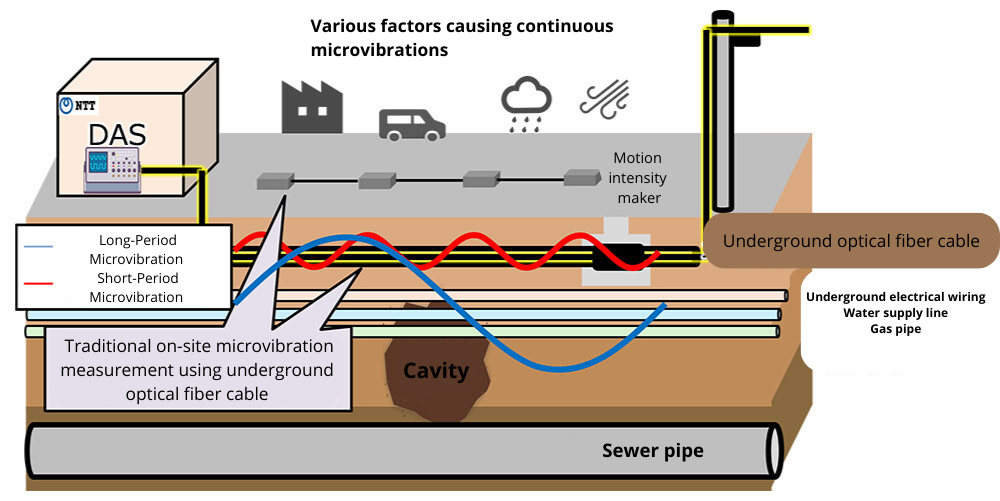
By measuring constant micro-tremors through optical fibers installed in underground pipelines, cavities can be monitored remotely at high frequency

Because sinkholes can develop rapidly, inspections conducted only every few years risk missing critical changes. Regularly orbiting satellites allow for high-frequency, continuous monitoring, enabling earlier detection of dangerous cavities.
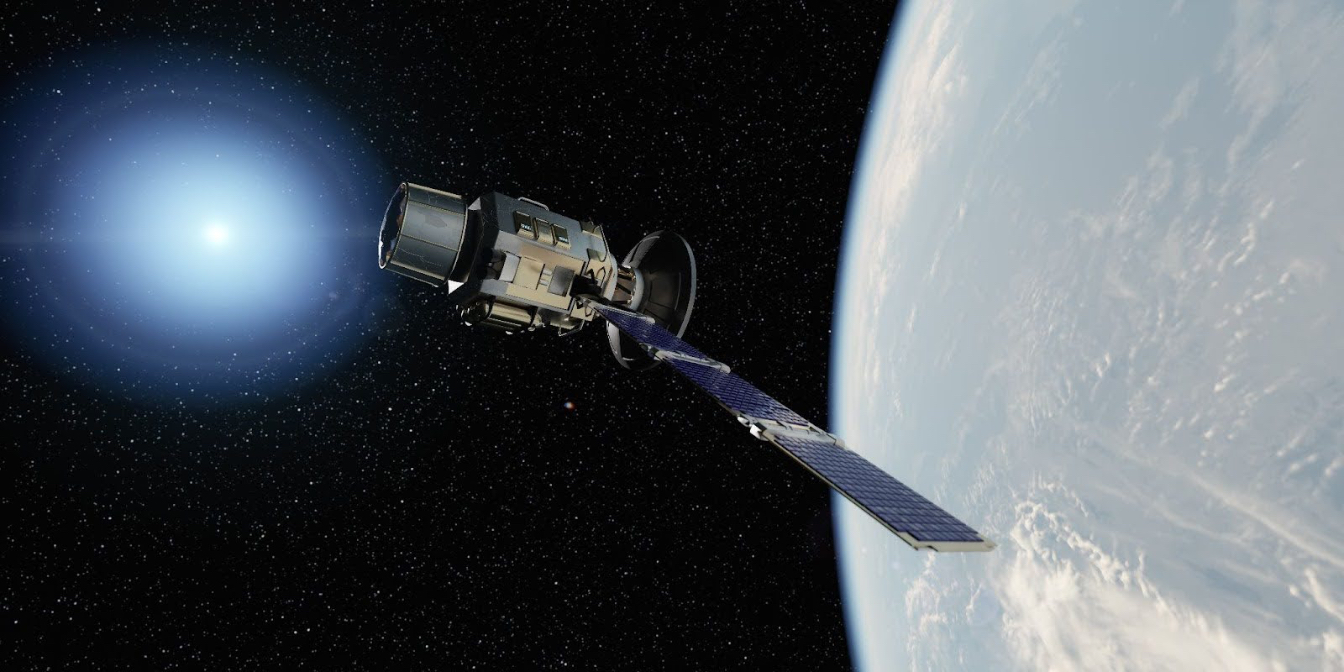
 Source: Envato

Looking ahead, NTT plans to improve the system’s reliability through demonstration experiments conducted in cooperation with local governments, with the goal of strengthening the safety and resilience of critical social infrastructure.

Translated by Lucas Maltzman, Anita De Michele | JStories

Edited by Mark Goldsmith

Top photo: Envato

For inquiries regarding this article, please contact jstories@pacificbridge.jp


Click here for the Japanese version of the article

Previous Post

The plush toy hospital keeping childhood memories alive

Next Post

World-first “anime character-based therapy” trial to test effectiveness in Japanese young adults

Ayaka Sagasaki

Ayaka Sagasaki

Related Posts

Clean Tech

Japanese startup turns eggshell waste into eco-friendly plastics and paper

by Yoshiko Ohira
02/06/2026
AgriTech

Fish scraps as a hidden treasure

by Kei Mizuno
01/16/2026
AgriTech

Can a small robot save Japan’s terraced paddies?

by Yoshiko Ohira
11/28/2025
Clean Tech

From swordfish to blue jeans: How a Japanese craftsman turns waste into wear

by Yoshiko Ohira
11/07/2025
Earth

Space technology meets everyday life: The Tokyo-based startup taking on the apparel of the future

by Tokyo Updates
11/07/2025
Next Post

World-first “anime character-based therapy” trial to test effectiveness in Japanese young adults

Leave a Reply Cancel reply

Your email address will not be published. Required fields are marked *

Videos

Round-up Video #29

10/06/2022

Round-Up Video #31

10/27/2022

Taking action for peace

11/30/2022

Browse by Tags

Ai Alternative Energy biotechnology Climate Change Community decarbonization Education Event Food foodtech Health Inclusion Infrastructure Innovation Interview J-Stories Japan Japan-Taiwan Innovation Summit Japan startups Japan Tech Labor Living Nature Podcast Recycling Refugees robotics Society Space Startup Startup Ecosystem Startups SusHI Tech Tokyo Sustainability Sustainable Society Taiwan Technology Tokyo Tokyo Innovation Base Tokyo Metropolitan Government Tokyo Updates venture capital video Wealth Zero Waste
JStories

©Articles and photos published on JSTORIES are protected by Japanese copyright law and international treaties. They cannot be reproduced without the permission of the copyright holders

Explore JStories

  • About Jstories
  • Company
  • Contact
  • Home
  • Partner Press Releases
  • Pricing
  • Privacy Policy
  • Team

Follow Us

Welcome Back!

Login to your account below

Forgotten Password?

Retrieve your password

Please enter your username or email address to reset your password.

Log In
No Result
View All Result
  • Home
  • AI
    • Artificial Intelligence
    • Robotics
    • Mobility
  • Earth
    • Energy
    • Climate Tech
    • AgriTech
    • Clean Tech
    • Disaster Tech
    • SpaceTech
  • Life Sciences
    • BioTech
    • HealthTech
    • MedTech
    • AgeTech
  • Society
    • Media
    • EdTech
    • Diversity
    • FemTech
    • HRTech
    • LegalTech
    • Social Impact
    • FinTech
    • Anime
  • Lifestyle
    • FoodTech
    • FashionTech
    • BeautyTech
    • Wellbeing
    • Art & Music
  • Travel
    • Adventure Travel
    • Luxury Travel
    • Wellness & Medical Tourism
    • Culture
  • Video
  • Deals
    • Venture Capital
    • M&A
    • Startup Events
    • Ecosystem Support
  • Interview
  • Opinion

©Articles and photos published on JSTORIES are protected by Japanese copyright law and international treaties. They cannot be reproduced without the permission of the copyright holders

Are you sure want to unlock this post?
Unlock left : 0
Are you sure want to cancel subscription?