
• Login
Upgrade
JStories
  • 日本語
  • 中文 (中国)
No Result
View All Result
  • Home
  • AI
    • Artificial Intelligence
    • Robotics
    • Mobility
  • Earth
    • Energy
    • Climate Tech
    • AgriTech
    • Clean Tech
    • Disaster Tech
    • SpaceTech
  • Life Sciences
    • BioTech
    • HealthTech
    • MedTech
    • AgeTech
  • Society
    • Media
    • EdTech
    • Diversity
    • FemTech
    • HRTech
    • LegalTech
    • Social Impact
    • FinTech
    • Anime
  • Lifestyle
    • FoodTech
    • FashionTech
    • BeautyTech
    • Wellbeing
    • Art & Music
  • Travel
    • Adventure Travel
    • Luxury Travel
    • Wellness & Medical Tourism
    • Culture
  • Video
  • Deals
    • Venture Capital
    • M&A
    • Startup Events
    • Pitch
    • Ecosystem Support
  • Interview
  • Opinion
  • Home
  • AI
    • Artificial Intelligence
    • Robotics
    • Mobility
  • Earth
    • Energy
    • Climate Tech
    • AgriTech
    • Clean Tech
    • Disaster Tech
    • SpaceTech
  • Life Sciences
    • BioTech
    • HealthTech
    • MedTech
    • AgeTech
  • Society
    • Media
    • EdTech
    • Diversity
    • FemTech
    • HRTech
    • LegalTech
    • Social Impact
    • FinTech
    • Anime
  • Lifestyle
    • FoodTech
    • FashionTech
    • BeautyTech
    • Wellbeing
    • Art & Music
  • Travel
    • Adventure Travel
    • Luxury Travel
    • Wellness & Medical Tourism
    • Culture
  • Video
  • Deals
    • Venture Capital
    • M&A
    • Startup Events
    • Pitch
    • Ecosystem Support
  • Interview
  • Opinion
en English ja 日本語 zh 中文 (中国)
JStories
No Result
View All Result

An environment-friendly super-absorbent polymer saves farming villages from drought

Yoshiko Ohira by Yoshiko Ohira
04/12/2024
in AgriTech, BioTech, Clean Tech, Deals, Earth, Ecosystem Support, Life Sciences, Venture Capital
0
Home Earth AgriTech
Share on FacebookShare on Twitter

J-STORIES – Climate change is causing water shortages across the world. Drought already affects the livelihoods of around 45% of the world’s population, and the impact on agriculture, which relies closely on water supply, is particularly severe.

Many different companies and researchers are working to develop technologies and products to help solve water shortages and aid farmers who lack access to sufficient water. Among them is Narayan Lal Gurjar from India, who has developed a natural super-absorbent polymer that saves considerable amounts of water when used in agriculture. What’s more, it produces almost no CO2 or polluted water.
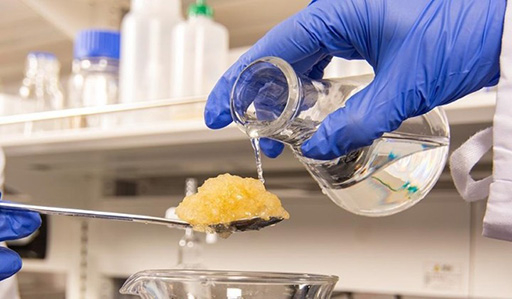
The polymer can absorb 50 times its own weight in water. Source: EF Polymer

Super-absorbent polymers are widely used in products such as disposable diapers, sanitary towels, and cosmetics. Existing polymers are petroleum-based, and while cheap, there is concern over their effect on the environment. The super-absorbent polymer developed by Gurjar, however, is made from organic materials such as orange peel and no chemicals are used.
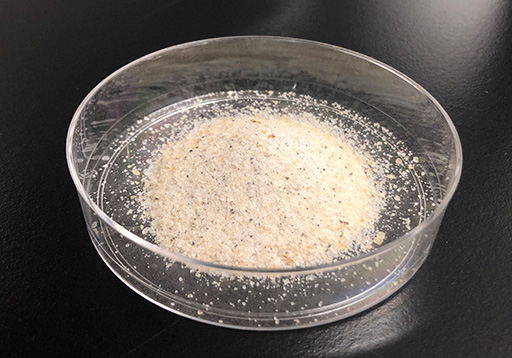
The polymer in powder form. Source: EF Polymer

EF Polymer’s public relations officer, Kyoji Nakao, explains why the super-absorbent polymer is unique.

“It can absorb 50 times its own weight in water, repeatedly absorbing and releasing this water for six months, after which it decomposes and returns to soil over a period of one year. What’s more, its excellent water-absorbing properties mean fertilizer does not run off and can remain effective for a long time.”
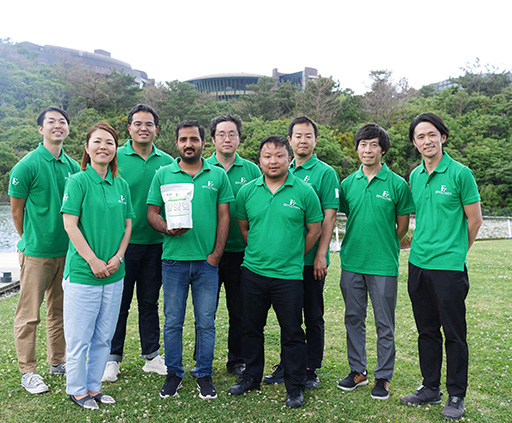
Gurjar (center) with staff from the EF Polymer Japan subsidiary that was set up in 2020. Source: EF Polymer

The polymer can be used in a number of ways, such as sprinkling onto seeds or coating them, ploughing in, adding to seedling pots, or spraying using drones. It can also be used together with other agricultural products to improve and activate the soil’s microbial environment.

According to the company’s demonstration tests, using the polymer resulted in 40% water consumption reduction, as well as less time spent on watering and a 20% reduction in fertilizer. It also reduced the incidence of plant diseases such as blossom-end rot in tomatoes and fruitlet core rot in pineapples, which increased yield by 15%.
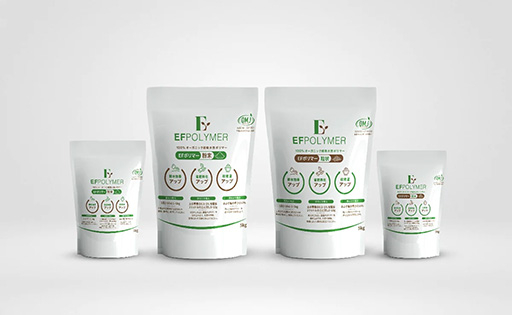
Packaged super-absorbent polymer. Source: EF Polymer

Sales to date are around 160 tonnes, around 45% of which are in India and the US, and 10% in Japan. While developing products for agriculture, the company has also been branching out into cosmetics and household products. From October 2023, it began development of a coolant pack together with Tokyo company Iwatani Materials Co., and that product is now being used by consumer goods retailer Muji.
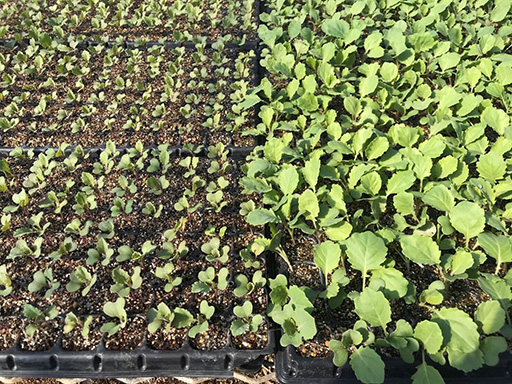
Seedlings grown with the polymer (right) and without (left.) The difference is dramatic. Source: EF Polymer

In April 2023, the company raised 550 million yen to expand its plant in India. It intends to expand production capacity from 10-20 tonnes per month to 100 tonnes by the end of the current financial year, while also expanding sales to France, Thailand and other countries.
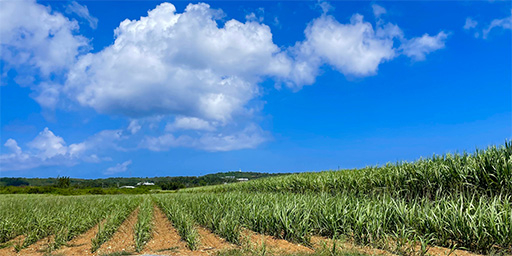
Sugarcane field on Kitadaito Island, Okinawa Prefecture, cultivated with EF polymers. Source: EF Polymer

The polymer is currently made using organic waste from orange juice factories in India. But according to Nakao, the company aims to procure waste locally in future, and is researching how to broaden the range of materials that can be used, such as fruits other than orange peel, and seaweed. This would be an effective way to use materials that would otherwise be discarded, he says.

Gurjar’s parents were farmers who lived in a village of around 300 people in Rajasthan, north-west India, an arid region that is severely affected by drought.

“Since early childhood, I have seen the hardships of my parents and the people in my village due to lack of water and lack of maize,” he says.

Staff explain to people in India about the polymer and how to use it. Source: EF Polymer

His work to fight water shortages was inspired by words of his father: “Since you like science, deepen your knowledge and help us farmers.” At university, he studied agricultural science, created a super-absorbent polymer prototype, and founded EF Polymer in India in 2018 while still a student.
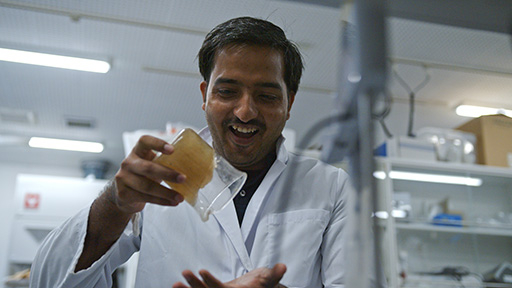
“We aim to provide real solutions, not from a short-term perspective, but from a long-term perspective. We believe that if our products are widely adopted, that farmers around the world will no longer suffer from water shortages, leading to the achievement of sustainable agriculture,” says EF Polymer CEO Gurjal.

In 2019, Gurjar was invited to Japan by the Okinawa Institute of Science and Technology (OIST) Start-up Accelerator Programme. With the use of its advanced research facilities, he created a 100 percent naturally derived polymer. He saw further potential to expand his work in Japan, which leads the world in use of super-absorbent polymers, and in 2020 established a Japanese subsidiary in Kunigami, Okinawa Prefecture.
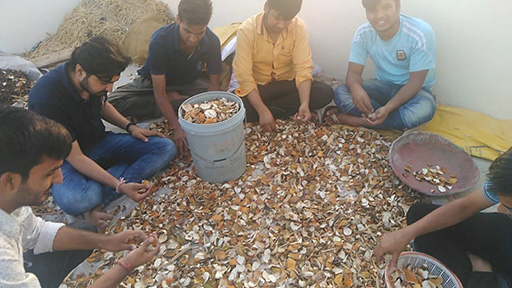
The orange peel used to make the polymer was carefully sorted by hand. (Photo taken around the time of the EF Polymer’s establishment.) Source: EF Polymer 

“We aim to provide real solutions, not from a short-term perspective, but from a long-term perspective. We believe that if our products are widely adopted, that farmers around the world will no longer suffer from water shortages, leading to the achievement of sustainable agriculture,” says Gurjar.

Translation by Tony McNicol

Editing by Chika Osaka

Top page photo by

For inquires about this article, please contact us at jstories@pacificbridge.jp


Click here for the Japanese version of the article.

Tags: Agri-innovationbiotechnologycircular economyClimate ChangeDrought ReliefEF PolymerEnvironmental ProtectionIndia-Japan CollaborationNarayan Lal GurjarOISTOrange PeelOrganic Waste UpcyclingSuper-absorbent Polymer (SAP)Sustainable AgricultureWater Conservation
Previous Post

Aster: The presentation video from JGIF

Next Post

A taste sensor that can ‘visualize’ the flavors of food

Yoshiko Ohira

Yoshiko Ohira

Related Posts

Japan leads global collaboration to combat AI disinformation
AI

Japan leads global collaboration to combat AI disinformation

by Ayaka Sagasaki
03/16/2026
Deals

More than 700 startups to gather at SusHi Tech Tokyo 2026, Asia’s largest global innovation conference

by Toshi Maeda
02/20/2026
HealthTech

Engineering safety from the ground up

by Tokyo Updates
02/13/2026
Clean Tech

Japanese startup turns eggshell waste into eco-friendly plastics and paper

by Yoshiko Ohira
02/06/2026
Earth

A world first: Detecting road sinkholes from space

by Ayaka Sagasaki
01/30/2026
Next Post

Journalist-turned-startup entrepreneur returns to journalism to launch J-Stories

Leave a Reply Cancel reply

Your email address will not be published. Required fields are marked *

Videos

Round-up Video #29

10/06/2022

Round-up Video #22

07/28/2022

Round-Up Video #38

12/15/2022

Browse by Tags

Ai Alternative Energy biotechnology Climate Change Community decarbonization Education Event Food foodtech Health Inclusion Infrastructure Innovation Interview J-Stories Japan Japan-Taiwan Innovation Summit Japan startups Japan Tech Labor Living Nature Podcast Recycling Refugees robotics Society Space Startup Startup Ecosystem Startups SusHI Tech Tokyo Sustainability Sustainable Society Taiwan Technology Tokyo Tokyo Innovation Base Tokyo Metropolitan Government Tokyo Updates venture capital video Wealth Zero Waste
JStories

©Articles and photos published on JSTORIES are protected by Japanese copyright law and international treaties. They cannot be reproduced without the permission of the copyright holders

Explore JStories

  • About Jstories
  • Company
  • Contact
  • Home
  • Partner Press Releases
  • Pricing
  • Privacy Policy
  • Team

Follow Us

Welcome Back!

Login to your account below

Forgotten Password?

Retrieve your password

Please enter your username or email address to reset your password.

Log In
No Result
View All Result
  • Home
  • AI
    • Artificial Intelligence
    • Robotics
    • Mobility
  • Earth
    • Energy
    • Climate Tech
    • AgriTech
    • Clean Tech
    • Disaster Tech
    • SpaceTech
  • Life Sciences
    • BioTech
    • HealthTech
    • MedTech
    • AgeTech
  • Society
    • Media
    • EdTech
    • Diversity
    • FemTech
    • HRTech
    • LegalTech
    • Social Impact
    • FinTech
    • Anime
  • Lifestyle
    • FoodTech
    • FashionTech
    • BeautyTech
    • Wellbeing
    • Art & Music
  • Travel
    • Adventure Travel
    • Luxury Travel
    • Wellness & Medical Tourism
    • Culture
  • Video
  • Deals
    • Venture Capital
    • M&A
    • Startup Events
    • Ecosystem Support
  • Interview
  • Opinion

©Articles and photos published on JSTORIES are protected by Japanese copyright law and international treaties. They cannot be reproduced without the permission of the copyright holders

Are you sure want to unlock this post?
Unlock left : 0
Are you sure want to cancel subscription?