

JSTORIES ー In Japan, nearly 80 percent of working women report that menstrual symptoms interfere with their job performance. Yet, in most workplaces, formal support systems — physical or emotional — are virtually nonexistent. While artificial intelligence is rapidly transforming sectors like finance and logistics, its integration into women’s health remains limited, especially across Asia.
That’s something Anna Kreshchenko is determined to change.
A Ukrainian entrepreneur based in Japan, Kreshchenko is the founder and CEO of Flora, a femtech startup that blends AI, medical partnerships, and real-time workplace data to address what she sees as a critical blind spot in health innovation: menstruation, fertility, and menopause—stages of life long treated as niche or taboo. Flora’s mission is deceptively simple: to use data to support women not just at home, but in the workplace as well.
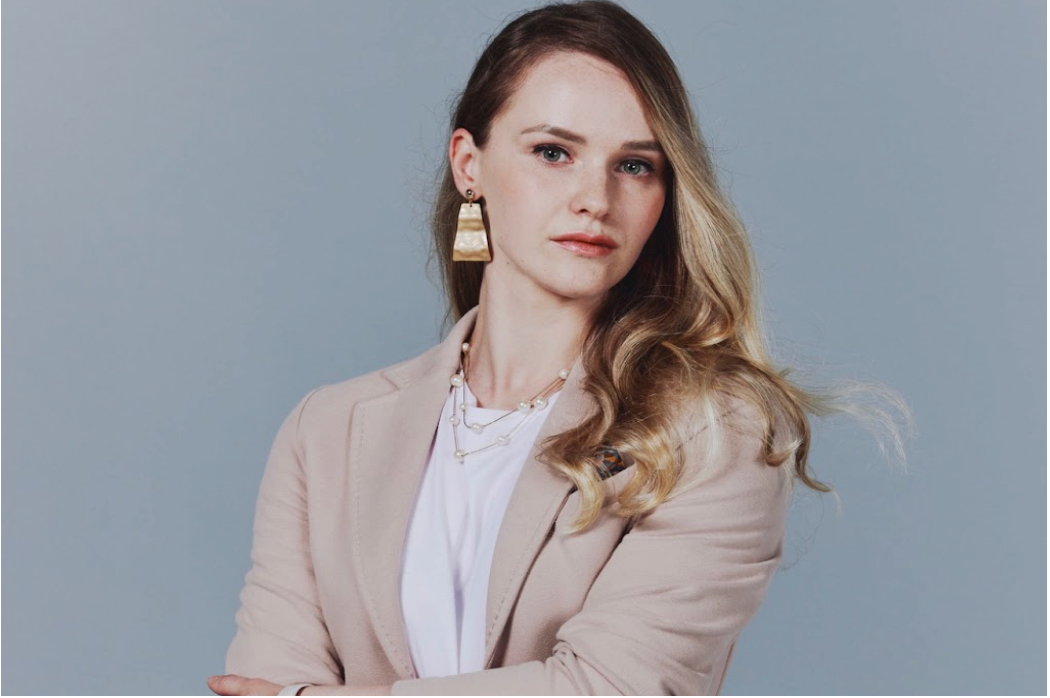
Flora: bringing AI to women’s health
Best known for its AI-powered app Moonly, Flora offers personalized tools for menstrual tracking, fertility planning, and menopause management. But Kreshchenko’s ambitions extend far beyond symptom logging. “We’re not just telling users when their period might start,” she explains. “We help them understand how things like poor sleep or stress might trigger symptoms like PMS or mood changes.”
In doing so, Flora is not only building smarter apps — it’s helping companies rethink how they support women.
With tens of thousands of downloads, the app allows users to track their periods, predict ovulation, and plan for conception, helping those trying to conceive. For menopause, Moonly has features to monitor symptoms like hot flashes, mood changes, and sleep disruptions, and provides advice and coping strategies. By offering insights tailored to individual needs, Moonly empowers women to better understand and manage their health at different life stages, fostering improved well-being and informed decision-making.
Addressing a data gap in women’s health with Flora’s innovative solution
The central issue Flora is trying to solve is the lack of medical data and systemic understanding of women’s health, especially around menstruation, fertility, and menopause. “The main problem with this area, even now, is that there’s not enough data. Nobody really knows which issue can connect to which disorder,” Anna explains to JStories. “So it’s something that we want to tackle. We want to gather this data regarding every life stage of a female’s life, to see how different symptoms are connected with different conditions, and how they influence.”
In a crowded femtech market, Flora has carved out a unique position by combining consumer health tools like Moonly and workplace education and policy reform, with the aim to improve not just personal wellbeing, but also corporate culture and productivity.
Flora emphasizes the importance of addressing menstrual health issues for female workers, arguing that supporting employee well-being through adequate breaks and a comfortable environment not only reduces absenteeism but also boosts morale, fosters a positive work culture, and ultimately enhances productivity. By investing in employees’ health, companies can achieve long-term benefits, improving both worker satisfaction and overall performance
Hormonal fluctuations: Not just a women’s issue
Hormonal fluctuations ー often linked to women’s life stages like menstruation, pregnancy, and menopause — can significantly affect concentration, energy, and stress tolerance in the workplace. But these changes aren’t exclusive to women; men also experience hormonal shifts, though the causes and effects differ. “What we’re doing right now is — we’re focusing on what we call gender-specific issues, mostly women. Lately, we’ve been doing some male menopause or male infertility, but primarily we’re focusing on women. And we have a few services,” Anna explained. “Instead of being just a period tracking app, Moonly acts more like a smart AI assistant that supports your daily health.”
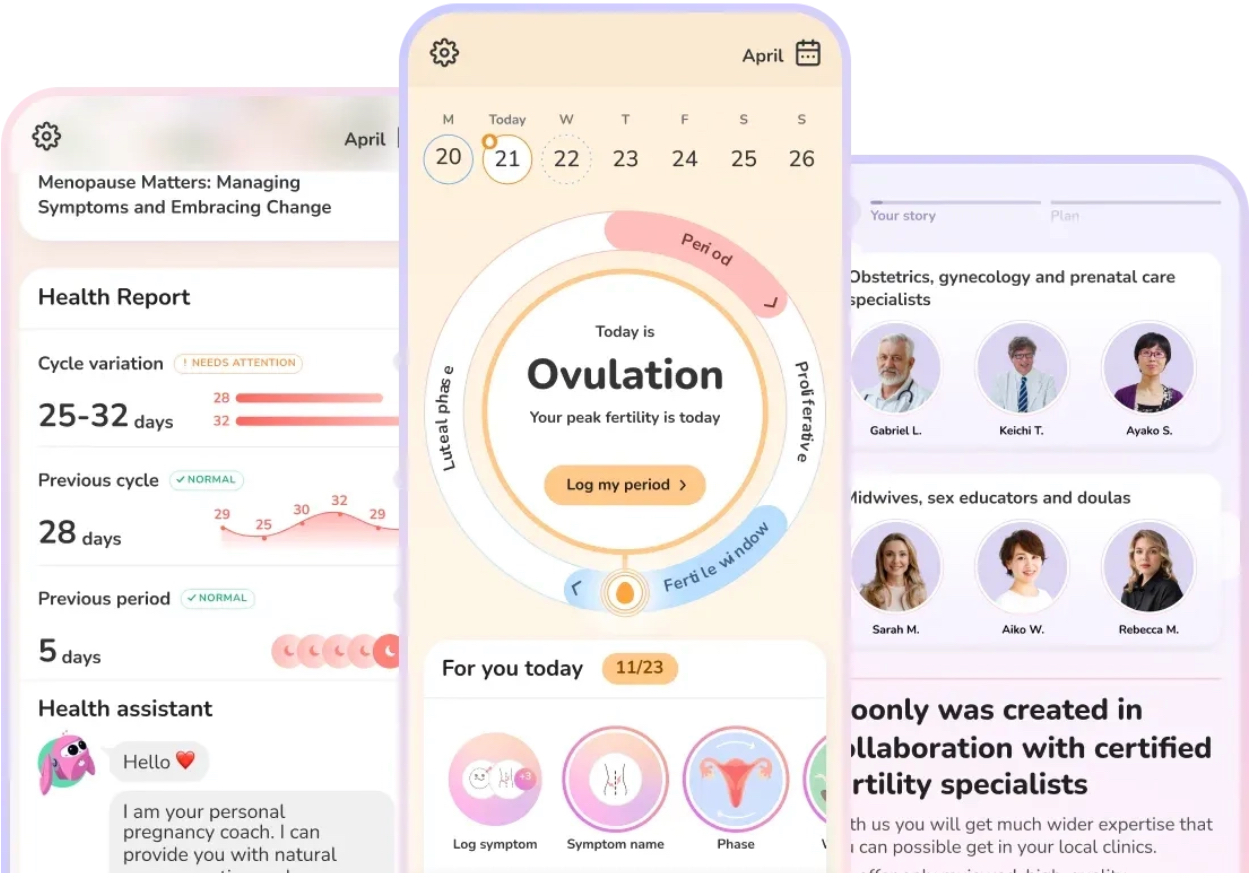
Unlike competitors who focus solely on fertility or telehealth, Flora takes a holistic approach by combining AI-based symptom prediction with access to doctors, hygiene products, and workplace training.“We started with postpartum, but we realized it’s all connected: PMS, sleep, productivity, menopause, even infertility,” Anna said. “You can’t just separate them. That’s why we’re trying to take a whole-life perspective.”
Flora’s services span both business-to-consumer (B2C) and business-to-business (B2B) markets. In addition to its core offerings, the company is also leveraging its growing health data to explore collaborations with pharmaceutical and beauty brands. These partnerships aim to co-create innovative products that address health and wellness challenges where no effective solutions currently exist.
Wellflow: Transforming workplaces through AI
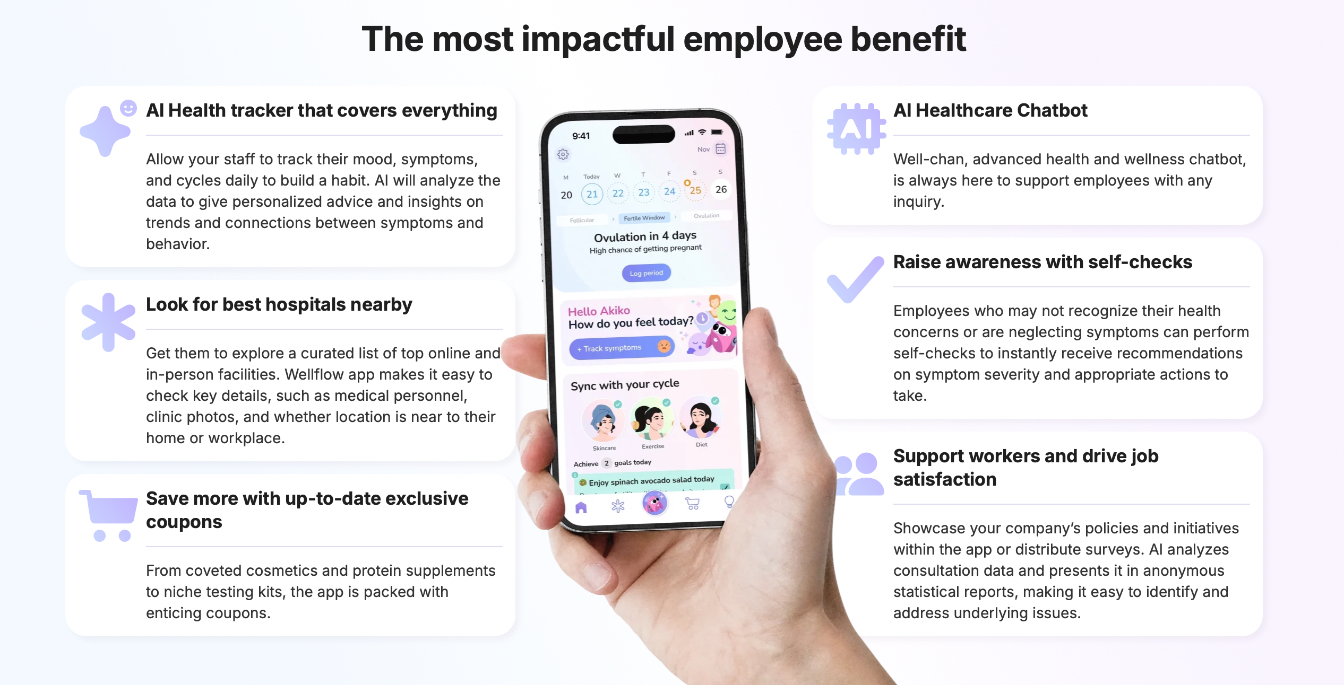
Flora’s B2B platform, Wellflow, is helping to transform workplace environments in Japan by turning employee feedback and health data into meaningful change. Used by factories, shipping firms, and railway operators, the system provides actionable insights that improve both employee well-being and productivity.
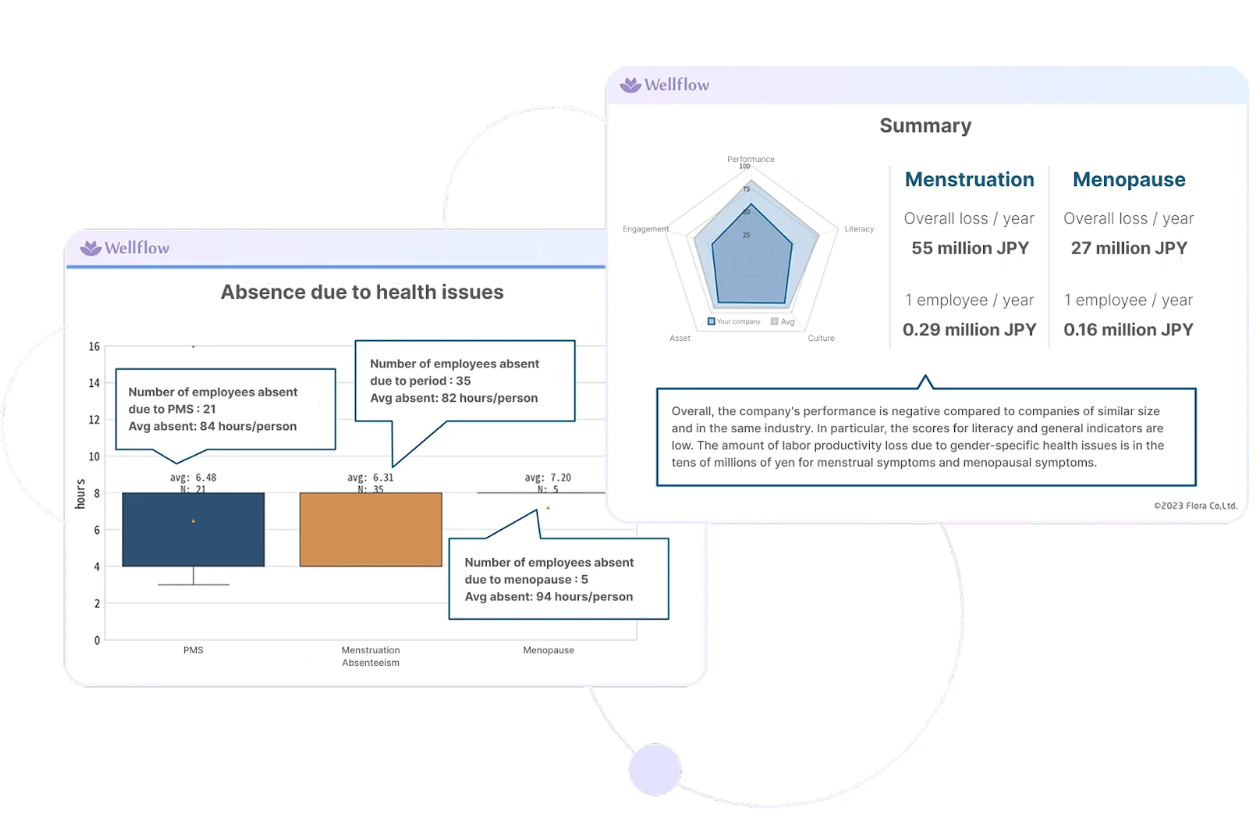
In one case, Wellflow helped a factory uncover that its fixed 10-minute bathroom breaks were too short for menstruating workers to manage hygiene comfortably. “By slightly increasing the break time, productivity actually improved because workers felt more comfortable and could take care of themselves properly.”
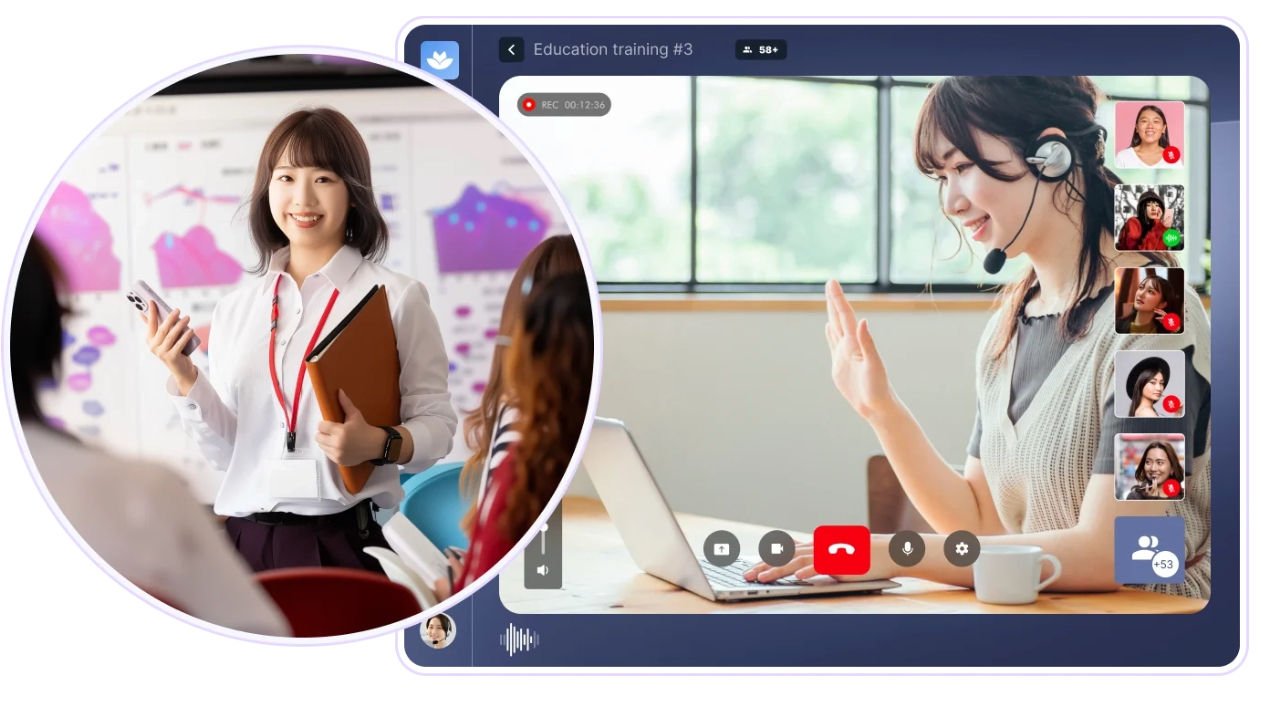
Flora tackles cultural taboos around menstruation and fertility in Japanese workplaces through two main approaches. First, its e-learning modules educate both employees and managers on how to support women’s health needs sensitively and effectively, helping to build awareness and reduce stigma.
Second, Flora’s AI-powered platform offers anonymous access to benefits and medical resources, allowing workers to seek help without the discomfort of directly approaching managers, especially male supervisors. As Anna puts it, “Our goal is to create a safe environment for open communication. These issues shouldn’t be shameful or awkward—they’re natural, and we want to normalize talking about them.”
Who is Anna Kreshchenko?
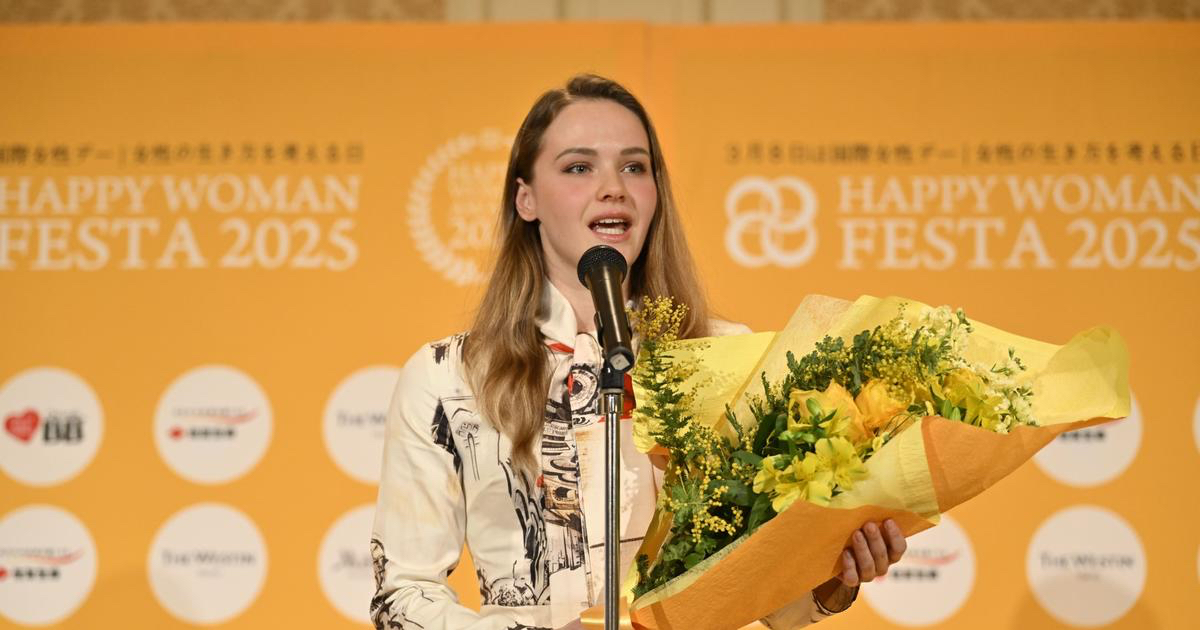
Born in Ukraine, Anna is one of the few foreign female founders in Japan’s tech ecosystem. At the age of 16, she represented Ukraine in the World Karate Championship and decided to study abroad in Japan, the birthplace of karate, aiming to compete in the Olympics. Although she was unable to compete, she continued her studies at Kyoto University, pursuing her academic goals.“I wanted to explore something completely different, and Japan really fascinated me,” she said.
In 2019, personal tragedies led to the realization of the significant mental health challenges women face in the field of gynecology. Her cousin, who was pregnant at the time, developed pregnancy-related complications and suffered from prenatal depression. Tragically, her second child passed away after birth. This experience sparked an awareness of the mental health issues many women struggle with, particularly in the realm of women’s health. Motivated by a desire to address these challenges, she became interested in “femtech” as a potential solution. With a long-standing interest in social entrepreneurship, she believes that having a meaningful problem to solve can provide the necessary motivation to keep moving forward.
Looking ahead: Normalizing women’s health conversations
Looking ahead, Flora’s mission extends beyond business expansion. While the company plans to grow its domestic client base to 500–1000 companies and adapt its platform for international markets, its broader vision is to change how society approaches women’s health.
As Anna explains, “We’re just trying to help everybody take control of their health and feel comfortable in their bodies. We want to solve gender-specific issues in the workplace and improve women’s health worldwide.”
Ultimately, Flora hopes to make topics like menstruation and female health a normal part of public discourse — enabling open, stigma-free conversations between women and men alike.
Written by Anita De Michele | JStories
Edited by Takanori Isshiki, Desiderio Luna | JStories
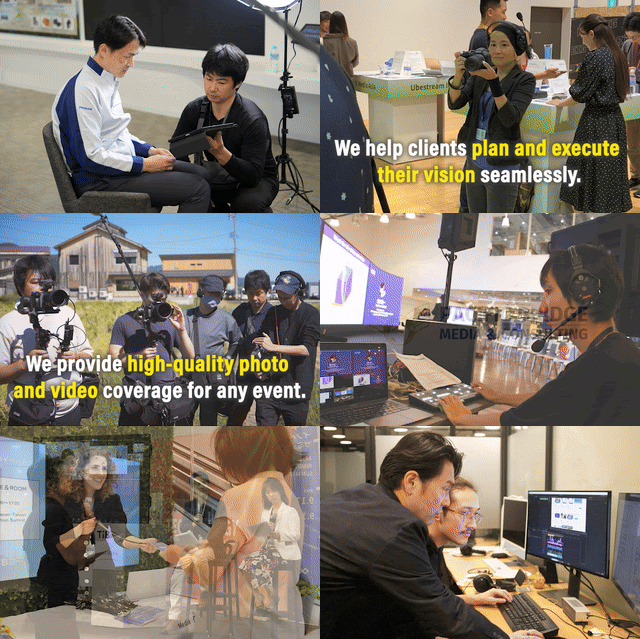
Top photo: Photo courtesy of Flora (Collage by JStories)
For inquiries regarding this article, please contact jstories@pacificbridge.jp
Click here for the Japanese version of the article