• Login
Upgrade
JStories
  • 日本語
  • 中文 (中国)
No Result
View All Result
  • Home
  • AI
    • Artificial Intelligence
    • Robotics
    • Mobility
  • Earth
    • Energy
    • Climate Tech
    • AgriTech
    • Clean Tech
    • Disaster Tech
    • SpaceTech
  • Life Sciences
    • BioTech
    • HealthTech
    • MedTech
    • AgeTech
  • Society
    • Media
    • EdTech
    • Diversity
    • FemTech
    • HRTech
    • LegalTech
    • Social Impact
    • FinTech
    • Anime
  • Lifestyle
    • FoodTech
    • FashionTech
    • BeautyTech
    • Wellbeing
    • Art & Music
  • Travel
    • Adventure Travel
    • Luxury Travel
    • Wellness & Medical Tourism
    • Culture
  • Video
  • Deals
    • Venture Capital
    • M&A
    • Startup Events
    • Pitch
    • Ecosystem Support
  • Interview
  • Opinion
  • Home
  • AI
    • Artificial Intelligence
    • Robotics
    • Mobility
  • Earth
    • Energy
    • Climate Tech
    • AgriTech
    • Clean Tech
    • Disaster Tech
    • SpaceTech
  • Life Sciences
    • BioTech
    • HealthTech
    • MedTech
    • AgeTech
  • Society
    • Media
    • EdTech
    • Diversity
    • FemTech
    • HRTech
    • LegalTech
    • Social Impact
    • FinTech
    • Anime
  • Lifestyle
    • FoodTech
    • FashionTech
    • BeautyTech
    • Wellbeing
    • Art & Music
  • Travel
    • Adventure Travel
    • Luxury Travel
    • Wellness & Medical Tourism
    • Culture
  • Video
  • Deals
    • Venture Capital
    • M&A
    • Startup Events
    • Pitch
    • Ecosystem Support
  • Interview
  • Opinion
en English ja 日本語 zh 中文 (中国)
JStories
No Result
View All Result

Gravity creation out of this world

Ayaka Sagasaki by Ayaka Sagasaki
01/12/2023
in Earth, SpaceTech
0
Home Earth
Share on FacebookShare on Twitter

J-STORIES – Construction company Kajima Corp. has joined forces with scientists at Kyoto University’s Human Spaceology Center to develop a revolving facility that replicates Earth-like gravity on the moon in an ambitious attempt to solve a familiar problem facing programs aiming to put people in space.

The last astronauts to set foot on the moon were part of the Apollo 17 mission in 1972, but unlike that trip, current programs in the pipeline plan to find ways to enable humanity to stay more long-term. NASA’s Artemis program, for example, hopes to make a crewed moon landing by 2025 and in preparation launched Artemis 1, a 26-day unstaffed mission that orbited the moon in late 2022. The Artemis program’s goal is to set up a permanent moon base, then use that as a steppingstone for future crewed missions to Mars, or even farther afield.

A number of national space agencies, including the Japan Aerospace Exploration Agency (JAXA), are helping NASA develop the range of advanced technologies required to enable women and men to make longer stays on the moon. The Japan Cabinet Office’s “Stardust Program,” a space development initiative that was launched in fiscal 2020, includes 13 R&D projects aimed at enabling autonomous construction on the moon.
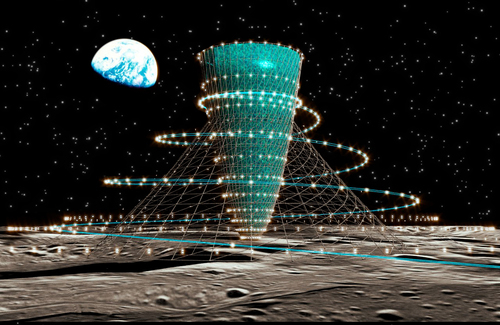
An artist’s impression of the Lunar Glass artificial gravity living facility.     Source: Kajima Corp.

But a number of problems need solving before humans can achieve long-term lunar living. These include securing oxygen and water, controlling temperature, and protecting residents from radiation. Another major issue is gravity, which on the moon is less than 17 percent of that found on Earth. It is likely that this would adversely affect the muscle and bone density of anyone living there for long periods of time, and could also cause problems during pregnancy, and for children as they grow.

The “artificial gravity living facility” being developed by Kajima Corp. and Kyoto University could help overcome these problems.
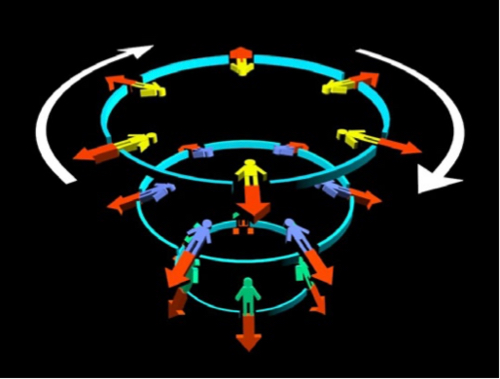
The Lunar Glass would simulate Earth’s gravity via a combination of moon gravity and centrifugal force.     Source: Kajima Corp.

That facility is called “Lunar Glass,” a name that was derived from its wineglass-like shape and the centrifugal force it would use, which is the same force that presses wine against the inside of a wineglass when it is gently swirled. According to researchers, rotating the cone, which would be 200-meter-wide top, at a speed of three times per minute would generate enough gravitational force to enable an Earth-like environment on cone’s interior.

The project also aims to reproduce the ecosystem of the Earth as much as possible by developing forests and oceans inside Lunar Glass.

Similar technology could also be used on other planets and satellites, with the shape of the cone varying to match each body’s environment and gravity.. For example, researchers are also drawing up plans for a “Mars Glass.”
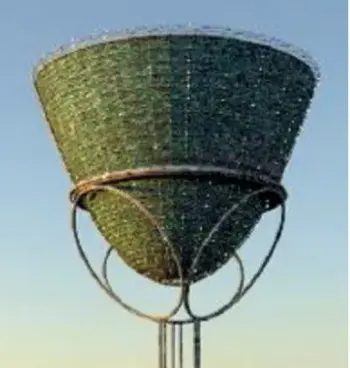
An artist’s impression of a similar artificial gravity living facility for Mars. Source: Kajima Corp.

A number of other large Japanese construction companies are working on ways to help humans live long term in space. Obayashi Corp. is drawing up plans for a space station in stationary orbit that would be connected to Earth by a space elevator. Shimizu Corp., meanwhile, has a blueprint for a space hotel and moon base and Takenaka Corp.is working with JAXA and others on the development of space agriculture systems.

Translation by Tony McNicol

Top page photo by savagerus/Envato

For inquiries about this article, please contact us at jstories@pacificbridge.jp


Click here for the Japanese version of the article.

Tags: EnvironmentHealthLivingSpaceTechnology
Previous Post

INTERVIEW | Diagnosing a company’s ‘kindness’ with AI

Next Post

Round-Up Video #40

Ayaka Sagasaki

Ayaka Sagasaki

Related Posts

Clean Tech

Japanese startup turns eggshell waste into eco-friendly plastics and paper

by Yoshiko Ohira
02/06/2026
Earth

A world first: Detecting road sinkholes from space

by Ayaka Sagasaki
01/30/2026
AgriTech

Fish scraps as a hidden treasure

by Kei Mizuno
01/16/2026
AgriTech

Can a small robot save Japan’s terraced paddies?

by Yoshiko Ohira
11/28/2025
Clean Tech

From swordfish to blue jeans: How a Japanese craftsman turns waste into wear

by Yoshiko Ohira
11/07/2025
Next Post

Round-Up Video #40

Leave a Reply Cancel reply

Your email address will not be published. Required fields are marked *

Videos

Round-Up Video #30

10/13/2022

Round-Up Video #31

10/27/2022

Taking action for peace

11/30/2022

Browse by Tags

Ai Alternative Energy biotechnology Climate Change Community decarbonization Education Event Food foodtech Health Inclusion Infrastructure Innovation Interview J-Stories Japan Japan-Taiwan Innovation Summit Japan startups Japan Tech Labor Living Nature Podcast Recycling Refugees robotics Society Space Startup Startup Ecosystem Startups SusHI Tech Tokyo Sustainability Sustainable Society Taiwan Technology Tokyo Tokyo Innovation Base Tokyo Metropolitan Government Tokyo Updates venture capital video Wealth Zero Waste
JStories

©Articles and photos published on JSTORIES are protected by Japanese copyright law and international treaties. They cannot be reproduced without the permission of the copyright holders

Explore JStories

  • About Jstories
  • Company
  • Contact
  • Home
  • Partner Press Releases
  • Pricing
  • Privacy Policy
  • Team

Follow Us

Welcome Back!

Login to your account below

Forgotten Password?

Retrieve your password

Please enter your username or email address to reset your password.

Log In
No Result
View All Result
  • Home
  • AI
    • Artificial Intelligence
    • Robotics
    • Mobility
  • Earth
    • Energy
    • Climate Tech
    • AgriTech
    • Clean Tech
    • Disaster Tech
    • SpaceTech
  • Life Sciences
    • BioTech
    • HealthTech
    • MedTech
    • AgeTech
  • Society
    • Media
    • EdTech
    • Diversity
    • FemTech
    • HRTech
    • LegalTech
    • Social Impact
    • FinTech
    • Anime
  • Lifestyle
    • FoodTech
    • FashionTech
    • BeautyTech
    • Wellbeing
    • Art & Music
  • Travel
    • Adventure Travel
    • Luxury Travel
    • Wellness & Medical Tourism
    • Culture
  • Video
  • Deals
    • Venture Capital
    • M&A
    • Startup Events
    • Ecosystem Support
  • Interview
  • Opinion

©Articles and photos published on JSTORIES are protected by Japanese copyright law and international treaties. They cannot be reproduced without the permission of the copyright holders

Are you sure want to unlock this post?
Unlock left : 0
Are you sure want to cancel subscription?