• Login
Upgrade
JStories
  • 日本語
  • 中文 (中国)
No Result
View All Result
  • Home
  • AI
    • Artificial Intelligence
    • Robotics
    • Mobility
    • FinTech
    • Quantum EN
  • Earth
    • Energy
    • Climate Tech
    • AgriTech
    • Clean Tech
    • Disaster Tech
    • SpaceTech
    • Materials EN
  • Life Sciences
    • BioTech
    • HealthTech
    • MedTech
    • AgeTech
  • Society
    • Media
    • EdTech
    • Diversity
    • FemTech
    • Social Impact
  • Lifestyle
    • FoodTech
    • Beauty & Fashion
    • Wellbeing
    • Arts & Music
    • Anime
  • Travel
    • Adventure Travel
    • Luxury Travel
    • Wellness & Medical Tourism
    • Culture
  • Video
  • Deals
    • Venture Capital
    • M&A
    • Events
    • Pitch
    • Growth Support
    • Legal & IP
  • Interview
  • Opinion
  • Home
  • AI
    • Artificial Intelligence
    • Robotics
    • Mobility
    • FinTech
    • Quantum EN
  • Earth
    • Energy
    • Climate Tech
    • AgriTech
    • Clean Tech
    • Disaster Tech
    • SpaceTech
    • Materials EN
  • Life Sciences
    • BioTech
    • HealthTech
    • MedTech
    • AgeTech
  • Society
    • Media
    • EdTech
    • Diversity
    • FemTech
    • Social Impact
  • Lifestyle
    • FoodTech
    • Beauty & Fashion
    • Wellbeing
    • Arts & Music
    • Anime
  • Travel
    • Adventure Travel
    • Luxury Travel
    • Wellness & Medical Tourism
    • Culture
  • Video
  • Deals
    • Venture Capital
    • M&A
    • Events
    • Pitch
    • Growth Support
    • Legal & IP
  • Interview
  • Opinion
en English ja 日本語 zh 中文 (中国)
JStories
No Result
View All Result

Greening the desert with trash

Yui Sawada by Yui Sawada
03/23/2023
in Clean Tech, Earth, Environment, News, Social Impact, Society
0
Home Earth Clean Tech
Share on FacebookShare on Twitter

J-STORIES – The sight of local Niger women throwing kitchen waste out into the African desert inspired a project that has turned arid land into an area of verdant vegetation.

It was back in 2000 when Kyoto University’s Shuichi Oyama, who was conducting research in a rural area of the Western African nation afflicted with poverty, desertification, and conflict, first came across this littering phenomenon and wondered if his research could turn it into an advantage.

Oyama was living in the Sahel region of the southern Sahara where, since the 1970s, desertification has been a major problem due to drought and climate change. As a specialist in Africa, his research involved surveying rural communities to analyze perceptions of the environment, natural resource use, and social structures, then work on solutions.
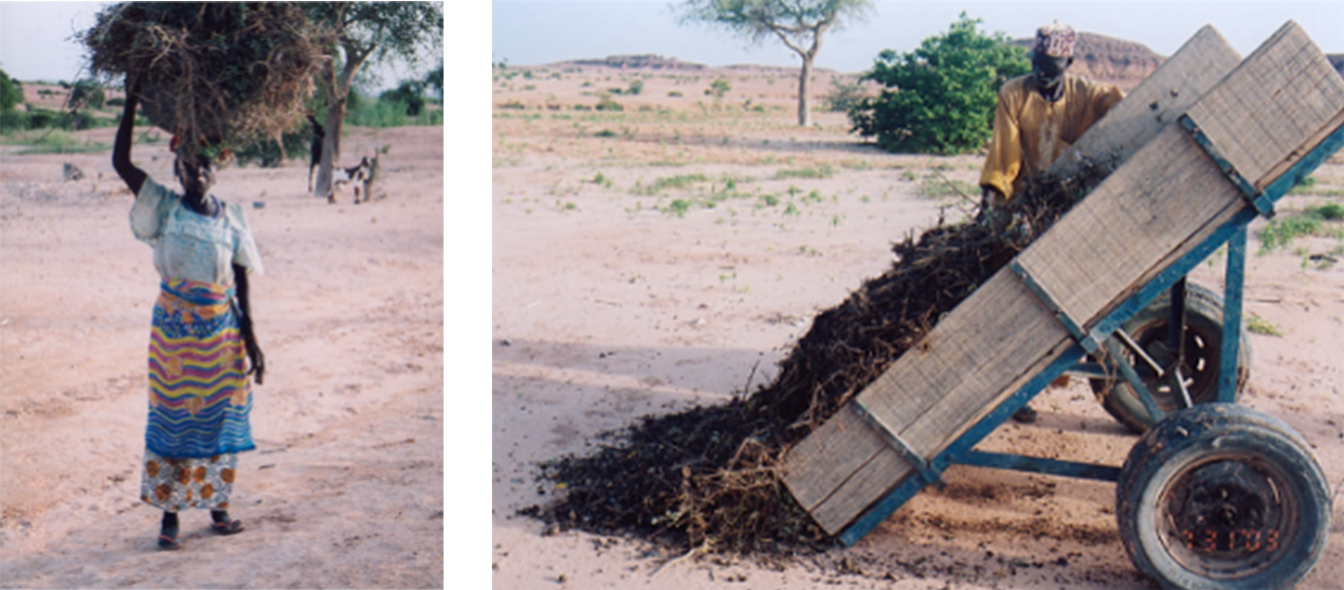
Kitchen waste being scattered on the desert.     Source: Shuichi Oyama

The simple but effective tactic he and his research colleagues devised was to bring household garbage from the city, scatter it in a fenced-off area of desertification-affected land, then cover it with sand. They found that the garbage quickly decomposed to nourish the earth and, when the rainy season came, the seeds of various plants in the garbage germinated, making the area lush with vegetation.

Another important role in the greening process is played by desert termites. When garbage is spread within 250 to 300 meters of termite hills, the insects head for the garbage, dig through the sand to feed on it and, in the process, turn over and cultivate the otherwise concrete-hard ground.

Meanwhile, in areas that have already become green, cows and goats feed on the plants, producing manure that further fertilizes the soil.

In fact, according to Oyama, their first plan was to use the newly greened land as pasture for livestock. But in the project’s initial year, residents first harvested plants that had grown from the seeds in the garbage, only allowing in livestock afterward. The result was that formerly arid areas now produced food for both villagers and their livestock.
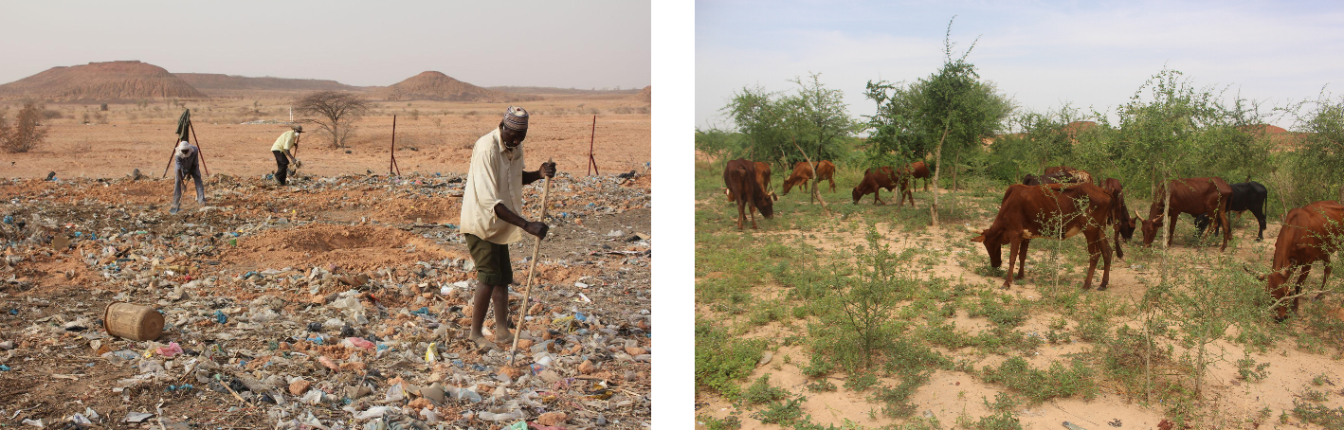
Covering land with 4.5 cm of waste produces fertile topsoil 15 cm deep, enough for hardy local plants.     Source: Shuichi Oyama

Greening the land has another important potential benefit. In countries of the Sahel region such as Niger and Nigeria, conflict often breaks out between livestock farmers and crop farmers. Oyama told J-Stories that he hopes greening the desert could prevent livestock from damaging crops and reduce some of that conflict, bringing peace to communities.

In 2020, Oyama and his fellow researchers took part in the Japan International Cooperation Agency Grassroots Technical Cooperation Project and Kusunoki 125, a university fund set up to commemorate the 125th anniversary of Kyoto University’s founding. Thanks to such activities, in September 2021 the Ministry of Environment in Niger officially  acknowledged the usefulness of garbage for improving the nation’s soil.
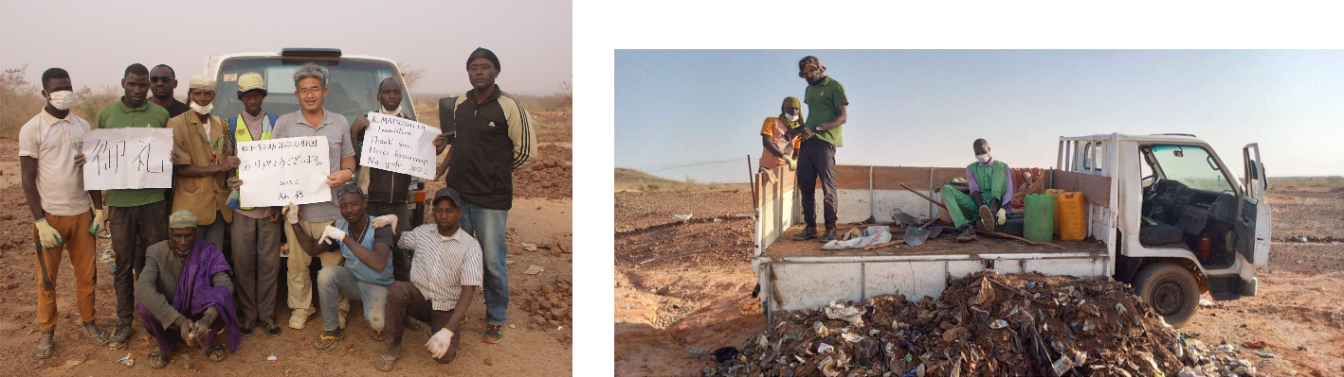
A truck bought with money awarded by the K. Matsushita Foundation for “coexistence between humans and environment.”     Source: Shuichi Oyama

Going forward, a challenge is to improve the sorting of garbage before it is scattered on the desert. This April, a project was launched at the Research Institute for Humanity and Nature in Kyoto to study the decomposition of plastic in garbage and systems to inspect garbage for toxic substances. There are also plans to set up an Environmental Research Institute in Niger in 2024.

Translation by Tony McNicol

Top page photo by Shuichi Oyama

For inquiries about this article, please contact jstories@pacficbridge.jp


Click here for the Japanese version of the article.

Tags: LivingSustainable SocietyZero Waste
Previous Post

From hot springs to cancer therapy

Next Post

Round-Up #50

Yui Sawada

Yui Sawada

Related Posts

When digital and physical worlds meet – Interview with Yoichi Ochiai 何がすごい? 〜 現実とデジタルを融合する、落合陽一の世界
Video

When digital and physical worlds meet – Interview with Yoichi Ochiai 何がすごい? 〜 現実とデジタルを融合する、落合陽一の世界

by JStories_Admin
04/01/2026
Ai Heart Japan
News

Ai Heart Japan

by JStories_Admin
04/01/2026
Assist motion
News

Assist motion

by JStories_Admin
04/01/2026
Aster
News

Aster

by JStories_Admin
04/01/2026
Challenergy
News

Challenergy

by JStories_Admin
04/01/2026
Next Post

Round-Up #50

Leave a Reply Cancel reply

Your email address will not be published. Required fields are marked *

Videos

Round-Up Video #34

11/17/2022

Round-up Video #23

08/04/2022

INTERVIEW | Taking action for peace

11/30/2022

Browse by Tags

#Startup Aging Society Ai Alternative Energy biotechnology Climate Change Community Education Event Food foodtech Health Inclusion Infrastructure Innovation Interview J-Stories Japan Japan-Taiwan Innovation Summit Japan startups Japan Tech Labor Living Nature Podcast Recycling Refugees robotics Society Space Startup Ecosystem Startups SusHI Tech Tokyo Sustainability Sustainable Society Taiwan Technology Tokyo Tokyo Innovation Base Tokyo Metropolitan Government Tokyo Updates venture capital video Wealth Zero Waste
JStories

©Articles and photos published on JSTORIES are protected by Japanese copyright law and international treaties. They cannot be reproduced without the permission of the copyright holders

Explore JStories

  • About Jstories
  • Company
  • Contact
  • Home
  • Partner Press Releases
  • Privacy Policy
  • Team

Follow Us

Welcome Back!

Login to your account below

Forgotten Password?

Retrieve your password

Please enter your username or email address to reset your password.

Log In
No Result
View All Result
  • Home
  • AI
    • Artificial Intelligence
    • Robotics
    • Mobility
    • FinTech
    • Quantum EN
  • Earth
    • Energy
    • Climate Tech
    • AgriTech
    • Clean Tech
    • Disaster Tech
    • SpaceTech
    • Materials EN
  • Life Sciences
    • BioTech
    • HealthTech
    • MedTech
    • AgeTech
  • Society
    • Media
    • EdTech
    • Diversity
    • FemTech
    • Social Impact
  • Lifestyle
    • FoodTech
    • Beauty & Fashion
    • Wellbeing
    • Arts & Music
    • Anime
  • Travel
    • Adventure Travel
    • Luxury Travel
    • Wellness & Medical Tourism
    • Culture
  • Video
  • Deals
    • Venture Capital
    • M&A
    • Events
    • Growth Support
    • Legal & IP
  • Interview
  • Opinion

©Articles and photos published on JSTORIES are protected by Japanese copyright law and international treaties. They cannot be reproduced without the permission of the copyright holders

Are you sure want to unlock this post?
Unlock left : 0
Are you sure want to cancel subscription?