

J-STORIES – Efforts are spreading to utilize electric wheelchairs as a short-distance transportation infrastructure that can be used by everyone, not just people with disabilities or the elderly.
WHILL (Shinagawa-ku, Tokyo) , a venture company, is working on a new mobility system using electric wheelchairs. Founded in 2012, the company’s mission is to “make mobility fun and smart for everyone,” and it has been working to improve the operability and comfort of electric wheelchairs, positioning them not as welfare equipment, but as a means of personal mobility.
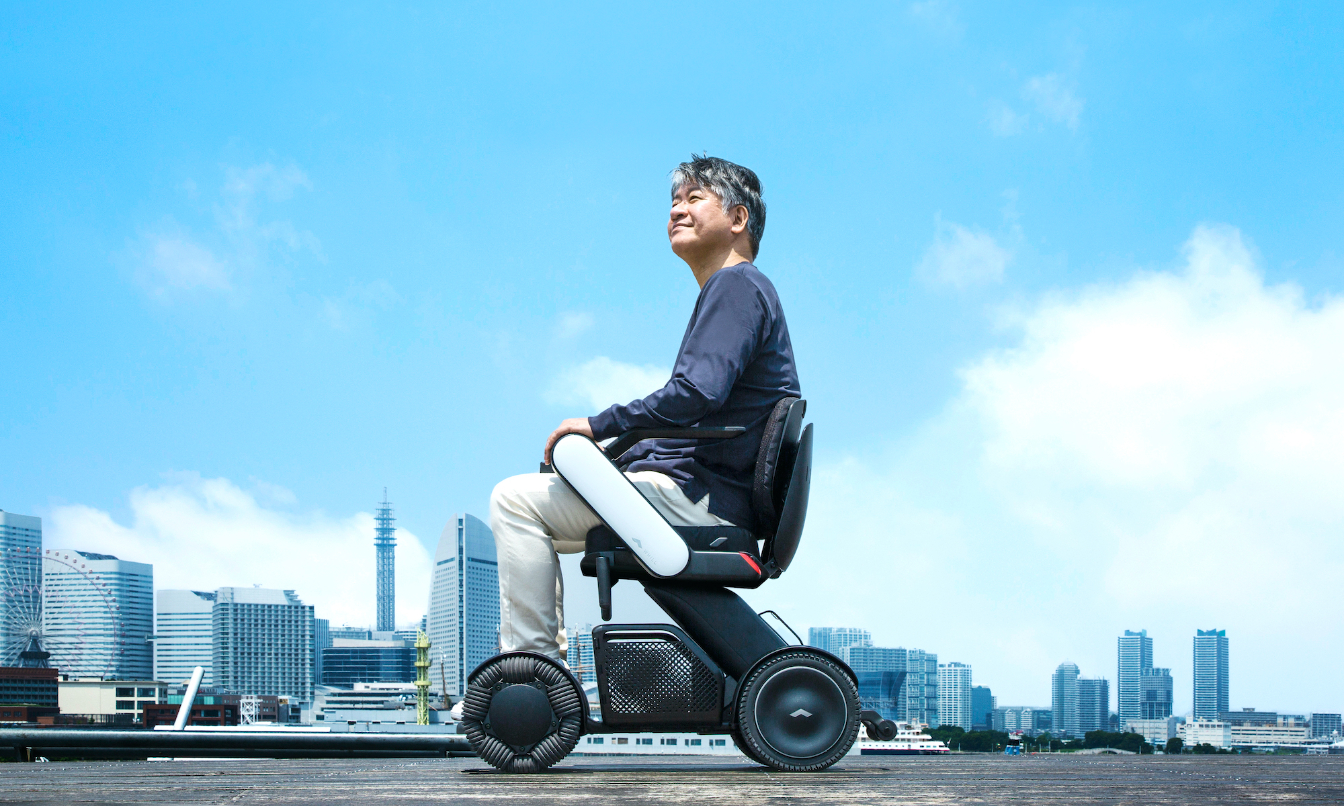
The company’s electric wheelchairs are controlled by a handheld controller that handles acceleration, braking, and steering. They can move at a speed of 6 kilometers per hour and safely overcome obstacles of approximately 5 centimeters. Because of their slow top speed, they are treated as “pedestrians” under road traffic laws and do not require a driver’s license.
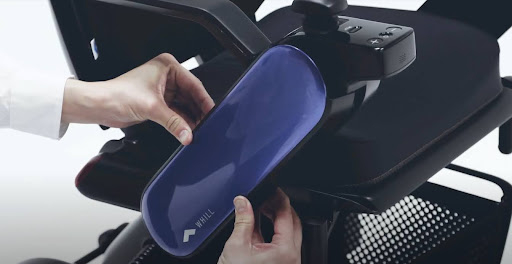
The sophisticated design and the availability of arm covers in various colors are features not found in typical wheelchairs. Toyota and Honda dealerships are already beginning to sell them as a means of transportation for elderly people who have surrendered their driver’s licenses.
Currently, the company sells three types of electric wheelchairs: the standard ” WHILL Model C2 ,” the foldable “WHILL Model F,” and the “WHILL Model S,” a scooter -type wheelchair designed primarily for outdoor use and offering a bicycle-like riding experience .

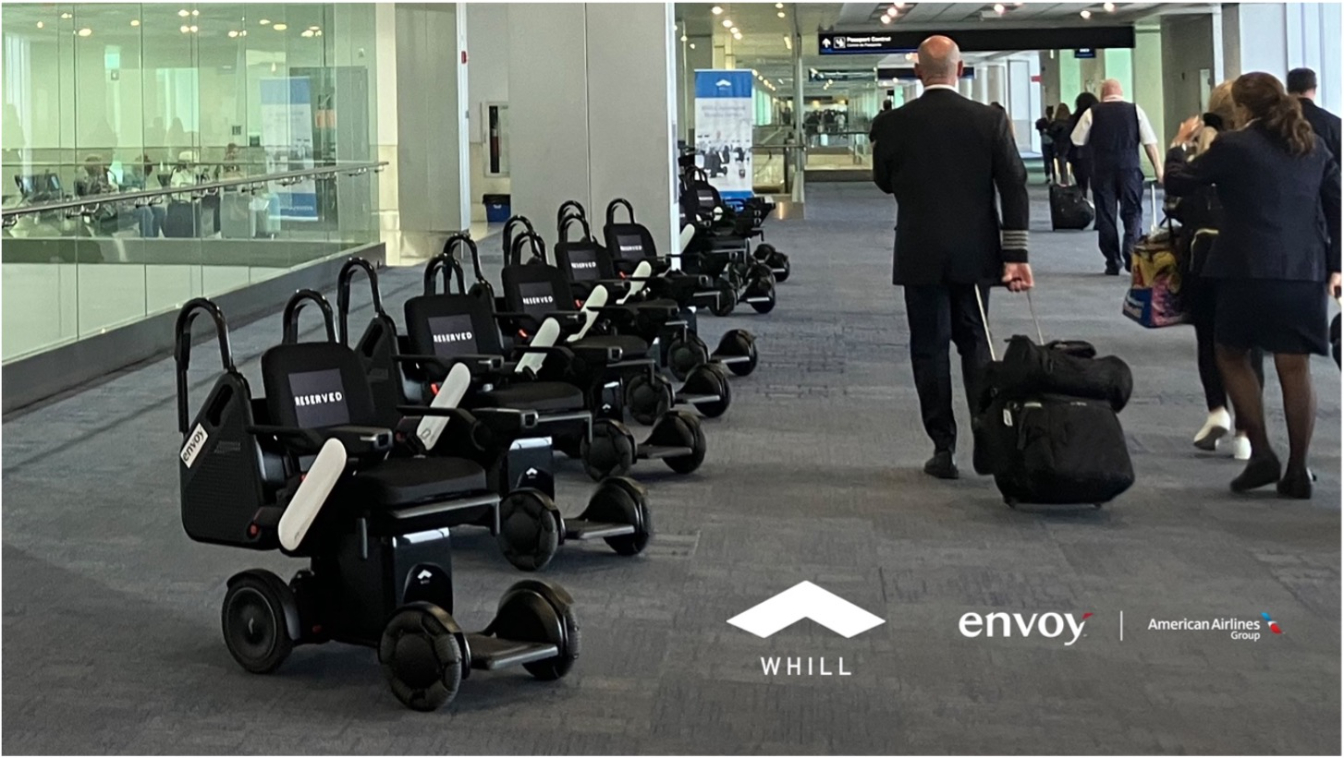
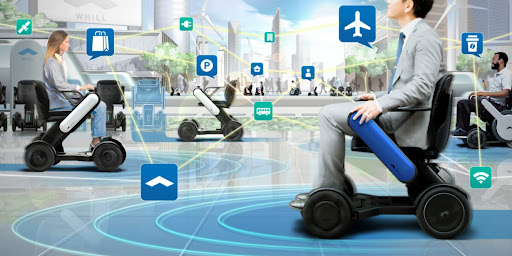
The company also offers an autonomous driving service using electric wheelchairs. At Haneda Airport, a new mobility service connecting the company’s electric wheelchairs via autonomous driving began at Terminal 1 on June 14, 2021, then at the entire Terminal 2 in mid-July, and at Terminal 3 in December 2023. This system allows users to get into a WHILL wheelchair, input information on a touch panel, and be automatically transported to their designated destination.
In December 2022, the company launched the first autonomous driving service outside of Japan at Winnipeg International Airport in Canada, and from the end of March 2024, it will also start the same service at Los Angeles International Airport and Miami International Airport in the United States, aiming to expand autonomous driving services to airports both domestically and internationally.
Meanwhile, the company also rents out electric wheelchairs as a means of transportation within tourist areas such as Minato Mirai in Yokohama, Huis Ten Bosch in Nagasaki, Azabudai Hills, and Tokyo Dome City.
Furthermore, the company announced that in March 2024, it would collaborate with the travel agency JTB Group, and in May of the same year, with TokudAw, a company that handles customized tours for tourists visiting Japan, to launch a WHILL wheelchair rental service at tourist destinations. The rental service will utilize the foldable “WHILL Model F,” which can be used as a second mode of transportation after getting out of a car at a tourist destination.

In May 2022, the company reached an agreement to raise funds from Woven Capital, the investment arm of Woven Planet Group, a subsidiary of Toyota Motor Corporation. Woven Planet is responsible for Toyota’s efforts toward a next-generation mobility society, including autonomous driving, and Woven Capital, as its global investment fund, invests in innovative companies in the mobility sector.
This marks Woven Capital’s first investment in a Japanese company. WHILL plans to use the funds raised to “expand its production system globally and strengthen resources with a focus on its service business.”
WHILL’s public relations representative, Natsuki Shinmen, explained to J-Stories that through this fundraising, they aim to leverage Woven Planet’s extensive network and expertise to grow their business.
Regarding the development of electric wheelchair products, he pointed out that “While wheelchairs have improved technologically, their design hasn’t changed for over 100 years. (Without changing the design) the notion that people who use wheelchairs are people who can’t walk has become deeply ingrained.” He added, “We want to improve the design of electric wheelchairs so that everyone will want to ride them and it will be an opportunity for them to regain their confidence.”
Article by: Emi Takahata, Edited by: Katsuro Kitamatsu
Update article: Yusei Higuchi Update editing: Takanori Isshiki
Homepage photo: Provided by WHILL
The English version of this article can be viewed here .