
• Login
Upgrade
JStories
  • 日本語
  • 中文 (中国)
No Result
View All Result
  • Home
  • AI
    • Artificial Intelligence
    • Robotics
    • Mobility
  • Earth
    • Energy
    • Climate Tech
    • AgriTech
    • Clean Tech
    • Disaster Tech
    • SpaceTech
  • Life Sciences
    • BioTech
    • HealthTech
    • MedTech
    • AgeTech
  • Society
    • Media
    • EdTech
    • Diversity
    • FemTech
    • HRTech
    • LegalTech
    • Social Impact
    • FinTech
    • Anime
  • Lifestyle
    • FoodTech
    • FashionTech
    • BeautyTech
    • Wellbeing
    • Art & Music
  • Travel
    • Adventure Travel
    • Luxury Travel
    • Wellness & Medical Tourism
    • Culture
  • Video
  • Deals
    • Venture Capital
    • M&A
    • Startup Events
    • Pitch
    • Ecosystem Support
  • Interview
  • Opinion
  • Home
  • AI
    • Artificial Intelligence
    • Robotics
    • Mobility
  • Earth
    • Energy
    • Climate Tech
    • AgriTech
    • Clean Tech
    • Disaster Tech
    • SpaceTech
  • Life Sciences
    • BioTech
    • HealthTech
    • MedTech
    • AgeTech
  • Society
    • Media
    • EdTech
    • Diversity
    • FemTech
    • HRTech
    • LegalTech
    • Social Impact
    • FinTech
    • Anime
  • Lifestyle
    • FoodTech
    • FashionTech
    • BeautyTech
    • Wellbeing
    • Art & Music
  • Travel
    • Adventure Travel
    • Luxury Travel
    • Wellness & Medical Tourism
    • Culture
  • Video
  • Deals
    • Venture Capital
    • M&A
    • Startup Events
    • Pitch
    • Ecosystem Support
  • Interview
  • Opinion
en English ja 日本語 zh 中文 (中国)
JStories
No Result
View All Result

Weaving history: Japanese kimono artisans enter India’s sari market

Suvendrini Kakuchi by Suvendrini Kakuchi
11/02/2023
in FashionTech, Lifestyle
0
Home Lifestyle FashionTech
Share on FacebookShare on Twitter

J-STORIES – The Indian sari, worn by females in the world’s most populated country, is emerging as a beacon of hope for Japan’s famed Kimono artisans struggling against declining sales at home.

The idea of making Saris using ancient Kimono techniques for sale in expanding economies is the brainchild of Susumu Takehana, a fourth-generation artisan in Kyoto, Japan’s cultural capital.

He explained that Bangladesh, another sari wearing country with a fast-growing wealthy population that has risen over 14% in 2022 according to global data, is also a target.

“We use the same weaving and dyeing skills that has, for centuries, produced high-quality Japanese kimono. Initial efforts to market in India over the past year are promising,” he said.

Takehara is the head of the Kyo-Yuzen dye association in Kyoto. They manufacture expensive 17th century Kyo-tegaki-yuzen kimono associated with brilliant colors and exquisite embroidery of gold leaves and other decorations.

The survival in India’s competitive Indian sari market, according to Takehana, is based on highlighting Japanese ancient skills to affluent Indian buyers who are fans. The 5-meter-long saris have designs representing motifs such as cherry or plum blossoms representing Japanese art.

The increasing demand in India for saris helps Kyoto’s traditional kimono dyeing business stay afloat

“I was desperate to increase the income of Kimono artisans to preserve their historical skills. To survive we plan to become a global brand not restricted to only Japanese products,” explained Takehana. The unique idea marks a minor revolution in Kyoto’s tightly-knit tradition.

Preference for cheaper western clothes among Japanese women to suit their modern work-oriented lifestyles is the biggest threat to Kyoto’s artisans. Expensive hand-made Kimonos that were traditionally part of a bride’s trousseau, for example, are no longer a common trend.

As orders decreased so did registered artisans in Kyoto, Japan’s 16th century capital and the heart of shokunin artisan culture. In 2021, registered numbers were 13,939 marking a 49% decline since 2006.
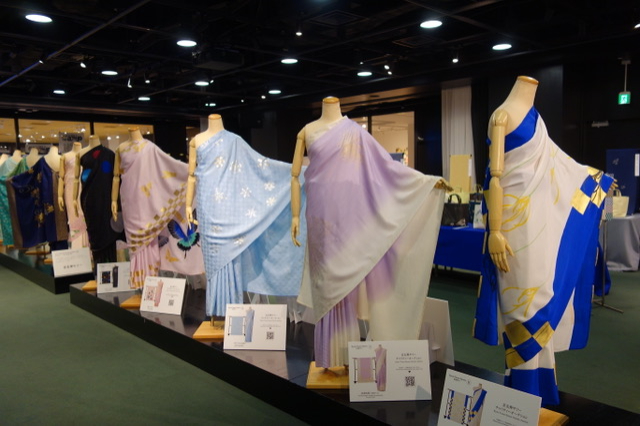
Kyoto sari exhibition  

More than 60% of artisans are currently in their 50s to 70s highlighting a major challenge for aging artisans to find successors.

The 2020 COVID-19 pandemic was an extra hit as social events closed. To cope, Takehana’s association decided to apply for a subsidy offered by the Kyoto Prefectural government to support struggling artisans.

The artisans have received the blessings of the Indian embassy in Tokyo and held several exhibitions in India last year. In December, they plan to display in Mumbai, India’s fast paced financial city also famous for the multi-billion-dollar domestic movie industry.

Feedback over the past year has been slow but positive. Takehana explained a major breakthrough was registering a contract with a clothing buyer in India that targets wealthy society including business women searching for luxury products. The yuzen-dyed sari is priced at almost 1 million yen ($10,000 USD) per piece.
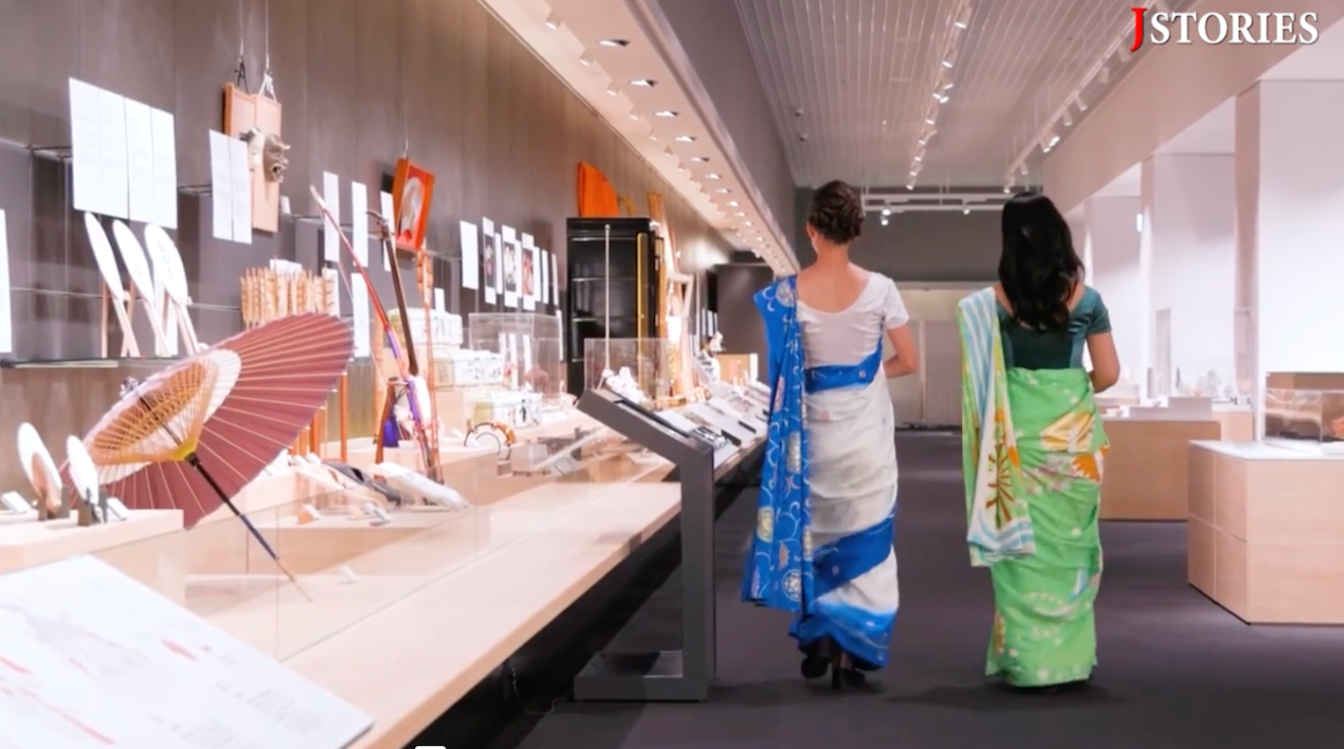
The Kyoto saris being worn  

“Entry into a new market is both exciting and a challenge. Marketing involves a lot of explanations that include fashion shows. The cross culture brings diverse talents together,” he said.

Emiko Ban, 81, a kimono tailor, is part of the new Yuzen India project. “I’m just elated to be working again,” she said in an interview, pointing out her work had almost dried up in the past decade making her feel lonely and hopeless about the future.

Kyoto is Japan’s most visited tourist city that showcases Japan’s heritage represented in ancient wooden temples and traditional daily life that has almost disappeared in Tokyo, Japan’s modern capital.

Preserving Kyoto is a major goal for the Kyoto prefectural government that extends financial support for diverse initiatives including start-up visas for foreign nationals who plan new ventures that preserve Japanese heritage.

Models wearing the Kyoto saris

Other measures include support for training programs to foster young craftsmen. Some establishments like museums or taxi services offer discounts for people wearing kimono to encourage sales.

Kyoto is also promoting recycling themes and environment protection projects to create a sustainable city, a concept linked to traditional Japanese values that respect frugality and the importance of greenery in daily life.

A city of shokunin, (artisans) also target tourists. For example, Shotaro Yamada, 44, who manages the 130-year-old family kimono shibori (Tie-and-dye) business, is raising his income through workshops for foreigners.

The Kyoto saris being worn 

“My life today is far removed from my father and grandfather,” he explained. He relies on artificial intelligence to expand his market and develop new designs specifically for youth.

Today, the father and son are sustaining the family business through new products that include bags and western clothes, outsourcing the intricate embroidering work to a factory in China, which has reduced expenses by half.

Writing by Suvendrini Kakuchi

Editing by Takanori Isshiki

Photos photo provided by the Kyo-Yuzen dye association

For inquiries about this article, please contact jstories@pacificbridge.jp


Click here for the Japanese version of the article

Tags: artisanIndiaJapanKimonoKyotoSari
Previous Post

Upcycling “troubled” water plants into biofuel and craft gin【Update】

Next Post

Eco-friendly next-generation laundromat that doesn’t use detergent

Suvendrini Kakuchi

Suvendrini Kakuchi

Related Posts

Starting a sustainable wood-fired bakery in Tokyo
FoodTech

Starting a sustainable wood-fired bakery in Tokyo

by Tokyo Updates
03/05/2026
Lifestyle

The plush toy hospital keeping childhood memories alive

by Tokyo Updates
01/30/2026
Lifestyle

Lost item return rate triples: Tokyo startup envisions a world where nothing stays lost

by Tokyo Updates
01/23/2026
FoodTech

[Interview: Part 2] A digital approach to tackle child hunger in Japan with dignity

by Toshi Maeda
12/19/2025
Lifestyle

App-based interpreting service supports global business and community

by Tokyo Updates
12/05/2025
Next Post

Eco-friendly next-generation laundromat that doesn't use detergent

Leave a Reply Cancel reply

Your email address will not be published. Required fields are marked *

Videos

INTERVIEW | Taking action for peace

11/30/2022

Round-Up Video #38

12/15/2022

Taking action for peace

11/30/2022

Browse by Tags

Ai Alternative Energy biotechnology Climate Change Community decarbonization Education Event Food foodtech Health Inclusion Infrastructure Innovation Interview J-Stories Japan Japan-Taiwan Innovation Summit Japan startups Japan Tech Labor Living Nature Podcast Recycling Refugees robotics Society Space Startup Startup Ecosystem Startups SusHI Tech Tokyo Sustainability Sustainable Society Taiwan Technology Tokyo Tokyo Innovation Base Tokyo Metropolitan Government Tokyo Updates venture capital video Wealth Zero Waste
JStories

©Articles and photos published on JSTORIES are protected by Japanese copyright law and international treaties. They cannot be reproduced without the permission of the copyright holders

Explore JStories

  • About Jstories
  • Company
  • Contact
  • Home
  • Partner Press Releases
  • Pricing
  • Privacy Policy
  • Team

Follow Us

Welcome Back!

Login to your account below

Forgotten Password?

Retrieve your password

Please enter your username or email address to reset your password.

Log In
No Result
View All Result
  • Home
  • AI
    • Artificial Intelligence
    • Robotics
    • Mobility
  • Earth
    • Energy
    • Climate Tech
    • AgriTech
    • Clean Tech
    • Disaster Tech
    • SpaceTech
  • Life Sciences
    • BioTech
    • HealthTech
    • MedTech
    • AgeTech
  • Society
    • Media
    • EdTech
    • Diversity
    • FemTech
    • HRTech
    • LegalTech
    • Social Impact
    • FinTech
    • Anime
  • Lifestyle
    • FoodTech
    • FashionTech
    • BeautyTech
    • Wellbeing
    • Art & Music
  • Travel
    • Adventure Travel
    • Luxury Travel
    • Wellness & Medical Tourism
    • Culture
  • Video
  • Deals
    • Venture Capital
    • M&A
    • Startup Events
    • Ecosystem Support
  • Interview
  • Opinion

©Articles and photos published on JSTORIES are protected by Japanese copyright law and international treaties. They cannot be reproduced without the permission of the copyright holders

Are you sure want to unlock this post?
Unlock left : 0
Are you sure want to cancel subscription?