• Login
Upgrade
JStories
  • 日本語
  • 中文 (中国)
No Result
View All Result
  • Home
  • AI
    • Artificial Intelligence
    • Robotics
    • Mobility
  • Earth
    • Energy
    • Climate Tech
    • AgriTech
    • Clean Tech
    • Disaster Tech
    • SpaceTech
  • Life Sciences
    • BioTech
    • HealthTech
    • MedTech
    • AgeTech
  • Society
    • Media
    • EdTech
    • Diversity
    • FemTech
    • HRTech
    • LegalTech
    • Social Impact
    • FinTech
    • Anime
  • Lifestyle
    • FoodTech
    • FashionTech
    • BeautyTech
    • Wellbeing
    • Art & Music
  • Travel
    • Adventure Travel
    • Luxury Travel
    • Wellness & Medical Tourism
    • Culture
  • Video
  • Deals
    • Venture Capital
    • M&A
    • Startup Events
    • Pitch
    • Ecosystem Support
  • Interview
  • Opinion
  • Home
  • AI
    • Artificial Intelligence
    • Robotics
    • Mobility
  • Earth
    • Energy
    • Climate Tech
    • AgriTech
    • Clean Tech
    • Disaster Tech
    • SpaceTech
  • Life Sciences
    • BioTech
    • HealthTech
    • MedTech
    • AgeTech
  • Society
    • Media
    • EdTech
    • Diversity
    • FemTech
    • HRTech
    • LegalTech
    • Social Impact
    • FinTech
    • Anime
  • Lifestyle
    • FoodTech
    • FashionTech
    • BeautyTech
    • Wellbeing
    • Art & Music
  • Travel
    • Adventure Travel
    • Luxury Travel
    • Wellness & Medical Tourism
    • Culture
  • Video
  • Deals
    • Venture Capital
    • M&A
    • Startup Events
    • Pitch
    • Ecosystem Support
  • Interview
  • Opinion
en English ja 日本語 zh 中文 (中国)
JStories
No Result
View All Result

Kyoto startups look to Taiwan as global gateway

J-STORIES by J-STORIES
08/29/2025
in BioTech, Deals, Ecosystem Support, EdTech, HealthTech, Life Sciences, M&A, MedTech, Social Impact, Society, Startup Events, Venture Capital
0
Home Life Sciences BioTech
Share on FacebookShare on Twitter

JSTORIES — Kyoto, long celebrated for its temples, traditions and tea, is increasingly becoming a crucible of innovation. Now, Kyoto University’s wholly owned venture capital (VC) arm, Kyoto University Innovation Capital (Kyoto iCAP), is looking beyond Japan’s borders, targeting Taiwan as its next strategic foothold in Asia.

A portal into Asia

Kyoto iCAP plans to establish a base in Taiwan by end-2026, a move that president Ko Kusumi describes as essential. “As a springboard into Asia, Taiwan is extremely promising,” he said in an interview with JStories. “The time difference is minimal, and compared with other markets, it’s far easier to enter. Along with Singapore, it offers a natural gateway.”
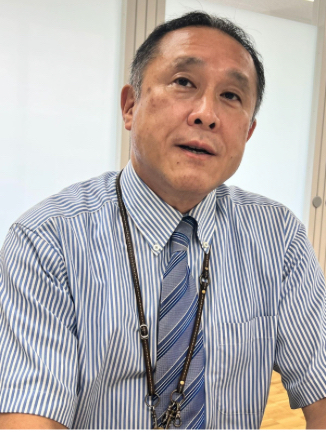
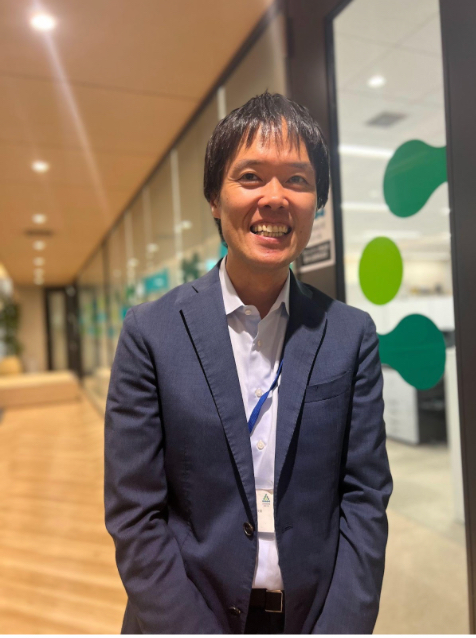
Ko Kusumi, president of Kyoto University Innovation Capital (Kyoto iCAP), speaks during an interview with JStories        Photo by Toshi Maeda | JStories (Same below)

Established to commercialize the university’s basic research, Kyoto iCAP has already forged ties across the strait. In 2024, it signed a memorandum of understanding (MOU) with Taiwan’s National Development Council, creating a framework for government-level cooperation between Japan’s and Taiwan’s startup ecosystems.

The university VC’s interest in Taiwan startups dates back further. In 2020, Kyoto iCAP invested in ACT Genomics, a Taiwanese medical startup working with Kyoto University researchers on advanced cancer diagnostics and drug discovery support. Kusumi acknowledges Japan’s paradox: “Our universities produce world-class basic research, but when it comes to business execution, we often need to learn from places like Taiwan.”

Reflecting the strengths of Kyoto University’s research, life sciences companies make up about half of Kyoto iCAP’s portfolio; based on investment value, the share is even higher. To date, Kyoto iCAP has backed more than 70 startups, of which less than 10 percent are overseas ventures.
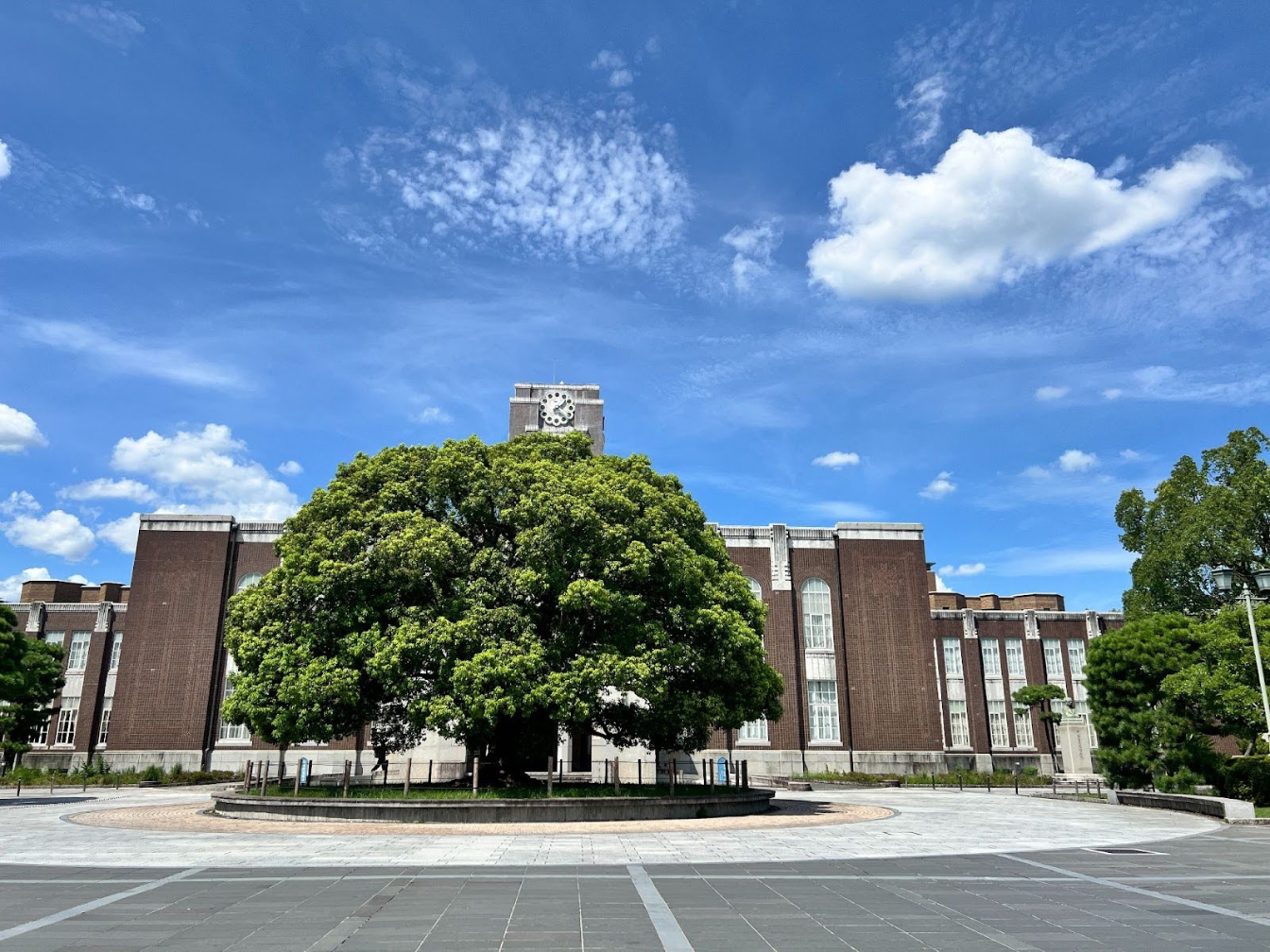
Based inside Kyoto University, Kyoto iCAP has invested over ¥16 billion ($108.2 million) in more than 70 startups. Fewer than 10 percent are overseas ventures, but the firm expects that number to rise

A ‘small Silicon Valley’

The push overseas is matched by a strengthening startup ecosystem at home. At the center of Kyoto sits KOIN, a co-working hub with nearly 8,000 members and more than 200 events a year. “Out of the 600-plus startups in Kyoto Prefecture, I would say almost all either aim for overseas expansion or are at least interested in it,” said Yuki Kanayama, deputy director of the organization that manages KOIN.

Among them are a growing number of student entrepreneurs. “Brilliant student founders are emerging one after another from Kyoto,” Kanayama said. Fields range from green tech and AI to life sciences and hardware, creating an ecosystem some have called a “small Silicon Valley” in the heart of Japan.
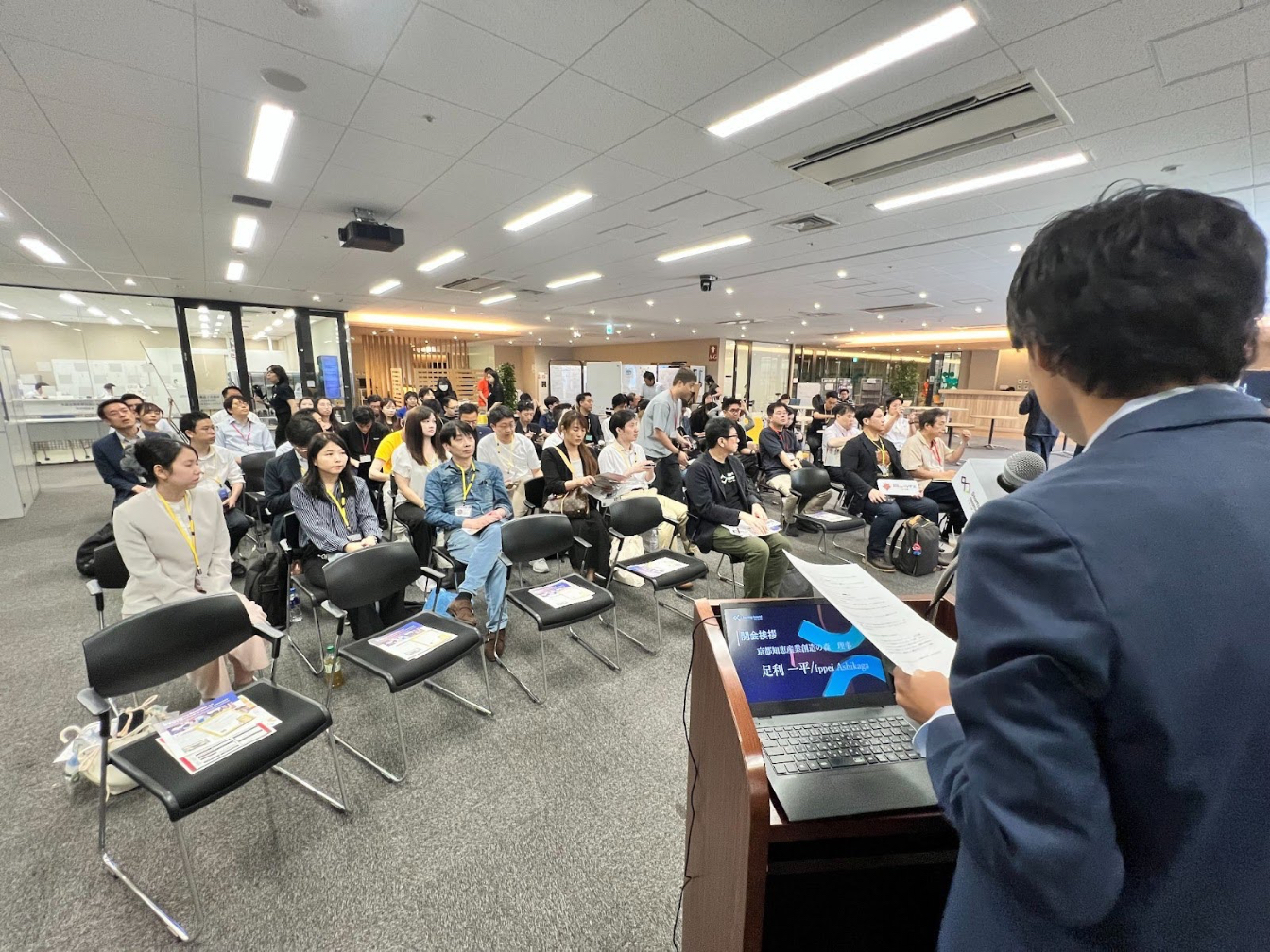
In mid-August 2025, Kyoto hosted a seminar bringing together startup leaders from Japan and Taiwan
Yuki Kanayama, deputy director of the Knowledge Capital Association, which works with Kyoto Prefecture, Kyoto City and JETRO Kyoto to build an international startup ecosystem

Game-changing technologies

The innovations of Kyoto’s budding entrepreneurs cover a wide range of fields. For example, Toregem Biopharma is developing a drug to regrow teeth. Space Power Technologies transmits electricity wirelessly. EnEcoat Technologies has created a paint that turns any surface into a solar panel.

In some cases, modern technology intertwines with ancient heritage. For instance, Mitsufuji, a company rooted in Kyoto’s centuries-old “Nishijin” weaving tradition — famed for its intricate silk textiles — has entered the global wearable device market. By using silver-thread technology for biosensing, what started as a textile factory nearly 70 years ago has developed ways to detect early signs of health deterioration, such as heatstroke, and its global partners now include Taiwan Textile Research Institute (TTRI).

‘Global First’ strategies, even moving abroad

For some startups, expanding abroad is not just an aspiration but a necessity. Shinobi Therapeutics, an iCAP-backed venture using Nobel laureate Shinya Yamanaka’s induced pluripotent stem (iPS) cell technology for cancer treatment, moved its headquarters to California. iPS cells are created by reprogramming mature adult cells, such as skin cells, back to an embryonic-like state, making them promising for regenerative medicine.

“Given the scale of funding and the size of the market, relocating overseas is often the rational choice,” Kusumi said. The guiding philosophy: develop the science in Japan, but commercialize wherever the business environment is most favorable.

Taiwan: stage for proof-of-concept

That logic is driving Kyoto’s increasing interest in Taiwan as a proving ground. Clinical trials and pilot projects that are difficult to conduct in Japan can often be executed more smoothly there. Kusumi recalls seeing autonomous driving tests in Hong Kong five or six years ago, powered — he later learned — by a Kyoto University professor’s technology.

“It was gratifying to see our research applied in society,” he said. “But at the same time, it was frustrating to realize that foreign startups were the ones putting it to use before Japan.”

The Knowledge Capital Association’s deputy director, Kanayama, agreed that Taiwan could ease that frustration. The island could be the ideal testing stage for Japanese biotech and drug discovery startups before they go global, he said.
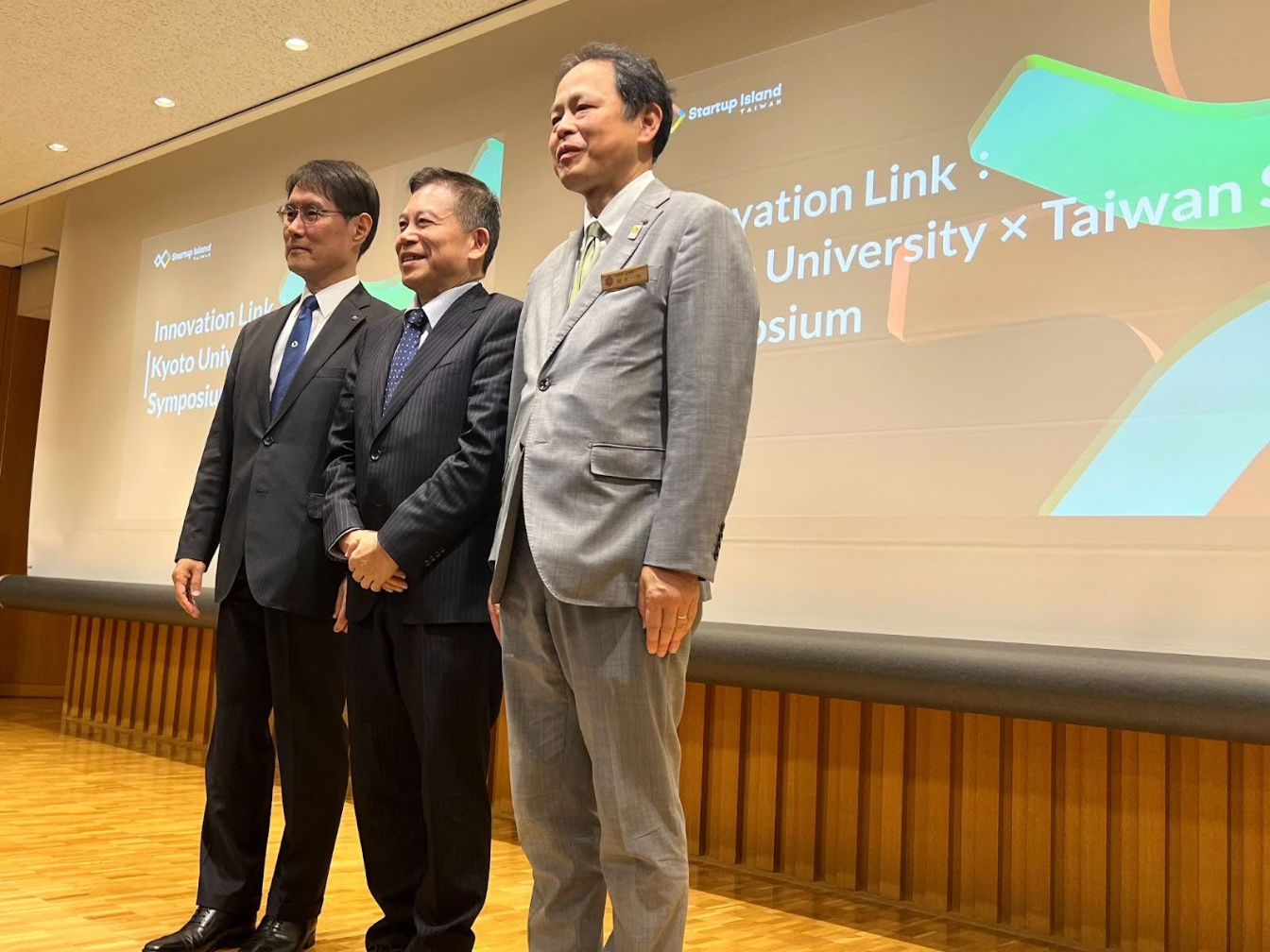
At a Kyoto University symposium in August, leaders including Kyoto Vice Governor Kazuya Suzuki (right), Taiwan’s National Development Council minister Chin-Ching Liu (center), and Kyoto Deputy Mayor Norikazu Okada (left) discussed cross-border collaboration

A new cross-border innovation model

The ambition goes beyond exporting Japanese technology. Innovators in Kyoto and Taiwan hope to combine the strengths of Japan’s cutting-edge science with Taiwan’s and even Southeast Asia’s market opportunities. That’s because many see Taiwan as a gateway for Japanese firms to expand further into Southeast Asian countries through the region’s network of Chinese-speaking business community.

Kyoto iCap already has a liaison office in Singapore. With a planned new office in Taipei, the university VC aims to gain traction throughout East and Southeast Asia, a huge market with a combined population of 2.3 billion people.

“International expansion is not an end in itself,” Kusumi said. “It’s a means to achieve the real goal: bringing Japan’s research results into society as quickly as possible. If that means launching in Taiwan instead of Japan, that’s fine. What matters is speed.”

Article by JStories

Top photo: Photo courtesy of Startup Island TAIWAN

For inquiries regarding this article, please contact jstories@pacificbridge.jp


Click here for the Japanese version of the article

Tags: Biotechcross-border VC Japan TaiwanInterviewJapanKyotoKyoto University startup ecosystemStartup EcosystemTaiwanUniversity Innovationventure capital
Previous Post

Japanese startup serving up crickets in Cambodia to combat food crisis

Next Post

Largest Japan-Taiwan startup events wrap up in Osaka, Tokyo

J-STORIES

J-STORIES

Related Posts

Japan leads global collaboration to combat AI disinformation
AI

Japan leads global collaboration to combat AI disinformation

by Ayaka Sagasaki
03/16/2026
Deals

More than 700 startups to gather at SusHi Tech Tokyo 2026, Asia’s largest global innovation conference

by Toshi Maeda
02/20/2026
HealthTech

Engineering safety from the ground up

by Tokyo Updates
02/13/2026
Anime

World-first “anime character-based therapy” trial to test effectiveness in Japanese young adults

by Lucas Maltzman
01/30/2026
Social Impact

From a childhood shaped by conflict to an investor bridging Japan and the world

by Ayaka Sagasaki
01/23/2026
Next Post

Largest Japan-Taiwan startup events wrap up in Osaka, Tokyo

Leave a Reply Cancel reply

Your email address will not be published. Required fields are marked *

Videos

Harmonizing tradition and technology with immersive sound experience

07/19/2023

Round-up Video #23

08/04/2022

Round-Up Video #38

12/15/2022

Browse by Tags

Ai Alternative Energy biotechnology Climate Change Community decarbonization Education Event Food foodtech Health Inclusion Infrastructure Innovation Interview J-Stories Japan Japan-Taiwan Innovation Summit Japan startups Japan Tech Labor Living Nature Podcast Recycling Refugees robotics Society Space Startup Startup Ecosystem Startups SusHI Tech Tokyo Sustainability Sustainable Society Taiwan Technology Tokyo Tokyo Innovation Base Tokyo Metropolitan Government Tokyo Updates venture capital video Wealth Zero Waste
JStories

©Articles and photos published on JSTORIES are protected by Japanese copyright law and international treaties. They cannot be reproduced without the permission of the copyright holders

Explore JStories

  • About Jstories
  • Company
  • Contact
  • Home
  • Partner Press Releases
  • Pricing
  • Privacy Policy
  • Team

Follow Us

Welcome Back!

Login to your account below

Forgotten Password?

Retrieve your password

Please enter your username or email address to reset your password.

Log In
No Result
View All Result
  • Home
  • AI
    • Artificial Intelligence
    • Robotics
    • Mobility
  • Earth
    • Energy
    • Climate Tech
    • AgriTech
    • Clean Tech
    • Disaster Tech
    • SpaceTech
  • Life Sciences
    • BioTech
    • HealthTech
    • MedTech
    • AgeTech
  • Society
    • Media
    • EdTech
    • Diversity
    • FemTech
    • HRTech
    • LegalTech
    • Social Impact
    • FinTech
    • Anime
  • Lifestyle
    • FoodTech
    • FashionTech
    • BeautyTech
    • Wellbeing
    • Art & Music
  • Travel
    • Adventure Travel
    • Luxury Travel
    • Wellness & Medical Tourism
    • Culture
  • Video
  • Deals
    • Venture Capital
    • M&A
    • Startup Events
    • Ecosystem Support
  • Interview
  • Opinion

©Articles and photos published on JSTORIES are protected by Japanese copyright law and international treaties. They cannot be reproduced without the permission of the copyright holders

Are you sure want to unlock this post?
Unlock left : 0
Are you sure want to cancel subscription?