• Login
Upgrade
JStories
  • 日本語
  • 中文 (中国)
No Result
View All Result
  • Home
  • AI
    • Artificial Intelligence
    • Robotics
    • Mobility
  • Earth
    • Energy
    • Climate Tech
    • AgriTech
    • Clean Tech
    • Disaster Tech
    • SpaceTech
  • Life Sciences
    • BioTech
    • HealthTech
    • MedTech
    • AgeTech
  • Society
    • Media
    • EdTech
    • Diversity
    • FemTech
    • HRTech
    • LegalTech
    • Social Impact
    • FinTech
    • Anime
  • Lifestyle
    • FoodTech
    • FashionTech
    • BeautyTech
    • Wellbeing
    • Art & Music
  • Travel
    • Adventure Travel
    • Luxury Travel
    • Wellness & Medical Tourism
    • Culture
  • Video
  • Deals
    • Venture Capital
    • M&A
    • Startup Events
    • Pitch
    • Ecosystem Support
  • Interview
  • Opinion
  • Home
  • AI
    • Artificial Intelligence
    • Robotics
    • Mobility
  • Earth
    • Energy
    • Climate Tech
    • AgriTech
    • Clean Tech
    • Disaster Tech
    • SpaceTech
  • Life Sciences
    • BioTech
    • HealthTech
    • MedTech
    • AgeTech
  • Society
    • Media
    • EdTech
    • Diversity
    • FemTech
    • HRTech
    • LegalTech
    • Social Impact
    • FinTech
    • Anime
  • Lifestyle
    • FoodTech
    • FashionTech
    • BeautyTech
    • Wellbeing
    • Art & Music
  • Travel
    • Adventure Travel
    • Luxury Travel
    • Wellness & Medical Tourism
    • Culture
  • Video
  • Deals
    • Venture Capital
    • M&A
    • Startup Events
    • Pitch
    • Ecosystem Support
  • Interview
  • Opinion
en English ja 日本語 zh 中文 (中国)
JStories
No Result
View All Result

Researchers produce baby mice from the cells of two male parents

Ayaka Sagasaki by Ayaka Sagasaki
12/29/2023
in Diversity, Life Sciences, MedTech, Social Impact, Society
0
Home Society Diversity
Share on FacebookShare on Twitter

J-STORIES – This March, an Osaka University research team lead by Professor Katsuhiko Hayashi became the first in the world to successfully produce eggs from iPS (induced pluripotent stem) cells of a male mouse and artificially inseminate them with sperm from another male mouse, resulting in the birth of baby mice. The research demonstrated that offspring could be produced from two male parents and, theoretically, could be also applied to humans.
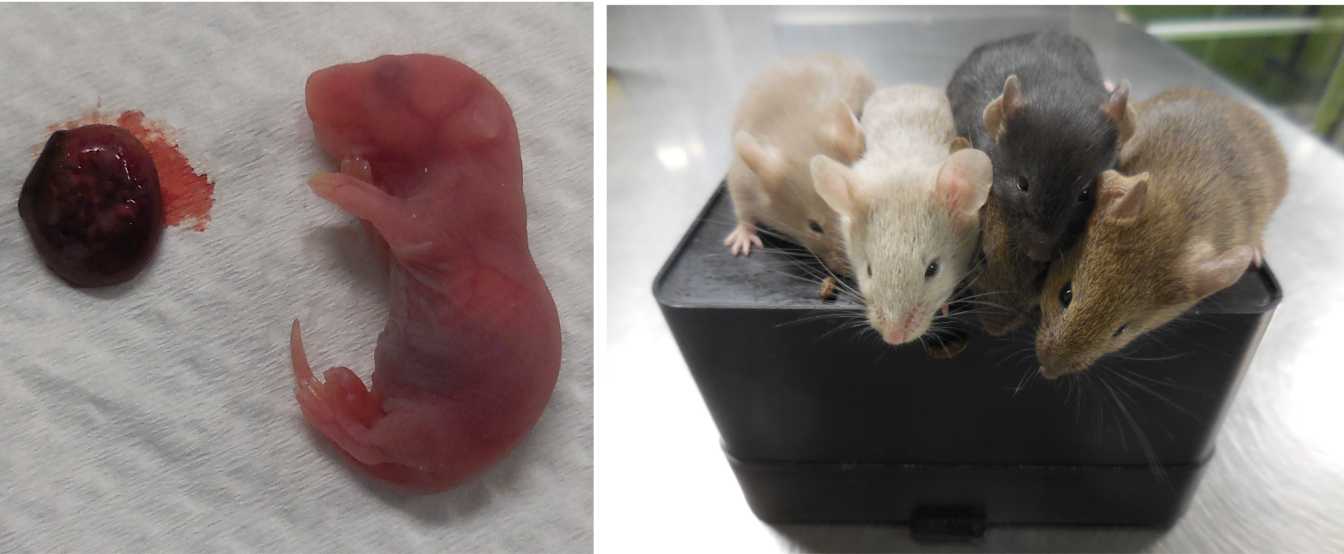
One of the One of the newborn baby mice from two male mice (left) and the grown-up mice (right)     Source: Osaka University

The sex chromosomes of humans and other mammals generally consist of one X and one Y chromosome in males, and two X chromosomes in females. However, cells are unstable after repeated cell division and even male sex chromosomes can very occasionally lose their Y chromosome or have two X chromosomes, as in females.
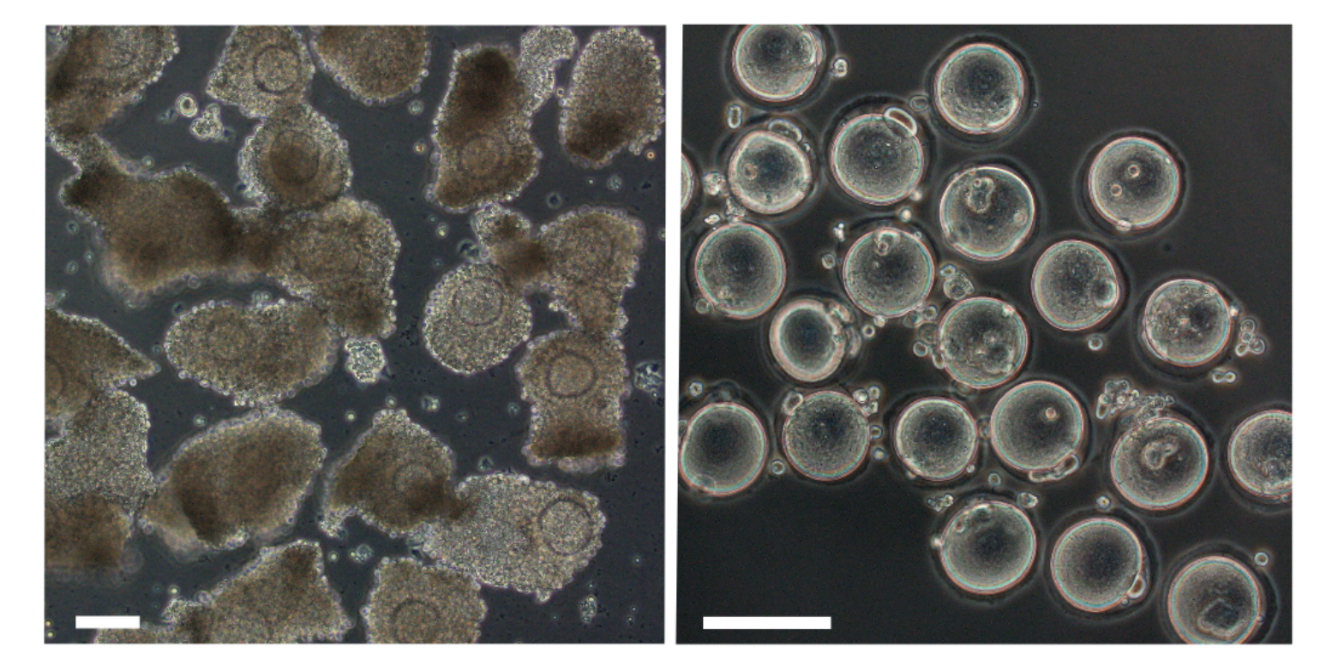
Oocyte (left, pre-egg) and egg (right) made from male tail cells.     Source: Osaka University

Hayashi and his team selected cells that had lost their Y chromosome from cultures of male iPS cells and used them to create eggs. These eggs were then fertilized with sperm, leading to the birth of healthy, growing baby mice.
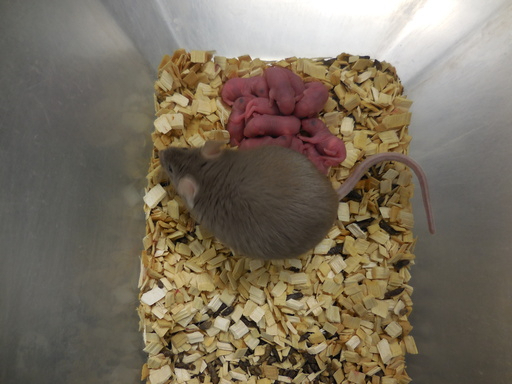
Mice (females) born from two males, mated and gave birth after it grew up.     Source: Osaka University

Although the research is currently restricted to mice, Hayashi told J-STORIES that “at the cellular level, the same technology could be applied to humans.”

“We could be successful in as soon as a few years. Creating eggs is still some way off, but there is no reason why it should be impossible. It’s just a matter of time.”

The initial impetus for Hayashi’s research was a desire to help those with intractable conditions, such as women who cannot conceive due to chromosomal abnormalities. These include Swyer syndrome, in which a woman has XY sex chromosomes, and Turner syndrome, where a woman has only one X chromosome. Research into treating these syndromes lead to a method of producing eggs from males.

At the cellular level, the same technology can be applied to humans. It could succeed as early as a few years.     Source: Envato

The production of offspring from two male mammals has generated a great deal of interest, not only from those with intractable conditions, but also from the LGBTQ+ community. On the other hand, there is also criticism from an ethical perspective that the research goes against the natural order. Any application to humans is likely to see strong views on both sides.

“There is potential to apply the research to humans as research progresses, but whether to apply it to human society or not is a different problem and requires discussion by society,” Hayashi told J-STORIES.
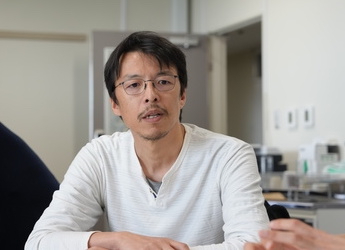
Katsuhiko Hayashi, professor of reproductive genetics at Osaka University’s Graduate School of Medicine, said, “My original motivation was to solve the problems of women who cannot conceive due to chromosomal abnormalities, but it turned out to be the same method as producing eggs from men.     Source: Osaka University

“Personally speaking, I feel that it is not a good idea to use science and technology to do things that cannot happen naturally, but if it is accepted by society, I intend to follow that lead. I believe that the role of scientists is to ensure that technology is safe and present it for debate.”

There are high expectations not only from patients with incurable diseases, but also from the LGBTQ+ (sexual minority) perspective.     Source: Envato

One potential application of this technology is in the conservation of endangered wildlife. In fact, as reported in J-STORIES, Hayashi is also involved in an international project to preserve the Northern White Rhino, of which only two remain due to poaching and environmental destruction. https://jstories.media/jp/article/saving-the-northern-white-rhino
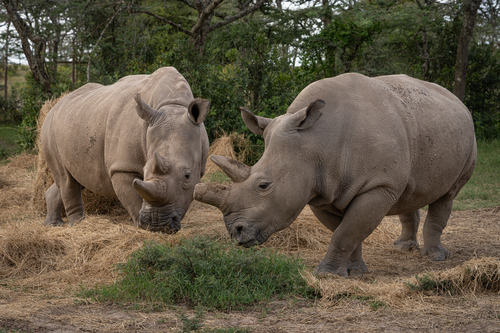
J-STORIES 2023/3/1 published article “Saving the northern white rhino – Japanese scientists use stem cells in bid to breed near-extinct species”     Source: Osaka University

There is no doubt that his research has already opened up new areas in reproductive medicine and the use of iPS cells. Going forward, it is likely to deepen discussion on ethical issues and diverse family structures. Many people are interested in how the research may find practical application and contribute to society.

In December, Hayashi was named one of Nature magazine’s “Nature’s 10,” an annual list exploring key developments in science and the individuals who contributed to them.

Translated by Tony McNicol

Photo by Osaka University

For inquiries about this article, please contact jstories@pacificbridge.jp


Click here for the Japanese version of the article

Tags: BioethicsChromosomal AbnormalitiesEndangered SpeciesGenetic EngineeringiPS CellsJapan TechKatsuhiko HayashiLGBTQ+ RightsMale-derived EggsNorthern White RhinoOsaka UniversityReproductive MedicineStem Cell ResearchSwyer SyndromeTurner Syndrome
Previous Post

Nursery school children prepare food with real knives

Next Post

Greening the desert with trash

Ayaka Sagasaki

Ayaka Sagasaki

Related Posts

Japan leads global collaboration to combat AI disinformation
AI

Japan leads global collaboration to combat AI disinformation

by Ayaka Sagasaki
03/16/2026
HealthTech

Engineering safety from the ground up

by Tokyo Updates
02/13/2026
Anime

World-first “anime character-based therapy” trial to test effectiveness in Japanese young adults

by Lucas Maltzman
01/30/2026
Social Impact

From a childhood shaped by conflict to an investor bridging Japan and the world

by Ayaka Sagasaki
01/23/2026
BioTech

Toward a targeted therapy with fewer side effects for chronic allergic eye disease

by Yoshiko Ohira
01/08/2026
Next Post

Virtual solutions for practical challenges: Japanese universities embrace VR to replace animal experiments

Leave a Reply Cancel reply

Your email address will not be published. Required fields are marked *

Videos

The blind leading the sighted

05/27/2022

Round-up Video #23

08/04/2022

Round-up Video #28

09/29/2022

Browse by Tags

Ai Alternative Energy biotechnology Climate Change Community decarbonization Education Event Food foodtech Health Inclusion Infrastructure Innovation Interview J-Stories Japan Japan-Taiwan Innovation Summit Japan startups Japan Tech Labor Living Nature Podcast Recycling Refugees robotics Society Space Startup Startup Ecosystem Startups SusHI Tech Tokyo Sustainability Sustainable Society Taiwan Technology Tokyo Tokyo Innovation Base Tokyo Metropolitan Government Tokyo Updates venture capital video Wealth Zero Waste
JStories

©Articles and photos published on JSTORIES are protected by Japanese copyright law and international treaties. They cannot be reproduced without the permission of the copyright holders

Explore JStories

  • About Jstories
  • Company
  • Contact
  • Home
  • Partner Press Releases
  • Pricing
  • Privacy Policy
  • Team

Follow Us

Welcome Back!

Login to your account below

Forgotten Password?

Retrieve your password

Please enter your username or email address to reset your password.

Log In
No Result
View All Result
  • Home
  • AI
    • Artificial Intelligence
    • Robotics
    • Mobility
  • Earth
    • Energy
    • Climate Tech
    • AgriTech
    • Clean Tech
    • Disaster Tech
    • SpaceTech
  • Life Sciences
    • BioTech
    • HealthTech
    • MedTech
    • AgeTech
  • Society
    • Media
    • EdTech
    • Diversity
    • FemTech
    • HRTech
    • LegalTech
    • Social Impact
    • FinTech
    • Anime
  • Lifestyle
    • FoodTech
    • FashionTech
    • BeautyTech
    • Wellbeing
    • Art & Music
  • Travel
    • Adventure Travel
    • Luxury Travel
    • Wellness & Medical Tourism
    • Culture
  • Video
  • Deals
    • Venture Capital
    • M&A
    • Startup Events
    • Ecosystem Support
  • Interview
  • Opinion

©Articles and photos published on JSTORIES are protected by Japanese copyright law and international treaties. They cannot be reproduced without the permission of the copyright holders

Are you sure want to unlock this post?
Unlock left : 0
Are you sure want to cancel subscription?