• Login
Upgrade
JStories
  • 日本語
  • 中文 (中国)
No Result
View All Result
  • Home
  • AI
    • Artificial Intelligence
    • Robotics
    • Mobility
  • Earth
    • Energy
    • Climate Tech
    • AgriTech
    • Clean Tech
    • Disaster Tech
    • SpaceTech
  • Life Sciences
    • BioTech
    • HealthTech
    • MedTech
    • AgeTech
  • Society
    • Media
    • EdTech
    • Diversity
    • FemTech
    • HRTech
    • LegalTech
    • Social Impact
    • FinTech
    • Anime
  • Lifestyle
    • FoodTech
    • FashionTech
    • BeautyTech
    • Wellbeing
    • Art & Music
  • Travel
    • Adventure Travel
    • Luxury Travel
    • Wellness & Medical Tourism
    • Culture
  • Video
  • Deals
    • Venture Capital
    • M&A
    • Startup Events
    • Pitch
    • Ecosystem Support
  • Interview
  • Opinion
  • Home
  • AI
    • Artificial Intelligence
    • Robotics
    • Mobility
  • Earth
    • Energy
    • Climate Tech
    • AgriTech
    • Clean Tech
    • Disaster Tech
    • SpaceTech
  • Life Sciences
    • BioTech
    • HealthTech
    • MedTech
    • AgeTech
  • Society
    • Media
    • EdTech
    • Diversity
    • FemTech
    • HRTech
    • LegalTech
    • Social Impact
    • FinTech
    • Anime
  • Lifestyle
    • FoodTech
    • FashionTech
    • BeautyTech
    • Wellbeing
    • Art & Music
  • Travel
    • Adventure Travel
    • Luxury Travel
    • Wellness & Medical Tourism
    • Culture
  • Video
  • Deals
    • Venture Capital
    • M&A
    • Startup Events
    • Pitch
    • Ecosystem Support
  • Interview
  • Opinion
en English ja 日本語 zh 中文 (中国)
JStories
No Result
View All Result

Picture books help save traditional foods

Emi Takahata by Emi Takahata
06/06/2022
in Art & Music, Culture, EdTech, FoodTech, Lifestyle, Social Impact, Society, Travel, Wellbeing
0
Home Lifestyle Art & Music
Share on FacebookShare on Twitter

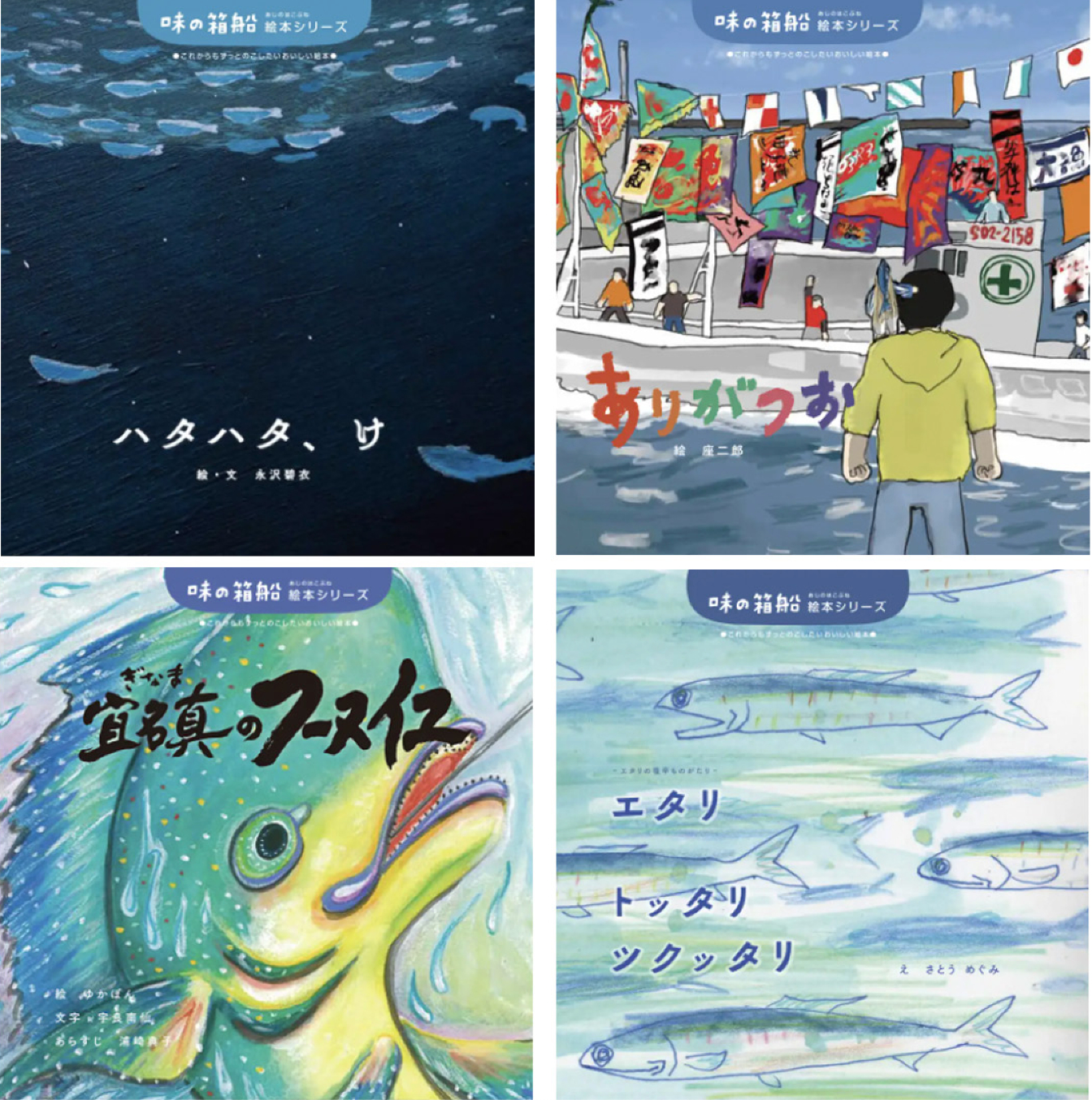
J-STORIES – Like many other countries, fast food is a staple of modern life in Japan, often replacing ancient regional food traditions that are in danger of being lost. Thanks to a new series of picture books, however, Japanese children are being introduced to their country’s rich and delicious food heritage.

Four books have been produced so far, each featuring a food item from a different part of Japan. Colorful illustrations and text explain the local history and stories related to the food. One book is on “shottsuru,” a pungent fermented fish sauce from Akita Prefecture in Japan’s north. Another covers a local arrangement of mahi-mahi, a tropical fish found in Okinawa in Japan’s south.

The books’ writers and illustrators also hail from the regions featured, so they are well placed to explain the cultural backgrounds of their local foods.

The project is headed by the president of Slow Food Nippon, Megumi Watanabe. She told J-Stories that the organization works to rethink contemporary cuisine and create a richer food culture.
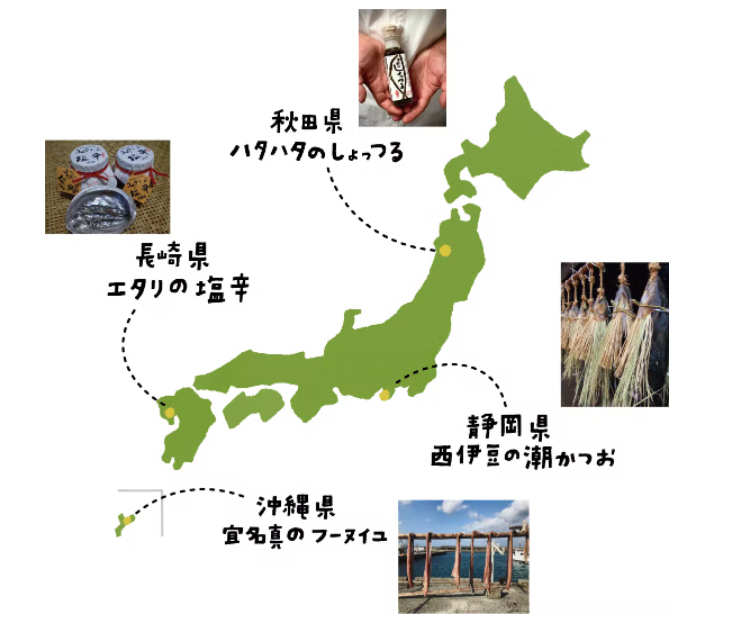
The books introduce four traditional foods. Clockwise from top: “shottsuru” fish sauce, cured bonito, “shiokara” salted seafood paste, and mahi-mahi fish.      Source: Slow Food Nippon
The books cover foodstuffs from four different Japanese prefectures. Clockwise from top left: Akita, Shizuoka, Nagasaki and Okinawa.     Source: Slow Food Nippon

She explained how traditional foods were created at a time of limited technology and transport. People used the wisdom gained from living alongside nature to prepare dishes from locally available ingredients. Now, the dishes are disappearing—not just because of environmental problems, but because there are fewer opportunities to pass traditions on to future generations.

Slow Food is a grassroots movement that originated in Italy to bring “Good, Clean, Fair” food to everyone. There are Slow Food organizations in over 160 countries, including Japan.     Source: Slow Food Nippon

The book project is funded both by the Nippon Foundation and a crowdfunding campaign that raised around 3 million yen from 350 people. Part of the profits go to local projects, while books are donated and lent to libraries, where special reading events are held.

The picture books are part of an international Ark of Taste project run by the Slow Food Foundation for Biodiversity. Since 1996, the project has collected 5,718 local foods from 150 countries. According to its website, these are “small-scale quality productions that belong to the cultures, history and traditions of the entire planet.”

Translation and editing by Tony McNicol

Top page photo by Slow Food Nippon

For inquires about this article, please contact us at jstories@pacificbridge.jp


Click here for the Japanese version of the article.

Tags: EducationFood
Previous Post

Round-up Video #14

Next Post

Cheaper and more efficient rare earth metal recycling

Emi Takahata

Emi Takahata

Related Posts

When digital and physical worlds meet – Interview with Yoichi Ochiai 何がすごい? 〜 現実とデジタルを融合する、落合陽一の世界
Video

When digital and physical worlds meet – Interview with Yoichi Ochiai 何がすごい? 〜 現実とデジタルを融合する、落合陽一の世界

by JStories_Admin
04/01/2026
Japan leads global collaboration to combat AI disinformation
AI

Japan leads global collaboration to combat AI disinformation

by Ayaka Sagasaki
03/16/2026
Starting a sustainable wood-fired bakery in Tokyo
FoodTech

Starting a sustainable wood-fired bakery in Tokyo

by Tokyo Updates
03/05/2026
Anime

World-first “anime character-based therapy” trial to test effectiveness in Japanese young adults

by Lucas Maltzman
01/30/2026
Lifestyle

The plush toy hospital keeping childhood memories alive

by Tokyo Updates
01/30/2026
Next Post

Cheaper and more efficient rare earth metal recycling

Leave a Reply Cancel reply

Your email address will not be published. Required fields are marked *

Videos

Taking action for peace

11/30/2022

Round-up Video #21

07/21/2022

The blind leading the sighted

05/27/2022

Browse by Tags

Ai Alternative Energy biotechnology Climate Change Community decarbonization Education Event Food foodtech Health Inclusion Infrastructure Innovation Interview J-Stories Japan Japan-Taiwan Innovation Summit Japan startups Japan Tech Labor Living Nature Podcast Recycling Refugees robotics Society Space Startup Startup Ecosystem Startups SusHI Tech Tokyo Sustainability Sustainable Society Taiwan Technology Tokyo Tokyo Innovation Base Tokyo Metropolitan Government Tokyo Updates venture capital video Wealth Zero Waste
JStories

©Articles and photos published on JSTORIES are protected by Japanese copyright law and international treaties. They cannot be reproduced without the permission of the copyright holders

Explore JStories

  • About Jstories
  • Company
  • Contact
  • Home
  • Partner Press Releases
  • Pricing
  • Privacy Policy
  • Team

Follow Us

Welcome Back!

Login to your account below

Forgotten Password?

Retrieve your password

Please enter your username or email address to reset your password.

Log In
No Result
View All Result
  • Home
  • AI
    • Artificial Intelligence
    • Robotics
    • Mobility
  • Earth
    • Energy
    • Climate Tech
    • AgriTech
    • Clean Tech
    • Disaster Tech
    • SpaceTech
  • Life Sciences
    • BioTech
    • HealthTech
    • MedTech
    • AgeTech
  • Society
    • Media
    • EdTech
    • Diversity
    • FemTech
    • HRTech
    • LegalTech
    • Social Impact
    • FinTech
    • Anime
  • Lifestyle
    • FoodTech
    • FashionTech
    • BeautyTech
    • Wellbeing
    • Art & Music
  • Travel
    • Adventure Travel
    • Luxury Travel
    • Wellness & Medical Tourism
    • Culture
  • Video
  • Deals
    • Venture Capital
    • M&A
    • Startup Events
    • Ecosystem Support
  • Interview
  • Opinion

©Articles and photos published on JSTORIES are protected by Japanese copyright law and international treaties. They cannot be reproduced without the permission of the copyright holders

Are you sure want to unlock this post?
Unlock left : 0
Are you sure want to cancel subscription?