
• Login
Upgrade
JStories
  • 日本語
  • 中文 (中国)
No Result
View All Result
  • Home
  • AI
    • Artificial Intelligence
    • Robotics
    • Mobility
  • Earth
    • Energy
    • Climate Tech
    • AgriTech
    • Clean Tech
    • Disaster Tech
    • SpaceTech
  • Life Sciences
    • BioTech
    • HealthTech
    • MedTech
    • AgeTech
  • Society
    • Media
    • EdTech
    • Diversity
    • FemTech
    • HRTech
    • LegalTech
    • Social Impact
    • FinTech
    • Anime
  • Lifestyle
    • FoodTech
    • FashionTech
    • BeautyTech
    • Wellbeing
    • Art & Music
  • Travel
    • Adventure Travel
    • Luxury Travel
    • Wellness & Medical Tourism
    • Culture
  • Video
  • Deals
    • Venture Capital
    • M&A
    • Startup Events
    • Pitch
    • Ecosystem Support
  • Interview
  • Opinion
  • Home
  • AI
    • Artificial Intelligence
    • Robotics
    • Mobility
  • Earth
    • Energy
    • Climate Tech
    • AgriTech
    • Clean Tech
    • Disaster Tech
    • SpaceTech
  • Life Sciences
    • BioTech
    • HealthTech
    • MedTech
    • AgeTech
  • Society
    • Media
    • EdTech
    • Diversity
    • FemTech
    • HRTech
    • LegalTech
    • Social Impact
    • FinTech
    • Anime
  • Lifestyle
    • FoodTech
    • FashionTech
    • BeautyTech
    • Wellbeing
    • Art & Music
  • Travel
    • Adventure Travel
    • Luxury Travel
    • Wellness & Medical Tourism
    • Culture
  • Video
  • Deals
    • Venture Capital
    • M&A
    • Startup Events
    • Pitch
    • Ecosystem Support
  • Interview
  • Opinion
en English ja 日本語 zh 中文 (中国)
JStories
No Result
View All Result

Pokemon Diglett inspires biodegradable T-shirts

Yui Sawada by Yui Sawada
09/15/2022
in Clean Tech, Earth
0
Home Earth Clean Tech
Share on FacebookShare on Twitter

J-STORIES – Pokemon character Diglett is a peace-loving mole who likes to cultivate and enrich the soil in which he lives. So, it seems natural that he should give his name to a line of T-shirts that are biodegradable, meaning they can join the lovable earth-dweller at the end of their wearable life.

What gives these T-shirts their decomposability can be found in the yarn, which takes a leaf out of the pages of a very traditional Japanese product: “washi” paper. Almost the entire product is made from washi thread, including the tags, which are conventionally made of polyester.

The T-shirts are produced by Tokyo clothing brand Original Stitch, which is part of World Co. Ltd. The company specializes in garments that are custom-made, which is a more sustainable production method as it avoids mass production and discarding unwanted inventory. But the Diglett duds mark the first time the company has produced clothes from eco-friendly materials.

Both the fabric and thread used to make the Diglett T-shirts are made from washi paper and are biodegradable.      Source: ©2022 Pokémon/Nintendo/CR/GF

When buried in the earth, the washi fibers used to make the T-shirts are broken down by microorganisms, enriching the soil. According to chemical analysis outfit GC Technology Inc., just 51 days after a T-shirt has been buried microbial diversity and activity values were more than three times higher than in a control sample.
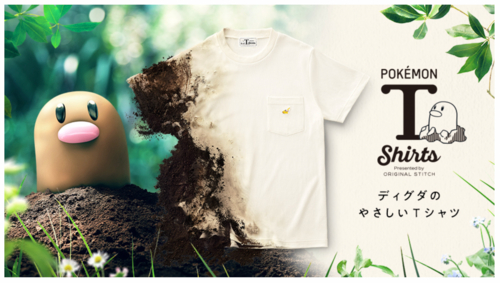
Diglett is a Pokémon character based on a mole. He likes to cultivate and enrich the forest soil.     Source: ©2022 Pokémon/Nintendo/CR/GF

“The disposal of apparel products is a problem, so the project was launched with the idea that, if we could develop products that return to the soil after getting old, these new products would be friendly to the global environment,” the T-shirt project director, Kosugi Kaname, told J-stories

And Original Japan’s project leader, Taichi Nemoto, added that by collaborating with Pokemon, the globally known Japanese media franchise featuring over 900 imaginary creatures, the company hopes “the concept of ‘sustainability’ will become a familiar issue to as many people as possible.”

As well as Diglett T-shirts made using washi yarn, there are other eco-friendly T-shirts made from Indian organic cotton and recycled Suvin cotton (a rare and highly valuable fiber grown only in southern India). The precious Suvin is recycled from cotton that falls off when the suvin yarn is spun.
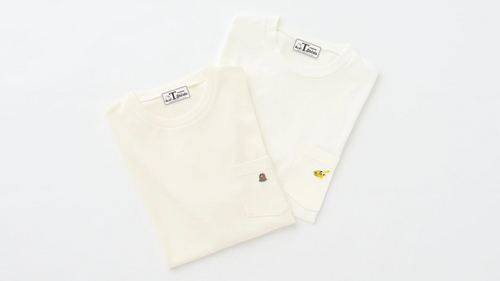
A T-shirt made from washi thread (left), and another T-shirt that contains Suvin cotton.          Source: ©2022 Pokémon/Nintendo/CR/GF

Translation and editing by Tony McNicol

Top page photo by ©2022 Pokémon/Nintendo/CR/GF

For inquires about this article, please contact us at jstories@pacificbridge.jp


Click here for the Japanese version of the article.

Tags: BiodiversityEarthNatureSustainabilitySustainable SocietyWild LifeZero Waste
Previous Post

Light-weight barricades with Herculean strength

Next Post

Round-up Video #26

Yui Sawada

Yui Sawada

Related Posts

Clean Tech

Japanese startup turns eggshell waste into eco-friendly plastics and paper

by Yoshiko Ohira
02/06/2026
Earth

A world first: Detecting road sinkholes from space

by Ayaka Sagasaki
01/30/2026
AgriTech

Fish scraps as a hidden treasure

by Kei Mizuno
01/16/2026
AgriTech

Can a small robot save Japan’s terraced paddies?

by Yoshiko Ohira
11/28/2025
Clean Tech

From swordfish to blue jeans: How a Japanese craftsman turns waste into wear

by Yoshiko Ohira
11/07/2025
Next Post

Round-up Video #26

Leave a Reply Cancel reply

Your email address will not be published. Required fields are marked *

Videos

Round-Up Video #31

10/27/2022

Round-Up Video #33

11/10/2022

Round-up Video #29

10/06/2022

Browse by Tags

Ai Alternative Energy biotechnology Climate Change Community decarbonization Education Event Food foodtech Health Inclusion Infrastructure Innovation Interview J-Stories Japan Japan-Taiwan Innovation Summit Japan startups Japan Tech Labor Living Nature Podcast Recycling Refugees robotics Society Space Startup Startup Ecosystem Startups SusHI Tech Tokyo Sustainability Sustainable Society Taiwan Technology Tokyo Tokyo Innovation Base Tokyo Metropolitan Government Tokyo Updates venture capital video Wealth Zero Waste
JStories

©Articles and photos published on JSTORIES are protected by Japanese copyright law and international treaties. They cannot be reproduced without the permission of the copyright holders

Explore JStories

  • About Jstories
  • Company
  • Contact
  • Home
  • Partner Press Releases
  • Pricing
  • Privacy Policy
  • Team

Follow Us

Welcome Back!

Login to your account below

Forgotten Password?

Retrieve your password

Please enter your username or email address to reset your password.

Log In
No Result
View All Result
  • Home
  • AI
    • Artificial Intelligence
    • Robotics
    • Mobility
  • Earth
    • Energy
    • Climate Tech
    • AgriTech
    • Clean Tech
    • Disaster Tech
    • SpaceTech
  • Life Sciences
    • BioTech
    • HealthTech
    • MedTech
    • AgeTech
  • Society
    • Media
    • EdTech
    • Diversity
    • FemTech
    • HRTech
    • LegalTech
    • Social Impact
    • FinTech
    • Anime
  • Lifestyle
    • FoodTech
    • FashionTech
    • BeautyTech
    • Wellbeing
    • Art & Music
  • Travel
    • Adventure Travel
    • Luxury Travel
    • Wellness & Medical Tourism
    • Culture
  • Video
  • Deals
    • Venture Capital
    • M&A
    • Startup Events
    • Ecosystem Support
  • Interview
  • Opinion

©Articles and photos published on JSTORIES are protected by Japanese copyright law and international treaties. They cannot be reproduced without the permission of the copyright holders

Are you sure want to unlock this post?
Unlock left : 0
Are you sure want to cancel subscription?