

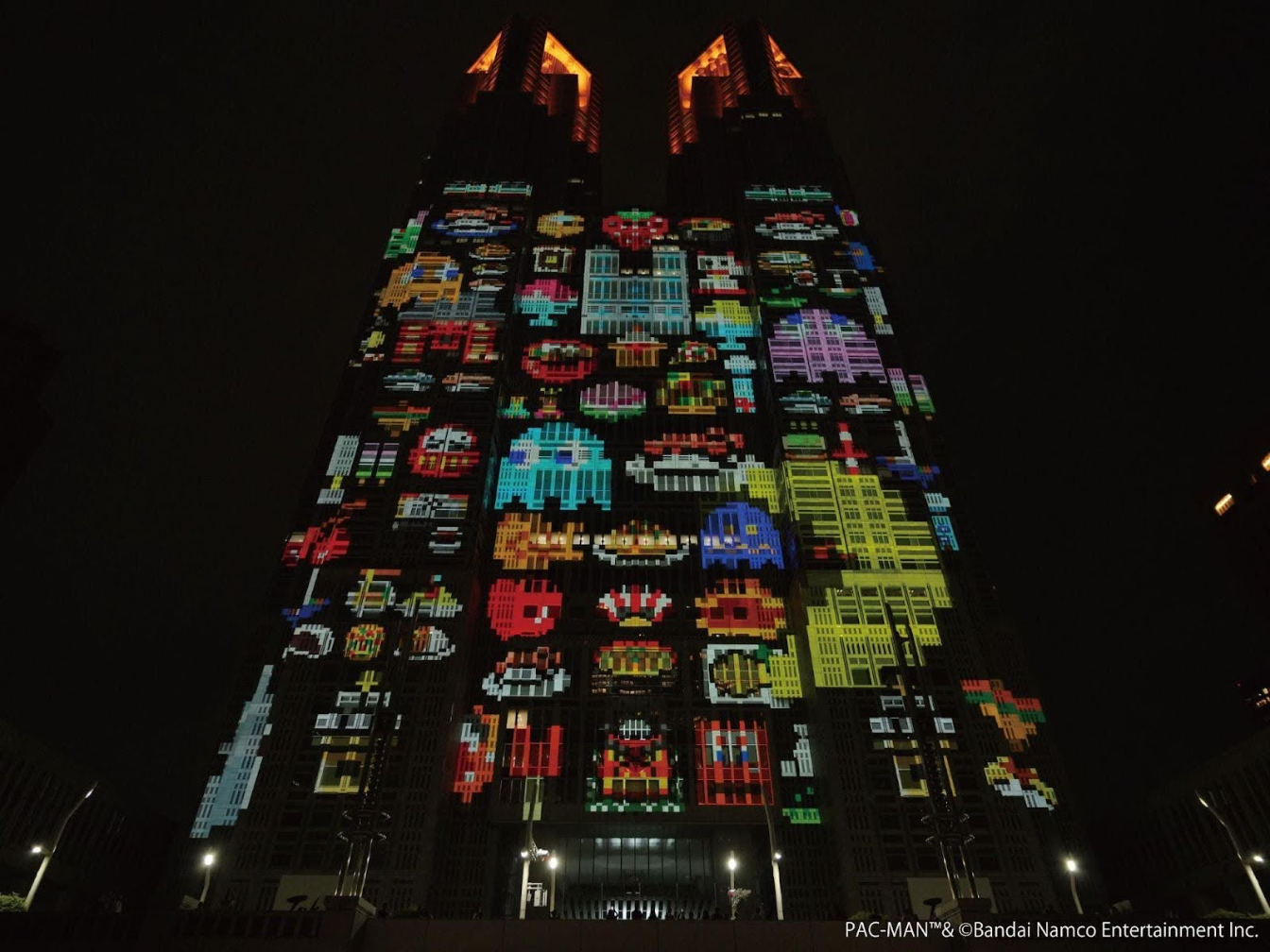
J-STORIES – Back in February, a huge projection mapping event took place in Tokyo’s Shinjuku district, lighting up the walls of the 48-story Tokyo Metropolitan Government Building. Since then, projection mapping has been a tourist attraction in the Japanese capital.
A colorful and eye-catching array of designs have been projected onto the building, including one called “Godzilla attacks the Tokyo Metropolitan Government Building” and one featuring the classic video game character Pac-Man. So far, the projections have attracted over 350,000 visitors, mainly tourists from overseas, and more events are planned, including the return of Godzilla this November.
To build on these popular events and help make Tokyo a global destination for projection mapping, this September creators from around the world were invited to Tokyo for the world’s largest projection mapping competition. Additionally, in November, Grand Prix winning creations from the last four years will be shown at Meiji Memorial Museum.
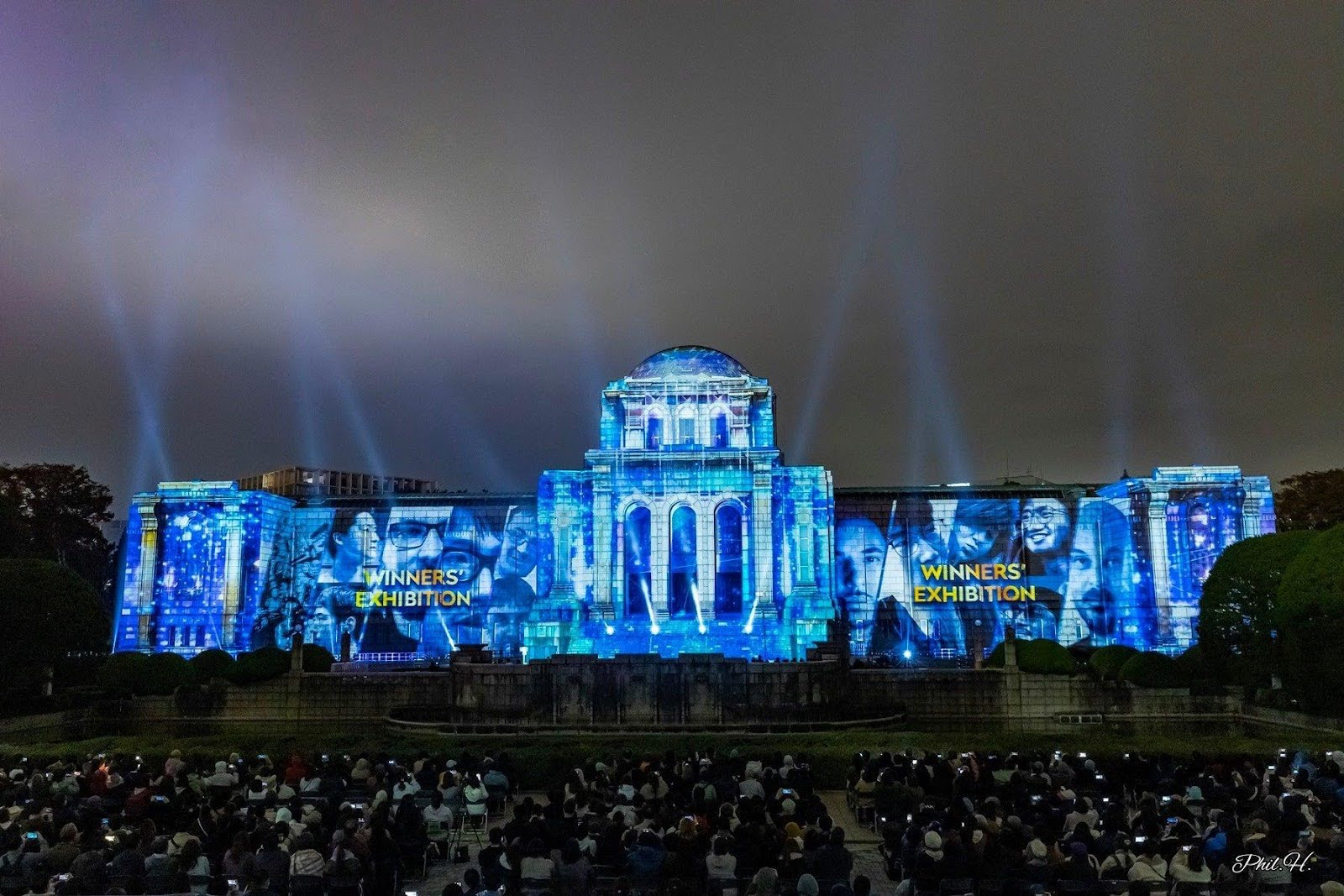
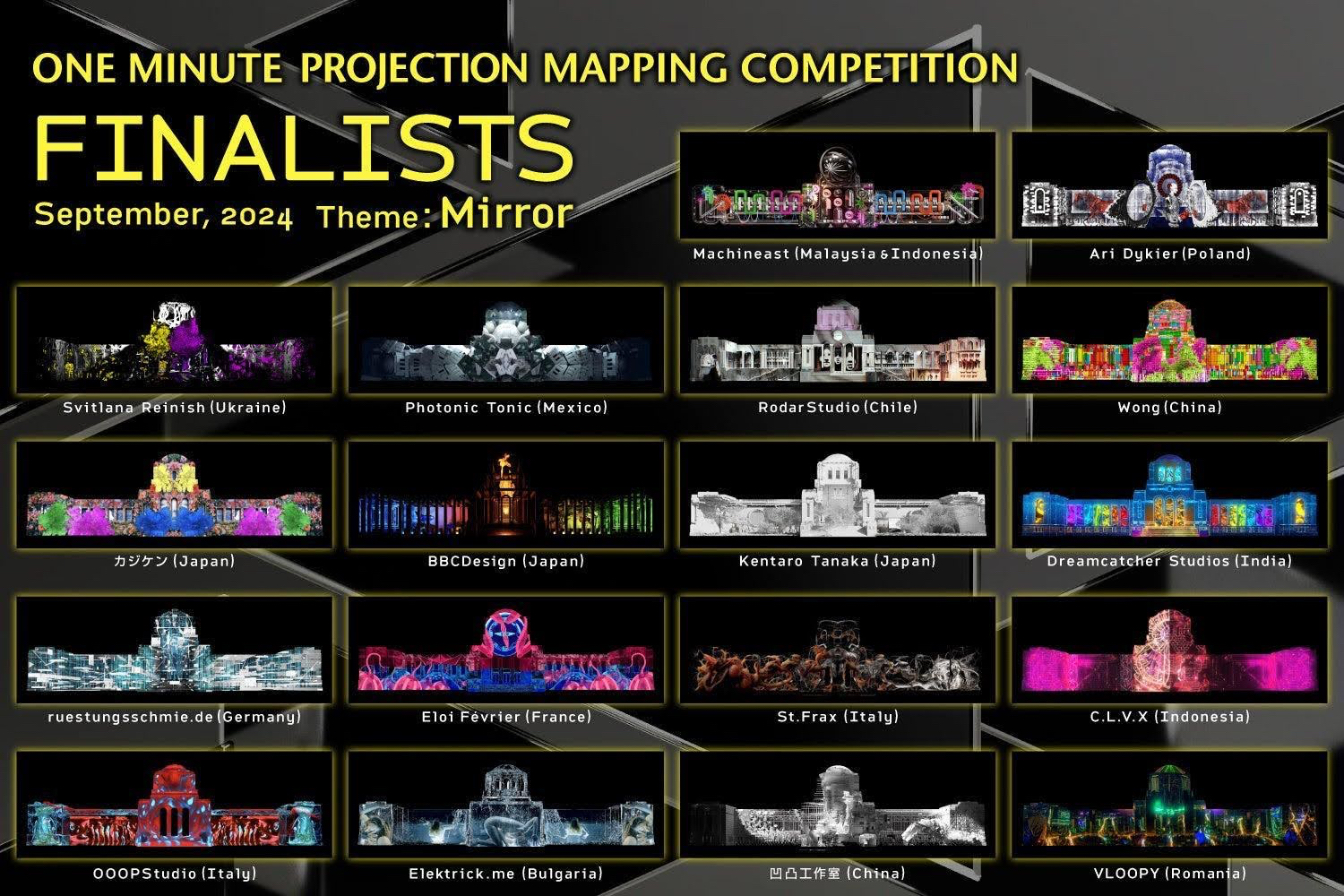
The 1minute Projection Mapping Competition, organized by the Projection Mapping Association of Japan, was launched in 2012 and has been held 12 times. Although there are popular events in Europe attended by top international projection mapping creators, such as one in Lille, France, the Tokyo event has a strong reputation for its history, scale, and level of technology. Some 278 teams from 56 countries entered this year’s event, with 18 teams from 14 countries reaching the final.
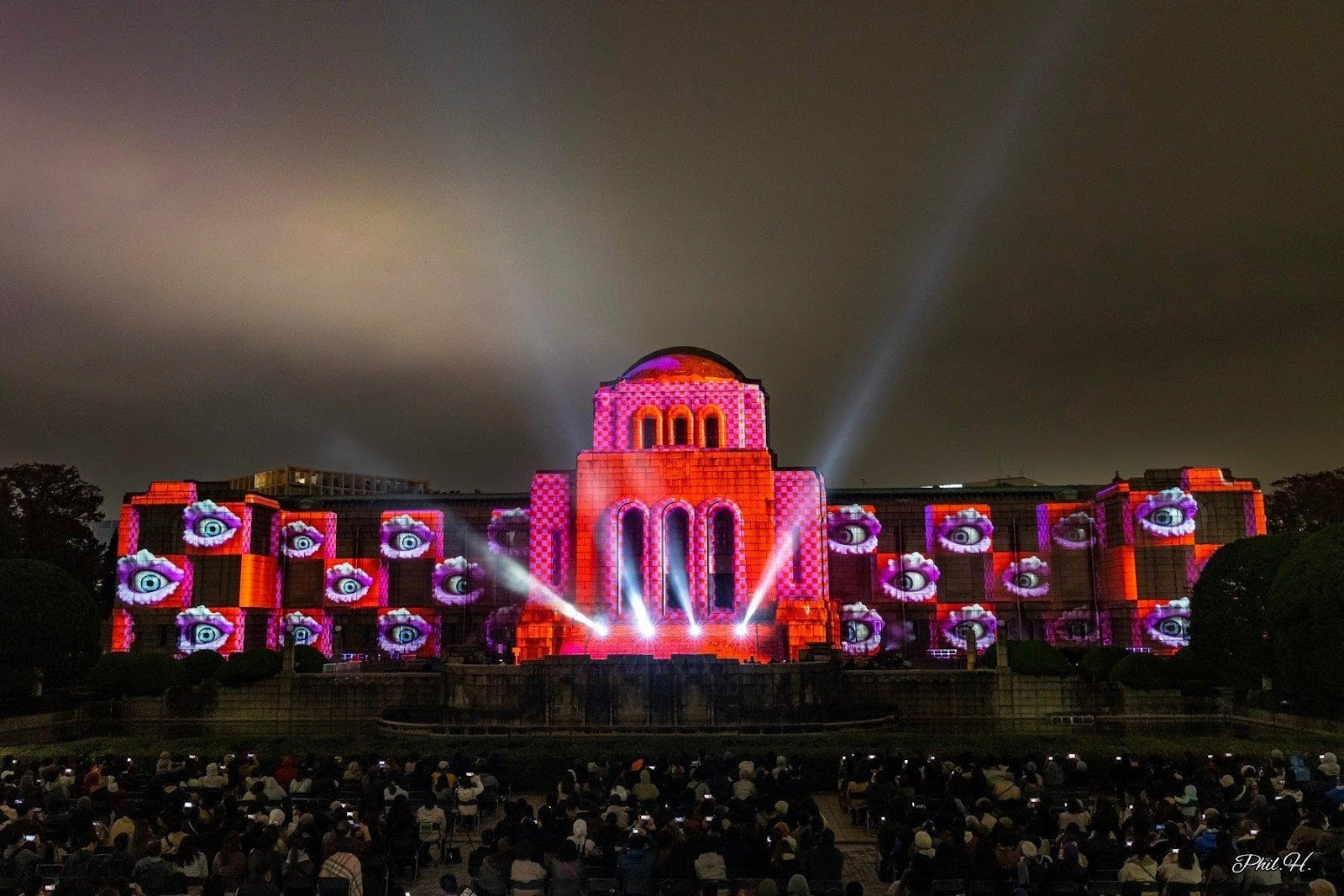
Each entry lasted between one minute and one minute, 49 seconds, and was projected onto the 12-meter-wide and 32-meter-high façade of the Meiji Memorial Picture Gallery. Creators used designated images and music to express this year’s theme of “mirror.”
The competition is open to both professional and amateur projection mapping creators and is seen as a gateway to international success in the field. Overall producer of the competition, Michiyuki Ishita, told J-Stories that, in order to encourage a wide range of international creators to participate, they not only set a short time limit, but also provide technical support.
“Because we prepare all the high-precision templates ourselves, such as the preliminary work for the 3D modeling, it’s easy for even those new to projection mapping to have a go,” Ishita said. “We get things ready for creators to concentrate as much as possible on their own artistic expression.”

This year’s Grand Prix was won by 24-year-old graphic designer Kentaro Tanaka for his work “Room 808.” A first-time entrant, Tanaka has since been invited to international projection mapping competitions in Europe and received inquiries about commissions.

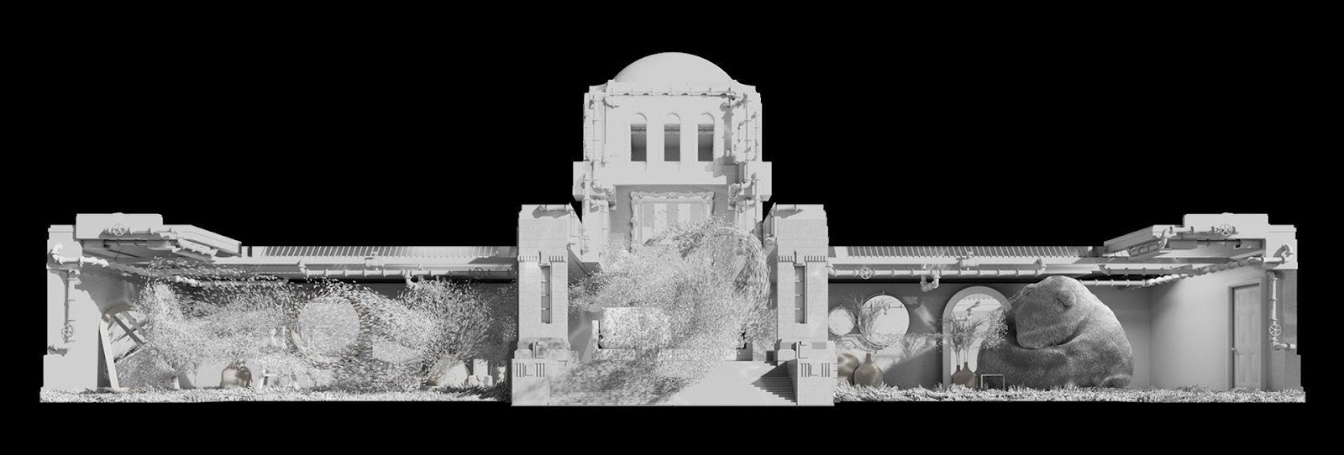
A competition that prioritizes artistic expression over technology
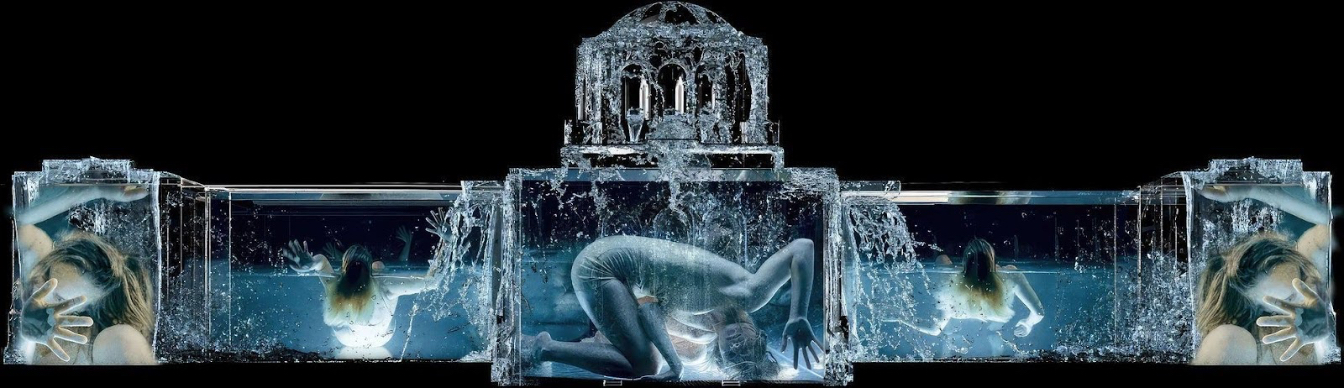
Ishita says that he wants the public to simply enjoy the experience of projection mapping. At the same time, he adds, for an international event, innovative artistic expression and ideas are more important than technology.
“There have now been many experiments with artistic expression through projection mapping,” he said. “Projecting images onto a building to create a 3D effect is becoming the common language of projection mapping, but there will be limits when it comes to future artistic expression. I hope that via the competition, creators will break through those limits to find fresh expression and ideas.”
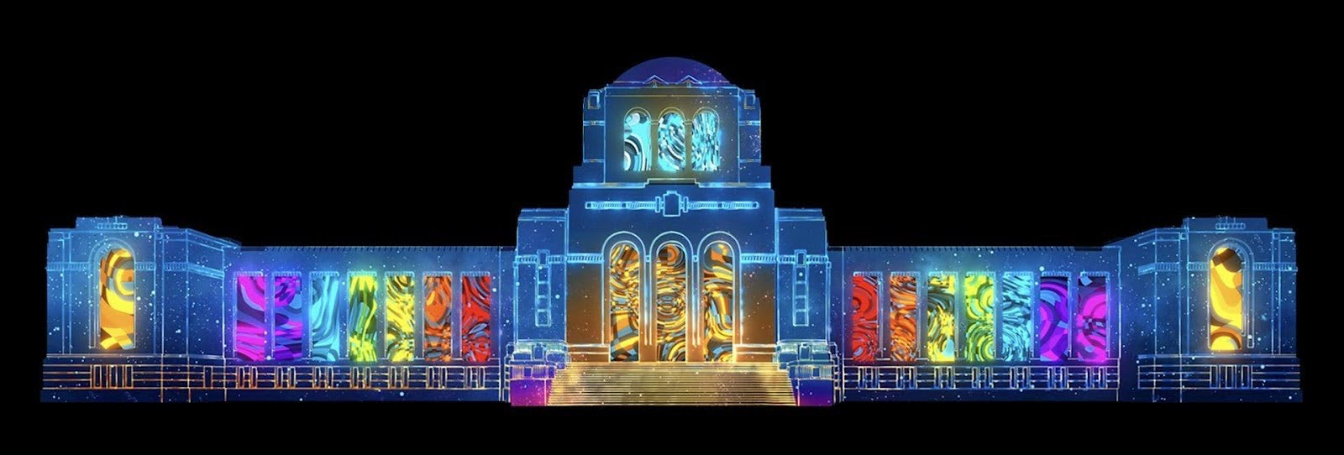
Each year, the competition creates new technological innovation and artistic expression. Ishita says they are aware of a need for “artistic expression that is half a step ahead of the times.” For example, last year’s winning entry made extensive use of AI and the judges debated whether that was acceptable or not. In the end, they decided to award the prize.
Ishita said: “This year, using AI is now almost taken for granted by society, and in fact, more than 1 in 3 entries used AI. But I think it is important that the competition discussed the rights and wrongs of using AI last year, back when people still hadn’t decided on the value of AI.”
Did the history of projection mapping start with Disney?
Projection mapping has a surprisingly long history. One account of its origins is a performance that combined projected images and live dance put on by a Czech stage director at the 1958 Brussels Expo. However, generally, it is thought that projection mapping began in 1969 with the Haunted Mansion attraction at Disneyland in California, where images were projected onto a bust to make it appear to talk.
In the years that followed, many innovative creators tried their hand at projection mapping, but it was only in the 1990s, when projectors, computers and other equipment became more precise and prices dropped due to mass production, that projection mapping became available to a broad range of people. In particular, projection mapping onto historical buildings in Europe and elsewhere, making effective use of their three-dimensionality, has attracted a lot of attention thanks to innovative visuals and depth of artistic expression. It is quite different to images simply projected onto a screen.
With the emergence of YouTube in 2005, projection mapping became an art form that could be shared across the globe, making it even more popular. There are highly original creators all over the world and buildings in many countries have become canvases for projection mapping art. In 2012, a large-scale projection mapping event that used the façade of Tokyo Station became a huge talking point in Japan.
Applications in medicine, education and architecture
In recent years, projection mapping technology has found applications in fields other than entertainment. In medicine, for example, it is used to indicate the location of internal organs before surgery or to help people move their bodies during physiotherapy. It is also used in manufacturing to superimpose work processes onto equipment in factory lines and in educational settings in combination with programming.
“Of course, projection mapping is used in entertainment such as opera and theater, but it is also starting to be used in all sorts of fields,” Ishita said. “In fact, it’s becoming less common to see projection mapping on its own. Going forward, it will be important to think about how to combine it with other forms of artistic expression as one of numerous tools.”
He says that, in the past, events included displays that combined projection mapping with moving lights and lasers. Looking forward, his team is considering using sensors and other devices to create an interactive and game-like interactive projection mapping experience.
When everyone turns off their home lights to watch the projection mapping..
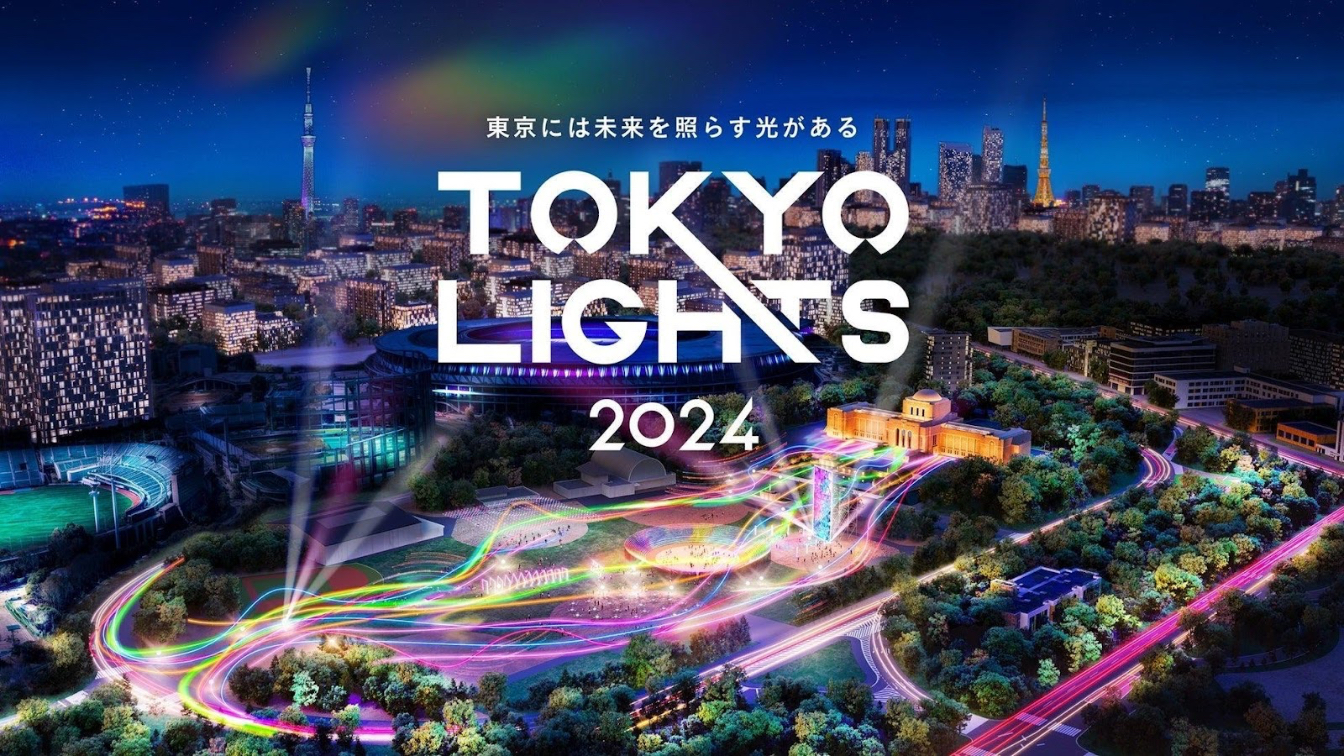
On the other hand, following the projection mapping event involving the Tokyo Metropolitan Government Building earlier this year, social media users posted critical comments that referred to “wasting money and electricity.” In response, the Tokyo Metropolitan Government is making the most of Japan’s excellent projection mapping technology to turn Tokyo into a leading destination for the new art form and to boost nighttime tourism. The related economic benefits have been calculated at 1.8 billion yen, over two and half times the 700 million yen budgeted for the project in 2023.
In fact, in places such as Sydney, Australia, and Lyon, France, “festivals of lights” are held during the quiet winter season. These popular events use illuminations and projection mapping and can attract millions of tourists. The recent competition in Tokyo was adopted as the main content of Tokyo Lights, a “light entertainment” project to create new nighttime attractions.
On the other hand, Ishita says that ever since 2011 (one year before the Projection Mapping Association’s start) when an earthquake and tsunami damaged the Fukushima nuclear power station and necessitated energy saving, he has been thinking about the pros and cons of projection mapping, which involves significant expense and electricity use.
He explains: “Ever since the Great East Japan Earthquake, people have criticized projection mapping as a waste of energy. Of course, we need to seriously consider this issue, including the use of renewable energy. However, how about if 10,000 people got together to watch a projection mapping event and they all turned off their home lights? That might make economic sense.”
“Above all, this form of artistic expression has the potential to change things that were originally negative into positive things that can be accepted by many people. For example, images can be projected onto a run-down building without changing it, presenting something new.”
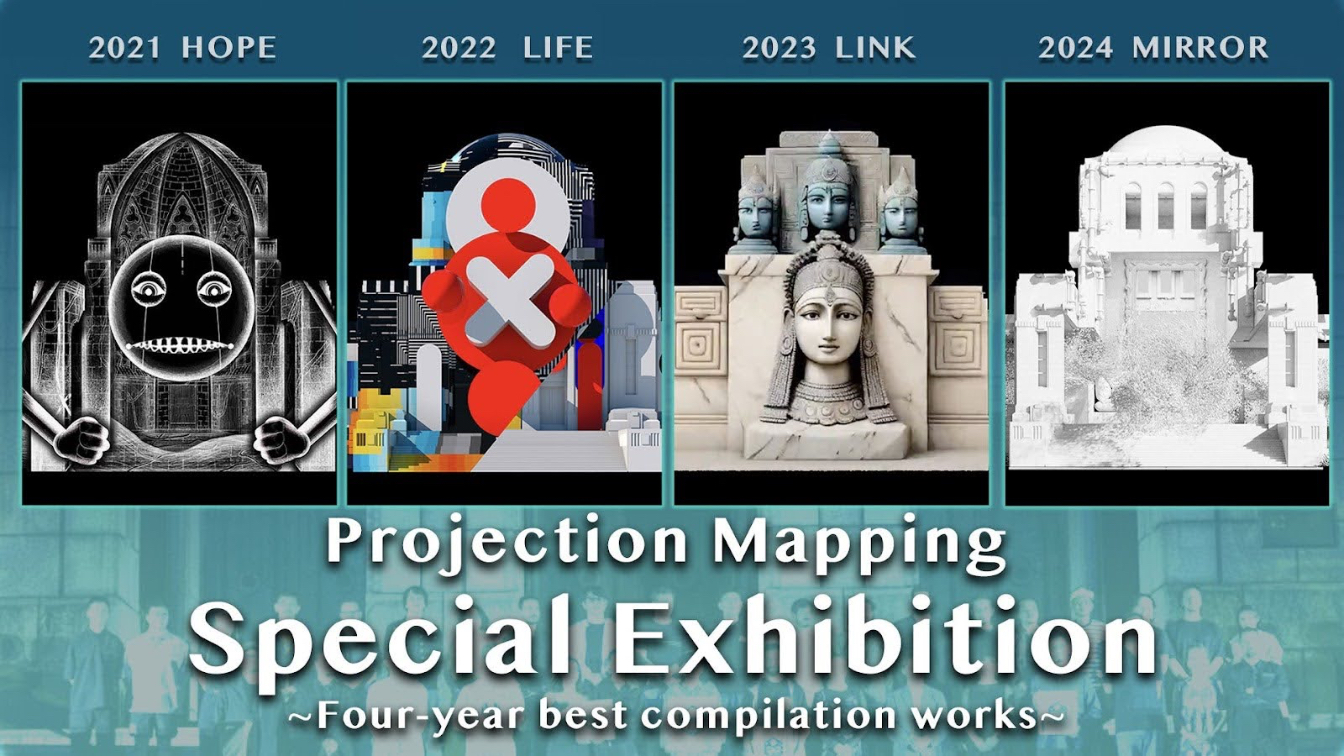
From November 7 to 10, an event is scheduled to showcase the Grand Prix award-winning works from the past four years, including those from 2024, at the Meiji Jingu Gaien Shōtoku Memorial Hall. For more details, click here.
Translated by Tony McNicol
Top photo by Projection Mapping Association of Japan
For inquiries regarding this article, please contact jstories@pacificbridge.jp
Click here for the Japanese version of the article