

Sustainability and aquaculture
J-STORIES – Japan is among the countries worldwide that are developing new approaches to inland aquaculture, which has been touted as a solution to the global problems of overfishing, ocean pollution and food security.
Recently, the globe’s first-ever sockeye salmon farm was opened in Fukushima Pref., spearheading the industrialization of the seafood industry here with a different approach to aquaculture.
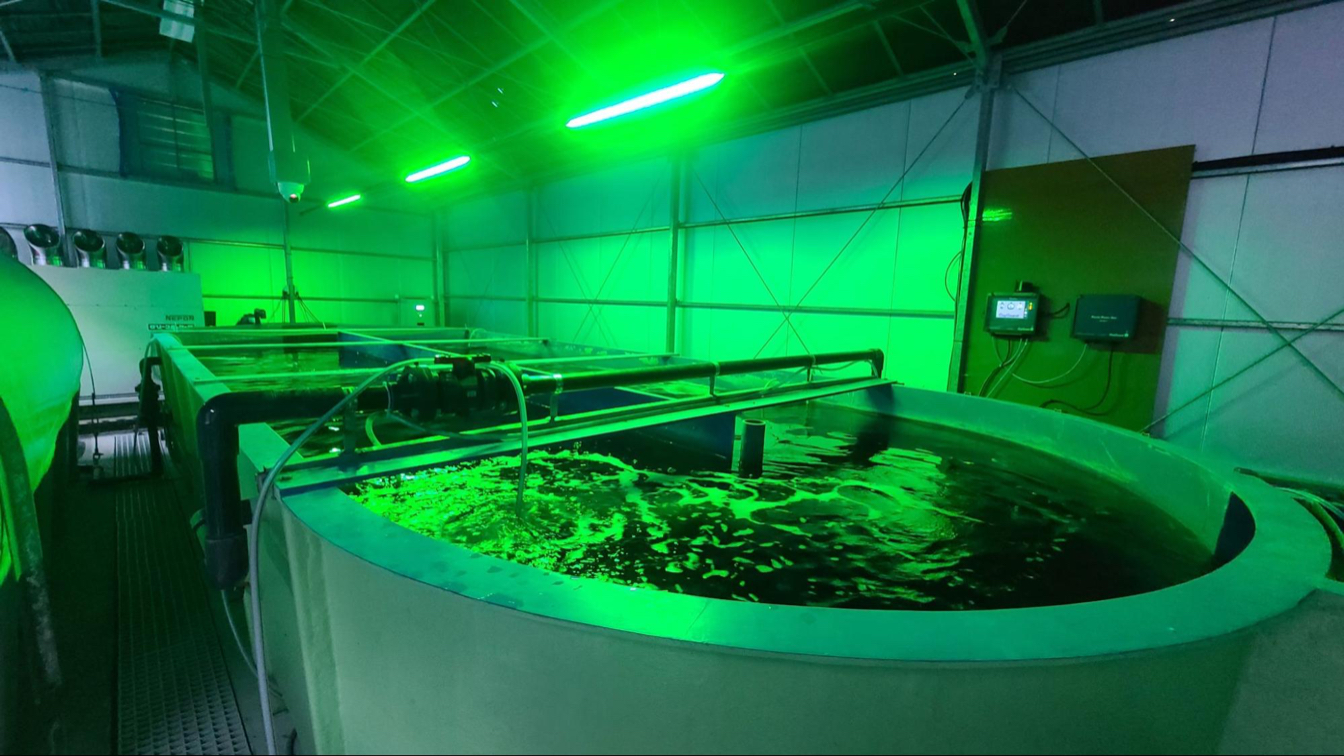
The revolutionary method employed at the plant ensures that, unlike other widely used aquaculture methods, no water is wasted. Known as the recirculating aquaculture system (RAS), it was developed by NTT East, an arm of a major telecommunications company, Okayama Science University, and a local Fukushima company, the supermarket chain Ichii. Compared to other forms of fish farming, the RAS is believed to be a more sustainable option.
The three organizations were brought together due to common concerns about the rapidly declining stocks of marine resources, which has been brought about by overfishing. According to the UN Food and Agriculture Organization, illegal, unreported and unregulated fishing practices lead to the loss of between 11 million and 26 million tons of fish each year, while 35.4 percent of global fish stocks are being harvested at unsustainable levels. For Japan, an island nation that consumes 10 percent of the global catch, this is an especially pressing issue.
With this in mind, NTT East began to look into developing an aquaculture technology that could not only provide a solution to food security issues, but would also be less harmful to the environment.
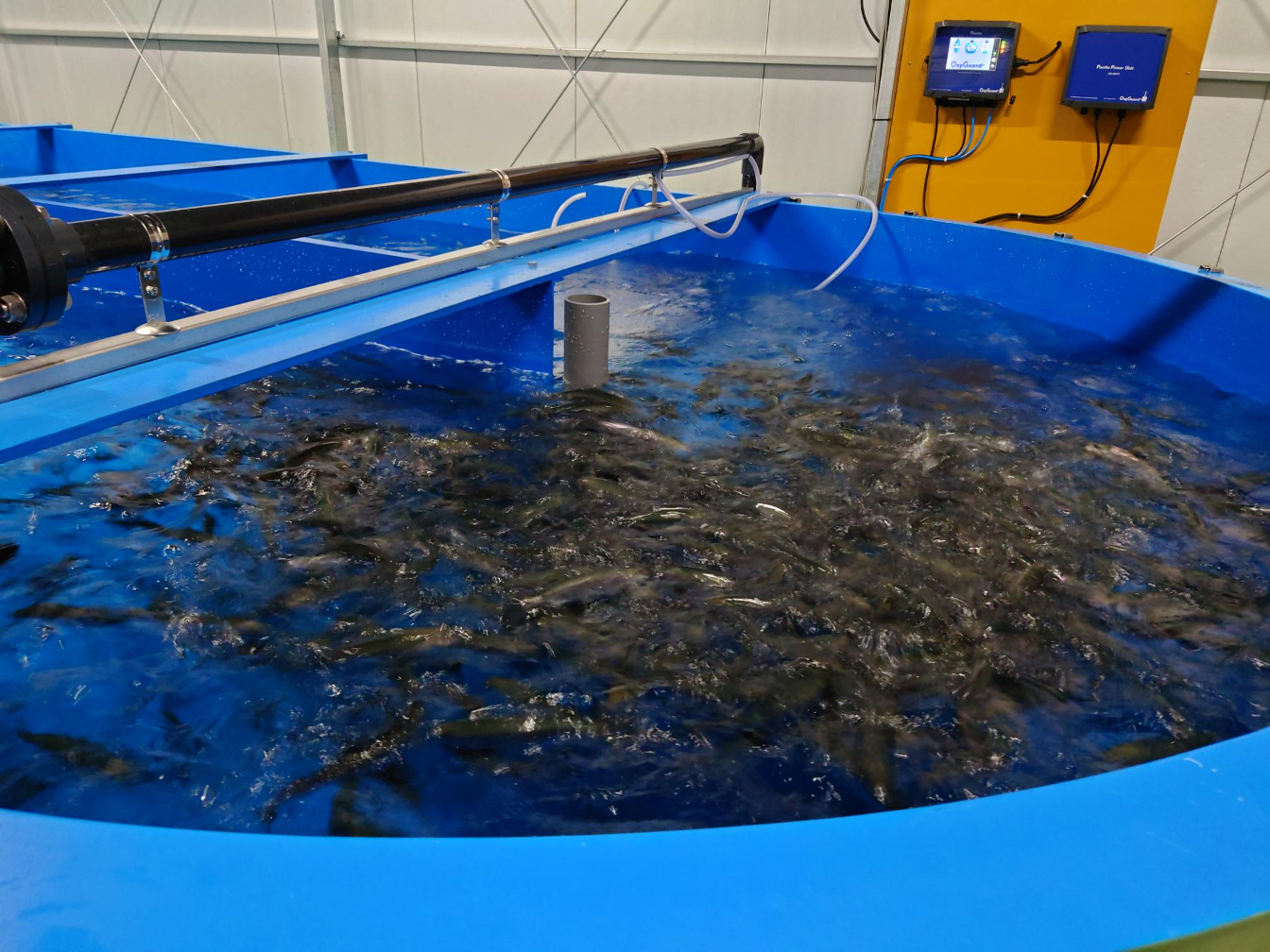
There are different methods of fish farming, the best-known of which are ocean-based. In terms of those conducted on land, the “free flow” method – where seawater or groundwater is pumped into tanks on land and the resulting wastewater drained away – is perhaps the most typical. The downside of both methods, however, is that they are polluting.
With the RAS system, the same water is continually filtered and reused. “It’s very environmentally friendly,” says Tetsumi Ochi, a representative of NTT East.
Technological breakthroughs and commercialization — from farm to table
This means RAS plants can be built practically anywhere that has running water, inland or not — theoretically even in a desert.
The fact that RASs are completely disconnected from the ocean also means that the temperature in the plants can be closely regulated, which greatly diminishes the chance of the fish being exposed to parasites or diseases. It was this minutely controllable nature that allowed for the first-ever commercial farming of sockeye salmon, a species that is notoriously difficult to farm due to its high sensitivity to temperature changes, stress and disease.
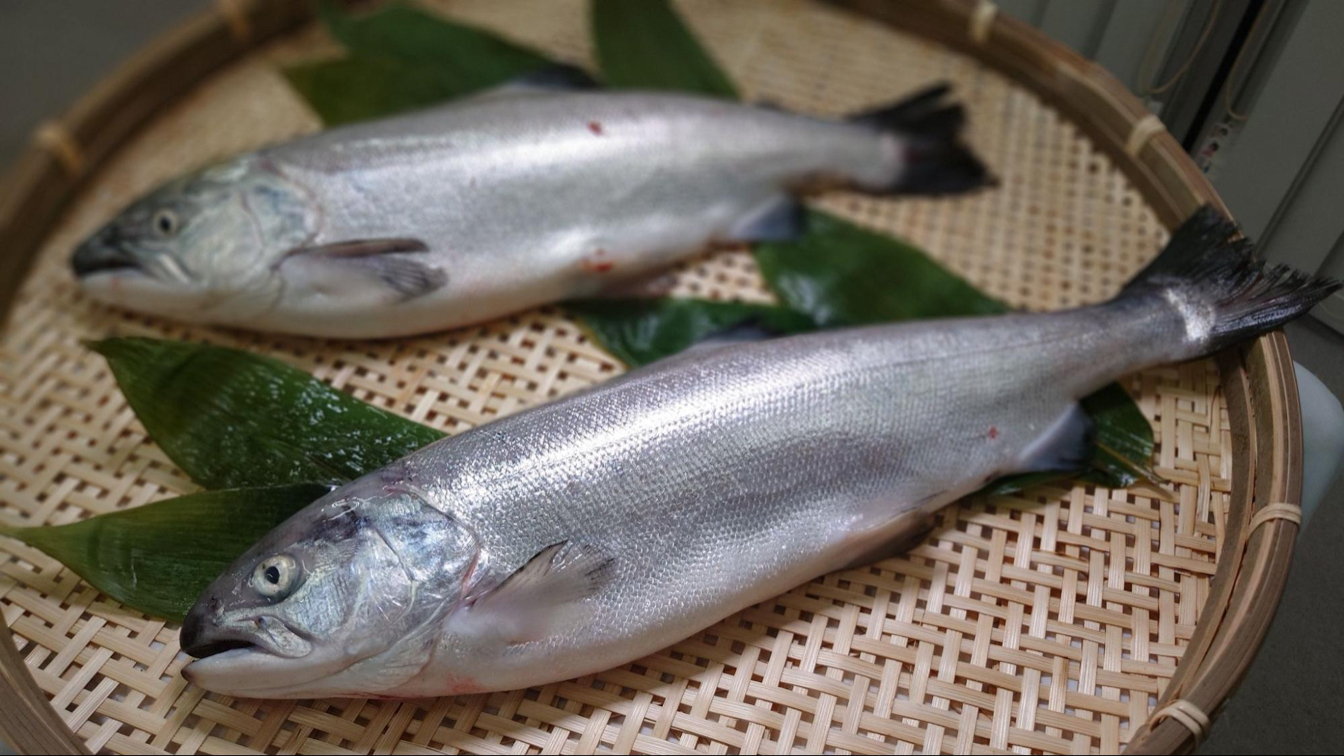
Interestingly, farmed salmon has been shown to mature faster than their wild-caught counterparts, reaching up to 1.2 kg in 18 months, which reach maturity in four years in the wild.
This growth spurt was given a helping hand by a simple adaptation. Toshimasa Yamamoto, a researcher at Okayama Science University, developed “ideal environment water,” an artificial saltwater with approximately one-third the salt concentration of seawater. Since saltwater fish spend most of their energy on adjusting the concentration of salt in their bodies, the farmed fish are able to repurpose that energy for physical growth. The accelerated growth compensates in the long term for the heavy production cost of RASs due to the advanced technology required, one of the largest barriers to maintaining such plants.
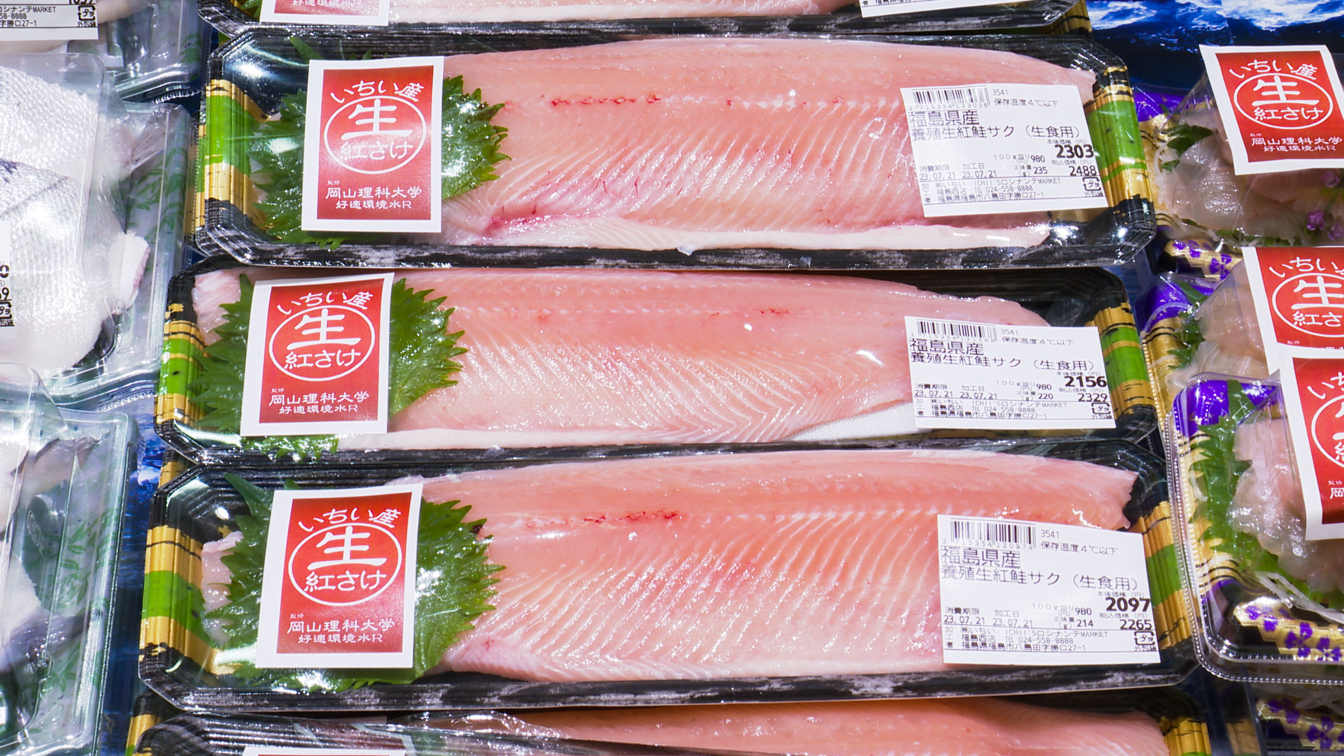
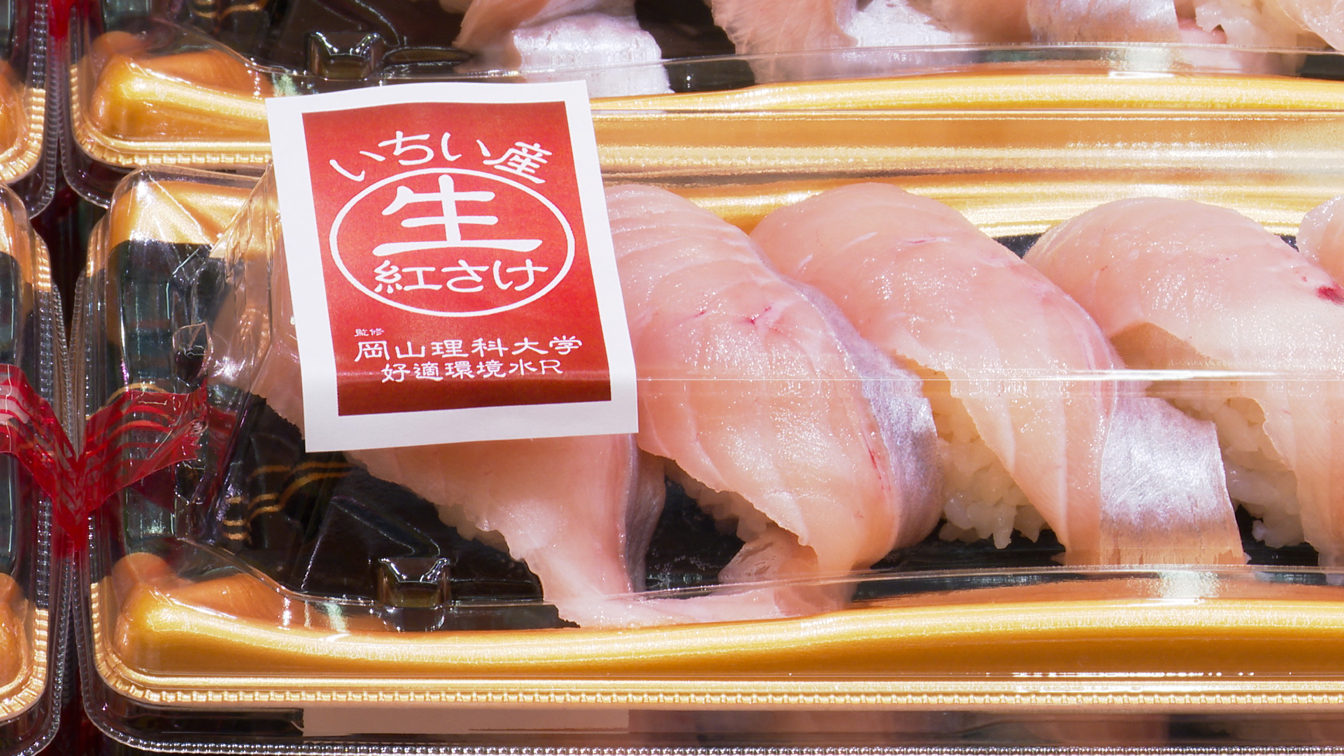
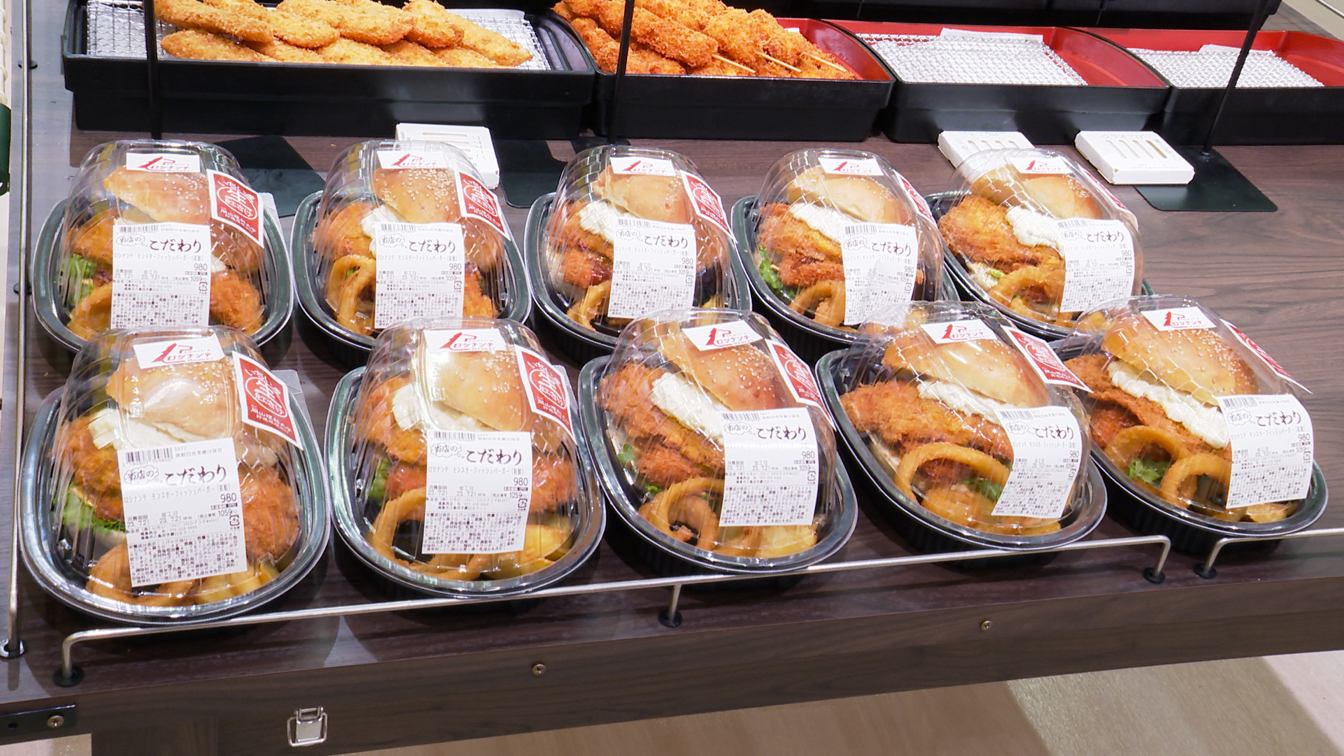
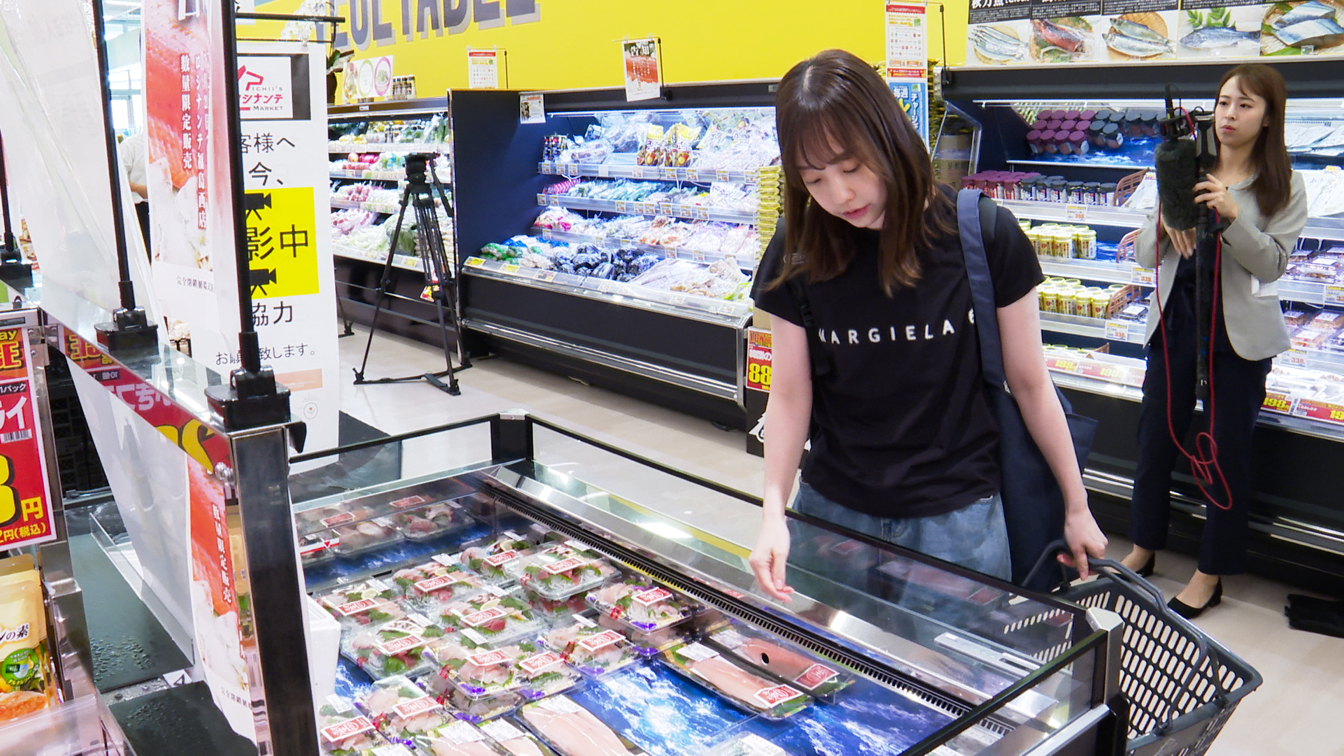
The RAS-farmed salmon was sold at supermarket Ichii in Fukushima for a three-day trial period this July. It appeared in various forms, from large filets to sushi, and even sandwiches.
Social and economic impact – and future considerations
The project’s successful outcome is highlighted by the benefits of this type of aquaculture beyond just environmental sustainability and production efficiency. Given that the temperature-controlled RAS plants do not face the seasonal constraints of some other onland farming methods, they can operate year-round, creating employment opportunities. In the case of the Fukushima project, which is staffed by local residents, there have even been discussions with the local government about repurposing abandoned school buildings to create new aquaculture plants.
“I think that historically, fishing hasn’t been considered a stable profession, and still isn’t,” NTT East’s Ochi said. “The current situation is that the aging population in Japan is causing even more people to leave the fishing industry.”
But this new project is paving the way for greater stability in the fishing industry. “I believe that primary industries (including agriculture and fishing) are incredibly important, so we want to make them industries where workers can feel the promise (of such a project),” he said.
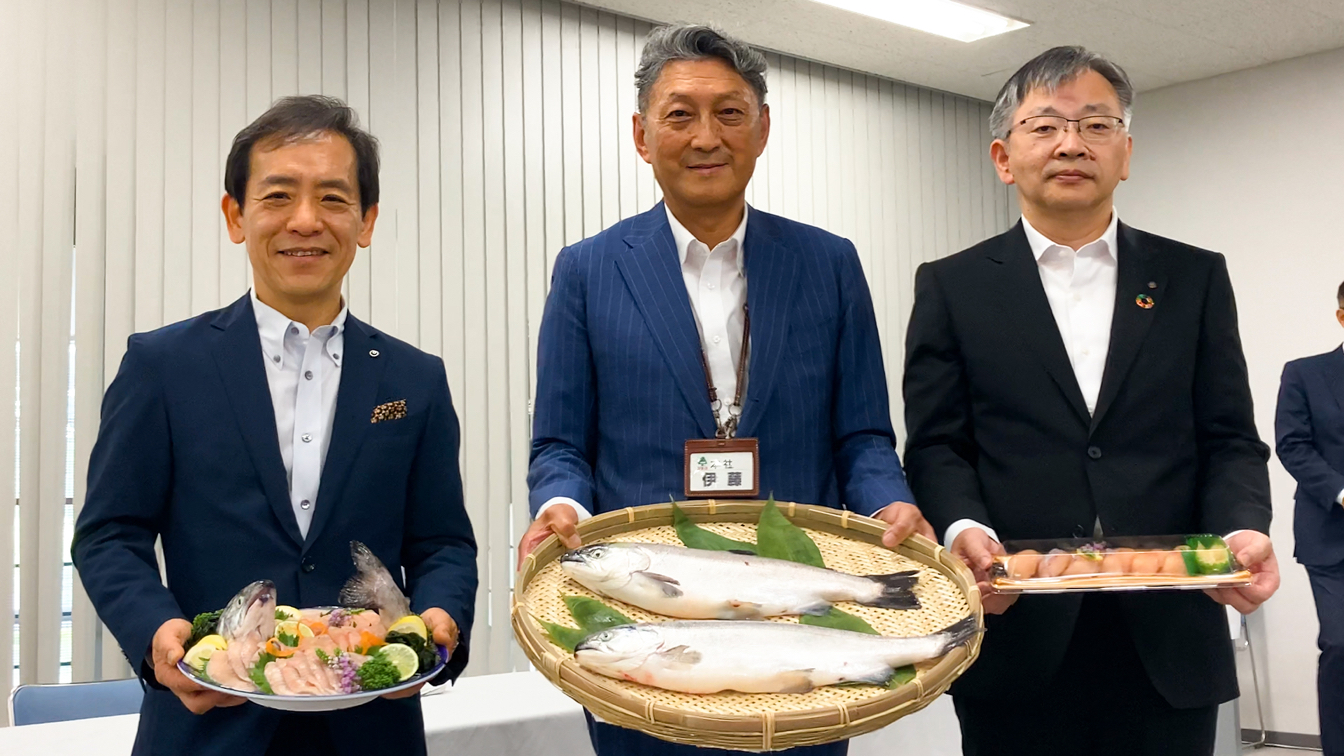
The project has a particular resonance for Fukushima, whose primary industries were rocked by the 2011 Great East Japan Earthquake and tsunami, but also by the nuclear disaster that ensued, which continue to have ramifications for the prefecture even today.
“Part of the reason why we did this project with sockeye salmon was because of its scarcity, as nobody has farmed it before,” Ochi explained. “This way there is a large possibility that it can be branded as a local specialty, and help develop industry growth in the region, and as a result, create jobs.”
Furthermore, Ochi added, the plant has been thoroughly proofed against natural disasters, to the extent that it will not be damaged even in the event of an earthquake or typhoon, which are both common occurrences in Japan.
However, this kind of aquaculture technology doesn’t come without its drawbacks. The plants are very expensive both to build and to run, doubling the price of farmed sockeye ( ¥980 per 100 grams) over the national average (¥503 per 100 grams). Additionally, the plant in Fukushima is currently monitored remotely, with data collected from water quality sensors sent to to the cloud, and then to specialists in Okayama. This could result in a delayed response to any issues that arise.
In order to overcome these issues, increasing the yield of the aquaculture process is one of NTT East’s most pressing future goals.
The future of farm fishing: genetic modification and mass-production
Improved aquaculture technology isn’t the only improvement NTT intends to apply to the aquaculture process. NTT recently established a new company, NTT Green & Food, which focuses on using gene editing technology to improve fish breeds: for instance, by shortening their growth time, increasing the percentage of edible flesh (by up to 160 percent with some species), and so on.
The technology and innovations employed in this particular project, in conjunction with the emergence of RASs across the globe, already suggest a massive shift in the status quo of the fishing industry. Already over half of the fish consumed globally is farmed. There will likely come a time in the near future when fish becomes another industrial food product that’s genetically modified and farmed for maximum yield, comparable to crops and poultry.
As a whole, NTT East sees sustainable aquaculture as a necessary next step. “When it comes to countries with growing populations,” Ochi said, “The demand for fish is also increasing. If we are going to continue coexisting and preserve fish for the future, with regards to the fish that we consume, we must start producing it for ourselves as a protein source.”
Writing by Sage Farrer
Editing by Desiderio Luna and Robert Gilhooly
Top page photo by NTT East
For inquiries about this article, please contact jstories@pacficbridge.jp
Click here for the Japanese version of the article.