• Login
Upgrade
JStories
  • 日本語
  • 中文 (中国)
No Result
View All Result
  • Home
  • AI
    • Artificial Intelligence
    • Robotics
    • Mobility
  • Earth
    • Energy
    • Climate Tech
    • AgriTech
    • Clean Tech
    • Disaster Tech
    • SpaceTech
  • Life Sciences
    • BioTech
    • HealthTech
    • MedTech
    • AgeTech
  • Society
    • Media
    • EdTech
    • Diversity
    • FemTech
    • HRTech
    • LegalTech
    • Social Impact
    • FinTech
    • Anime
  • Lifestyle
    • FoodTech
    • FashionTech
    • BeautyTech
    • Wellbeing
    • Art & Music
  • Travel
    • Adventure Travel
    • Luxury Travel
    • Wellness & Medical Tourism
    • Culture
  • Video
  • Deals
    • Venture Capital
    • M&A
    • Startup Events
    • Pitch
    • Ecosystem Support
  • Interview
  • Opinion
  • Home
  • AI
    • Artificial Intelligence
    • Robotics
    • Mobility
  • Earth
    • Energy
    • Climate Tech
    • AgriTech
    • Clean Tech
    • Disaster Tech
    • SpaceTech
  • Life Sciences
    • BioTech
    • HealthTech
    • MedTech
    • AgeTech
  • Society
    • Media
    • EdTech
    • Diversity
    • FemTech
    • HRTech
    • LegalTech
    • Social Impact
    • FinTech
    • Anime
  • Lifestyle
    • FoodTech
    • FashionTech
    • BeautyTech
    • Wellbeing
    • Art & Music
  • Travel
    • Adventure Travel
    • Luxury Travel
    • Wellness & Medical Tourism
    • Culture
  • Video
  • Deals
    • Venture Capital
    • M&A
    • Startup Events
    • Pitch
    • Ecosystem Support
  • Interview
  • Opinion
en English ja 日本語 zh 中文 (中国)
JStories
No Result
View All Result

Recycling weeds just the tonic

Emi Takahata by Emi Takahata
11/16/2022
in Clean Tech, Earth, Energy
0
Home Earth Clean Tech
Share on FacebookShare on Twitter

J-STORIES – A Japanese company has provided a tonic to an Asian nation shackled by a problem plant by using it to produce power and a tasty tipple.

Gifu-based Sunwaspa has found a way to harness the properties of the water hyacinth, an invasive plant native to South America but naturalized throughout the world, to make ethanol for fuel and craft gin.

The water hyacinth can increase the area it covers millions of times a year, hindering fishing and water transportation systems, and causing secondary pollution due to its high capacity to absorb large quantities of heavy metals and other harmful substances.

One place in Asia that has been particularly affected is Tonle Sap Lake in Cambodia, and paper and clothing recycling company Sunwaspa has been employing local residents there to gather the plant to use in the production of ethanol for biomass power generation. In cooperation with the Cambodian province of Kampong Chhnang, the company’s new mass production plant started operations this May.
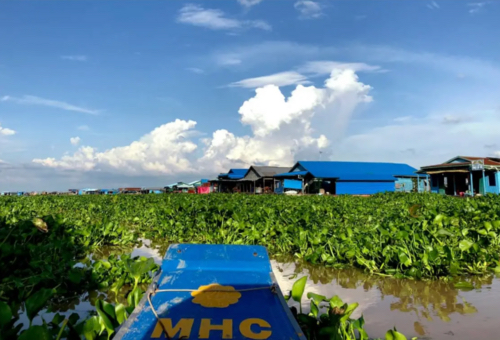
Water hyacinth growing on Tonle Sap Lake. Located around five kilometers north of the Cambodia capital, Phnom Penh, it is the nation’s largest lake.     Source: Sunwaspa

Bioethanol produced at the plant is used as fuel for generators, an everyday appliance for people who live on the lake, and is also repurposed as disinfectant. The plant has a production capacity of 55 liters per day. In addition, methane gas is produced from the residue after ethanol production and is used as an energy source in the production facility’s living quarters.
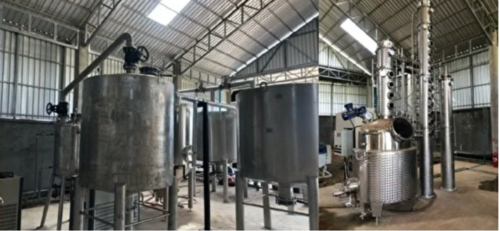
The bioethanol plant in Kampong Chhnang province.     Source: Sunwaspa

However, the company has found that bioethanol produced from water hyacinth isn’t sufficiently profitable when sold only as fuel, and it doesn’t expect the market to grow. So, to create a high value-added business, it has begun using the ethanol to also produce craft gin.

According to the company, the added value of ethanol when used in spirits is more than 100 times greater than when it is used as fuel. The company has already started selling Mawsim, a high-end craft gin made from sugarcane-derived bioethanol, and has been delivering it to Cambodian restaurants, bars and hotels since summer. It has also been available in Japan and other countries via the internet since September. The company plans to launch its craft gin made from the water hyacinth of Tonle Sap Lake during the current fiscal year.

The company’s Mawsim craft gin, made from sugarcane-derived bioethanol.     Source: Sunwaspa

Cambodia isn’t the only country in Asia battling with the invasive weed, according to Sunwaspa CEO Tomotada Hara, who took over the 53-year-old company in 2015 and decided to launch a new renewable resource-focused business overseas due to Japan’s dwindling population. He hopes that one day the company can also use its renewable resource and biomass generation technology in other Asian nations such as Laos and Sri Lanka.
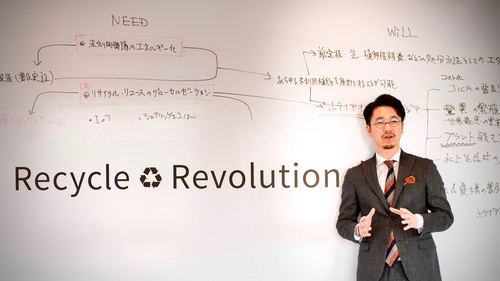
Sunwaspa CEO Tomotada Hara.     Source: Sunwaspa

Translation by Tony McNicol

Top page photo by poetique_id/Envato

For inquiries about this article, please contact us at jstories@pacificbridge.jp


Click here for the Japanese version of the article.

Tags: LivingregionalSustainabilitySustainable SocietyZero Waste
Previous Post

Round-Up Video #33

Next Post

Bacteria-free recycled paper

Emi Takahata

Emi Takahata

Related Posts

Clean Tech

Japanese startup turns eggshell waste into eco-friendly plastics and paper

by Yoshiko Ohira
02/06/2026
Earth

A world first: Detecting road sinkholes from space

by Ayaka Sagasaki
01/30/2026
AgriTech

Fish scraps as a hidden treasure

by Kei Mizuno
01/16/2026
AgriTech

Can a small robot save Japan’s terraced paddies?

by Yoshiko Ohira
11/28/2025
Clean Tech

From swordfish to blue jeans: How a Japanese craftsman turns waste into wear

by Yoshiko Ohira
11/07/2025
Next Post

Bacteria-free recycled paper

Leave a Reply Cancel reply

Your email address will not be published. Required fields are marked *

Videos

Round-up Video #23

08/04/2022

Round-Up Video #32

11/03/2022

Round-Up Video #39

12/22/2022

Browse by Tags

Ai Alternative Energy biotechnology Climate Change Community decarbonization Education Event Food foodtech Health Inclusion Infrastructure Innovation Interview J-Stories Japan Japan-Taiwan Innovation Summit Japan startups Japan Tech Labor Living Nature Podcast Recycling Refugees robotics Society Space Startup Startup Ecosystem Startups SusHI Tech Tokyo Sustainability Sustainable Society Taiwan Technology Tokyo Tokyo Innovation Base Tokyo Metropolitan Government Tokyo Updates venture capital video Wealth Zero Waste
JStories

©Articles and photos published on JSTORIES are protected by Japanese copyright law and international treaties. They cannot be reproduced without the permission of the copyright holders

Explore JStories

  • About Jstories
  • Company
  • Contact
  • Home
  • Partner Press Releases
  • Pricing
  • Privacy Policy
  • Team

Follow Us

Welcome Back!

Login to your account below

Forgotten Password?

Retrieve your password

Please enter your username or email address to reset your password.

Log In
No Result
View All Result
  • Home
  • AI
    • Artificial Intelligence
    • Robotics
    • Mobility
  • Earth
    • Energy
    • Climate Tech
    • AgriTech
    • Clean Tech
    • Disaster Tech
    • SpaceTech
  • Life Sciences
    • BioTech
    • HealthTech
    • MedTech
    • AgeTech
  • Society
    • Media
    • EdTech
    • Diversity
    • FemTech
    • HRTech
    • LegalTech
    • Social Impact
    • FinTech
    • Anime
  • Lifestyle
    • FoodTech
    • FashionTech
    • BeautyTech
    • Wellbeing
    • Art & Music
  • Travel
    • Adventure Travel
    • Luxury Travel
    • Wellness & Medical Tourism
    • Culture
  • Video
  • Deals
    • Venture Capital
    • M&A
    • Startup Events
    • Ecosystem Support
  • Interview
  • Opinion

©Articles and photos published on JSTORIES are protected by Japanese copyright law and international treaties. They cannot be reproduced without the permission of the copyright holders

Are you sure want to unlock this post?
Unlock left : 0
Are you sure want to cancel subscription?