• Login
Upgrade
JStories
  • 日本語
  • 中文 (中国)
No Result
View All Result
  • Home
  • AI
    • Artificial Intelligence
    • Robotics
    • Mobility
  • Earth
    • Energy
    • Climate Tech
    • AgriTech
    • Clean Tech
    • Disaster Tech
    • SpaceTech
  • Life Sciences
    • BioTech
    • HealthTech
    • MedTech
    • AgeTech
  • Society
    • Media
    • EdTech
    • Diversity
    • FemTech
    • HRTech
    • LegalTech
    • Social Impact
    • FinTech
    • Anime
  • Lifestyle
    • FoodTech
    • FashionTech
    • BeautyTech
    • Wellbeing
    • Art & Music
  • Travel
    • Adventure Travel
    • Luxury Travel
    • Wellness & Medical Tourism
    • Culture
  • Video
  • Deals
    • Venture Capital
    • M&A
    • Startup Events
    • Pitch
    • Ecosystem Support
  • Interview
  • Opinion
  • Home
  • AI
    • Artificial Intelligence
    • Robotics
    • Mobility
  • Earth
    • Energy
    • Climate Tech
    • AgriTech
    • Clean Tech
    • Disaster Tech
    • SpaceTech
  • Life Sciences
    • BioTech
    • HealthTech
    • MedTech
    • AgeTech
  • Society
    • Media
    • EdTech
    • Diversity
    • FemTech
    • HRTech
    • LegalTech
    • Social Impact
    • FinTech
    • Anime
  • Lifestyle
    • FoodTech
    • FashionTech
    • BeautyTech
    • Wellbeing
    • Art & Music
  • Travel
    • Adventure Travel
    • Luxury Travel
    • Wellness & Medical Tourism
    • Culture
  • Video
  • Deals
    • Venture Capital
    • M&A
    • Startup Events
    • Pitch
    • Ecosystem Support
  • Interview
  • Opinion
en English ja 日本語 zh 中文 (中国)
JStories
No Result
View All Result

Halloween garbage sparks a circular economy project in Shibuya

Yoshiko Ohira by Yoshiko Ohira
07/25/2025
in AgriTech, Earth, Social Impact, Society
0
Home Earth AgriTech
Share on FacebookShare on Twitter

JSTORIES ー Every year on the night of October 31, Tokyo’s Shibuya district is packed with revelers in elaborate costumes, swept up in the frenzy of Halloween. But when the party ends, the streets are left littered with piles of trash, a jarring aftermath of the celebration.

Shibuya Crossing, Tokyo – A vibrant, bustling intersection at the heart of one of Tokyo’s most iconic districts    Source: Envato

From this growing waste problem, a small experiment has blossomed into an ambitious project aimed at creating a circular economy, with Shibuya as its starting point.

“We want to transform Shibuya from the final stop of consumption into the starting point of a new cycle,” says Takahiro Tsubonuma, concept designer and founder of Shibuya Hiryo (Shibuya Fertilizer).

Shibuya Hiryo collects food scraps and construction debris, converting them into new products: sweets made from vegetables grown in composted soil, and souvenirs created from concrete salvaged during redevelopment projects.

The idea took shape in 2019, just before the opening of Shibuya Scramble Square. Tsubonuma’s proposal to address the district’s Halloween waste problem won first place at an event themed “Thinking about Shibuya’s future,” earning him a space at Shibuya QWS, the innovation hub.“ I was shocked to learn that 70 percent of Shibuya’s garbage comes from businesses such as offices—and that a large portion of it is food waste,” he recalls.

“Instead of letting trash be burned and forgotten, I wondered if we could transform it into something that excites people, something fun and meaningful,” he adds.

From this idea, Tsubonuma launched the project Shibuya Hiryou. By 2021, the project had grown into Shibuya Hiryou LLC, which now operates three flagship initiatives:

  • Circular Kits, plant-growing kits made with composted food scraps.
  • Circular Cosmetics, soaps and herbal workshops created from compost-grown herbs.
  • Circular Sweets, desserts made from vegetables grown using composted waste.
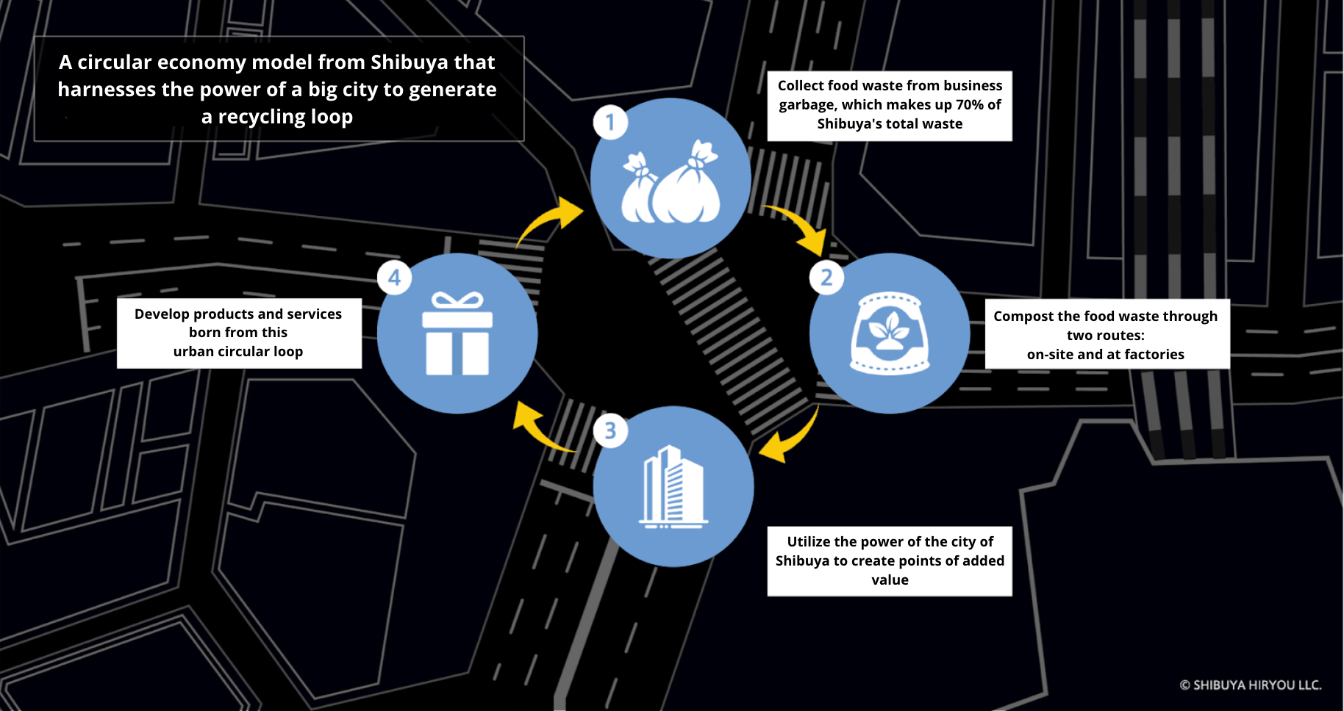
Urban food waste is collected, composted, and used to grow vegetables and herbs, which are then transformed into plant kits and sweets      Photo courtesy of Shibuya Hiryo LLC. (Same below) Translated by JStories
Shibuya Hiryou’ s project leader, Takahiro Tsubonuma 

Circular Kits use mechanical composters installed on the rooftops of buildings in Shibuya, which turn food waste into fertilizer, paired with seeds for easy planting. Circular Cosmetics follow the same principle: food waste is composted on-site, herbs are grown, and participants enjoy workshops where they craft handmade soaps from the harvest.

“Composting faces strict legal regulations. It often has to be processed within the facility where it’s generated, which is a challenge,” Tsubonuma explains. “We’re also experimenting with rooftop vegetable gardens and modular planters that can be rearranged depending on the purpose.”

Efforts to compost food waste where it’s generated have been tried in other regions, but hygiene concerns and management difficulties often make them unsustainable. Mechanical composters, however, are simple and efficient: just open the lid, toss in the food waste, and within 24 hours, compost is ready.

Tsubonuma believes the true value lies in the experience itself. “More than self-sufficiency, what matters is how this process can empower people, how it can enrich their lives and inspire them.”
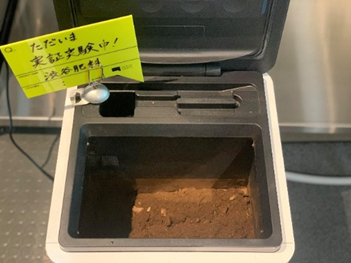
Expand the pilot experiment of creating compost from organic waste using mechanical composters to a wider area

Shibuya Hiryou also works with children to instill the principles of a circular economy. At a Tokyo kindergarten, they supported a program where food scraps from school lunches were composted to grow vegetables, which the children observed and cared for.

“The children start seeing leftovers not as trash, but as something that can be reused,” says Tsubonuma. Sharing these observations online, he adds, helps connect their activities to society at large.

Circular Sweets also involves composting some of Shibuya’s organic waste at a recycling plant in Ibaraki, using the compost to grow sweet potatoes. The harvested sweet potatoes are then purchased in Shibuya and turned into products, creating a circular system with a narrative where organic waste from Shibuya turns into valuable products and returns to Shibuya.
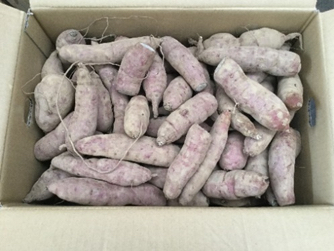
Sweet potatoes cultivated with compost at a recycling facility in Ibaraki Prefecture

Among the company’s flagship products is the “Re-Macaron,” made from sweet potatoes grown with composted waste at a recycling facility in Ibaraki Prefecture. When sold at Shibuya QWS, the macarons sold out two weeks earlier than expected.

In another partnership, Shibuya Hiryou collaborated with Akita Prefecture to develop “Shibu-Hera Ice,” a playful twist on Akita’s beloved ice cream.
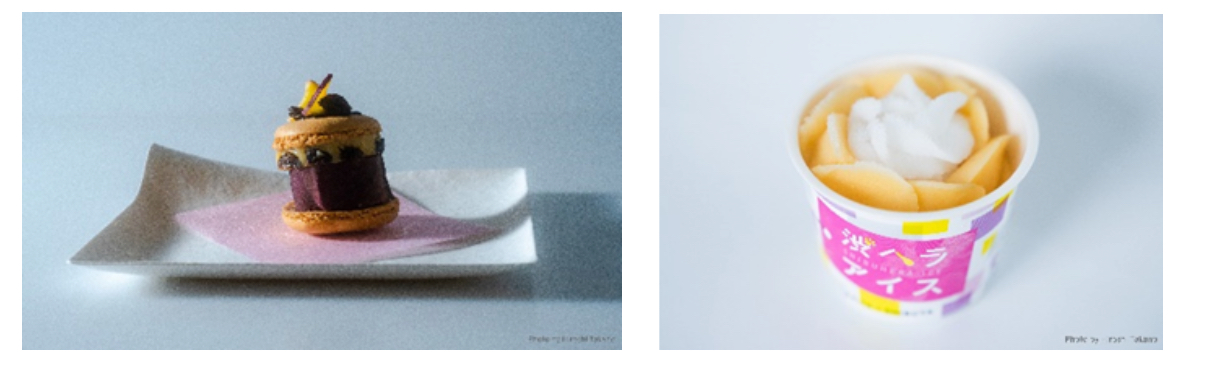
The first release of “Re-Macaron” made with Beni Haruka sweet potatoes (left) and “Shibu-Hera Ice,” a collaboration with Akita’s popular ice cream (right)

Shibuya Hiryou’s sweets not only recycle waste but also give regional produce higher value and a broader market. “We realized our work is about more than recycling food scraps. It’s about revitalizing local communities,” Tsubonuma says. “These circular models could work not just in Japan but abroad.”

Another unique initiative is “Shibuya Souvenirs.” Unlike other regions of Japan, Shibuya may not boast famous local specialties like Hokkaido’s milk or Ehime’s citrus, but Tsubonuma drew  inspiration from the cityscape itself, particularly the iconic Scramble Crossing, known as one of Japan’s safest intersections.

By shifting perspectives, Tsubonuma realized they could create souvenirs that preserve Shibuya’s evolving story. Concrete debris from redevelopment projects has been turned into “Architectural Souvenirs,” such as desk organizers and magnetic tools, in collaboration with Tokyu Construction.

“Even when a building is gone, its story remains,” Tsubonuma says. “We can pass that memory on through the objects we create.”
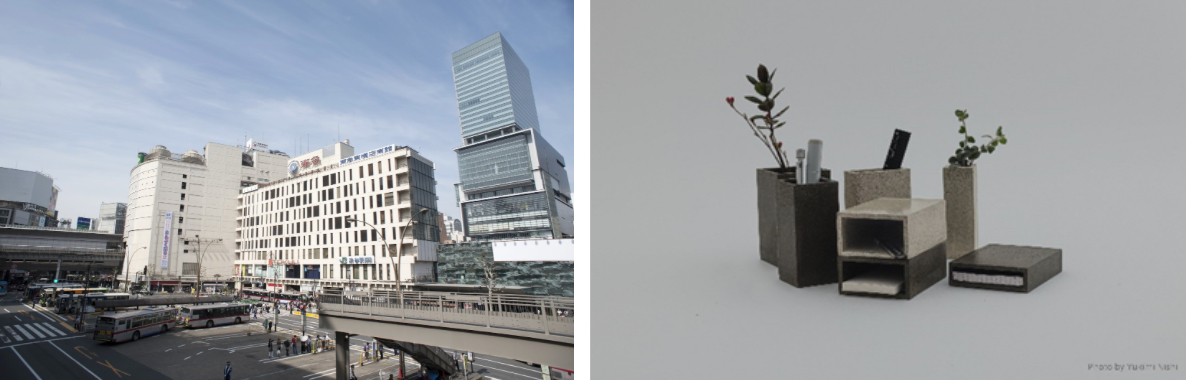
The Tokyu Department Store, a Shibuya landmark designed by Junzo Sakakura, closed in 2020 (left, Photo AC). Its demolition concrete was repurposed into the “Kumi-tsugu” magnetic tool and the “ma_desk organizer” (right)

While Japan has plenty of recycling technologies, Tsubonuma argues that the missing link is creating systems that give these materials meaning and value. “Our job is to step in and create a framework that enriches the lives of people living in these places, both materially and emotionally,” he says.

Shibuya Hiryou’s vision is to scale its circular experiments, expand its partnerships, and inspire both cities and rural areas to rethink waste as a resource.

Translated by Anita De Michele | JStories

Edited by Randy Wagenheim  | JStories

Top photo: Photo courtesy of Shibuya Hiryou

For inquiries regarding this article, please contact jstories@pacificbridge.jp


Click here for the Japanese version of the article

Tags: Food wasteInterviewJapanResource reuseshibuyaSustainabilityWaste management
Previous Post

TOKYO SNAPSHOTS | Inside Content Tokyo 2025

Next Post

Tech from Taiwan takes the stage in Osaka this August

Yoshiko Ohira

Yoshiko Ohira

Related Posts

Japan leads global collaboration to combat AI disinformation
AI

Japan leads global collaboration to combat AI disinformation

by Ayaka Sagasaki
03/16/2026
Clean Tech

Japanese startup turns eggshell waste into eco-friendly plastics and paper

by Yoshiko Ohira
02/06/2026
Anime

World-first “anime character-based therapy” trial to test effectiveness in Japanese young adults

by Lucas Maltzman
01/30/2026
Earth

A world first: Detecting road sinkholes from space

by Ayaka Sagasaki
01/30/2026
Social Impact

From a childhood shaped by conflict to an investor bridging Japan and the world

by Ayaka Sagasaki
01/23/2026
Next Post

Tech from Taiwan takes the stage in Osaka this August

Leave a Reply Cancel reply

Your email address will not be published. Required fields are marked *

Videos

Taking action for peace

11/30/2022

Round-up Video #25

09/01/2022

Round-Up Video #30

10/13/2022

Browse by Tags

Ai Alternative Energy biotechnology Climate Change Community decarbonization Education Event Food foodtech Health Inclusion Infrastructure Innovation Interview J-Stories Japan Japan-Taiwan Innovation Summit Japan startups Japan Tech Labor Living Nature Podcast Recycling Refugees robotics Society Space Startup Startup Ecosystem Startups SusHI Tech Tokyo Sustainability Sustainable Society Taiwan Technology Tokyo Tokyo Innovation Base Tokyo Metropolitan Government Tokyo Updates venture capital video Wealth Zero Waste
JStories

©Articles and photos published on JSTORIES are protected by Japanese copyright law and international treaties. They cannot be reproduced without the permission of the copyright holders

Explore JStories

  • About Jstories
  • Company
  • Contact
  • Home
  • Partner Press Releases
  • Pricing
  • Privacy Policy
  • Team

Follow Us

Welcome Back!

Login to your account below

Forgotten Password?

Retrieve your password

Please enter your username or email address to reset your password.

Log In
No Result
View All Result
  • Home
  • AI
    • Artificial Intelligence
    • Robotics
    • Mobility
  • Earth
    • Energy
    • Climate Tech
    • AgriTech
    • Clean Tech
    • Disaster Tech
    • SpaceTech
  • Life Sciences
    • BioTech
    • HealthTech
    • MedTech
    • AgeTech
  • Society
    • Media
    • EdTech
    • Diversity
    • FemTech
    • HRTech
    • LegalTech
    • Social Impact
    • FinTech
    • Anime
  • Lifestyle
    • FoodTech
    • FashionTech
    • BeautyTech
    • Wellbeing
    • Art & Music
  • Travel
    • Adventure Travel
    • Luxury Travel
    • Wellness & Medical Tourism
    • Culture
  • Video
  • Deals
    • Venture Capital
    • M&A
    • Startup Events
    • Ecosystem Support
  • Interview
  • Opinion

©Articles and photos published on JSTORIES are protected by Japanese copyright law and international treaties. They cannot be reproduced without the permission of the copyright holders

Are you sure want to unlock this post?
Unlock left : 0
Are you sure want to cancel subscription?