
• Login
Upgrade
JStories
  • 日本語
  • 中文 (中国)
No Result
View All Result
  • Home
  • AI
    • Artificial Intelligence
    • Robotics
    • Mobility
  • Earth
    • Energy
    • Climate Tech
    • AgriTech
    • Clean Tech
    • Disaster Tech
    • SpaceTech
  • Life Sciences
    • BioTech
    • HealthTech
    • MedTech
    • AgeTech
  • Society
    • Media
    • EdTech
    • Diversity
    • FemTech
    • HRTech
    • LegalTech
    • Social Impact
    • FinTech
    • Anime
  • Lifestyle
    • FoodTech
    • FashionTech
    • BeautyTech
    • Wellbeing
    • Art & Music
  • Travel
    • Adventure Travel
    • Luxury Travel
    • Wellness & Medical Tourism
    • Culture
  • Video
  • Deals
    • Venture Capital
    • M&A
    • Startup Events
    • Pitch
    • Ecosystem Support
  • Interview
  • Opinion
  • Home
  • AI
    • Artificial Intelligence
    • Robotics
    • Mobility
  • Earth
    • Energy
    • Climate Tech
    • AgriTech
    • Clean Tech
    • Disaster Tech
    • SpaceTech
  • Life Sciences
    • BioTech
    • HealthTech
    • MedTech
    • AgeTech
  • Society
    • Media
    • EdTech
    • Diversity
    • FemTech
    • HRTech
    • LegalTech
    • Social Impact
    • FinTech
    • Anime
  • Lifestyle
    • FoodTech
    • FashionTech
    • BeautyTech
    • Wellbeing
    • Art & Music
  • Travel
    • Adventure Travel
    • Luxury Travel
    • Wellness & Medical Tourism
    • Culture
  • Video
  • Deals
    • Venture Capital
    • M&A
    • Startup Events
    • Pitch
    • Ecosystem Support
  • Interview
  • Opinion
en English ja 日本語 zh 中文 (中国)
JStories
No Result
View All Result

Tea leaves’ second life: Ito En’s sustainable legacy

Ayaka Sagasaki by Ayaka Sagasaki
08/04/2023
in AgriTech, Clean Tech, Earth, FoodTech, Lifestyle
0
Home Earth AgriTech
Share on FacebookShare on Twitter

J-STORIES – When bottled drinks maker Ito En rolled out its new delivery trucks last year, it spilled the tea on how it made the vehicles lighter and more friendly to the environment and its staff.

The answer lies in a Japanese product that’s as old as the hills: tea leaves — discarded ones to be precise. The maker of the iconic “Oi Ocha” bottled green tea announced that the trucks had been retrofitted with plastic door panels made from old tea leaves, reducing the weight of the 3-ton trucks by 110 kg, thus saving fuel and cutting carbon dioxide emissions.
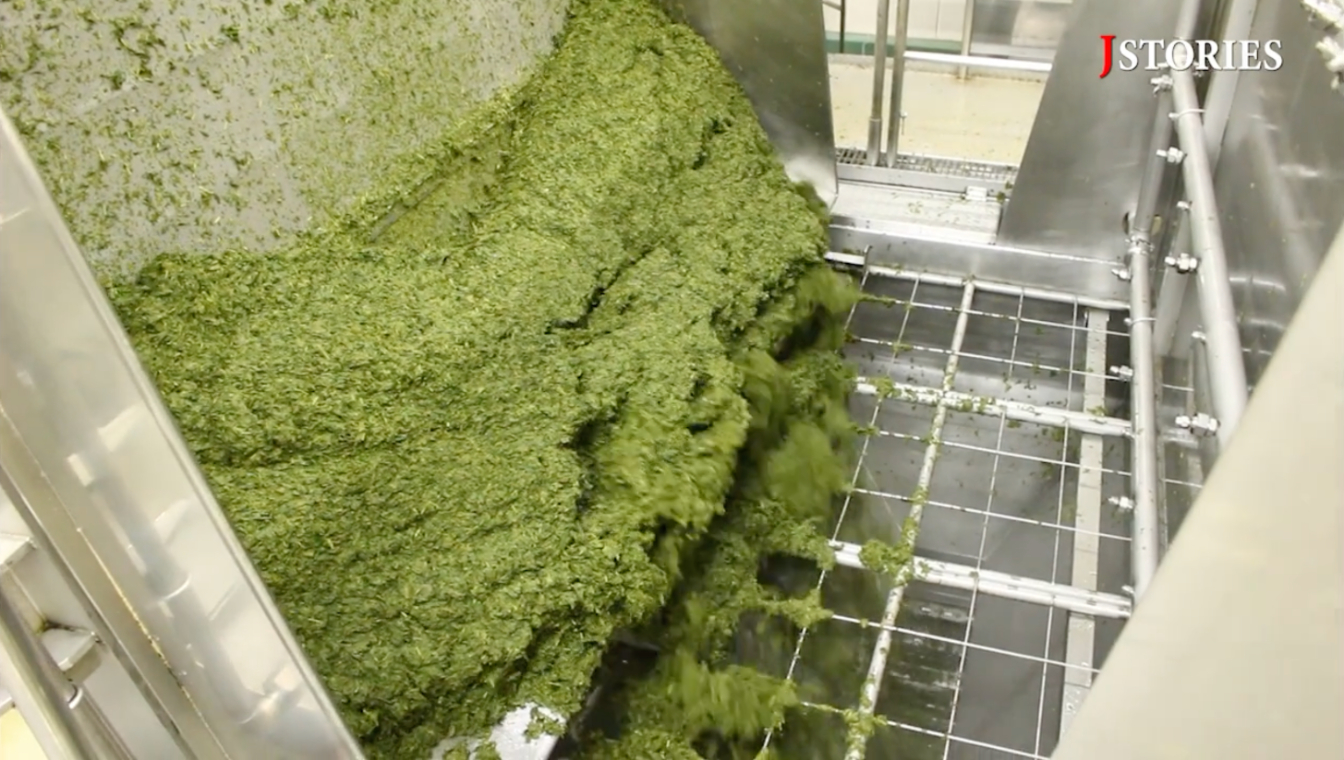
Discarded tea leaves.     Source: Ito En

This was the latest addition to Ito En’s self-styled “Used Tea Leaf Recycle System,” which was first conceived in 2001. The company has since recycled used tea leaves from its factories to make a variety of products, including benches and even vending machines in which the company’s drinks are sold.

There’s certainly scope for a huge volume of goods to be made. The factory that makes “Oi Ocha” produces some 54,800 tons of tea leaves waste each year, enough to fill a baseball stadium.

The company has been tapping into a long-held custom in Japan that considers it wasteful to discard used tea leaves, which are rich in nutrients, but can, ironically, pollute the environment if not dealt with properly. They are known to make great fertilizers and animal feed, and thanks to their deodorizing and anti-bacterial effects, they have many other traditional uses in Japan, such as household cleaning.

But while tea leaves are certainly versatile, recycling tea leaf waste from the factory has its challenges. Between 85 percent to 95 percent of that waste is water, so in order to fully utilize the leaves they need to be dried out first to prevent rotting. That in itself would require fuel, adding to the cost and removing some of the environmental benefits from recycling them.

That’s when the company brewed up its proprietary recycling system, which focuses on upcycling the resin in the leaves. And in 2003, together with a trading company specializing in tatami mats, it developed and manufactured its first recycled tea product: stiff boards that form the core of tatami mats.

The Central Research Institute’s Takanori Sato, who is in charge of the R&D for the recycling method, told J-Stories that it was his grandmother who inspired him to find a way to reuse the leaves.

“I remember how my grandmother would spread tea leaves on the tatami mats when she was cleaning [to stop dust rising],” he said. “I wanted to find a way to use that traditional wisdom.”

The tatami mats containing boards made from old tea leaves are sold across Japan.     Source: Ito En

Since then, the method has been used to make various materials, including boards used in construction, exterior wall tiles and plastics. It has also been employed to make paper items, such as envelopes, which emit a subtle tea aroma. Cardboard boxes made with old tea leaves, meanwhile, are used to pack Oi Ocha tea. According to the company, the boxes smell better than those made from ordinary recycled paper, and require less cardboard.

Ito En has also made sound absorbing panels from tea leaf plastic, an idea that arose out of the need to soundproof one of the company’s R&D labs that contained noisy pulverization equipment. Because the panels are significantly lighter than ordinary panels, they are easier to install, making them a handy option when quickly soundproofing buildings near construction sites.
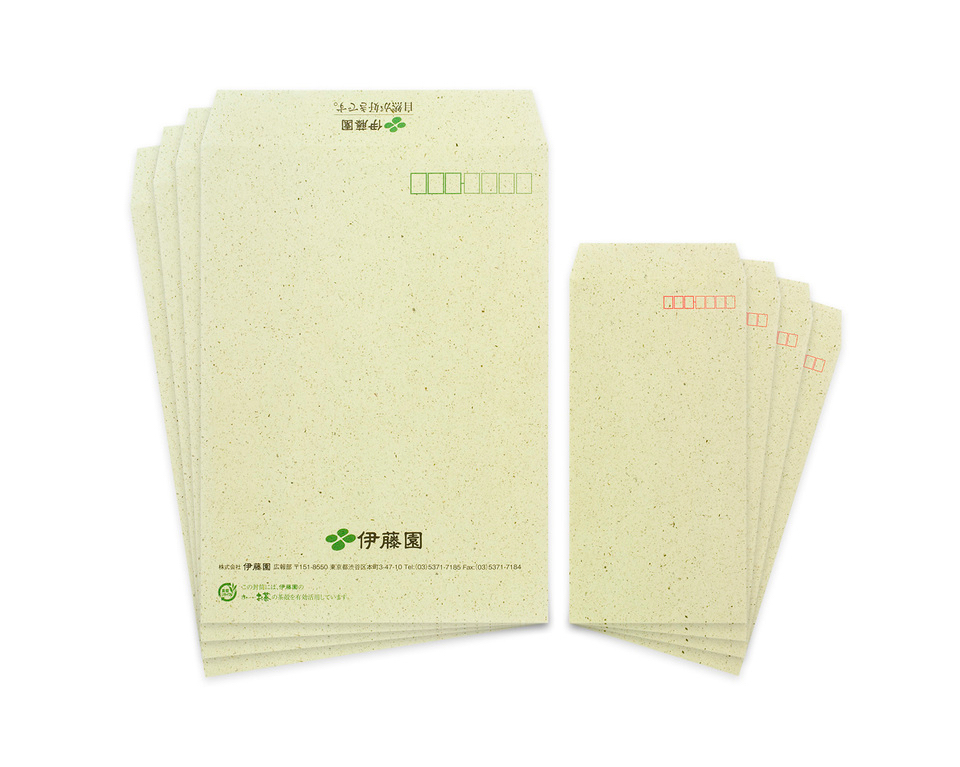
Paper products made from used tea leaves are lighter and less transparent than regular paper and emit a tea aroma.     Source: Ito En

Ito En’s latest tea leaf product, the plastic door panels for its delivery trucks, have also benefited from the reduced weight, proving to be a hit with delivery staff as the lighter doors take about one-third less force to open and close.
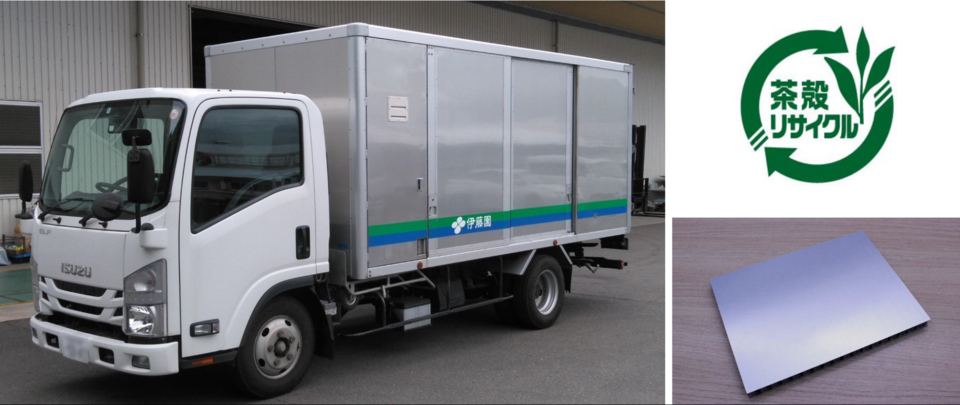
The company has replaced door panels on its trucks with plastic panels made with tea leaf resin.     Source: Ito En

“We knew that mixing tea leaves into plastic increased strength, but a disadvantage was that it cracked easily,” said Ito En’s Sato, adding that the company then researched ways to get around this while reducing the weight and maintaining strength.

Soundproofing walls constructed out of tea leaf plastic sound absorption panels.     Source: Ito En 

“We want to keep using tea leaves as a valuable resource to make products that surprise people,” Sato told J-Stories. “I hope this Japanese technology that came from a grandmother’s wisdom will spread across the world.”

Translation by Tony McNicol

Proofreading by Ridley Coyte

Top page photo by Ito En

For inquiries about this article, please contact jstories@pacficbridge.jp


Click here for the Japanese version of the article.

Tags: AgricultureAgritechJapanRecycledSustainabilityteatea leaves
Previous Post

Japanese researchers fight global warming tide with ‘Blue Carbon’

Next Post

Japanese company develops innovative portable barricade to counter vehicle threats

Ayaka Sagasaki

Ayaka Sagasaki

Related Posts

Starting a sustainable wood-fired bakery in Tokyo
FoodTech

Starting a sustainable wood-fired bakery in Tokyo

by Tokyo Updates
03/05/2026
Clean Tech

Japanese startup turns eggshell waste into eco-friendly plastics and paper

by Yoshiko Ohira
02/06/2026
Earth

A world first: Detecting road sinkholes from space

by Ayaka Sagasaki
01/30/2026
Lifestyle

The plush toy hospital keeping childhood memories alive

by Tokyo Updates
01/30/2026
Lifestyle

Lost item return rate triples: Tokyo startup envisions a world where nothing stays lost

by Tokyo Updates
01/23/2026
Next Post

Japanese company develops innovative portable barricade to counter vehicle threats

Leave a Reply Cancel reply

Your email address will not be published. Required fields are marked *

Videos

Round-up Video #29

10/06/2022

Round-Up Video #39

12/22/2022

Round-up Video #24

08/25/2022

Browse by Tags

Ai Alternative Energy biotechnology Climate Change Community decarbonization Education Event Food foodtech Health Inclusion Infrastructure Innovation Interview J-Stories Japan Japan-Taiwan Innovation Summit Japan startups Japan Tech Labor Living Nature Podcast Recycling Refugees robotics Society Space Startup Startup Ecosystem Startups SusHI Tech Tokyo Sustainability Sustainable Society Taiwan Technology Tokyo Tokyo Innovation Base Tokyo Metropolitan Government Tokyo Updates venture capital video Wealth Zero Waste
JStories

©Articles and photos published on JSTORIES are protected by Japanese copyright law and international treaties. They cannot be reproduced without the permission of the copyright holders

Explore JStories

  • About Jstories
  • Company
  • Contact
  • Home
  • Partner Press Releases
  • Pricing
  • Privacy Policy
  • Team

Follow Us

Welcome Back!

Login to your account below

Forgotten Password?

Retrieve your password

Please enter your username or email address to reset your password.

Log In
No Result
View All Result
  • Home
  • AI
    • Artificial Intelligence
    • Robotics
    • Mobility
  • Earth
    • Energy
    • Climate Tech
    • AgriTech
    • Clean Tech
    • Disaster Tech
    • SpaceTech
  • Life Sciences
    • BioTech
    • HealthTech
    • MedTech
    • AgeTech
  • Society
    • Media
    • EdTech
    • Diversity
    • FemTech
    • HRTech
    • LegalTech
    • Social Impact
    • FinTech
    • Anime
  • Lifestyle
    • FoodTech
    • FashionTech
    • BeautyTech
    • Wellbeing
    • Art & Music
  • Travel
    • Adventure Travel
    • Luxury Travel
    • Wellness & Medical Tourism
    • Culture
  • Video
  • Deals
    • Venture Capital
    • M&A
    • Startup Events
    • Ecosystem Support
  • Interview
  • Opinion

©Articles and photos published on JSTORIES are protected by Japanese copyright law and international treaties. They cannot be reproduced without the permission of the copyright holders

Are you sure want to unlock this post?
Unlock left : 0
Are you sure want to cancel subscription?