• Login
Upgrade
JStories
  • 日本語
  • 中文 (中国)
No Result
View All Result
  • Home
  • AI
    • Artificial Intelligence
    • Robotics
    • Mobility
  • Earth
    • Energy
    • Climate Tech
    • AgriTech
    • Clean Tech
    • Disaster Tech
    • SpaceTech
  • Life Sciences
    • BioTech
    • HealthTech
    • MedTech
    • AgeTech
  • Society
    • Media
    • EdTech
    • Diversity
    • FemTech
    • HRTech
    • LegalTech
    • Social Impact
    • FinTech
    • Anime
  • Lifestyle
    • FoodTech
    • FashionTech
    • BeautyTech
    • Wellbeing
    • Art & Music
  • Travel
    • Adventure Travel
    • Luxury Travel
    • Wellness & Medical Tourism
    • Culture
  • Video
  • Deals
    • Venture Capital
    • M&A
    • Startup Events
    • Pitch
    • Ecosystem Support
  • Interview
  • Opinion
  • Home
  • AI
    • Artificial Intelligence
    • Robotics
    • Mobility
  • Earth
    • Energy
    • Climate Tech
    • AgriTech
    • Clean Tech
    • Disaster Tech
    • SpaceTech
  • Life Sciences
    • BioTech
    • HealthTech
    • MedTech
    • AgeTech
  • Society
    • Media
    • EdTech
    • Diversity
    • FemTech
    • HRTech
    • LegalTech
    • Social Impact
    • FinTech
    • Anime
  • Lifestyle
    • FoodTech
    • FashionTech
    • BeautyTech
    • Wellbeing
    • Art & Music
  • Travel
    • Adventure Travel
    • Luxury Travel
    • Wellness & Medical Tourism
    • Culture
  • Video
  • Deals
    • Venture Capital
    • M&A
    • Startup Events
    • Pitch
    • Ecosystem Support
  • Interview
  • Opinion
en English ja 日本語 zh 中文 (中国)
JStories
No Result
View All Result

Test home will be powered by artificial photosynthesis

Emi Takahata by Emi Takahata
05/13/2022
in AI, Clean Tech, Earth, Energy, Robotics
0
Home AI
Share on FacebookShare on Twitter

J-STORIES ― Artificial photosynthesis can produce useful chemicals from sunlight, water and carbon dioxide.  There is an experiment underway on Miyakojima Island, Okinawa Prefecture, to test this technology’s ability to supply power and hot water to homes.
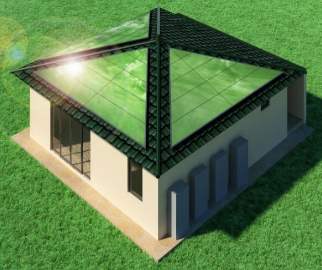
Researchers will conduct an experiment to determine how much of a household’s electricity needs can be supplied by current artificial photosynthesis technology.     Courtesy: Osaka City University Research Center for Artificial Photosynthesis

The Artificial Photosynthesis House demonstration experiment will be conducted by Osaka City University and Iida Group Holdings (Iida GHD) in Tokyo, a leading builder and seller of homes. The goal is to establish a new housing system that not only restricts and reduces the CO2 emitted from homes, but also converts CO2 and uses it as an energy source. If successful, this would be a world first.

Government, universities and industry are already working together to research artificial photosynthesis technology for use in a variety of fields. Iida GHD and Osaka City University Research Center for Artificial Photosynthesis (ReCAP) established a joint research division in 2015. They have developed artificial photosynthesis technology to produce hydrogen from formic acid created and stored using solar energy, and also technology for highly efficient electricity generation from that hydrogen.
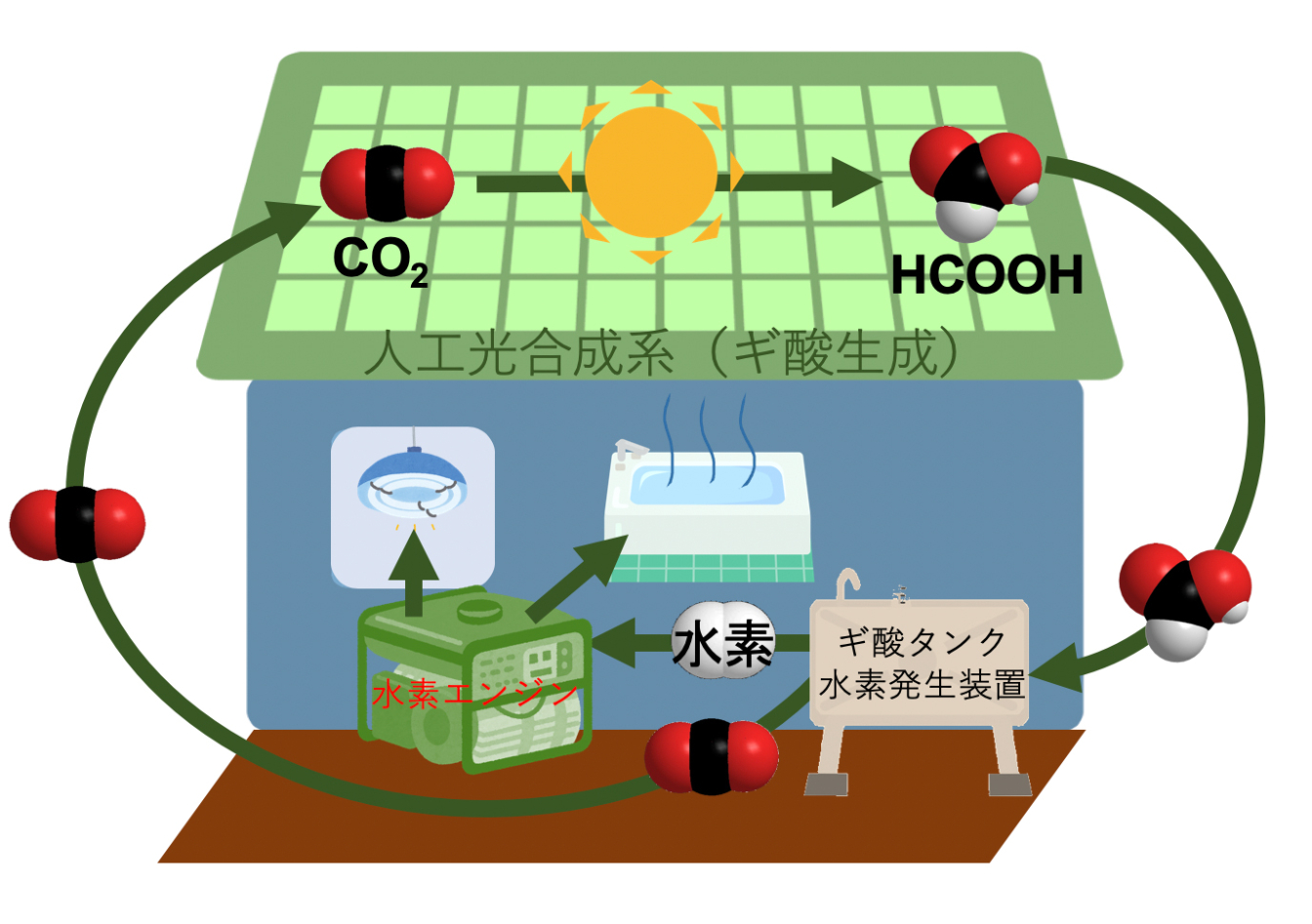
Unlike solar power generation, artificial photosynthesis converts carbon dioxide into formic acid, which is then converted into hydrogen and carbon dioxide as an energy source. The carbon dioxide produced is captured again and returned to the artificial photosynthesis cycle. Courtesy: Osaka City University Research Center for Artificial Photosynthesis

Hiroshi Hida, who works in the Next Generation Technology Development Office at Iida GHD, said that the company’s role is to connect various technologies that make up artificial photosynthesis, install them in homes, and show them working to provide energy in experimental residential homes.

Regarding the demonstration experiment on Miyakojima, ReCAP’s head, Professor Yutaka Amao, told J-Stories, “We would like to see whether or not a small-scale energy supply system is possible with artificial photosynthesis.”

Amao said that the center has been researching hydrogen engines with Iida GHD for many years, and that this led to them cooperating on the Artificial Photosynthesis House. The demonstration experiment was temporarily put on hold due to the COVID-19 pandemic but is scheduled to begin later this year if the situation does not worsen.

At present, they still cannot secure sufficient energy for the house through artificial photosynthesis alone, so some of the energy comes from solar power, said Amao. By 2025, they hope to ascertain how much electricity they can supply with current technology, and one day they hope to successfully supply energy only with artificial photosynthesis.

Translation and Editing by Tony McNicol

Top page photo by pro_creator/Envato

For inquires about this article, please contact us at jstories@pacificbridge.jp


Click here for the Japanese version of the article.

Tags: ArtificialNatureSustainabilityTechnology
Previous Post

Japanese company shares “self-healing” concrete tech

Next Post

Feeding hungry children with photos of rice balls

Emi Takahata

Emi Takahata

Related Posts

Japan leads global collaboration to combat AI disinformation
AI

Japan leads global collaboration to combat AI disinformation

by Ayaka Sagasaki
03/16/2026
Clean Tech

Japanese startup turns eggshell waste into eco-friendly plastics and paper

by Yoshiko Ohira
02/06/2026
Earth

A world first: Detecting road sinkholes from space

by Ayaka Sagasaki
01/30/2026
AgriTech

Fish scraps as a hidden treasure

by Kei Mizuno
01/16/2026
AgriTech

Can a small robot save Japan’s terraced paddies?

by Yoshiko Ohira
11/28/2025
Next Post

Feeding hungry children with photos of rice balls

Leave a Reply Cancel reply

Your email address will not be published. Required fields are marked *

Videos

Round-Up Video #33

11/10/2022

Round-up Video #23

08/04/2022

Round-up Video #29

10/06/2022

Browse by Tags

Ai Alternative Energy biotechnology Climate Change Community decarbonization Education Event Food foodtech Health Inclusion Infrastructure Innovation Interview J-Stories Japan Japan-Taiwan Innovation Summit Japan startups Japan Tech Labor Living Nature Podcast Recycling Refugees robotics Society Space Startup Startup Ecosystem Startups SusHI Tech Tokyo Sustainability Sustainable Society Taiwan Technology Tokyo Tokyo Innovation Base Tokyo Metropolitan Government Tokyo Updates venture capital video Wealth Zero Waste
JStories

©Articles and photos published on JSTORIES are protected by Japanese copyright law and international treaties. They cannot be reproduced without the permission of the copyright holders

Explore JStories

  • About Jstories
  • Company
  • Contact
  • Home
  • Partner Press Releases
  • Pricing
  • Privacy Policy
  • Team

Follow Us

Welcome Back!

Login to your account below

Forgotten Password?

Retrieve your password

Please enter your username or email address to reset your password.

Log In
No Result
View All Result
  • Home
  • AI
    • Artificial Intelligence
    • Robotics
    • Mobility
  • Earth
    • Energy
    • Climate Tech
    • AgriTech
    • Clean Tech
    • Disaster Tech
    • SpaceTech
  • Life Sciences
    • BioTech
    • HealthTech
    • MedTech
    • AgeTech
  • Society
    • Media
    • EdTech
    • Diversity
    • FemTech
    • HRTech
    • LegalTech
    • Social Impact
    • FinTech
    • Anime
  • Lifestyle
    • FoodTech
    • FashionTech
    • BeautyTech
    • Wellbeing
    • Art & Music
  • Travel
    • Adventure Travel
    • Luxury Travel
    • Wellness & Medical Tourism
    • Culture
  • Video
  • Deals
    • Venture Capital
    • M&A
    • Startup Events
    • Ecosystem Support
  • Interview
  • Opinion

©Articles and photos published on JSTORIES are protected by Japanese copyright law and international treaties. They cannot be reproduced without the permission of the copyright holders

Are you sure want to unlock this post?
Unlock left : 0
Are you sure want to cancel subscription?