• Login
Upgrade
JStories
  • 日本語
  • 中文 (中国)
No Result
View All Result
  • Home
  • AI
    • Artificial Intelligence
    • Robotics
    • Mobility
  • Earth
    • Energy
    • Climate Tech
    • AgriTech
    • Clean Tech
    • Disaster Tech
    • SpaceTech
  • Life Sciences
    • BioTech
    • HealthTech
    • MedTech
    • AgeTech
  • Society
    • Media
    • EdTech
    • Diversity
    • FemTech
    • HRTech
    • LegalTech
    • Social Impact
    • FinTech
    • Anime
  • Lifestyle
    • FoodTech
    • FashionTech
    • BeautyTech
    • Wellbeing
    • Art & Music
  • Travel
    • Adventure Travel
    • Luxury Travel
    • Wellness & Medical Tourism
    • Culture
  • Video
  • Deals
    • Venture Capital
    • M&A
    • Startup Events
    • Pitch
    • Ecosystem Support
  • Interview
  • Opinion
  • Home
  • AI
    • Artificial Intelligence
    • Robotics
    • Mobility
  • Earth
    • Energy
    • Climate Tech
    • AgriTech
    • Clean Tech
    • Disaster Tech
    • SpaceTech
  • Life Sciences
    • BioTech
    • HealthTech
    • MedTech
    • AgeTech
  • Society
    • Media
    • EdTech
    • Diversity
    • FemTech
    • HRTech
    • LegalTech
    • Social Impact
    • FinTech
    • Anime
  • Lifestyle
    • FoodTech
    • FashionTech
    • BeautyTech
    • Wellbeing
    • Art & Music
  • Travel
    • Adventure Travel
    • Luxury Travel
    • Wellness & Medical Tourism
    • Culture
  • Video
  • Deals
    • Venture Capital
    • M&A
    • Startup Events
    • Pitch
    • Ecosystem Support
  • Interview
  • Opinion
en English ja 日本語 zh 中文 (中国)
JStories
No Result
View All Result

The impact of the new Trump administration on the U.S. patent system (First part)

Eric D. Kirsch by Eric D. Kirsch
03/15/2025
in LegalTech, Society
0
Home Society LegalTech
Share on FacebookShare on Twitter

JSTORIES ー Recent headlines from America are teeming with news of abrupt policy changes,  initiatives and drastic personnel cuts to a number of administrative agencies in America.  This article will examine the predominant initiatives, changes and cuts with respect to the U.S. Patent System to expect from the new Trump Administration in the coming months and years.
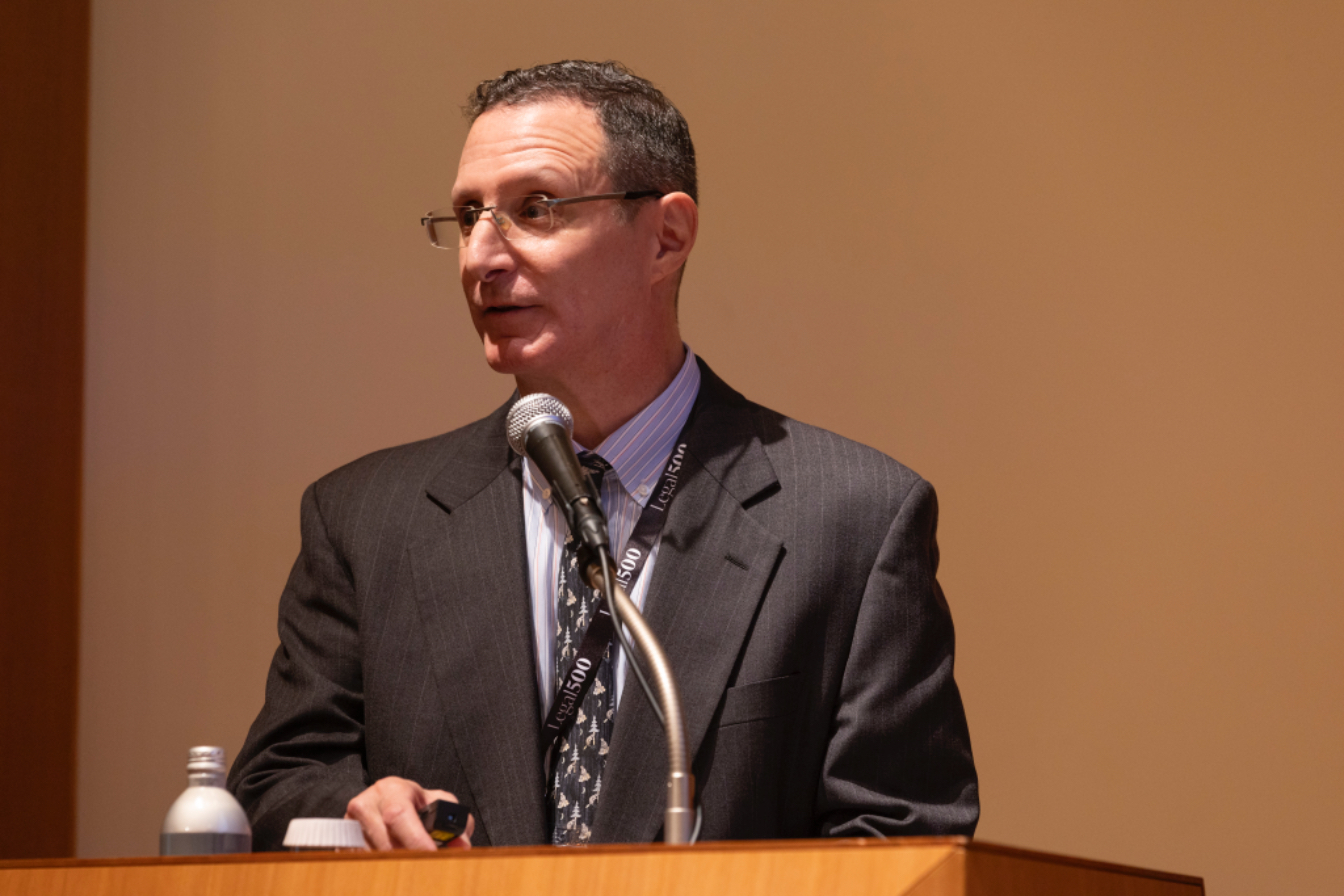
Eric D. Kirsch, Partner at Rimon’s Tokyo office, examining the key initiatives, changes, and potential cuts to the U.S. Patent System under the new Trump Administration at the ‘Japan-US Innovation 2025: Cross-Border Innovation, Collaboration, and Regulation in the New Trump Era’ seminar.       Source: Eric D. Kirsch (Same below)

Changes to the U.S. Patent Office (hereafter, the USPTO) and legislative patent reform under the new Trump Administration are first and foremost on the minds of many in the tech sector in America and in Japan, as competition and the pace of technical research and development has increased rapidly over the past 5 years.  One of the largest concerns is what is going on inside the USPTO, particularly in light of the huge backlog of unexamined patent applications, the Trump Administration’s Executive Order requiring employees of the Federal Government to work in person rather than remotely, and the Trump Administration’s Executive Order prohibiting the hiring of new employees.

The USPTO is a unique Federal Agency in several ways.  First, it is one of the few Federal Agencies that is revenue neutral.  Second, 95% of the USPTO’s employees work remotely under a program initiated in 1995.  Finally, many USPTO examiners are covered by a Collective Bargaining Agreement that cannot be cancelled or modified by Executive Order.

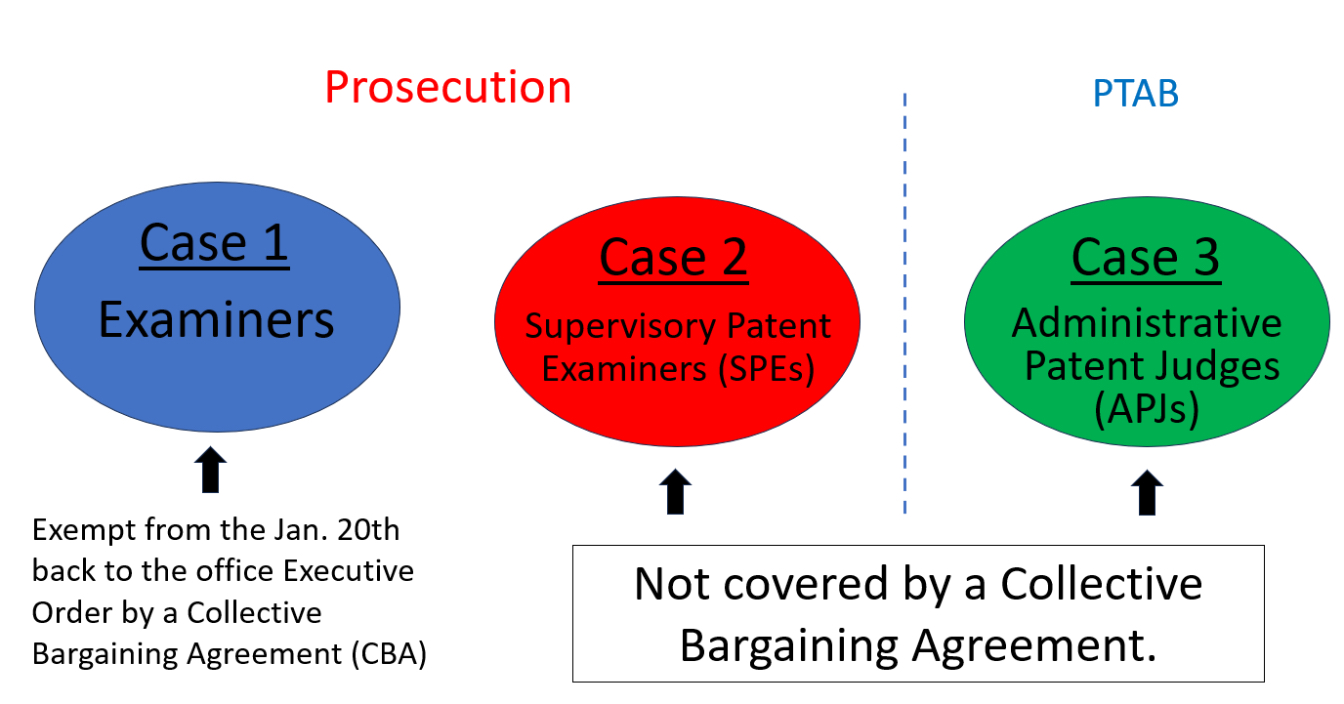
On January 20, 2025, the Trump Administration issued an Executive Order directing that all U.S Government employees must return to work (rather than work remotely) and a separate Executive Order prohibiting the hiring of new employees except in very specific circumstances.   The impact of the back to work Executive Order will vary based on whether a particular USPTO employee is covered by a Collective Bargaining Agreement.  The status of 3 types of USPTO employees is summarized below in Fig. 1.
With respect to the hiring freeze executive order, before President Trump was sworn into office, the USPTO had sent approximately 600 offer letters to hire more examiners in an attempt to reduce the unexamined patent application backlog. In response to the hiring freeze executive order, the UPSTO rescinded all of the offer letters.

Separately, the impact of the back to work executive order depends on the category of the USPTO employee.  As shown in Figure 1, on the prosecution side of the USPTO, ordinary examiners (Case 1) are covered by a Collective Bargaining Agreement, therefore, they can continue to work remotely despite the Trump Administration’s return to work order.  However, Supervisory Examiners (Case 2) are not covered by a Collective Bargaining Agreement, therefore they must return to the office.  The concern among many commentators is that many of these Supervisory Examiners live far from either the USPTO or one of the USPTO’s satellite offices, therefore, they might be unwilling to move and therefore may resign.  Obviously, this would exacerbate the USPTO’s backlog of unexamined patent applications and would have a negative impact on patent quality.  As of the time this article is published, it is unclear how many Supervisory Examiners will leave the USPTO as a result of the Trump Administration’s back to work order.

End of first part.

In the second part, Eric will explore the implications of the Trump Administration’s executive orders on the PTAB, including how the reduction of Administrative Patent Judges could affect inter partes reviews, followed by an analysis of pending legislative reforms such as the RESTORE Act and their potential impact on patent enforcement and innovation.


About Eric D. Kirsch

Eric D. Kirsch

Eric Kirsch designed electronics and wrote software at GE Space Division before attending law school at the University of Pittsburgh. Eric then became an Assistant District Attorney for the City of Philadelphia, and subsequently became a patent litigator for an IP boutique law firm in New York.  Eric was hired by Nikon as Chief IP Counsel in 2010 – a position he held for 10 years.  Recently, Eric joined Rimon as a partner in the firm’s Tokyo Office.

Eric can be reached at eric.kirsch@rimonlaw.com.

Top Photo by Envato

For inquiries regarding this article, please contact jstories@pacificbridge.jp


Click here for the Japanese version of the article

Tags: Executive OrdersIntellectual PropertyLegalTechPatent BacklogPatent PolicyPatent ReformPatent SystemTrump AdministrationUS-Japan InnovationUSPTO
Previous Post

J-Stories joins forces with SusHi Tech Tokyo 2025 as official media partner

Next Post

Global startups compete at Nagoya’s TechGALA – Innovations in AI, agriculture, and sustainability take top prizes!

Eric D. Kirsch

Eric D. Kirsch

Related Posts

Japan leads global collaboration to combat AI disinformation
AI

Japan leads global collaboration to combat AI disinformation

by Ayaka Sagasaki
03/16/2026
Anime

World-first “anime character-based therapy” trial to test effectiveness in Japanese young adults

by Lucas Maltzman
01/30/2026
Social Impact

From a childhood shaped by conflict to an investor bridging Japan and the world

by Ayaka Sagasaki
01/23/2026
Diversity

What happens when women’s ideas are finally taken seriously?

by HIROKO ISHII
12/12/2025
Diversity

Iceland’s bold break from tradition: The Women’s Day Off that rewrote history

by Sayuri Daimon
12/05/2025
Next Post

Global startups compete at Nagoya’s TechGALA – Innovations in AI, agriculture, and sustainability take top prizes!

Leave a Reply Cancel reply

Your email address will not be published. Required fields are marked *

Videos

Round-Up Video #33

11/10/2022

INTERVIEW | Taking action for peace

11/30/2022

Round-Up Video #35

11/24/2022

Browse by Tags

Ai Alternative Energy biotechnology Climate Change Community decarbonization Education Event Food foodtech Health Inclusion Infrastructure Innovation Interview J-Stories Japan Japan-Taiwan Innovation Summit Japan startups Japan Tech Labor Living Nature Podcast Recycling Refugees robotics Society Space Startup Startup Ecosystem Startups SusHI Tech Tokyo Sustainability Sustainable Society Taiwan Technology Tokyo Tokyo Innovation Base Tokyo Metropolitan Government Tokyo Updates venture capital video Wealth Zero Waste
JStories

©Articles and photos published on JSTORIES are protected by Japanese copyright law and international treaties. They cannot be reproduced without the permission of the copyright holders

Explore JStories

  • About Jstories
  • Company
  • Contact
  • Home
  • Partner Press Releases
  • Pricing
  • Privacy Policy
  • Team

Follow Us

Welcome Back!

Login to your account below

Forgotten Password?

Retrieve your password

Please enter your username or email address to reset your password.

Log In
No Result
View All Result
  • Home
  • AI
    • Artificial Intelligence
    • Robotics
    • Mobility
  • Earth
    • Energy
    • Climate Tech
    • AgriTech
    • Clean Tech
    • Disaster Tech
    • SpaceTech
  • Life Sciences
    • BioTech
    • HealthTech
    • MedTech
    • AgeTech
  • Society
    • Media
    • EdTech
    • Diversity
    • FemTech
    • HRTech
    • LegalTech
    • Social Impact
    • FinTech
    • Anime
  • Lifestyle
    • FoodTech
    • FashionTech
    • BeautyTech
    • Wellbeing
    • Art & Music
  • Travel
    • Adventure Travel
    • Luxury Travel
    • Wellness & Medical Tourism
    • Culture
  • Video
  • Deals
    • Venture Capital
    • M&A
    • Startup Events
    • Ecosystem Support
  • Interview
  • Opinion

©Articles and photos published on JSTORIES are protected by Japanese copyright law and international treaties. They cannot be reproduced without the permission of the copyright holders

Are you sure want to unlock this post?
Unlock left : 0
Are you sure want to cancel subscription?