

Demand for salmon is growing worldwide, and with it, anticipation for closed recirculating land-based salmon farming, with its low environmental impact and sustainable, stable production of salmon. Here, we spoke to Ando Yuma, manager of the Food Ingredients and Aquaculture Development Section, at Marubeni Corporation, which has teamed up with a Norwegian company to sell land-farmed salmon, about the advantages and future prospects of this method of salmon farming.
An Environmentally-Friendly and Sustainable Salmon Farming Technology
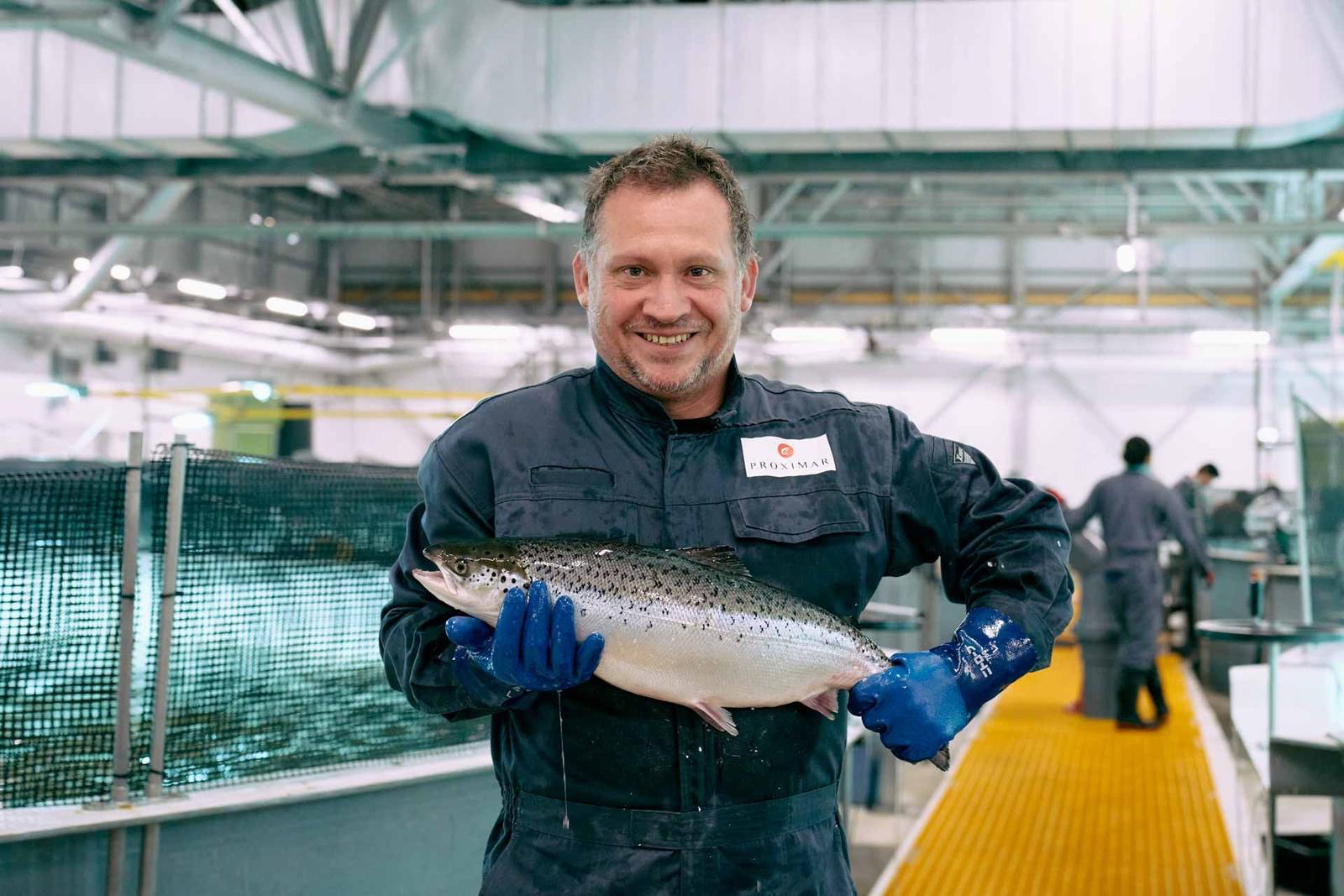
Marubeni has been supplying wild and farmed salmon to the Japanese market for many years, mainly through its subsidiaries. In recent years, Marubeni has been working to transition to a business model that is environmentally-friendly and that can ensure stable supply. In 2020, the company entered the business of farmed Atlantic salmon produced through the closed recirculating aquaculture system (RAS) through an investment in Denmark’s Danish Salmon, one of the world’s top producers of land-farmed salmon. Marubeni also teamed up with Norwegian company Proximar Seafood AS (hereinafter “Proximar”) in 2022, signing a contract that would give them exclusive sales rights to the closed RAS Atlantic salmon Proximar produces in Oyama Town, Shizuoka Prefecture in central Japan. These rights went into effect in 2024 and will last for 10 years, with Marubeni’s goal being to establish a “local production for local consumption” business model in Japan.
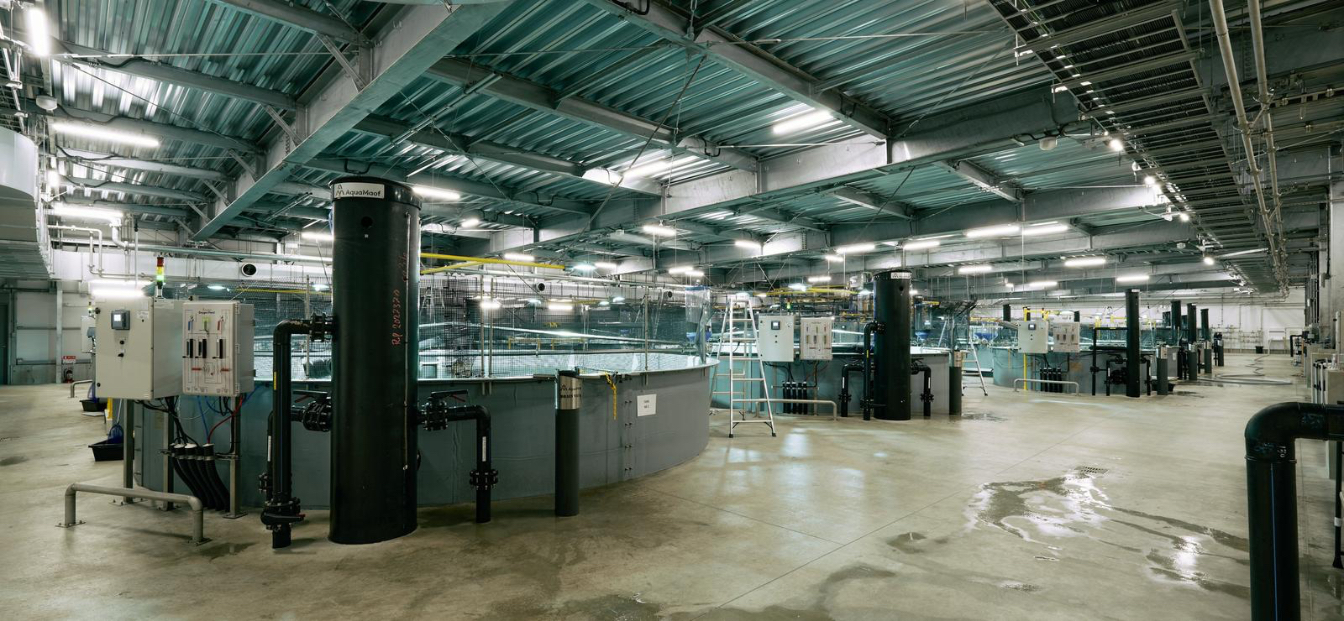
The closed RAS system used by Proximar is designed to be environmentally-friendly, with groundwater from the foothills of Mt. Fuji filtered and circulated within the system. Unlike sea-farming, the system is cut off from the external environment, and wastewater is treated properly, meaning the possibility of food or feces leaking into the sea or rivers is infinitesimally low. There is also little risk of pathogens entering the system, which basically eliminates the need for vaccines and antibiotics, and makes for fish-friendly aquaculture.
And on the off chance that a fish does become ill, damage will be minimal, as each fishpond in a closed RAS is an independent farming environment, and the illness will not affect the other fishponds.
The time it takes to get from hatching to harvesting is about two years. The farming process has been going well, and the first batch of salmon, whose eggs were entered into the system at the end of October 2022, were shipped out in Japan this October, two years into their lifecycle.
Delivering 4,700 Tons of Fresh Land-Farmed Salmon to Consumers by 2025
SusHi Tech Tokyo (Sustainable High City Tech Tokyo) 2024 was an international event hosted by the Tokyo Metropolitan Government from April to May 2024, with the goal of using cutting-edge technologies to solve common challenges in cities around the world. Marubeni exhibited at the event together with Proximar, and their land-farmed salmon was used in the sushi sold in the special booth for Kappo Funyu, an authentic Japanese restaurant in , Sumida City, Tokyo. Ando says about the reason they participated in the event: “While it was, of course, to raise awareness of land-farmed salmon, it was also because we resonated with the purpose of the event, which was to ‘Create sustainable new values.'”
Many at the event were surprised to hear that salmons could be farmed on land, and a survey of those who ate the sushi fielded many comments like: “Tastes great,” “Doesn’t seem different from the salmon I usually eat (in a good way),” and “Lighter and more palatable than the salmon I usually eat.” The survey also unearthed some challenges, however, when it comes to spreading sustainability awareness and values—when asked if they felt it was worth paying for environmentally-friendly products, many respondents said that they would choose environmentally-friendly products if they were the same price as regular products, but not if they were more expensive.
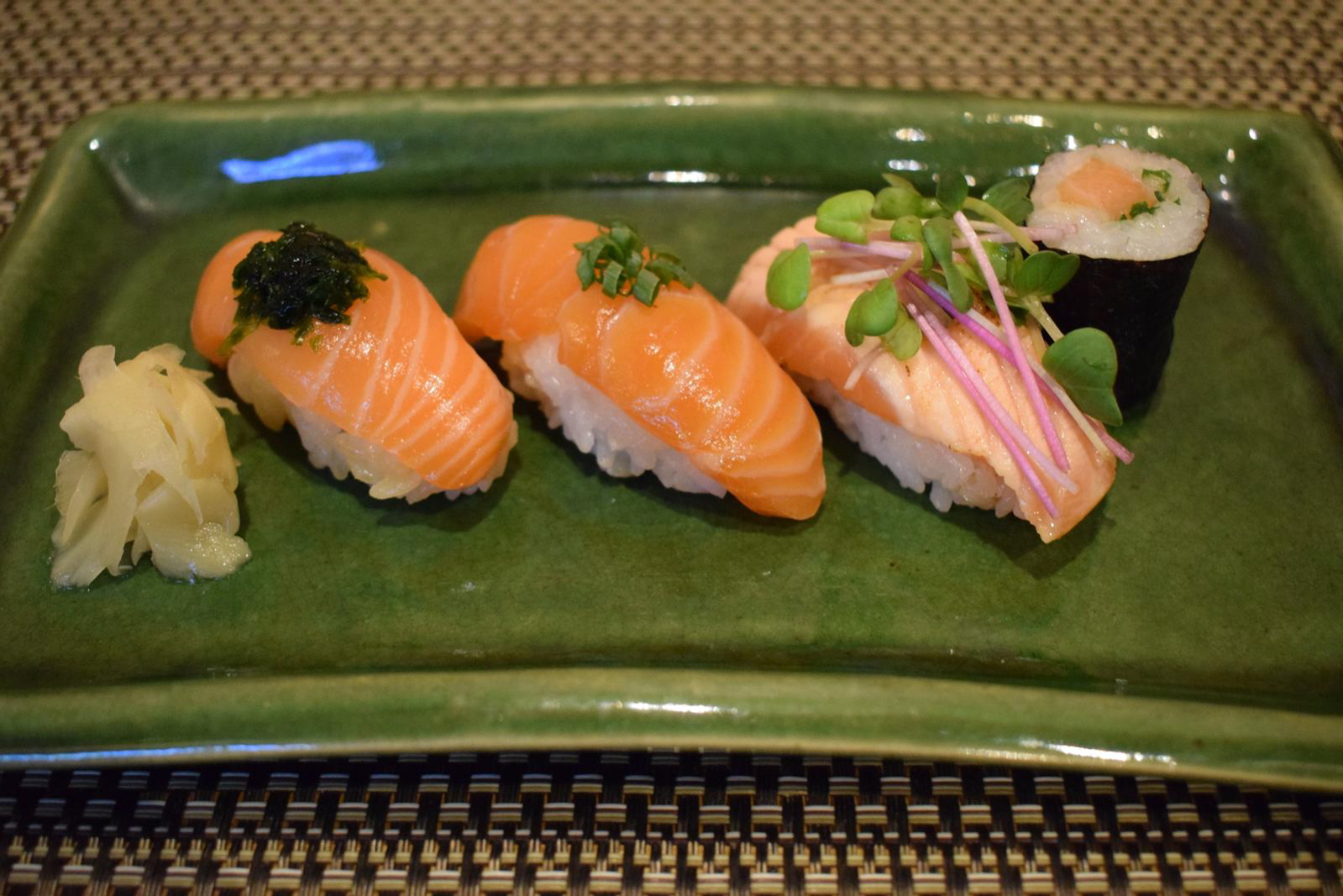
Marubeni is currently preparing to deliver fresh, land-farmed salmon to the mass market using the Marubeni Group’s direct sales channels to mass retailers and restaurants, and its strong network of processors. The company plans to ship approximately 4,700 tons of the salmon by 2025, eventually expanding this to 5,300 tons.
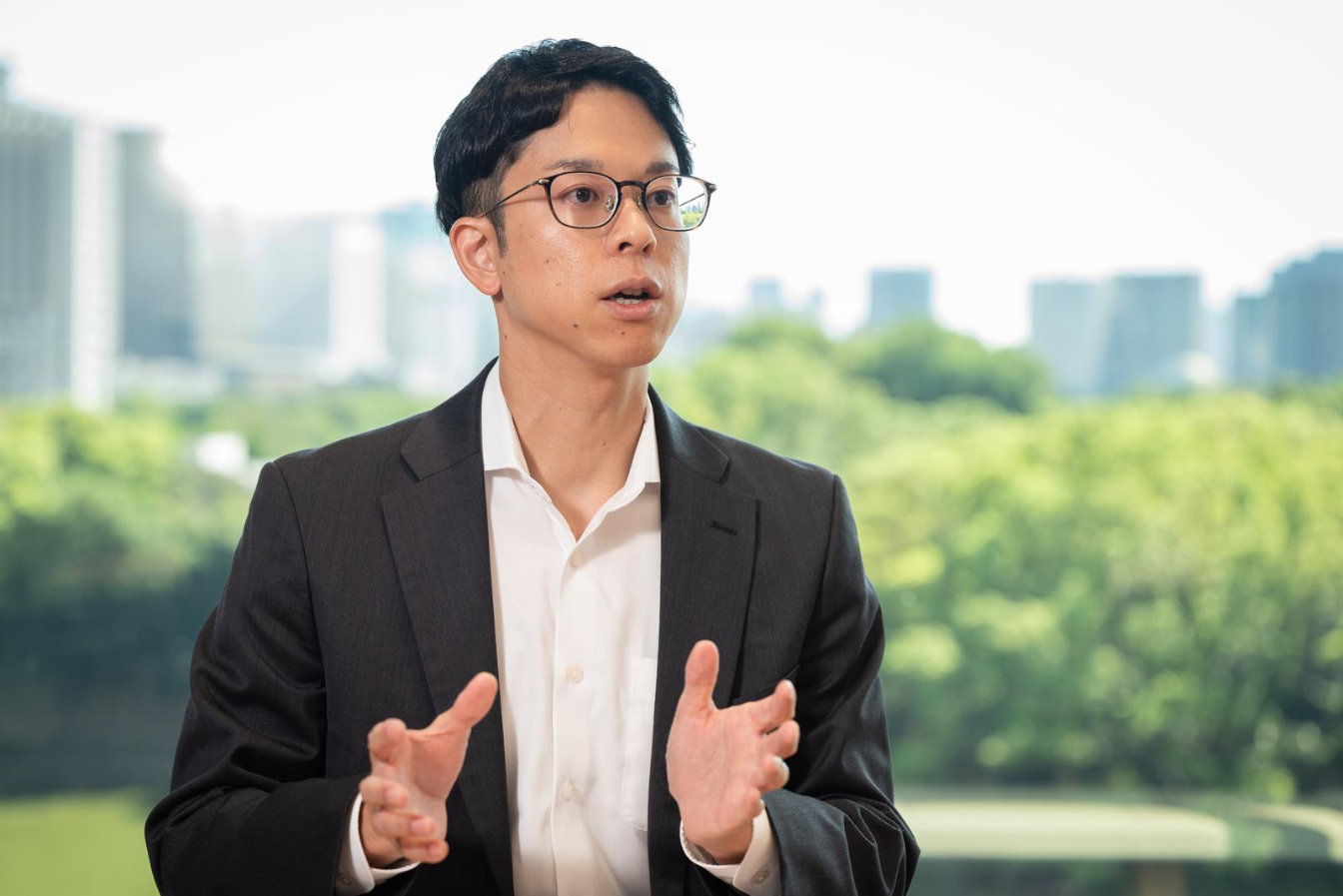
Ando says they expect a lot of consumption in Tokyo, Japan’s capital and most populous city. “As a trading company, we don’t get many opportunities to interact with consumers directly, so we’re looking forward to the Tokyo Metropolitan Government continuing to create these opportunities for us to participate actively in sustainability-related events like SusHi Tech Tokyo 2024.”
The Key to Fostering Sustainability Awareness is to Make It Personal
Marubeni’s goal is twofold: assist in the stable supply of Atlantic salmon to Japanese consumers, and establish itself as a premium sustainable seafood brand. As a part of this effort, the company has created a logo for the brand, and is working with retailers to design sales floors, promotional materials, and stickers that will properly convey the value of the product.
The key to fostering sustainability awareness amongst consumers will not only be the environmental performance of the product, but also making it “personal” for the consumers. To this end, Marubeni is engaging in a variety of food education efforts. The idea is that getting consumers to realize from a young age the value of environmentally-friendly products, will make it more likely that they are drawn to these sorts of products as adults.
It seems, with Marubeni’s exclusive sales rights to mass-produced domestic Atlantic salmon, it will not be long before we find ourselves seeing land-farmed salmon at our dinner tables on a regular basis. The hope is that as people come across this environmentally-friendly salmon, it will encourage them to think of sustainability as something that is a part of their own lives.
Ando Yuma
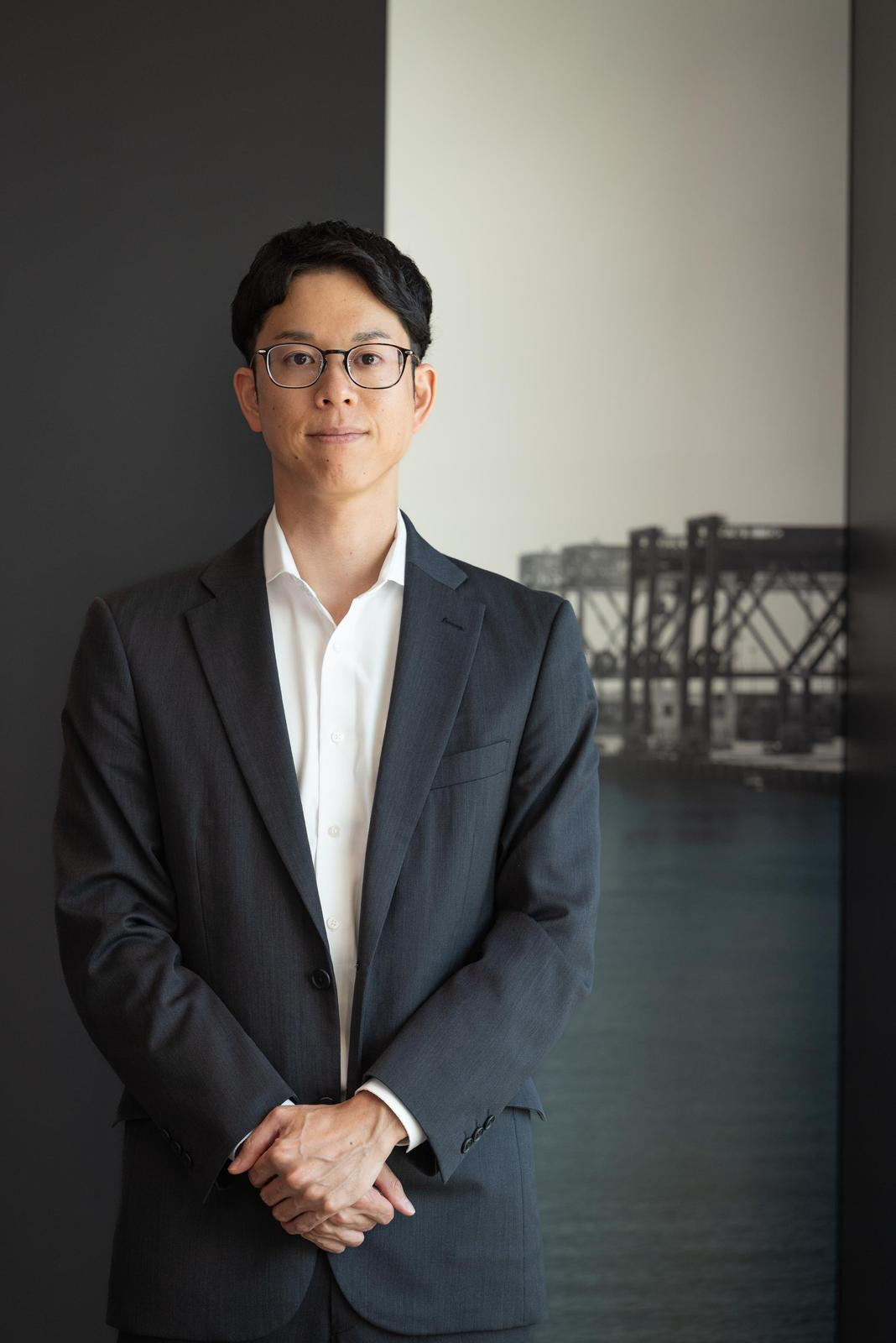
Marubeni Corporation
https://www.marubeni.com/en/news/2024/info/00049.html

SusHi Tech Tokyo, short for Sustainable High City Tech Tokyo, is a Tokyo-based concept that aims to create sustainable new value by overcoming global urban challenges through cutting-edge technology, diverse ideas, and digital expertise.
SusHi Tech Tokyo 2024: https://www.sushi-tech-tokyo2024.metro.tokyo.lg.jp/
Interview and writing by Yoshida Makoto
Photos by Akiyoshi Yoko
Translation by Tanaka Seira
To read the original article and more stories about what Tokyo offers, please visit Tokyo Updates’ website.
Click here for the Japanese version of the article.