• Login
Upgrade
JStories
  • 日本語
  • 中文 (中国)
No Result
View All Result
  • Home
  • AI
    • Artificial Intelligence
    • Robotics
    • Mobility
  • Earth
    • Energy
    • Climate Tech
    • AgriTech
    • Clean Tech
    • Disaster Tech
    • SpaceTech
  • Life Sciences
    • BioTech
    • HealthTech
    • MedTech
    • AgeTech
  • Society
    • Media
    • EdTech
    • Diversity
    • FemTech
    • HRTech
    • LegalTech
    • Social Impact
    • FinTech
    • Anime
  • Lifestyle
    • FoodTech
    • FashionTech
    • BeautyTech
    • Wellbeing
    • Art & Music
  • Travel
    • Adventure Travel
    • Luxury Travel
    • Wellness & Medical Tourism
    • Culture
  • Video
  • Deals
    • Venture Capital
    • M&A
    • Startup Events
    • Pitch
    • Ecosystem Support
  • Interview
  • Opinion
  • Home
  • AI
    • Artificial Intelligence
    • Robotics
    • Mobility
  • Earth
    • Energy
    • Climate Tech
    • AgriTech
    • Clean Tech
    • Disaster Tech
    • SpaceTech
  • Life Sciences
    • BioTech
    • HealthTech
    • MedTech
    • AgeTech
  • Society
    • Media
    • EdTech
    • Diversity
    • FemTech
    • HRTech
    • LegalTech
    • Social Impact
    • FinTech
    • Anime
  • Lifestyle
    • FoodTech
    • FashionTech
    • BeautyTech
    • Wellbeing
    • Art & Music
  • Travel
    • Adventure Travel
    • Luxury Travel
    • Wellness & Medical Tourism
    • Culture
  • Video
  • Deals
    • Venture Capital
    • M&A
    • Startup Events
    • Pitch
    • Ecosystem Support
  • Interview
  • Opinion
en English ja 日本語 zh 中文 (中国)
JStories
No Result
View All Result

Wireless communication below the waves

Yoshiko Ohira by Yoshiko Ohira
01/26/2023
in Uncategorized
0
Home Uncategorized
Share on FacebookShare on Twitter

J-STORIES – A joint project by a Japanese research organization and a private company has successfully tested an underwater system that can transmit information at speeds similar to communication networks on land.

The Japan Agency for Marine-Earth Science and Technology (JAMSTEC) and Trimatiz, a startup working on optical high-speed control technology, have announced the results of experiments conducted last November at a depth of around 1,000 meters in Sagami Bay, south of Tokyo, where researchers wirelessly transmitted data for 100 meters at a rate of 1 gigabit per second.

The system combines Trimatiz’s proprietary high-speed optical communication and control technology with JAMSTEC’s undersea optical technology, and the results prompted the two outfits to predict an imminent “paradigm shift in the field of underwater wireless communication technology.”
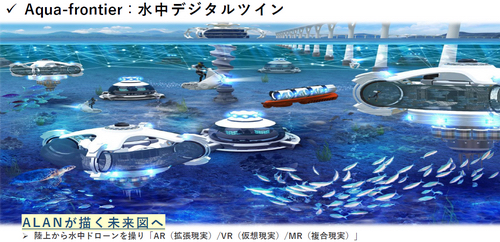
An illustration of potential underwater services.     Source: Trimatiz

Indeed, with such high-speed underwater wireless technology there is potential for a variety of untapped applications. Among them are those involving ocean development and river management, and even underwater “tours” using remote-controlled robots from land.

One of the reasons for the technology’s potential impact is the difficulties posed for radio waves to penetrate water, which has hindered high-capacity wireless communications to date.

Currently, acoustic communication systems are the main method of transmitting information underwater. Although they work over long distances they tend to suffer from interference and can only send a limited amount of data, totaling several tens of kilobits per second at the most.

Although many countries are working on systems that use laser light instead, these are still limited to the megabit level, which is 1,000 times more than acoustic underwater communication, but far less than a terrestrial cellphone, for example.

Now this joint project in Japan seems to have found a way to take similar land-based connection speeds below the waves.
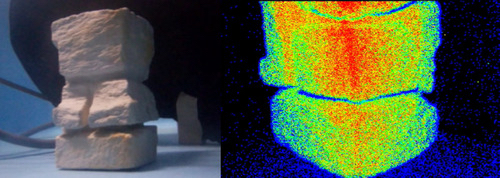
Using lidar, even underwater objects can be imaged in 3D.     Source: Trimatiz

And in anticipation of its success, Trimatiz is already working on a number of new underwater businesses that might tap its technology.

For example, underwater LiDAR (light detection and ranging) could be used in fish farming to remotely measure the size of fishes via 3D imaging and decide how much feed they require. Another application of significance for the environment is the use of wirelessly controlled underwater drones to monitor ocean plastics and water CO2 concentrations in real time.

It could also be used to check piers and docks for damage or deterioration, monitor water quality, or inspect ship hulls. The company also envisages the possibility of “underwater tours,” where people on land can explore the marine world using remote devices.
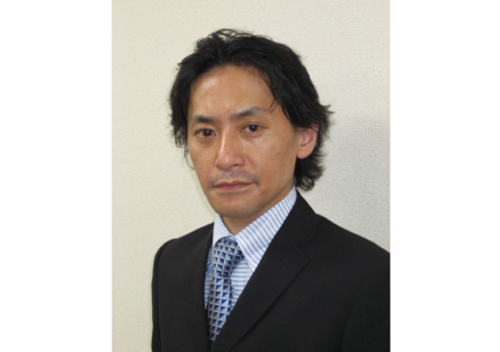
Takeshi Shimada, CEO of Trimatis and president of the ALAN Consortium.       Source: Trimatiz

Trimatiz CEO Takeshi Shimada told J-Stories that as the population of people involved in diving work ages, their work could be taken on by people on land operating robots. “Also, by using the robots to link the aquatic environment with land, bedridden elderly people could explore the sea using avatars, or children could experience marine creatures in underwater aquariums without having to enter the sea,”  he added.

Shimada said that the company plans to have technology such as an Aqua Local Area Network (ALAN) ready for practical use by around 2030.

Translation by Tony McNicol

Top page photo by EpicStockMedia/Envato

For inquiries about this article, please contact jstories@pacficbridge.jp


Click here for the Japanese version of the article.

Tags: CommunicationLaborLivingTechnology
Previous Post

Driver assistance system mimics eye

Next Post

Round-Up Video #42

Yoshiko Ohira

Yoshiko Ohira

Related Posts

Uncategorized

Making the invisible visible: Japan’s revolutionary battery scanner

by HIROKO ISHII
11/21/2025
Lifestyle

Endo Manufacturing forges ahead in Japan’s golf world and beyond

by Sayuri Daimon
10/24/2023
Diversity

Redefining gender roles to bridge ‘dream gap’ and unleash female ambitions

by Alisa Okawara
07/21/2023
Clean Tech

Making use of old emergency food supplies

by Ayaka Sagasaki
05/04/2023
Earth

INTERVIEW | What it really takes to get your product approved by NASA

by DISRUPTING JAPAN/TIM ROMERO
05/02/2023
Next Post

Round-Up Video #42

Leave a Reply Cancel reply

Your email address will not be published. Required fields are marked *

Videos

Round-Up Video #31

10/27/2022

Round-up Video #25

09/01/2022

Round-Up Video #39

12/22/2022

Browse by Tags

Ai Alternative Energy biotechnology Climate Change Community decarbonization Education Event Food foodtech Health Inclusion Infrastructure Innovation Interview J-Stories Japan Japan-Taiwan Innovation Summit Japan startups Japan Tech Labor Living Nature Podcast Recycling Refugees robotics Society Space Startup Startup Ecosystem Startups SusHI Tech Tokyo Sustainability Sustainable Society Taiwan Technology Tokyo Tokyo Innovation Base Tokyo Metropolitan Government Tokyo Updates venture capital video Wealth Zero Waste
JStories

©Articles and photos published on JSTORIES are protected by Japanese copyright law and international treaties. They cannot be reproduced without the permission of the copyright holders

Explore JStories

  • About Jstories
  • Company
  • Contact
  • Home
  • Partner Press Releases
  • Pricing
  • Privacy Policy
  • Team

Follow Us

Welcome Back!

Login to your account below

Forgotten Password?

Retrieve your password

Please enter your username or email address to reset your password.

Log In
No Result
View All Result
  • Home
  • AI
    • Artificial Intelligence
    • Robotics
    • Mobility
  • Earth
    • Energy
    • Climate Tech
    • AgriTech
    • Clean Tech
    • Disaster Tech
    • SpaceTech
  • Life Sciences
    • BioTech
    • HealthTech
    • MedTech
    • AgeTech
  • Society
    • Media
    • EdTech
    • Diversity
    • FemTech
    • HRTech
    • LegalTech
    • Social Impact
    • FinTech
    • Anime
  • Lifestyle
    • FoodTech
    • FashionTech
    • BeautyTech
    • Wellbeing
    • Art & Music
  • Travel
    • Adventure Travel
    • Luxury Travel
    • Wellness & Medical Tourism
    • Culture
  • Video
  • Deals
    • Venture Capital
    • M&A
    • Startup Events
    • Ecosystem Support
  • Interview
  • Opinion

©Articles and photos published on JSTORIES are protected by Japanese copyright law and international treaties. They cannot be reproduced without the permission of the copyright holders

Are you sure want to unlock this post?
Unlock left : 0
Are you sure want to cancel subscription?